This site is supported by our readers. We may earn a commission, at no cost to you, if you purchase through links.

A pastel banana clown can sell for ten times the price of a plain banana, even though both hatched from the same kind of egg in the same kind of rack. The difference lives in the genes stacked inside each animal, and every extra trait you add multiplies the work behind it.
Understanding how morph combos affect price means seeing the full chain: the odds of hitting a target clutch, the years of feeding and test breeding, the buyer demand that follows a striking pattern, and the way scarcity fades once other breeders catch up. Follow that chain and you’ll price, buy, or breed with far more control.
Table Of Contents
- Key Takeaways
- How Do Morph Combos Affect Prices?
- Ball Python Genetics Shape Combo Rarity
- Breeding Complexity Increases Morph Production Costs
- Appearance and Breeding Utility Drive Combo Demand
- Supply Cycles Change Long-Term Morph Prices
- Breeder Credibility and Documentation Influence Prices
- Frequently Asked Questions (FAQs)
- Conclusion
Key Takeaways
- Every extra gene you stack multiplies the odds against you in each clutch, so combo prices mostly reflect how many breeding seasons, holdbacks, and test breedings it took to produce the animal.
- Recessive and slow-to-produce combos like pied and clown hold their value, while hyped new releases, which sell at three to ten times established prices, usually fall back within one to three years as more breeders replicate them.
- Striking looks draw buyers in, but breeding utility, such as a proven female or a proven het, is what keeps them paying, so you should judge a price by what the animal will produce rather than how it looks.
- A trusted breeder, genetic test results, and clear lineage records all cut your risk, so run the odds through a calculator, compare current listings, and always ask for verifiable history before you buy.
How Do Morph Combos Affect Prices?
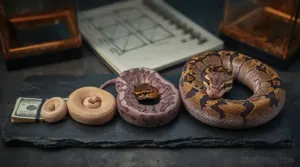
How much more will you pay for a combo than for a single-gene morph? Usually a lot, because each added gene narrows the odds in every clutch, and multi-gene combos take more breeding seasons, more holdbacks, and more risk to produce.
Comparing current prices side by side in this ball python morph price comparison helps you tell whether a combo’s cost reflects real breeding effort or just hype.
Three forces set the final number: genetic rarity, production cost, and buyer demand. Gene stacking can create strong novelty premiums, but those premiums rarely last once more breeders produce the same animal. Designer combinations of rare morphs can reach $1,000-5,000 or more, with prices driven by rarity, not care needs.
Before you buy, run the numbers through a morph pairing calculator and compare the result with current listings. A price that looks high may simply reflect low odds and several years of work, while a cheap combo might be about to get cheaper.
Prices will make sense.
Ball Python Genetics Shape Combo Rarity
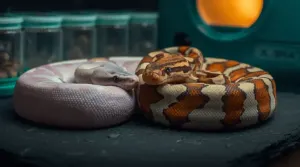
Rarity in ball pythons comes down to how genes pass from parents to offspring. You’ll see this play out in two points below, starting with how recessive and incomplete-dominant traits behave and moving on to the math behind a specific combo. Once you understand both, you can read a price tag and know why it looks the way it does.
Recessive and Incomplete-dominant Inheritance
Recessive genes stay hidden until you pair two copies, so het carriers look normal while passing the trait on. Incomplete dominants show up with one copy and intensify with two.
Here’s what that means for your pairings:
- Two copies reveal recessives.
- Hets look completely normal.
- Incomplete dominants show with one copy.
- Super forms need two copies.
- Breeding proves het status.
Calculating Specific Combination Odds
Once you know how each gene inherits, the math gets simple: multiply each trait’s odds together.
Those stacked combinations are exactly what make some of the most expensive and rarest ball python morphs so hard to produce and so valuable.
| Pairing | Odds | Combo |
|---|---|---|
| Yellowbelly, Pinstripe | 1/2 each | 1/4 |
| Spotnose, Pinstripe, Hypo, Clown | 1/2 each | 1/16 |
A double recessive from double het parents lands at 1/16 per egg. Enter zygosity in any calculator, because wrong assumptions skew every figure, then plan your pairings around numbers.
Before you build your grid, it helps to understand how codominant and recessive ball python genes differ, since each inherits differently.
Breeding Complexity Increases Morph Production Costs

Why does a complex combo cost so much to make? Because every extra gene adds generations, and generations are where breeders spend their money.
A recessive gene only shows when an animal carries two copies, so a breeder often has to produce het animals first, grow them out, and pair them before a single visual baby appears. A project like Clown Pied needs both parents to carry both genes, which can mean years of feeding, housing, and waiting before the first payoff.
Hidden genetics make it harder. A het looks like a normal ball python, so you can’t confirm what it carries by sight. Breeders run test breedings to prove it, and each clutch that misses the target still has to be fed and cared for.
Once you see those costs stacked up, the price tag starts to make sense.
Appearance and Breeding Utility Drive Combo Demand
Looks pull buyers in first, but breeding value keeps them paying. A bumblebee or banana clown stops a scroll because the colors and patterns read as something new, and that visual impact sets the opening tone for morph pricing.
Picture what buyers respond to:
- A bright yellow snake with soft, faded pattern edges
- A pale white body with striking blue eyes
- A clean, dark stripe running down a glowing back
- A pied patchwork of color against bold, solid tone
Utility adds a second layer. A proven female commands more because she can produce offspring, and trait compatibility lets one pairing yield many designer morphs. Weigh visual vs het by what they’ll produce, and you’ll pay for value instead of hype.
Supply Cycles Change Long-Term Morph Prices

A morph’s price rarely stays where it debuts, and knowing why gives you real control over when you buy and sell. Two patterns explain most of the movement you’ll see: how new-release premiums fade as supply grows, and which genes hold their value against cheaper lookalikes. Here’s how each one works.
New-release Premiums and Expanding Availability
Why does a brand-new morph cost so much more than a proven one? Scarcity and hype push new-release premiums to three to ten times what established morphs sell for, and you’re paying for novelty, not yet for genetics.
A fresh morph’s sky-high price reflects hype and scarcity, so you’re buying novelty long before you’re buying genes
Then availability expands, more breeders replicate the combination, and market saturation pulls prices down, usually within one to three years.
Value Retention Versus Cheaper Alternatives
New combos sell on hype, but recessive ones hold their worth because they’re slow to make. A pied or clown stays near $300 while a banana coral glow can fall from over $1,000 to about $150 as market saturation sets in.
Cheaper alternatives win when rare combos get common, so favor slow-to-produce genetic traits and watch how adults color up.
Breeder Credibility and Documentation Influence Prices

Does a breeder’s name really raise the price of an identical morph combo? Yes, and the reason is practical: breeder reputation shrinks the uncertainty you’d otherwise price into every purchase. Two animals can look the same, yet the one with a trusted seller behind it sells closer to asking price, draws fewer low-ball offers, and holds its value when the market dips.
Paper matters just as much. Genetic test results and clear lineage records prove what’s hiding in a het, and buyers pay more for that certainty because proven genetics make future clutches predictable. Strong documentation standards also protect you, since platform-verified sales and seller feedback give you recourse if something goes wrong.
From now on, always ask for verifiable history.
Frequently Asked Questions (FAQs)
Do morph combos affect health or temperament?
Why would a snake’s looks ever decide its health? They don’t, in most cases. Temperament stays calm across morphs, but some combos carry real neurological risks like wobble syndrome, so check genetics before buying.
Should I buy a het or visual animal?
Visuals cost more, but that doesn’t make them the smarter buy. If you’re breeding, a proven het stretches your budget further, since clutch probability favors you over time. If you want display, buy the visual.
Are multi-gene morphs a good investment for beginners?
Usually not. Multi-gene morphs cost more upfront, and you can’t easily recover that money if a price drops. Start with a single-gene animal, learn your husbandry, then move up once you understand how genetic inheritance works.
Where can I safely buy morph combos online?
Start with MorphMarket, where seller ratings and buyer protection policies back every purchase. Then check each breeder’s credibility: ask for lineage verification, feeding history, and a live arrival guarantee, so you’re buying with less risk.
How much do proven breeder females cost?
Proven doesn’t always mean expensive. Most proven females cost $250 to $500, though rare combos reach $500 to $3, You’ll pay 10 to 25 percent over unproven animals, and breeder reputation can nudge that higher.
Conclusion
Why does one pairing command a premium while another sits unsold? Because price follows the chain you now know, and knowing how morph combos affect price turns guesswork into a calculation you can run yourself.
Check the genetics, estimate the breeding costs, weigh demand against supply, and verify the breeder’s records before you commit. Tomorrow’s hot combo will be common soon enough, so buy and breed for the market that’s coming, not the one passing.