This site is supported by our readers. We may earn a commission, at no cost to you, if you purchase through links.
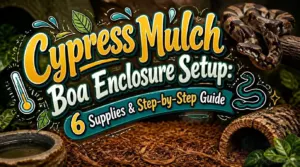
Most boa keepers blame the snake when something goes wrong. Usually, the bedding deserves the blame. A bag labeled "cypress mix" can hide mixed woods that irritate skin, and a bag of dyed mulch can leave a juvenile with scratches it never needed.
Pick the wrong substrate and you fight humidity, odors, and mold for weeks. Pick the right one and the enclosure nearly runs itself. A cypress mulch boa enclosure holds moisture, helps with burrowing, and stays safe when you choose pure, finely milled product.
Here’s how to buy it, lay it, and keep it working.
Table Of Contents
- Key Takeaways
- Choose Safe Cypress Mulch for Your Boa
- 6 Cypress Mulch and Boa Enclosure Supplies
- Lay Cypress Mulch at Least Two Inches
- Maintain Boa Humidity Without Waterlogged Bedding
- Adapt Cypress Mulch for Bioactive Boa Enclosures
- Spot-Clean Daily and Schedule Full Substrate Changes
- Frequently Asked Questions (FAQs)
- Conclusion
Key Takeaways
- Buy 100% pure, finely milled cypress mulch with no dyes, additives, or "cypress mix" blends, since mixed woods and chunky pieces can irritate skin and raise impaction risk, especially in juveniles.
- Lay the mulch at least 2 inches deep, expect it to compact 20 to 30 percent within a month or two, and skip aspen, which stays wet and molds quickly in a humid boa enclosure.
- Keep humidity up with a water bowl, a moist sphagnum humid hide, and a hygrometer rather than a soggy substrate, because waterlogged cypress breeds scale rot and mold.
- Spot-clean daily, replace the full substrate every 4 to 6 weeks (or at once if you smell ammonia or see mold or mites), and feed your boa in a bare tub to stop it swallowing loose chips.
Choose Safe Cypress Mulch for Your Boa
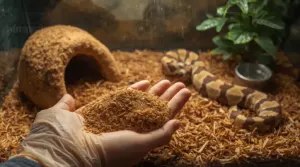
The label on the bag matters more than the brand. Look for 100% cypress mulch with no additives, dyes, or chemical treatments. Skip anything called a "cypress mix" at the hardware store, because those bags often hide mixed woods that don’t belong near a boa.
For more on how cypress works as boa bedding, this guide to cypress mulch for snakes breaks down what to buy.
Texture is the other half of substrate safety. Choose finely milled or triple-milled mulch, since sharp, chunky pieces can scratch skin and raise impaction risk, especially in juveniles.
You can cut that risk further by feeding your boa in a bare tub. It costs you a few minutes and removes most accidental swallowing.
Humidity retention is the reason cypress mulch earns its reputation, and it suits bioactive setups later, once the safety basics are covered.
6 Cypress Mulch and Boa Enclosure Supplies
Most of what’s below is bedding, and that’s on purpose, since substrate is the one piece of your setup that decides whether humidity holds steady. One item is a hygrometer, because you can’t manage humidity without measuring it. And one product here isn’t one I’d put in a boa enclosure, so read each entry before you buy.
1. Zoo Med Forest Floor Bedding 4qt
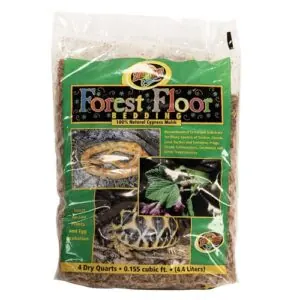
A 4-quart bag of this cypress mulch is a handy starter size, but it’s small for a boa. At 2 pounds and about 11.8 x 7.7 x 3.7 inches, it won’t fill a full enclosure to the two-inch minimum, so treat it as a top-up or a trial run.
The mulch holds moisture well, resists mold, and gives you a natural forest floor look. It’s rated for snakes, among other animals.
Some buyers report insect problems, so inspect the bag before you use it.
| Best For | Reptile and amphibian keepers who want a moisture-holding, natural-looking substrate for a small terrarium, or a top-up for a larger enclosure. |
|---|---|
| Weight | 2 pounds |
| Dimensions | 11.8 x 7.7 x 3.7 in |
| Material | Cypress mulch |
| Moisture Handling | Retains moisture |
| Suitable Animals | Snakes, lizards, tortoises, frogs |
| Customer Feedback | Mixed on infestations |
| Additional Features |
|
- Holds moisture well, which helps maintain humidity in the enclosure
- Resists mold growth when properly maintained
- Gives a natural forest floor look and suits many animals, including snakes, lizards, tortoises, frogs, and tarantulas
- At 4 quarts and 2 pounds, the bag is too small to fill a larger enclosure, such as a boa’s, to a proper depth
- Some customers report insect infestations, so the bag should be inspected before use
- Intended for indoor use only
2. ReptiChip Coconut Substrate 72 Quart
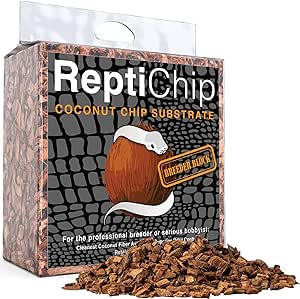
If you want more volume for your money, this is the next step up. The compressed brick measures 30.48 x 15.24 x 30.48 cm, weighs 4.51 kg, and expands to 2.5 cubic feet once hydrated. That’s plenty to hit the two-inch minimum depth.
It’s 100% coconut husk, which holds humidity well and absorbs odors. Be candid with yourself about quality, though. Some buyers report plastic pieces in the mix, and feedback on consistency is mixed. Sift it before use, and hydrate it first.
| Best For | Reptile and hermit crab keepers who want a large, affordable volume of humidity-holding coconut husk substrate for tropical habitats and are willing to sift it before use. |
|---|---|
| Weight | 10 lbs (4.51 kg) |
| Dimensions | 30.48 x 15.24 x 30.48 cm |
| Material | Coconut husk |
| Moisture Handling | Superior humidity retention |
| Suitable Animals | Ball pythons, geckos, tortoises |
| Customer Feedback | Mixed on quality |
| Additional Features |
|
- Expands to 2.5 cubic feet when hydrated, giving plenty of volume for deep burrowing layers.
- Made from 100% organic coconut husk that holds humidity well and absorbs odors while encapsulating waste.
- Suits many species, including ball pythons, leopard geckos, turtles, tortoises, and hermit crabs, and works as a bioactive substrate.
- Some customers report finding plastic pieces in the substrate.
- Feedback on consistency and purity is mixed.
- No water-to-expansion ratio is given, so hydrating it correctly may take some trial and error.
3. Govee H5075 Thermometer Hygrometer

Substrate only works if you know what’s happening inside the enclosure, and a gauge answers that. This Govee unit reads temperature to ±0.54°F and humidity to ±3%RH, using a Swiss-made sensor.
Once you have steady readings, adjust your substrate type and depth using these best practices for maintaining snake enclosures.
Since boas need 60-80% humidity, you can check your mulch setup without guessing. The app sends alerts when readings drift, and Bluetooth reaches 164ft, though walls shorten that. It’s Bluetooth only, with no Wi-Fi.
Reliability is mixed. Some owners report failures within six months, so keep a backup gauge.
| Best For | Reptile keepers, such as boa owners, who want to monitor enclosure temperature and humidity from their phone without guessing. |
|---|---|
| Weight | 0.1 kg |
| Dimensions | 2.5″W x 3.1″H |
| Material | N/A |
| Moisture Handling | N/A |
| Suitable Animals | N/A |
| Customer Feedback | Mixed on reliability |
| Additional Features |
|
- Swiss-made sensor reads temperature to ±0.54°F and humidity to ±3%RH
- Bluetooth range of up to 164ft, with app alerts when readings drift
- Exports two years of data as CSV and shows 20-day history graphs
- Bluetooth only, with no Wi-Fi connectivity
- Range can drop below 164ft when walls or other obstructions are in the way
- Reliability is mixed, with some owners reporting failures within six months
4. Zoo Med Forest Floor Bedding 24qt
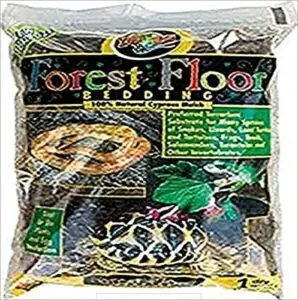
Bulk is where this product earns its place. The 24-quart bag of Zoo Med’s cypress mulch covers an enclosure deep enough for your boa, and it holds moisture well, which keeps humidity steady without constant misting.
Customers say it resists mold and bugs, though a few report infestations, so inspect the bag before you pour it in. Don’t expect pale wood either. The listing calls the color white, but cypress usually looks tan to brown.
For feeding, move your boa to a bare tub so it won’t swallow loose chips.
| Best For | Reptile, amphibian, and invertebrate keepers, such as owners of snakes, tortoises, frogs, or tarantulas, who want an affordable natural-looking substrate that holds humidity in a terrarium. |
|---|---|
| Weight | 10.6 pounds |
| Dimensions | 18 x 12 x 6 in |
| Material | Cypress |
| Moisture Handling | Retains moisture |
| Suitable Animals | Snakes, lizards, frogs, tarantulas |
| Customer Feedback | Mixed on infestations |
| Additional Features |
|
- Holds moisture well, keeping humidity steady without constant misting
- Gives the enclosure a natural forest floor look
- Suitable for a wide range of animals, including snakes, lizards, tortoises, frogs, salamanders, and tarantulas
- Customers report mixed experiences with infestations, so the bag should be inspected before use
- The listing calls the color white, which may not match the tan-to-brown look of natural cypress
- Loose chips can be swallowed, so animals may need to be fed in a separate bare tub
5. Riare 10LB Coconut Husk Chip Substrate
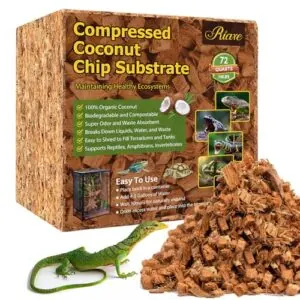
Pick this brick when you need a lot of substrate from one purchase. The Riare measures 11.8 x 11.8 x 5.12 inches compressed and expands to 72 quarts once you add water. It’s made from natural coconut husk fibers, so it holds heat and moisture for your humidity needs.
Know the catch, though. Customers report mixed feedback on durability and inconsistent results on expanded size, so don’t count on exact volume. Hydrate it before use since it needs water first.
| Best For | Reptile owners with larger enclosures or several terrariums who want a lot of natural, burrow-friendly substrate from a single purchase. |
|---|---|
| Weight | 10 lb |
| Dimensions | 11.8 x 11.8 x 5.12 in |
| Material | Coconut husk fibers |
| Moisture Handling | Retains heat and moisture |
| Suitable Animals | Snakes, tortoises, bearded dragons |
| Customer Feedback | Mixed on durability |
| Additional Features |
|
- Expands to 72 quarts from a 10 lb compressed brick, so one purchase covers a lot of space.
- Made from natural, biodegradable coconut husk fibers that hold heat and moisture to help maintain terrarium humidity.
- Encourages natural digging and burrowing, suits many reptiles and frogs, and can be composted in the garden afterward.
- Customers report mixed feedback on durability.
- Customers report inconsistent results on size after expansion, so the final volume may vary.
- It must be soaked in water and allowed to expand before it can go in the terrarium.
6. Zoo Med Aspen Snake Bedding 24qt
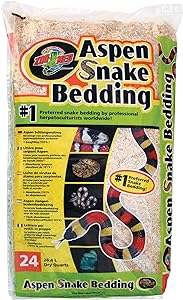
Picture a keeper who mists daily to hold 70% humidity, then fills the tank with aspen because the bag says it’s safe for all snakes. Within days, the lower layer stays damp and mold creeps in.
That’s the catch with this bedding. It’s absorbent (191%) and odorless, and it lets snakes burrow, but it stays wet for days and aspen molds quickly when damp. Dust levels vary, too.
For humidity-loving boas, skip aspen and stick with cypress or coconut chips.
| Best For | Keepers of dry-habitat snakes, such as corn snakes or ball pythons in drier setups, who want an odorless, burrowable bedding they can easily spot clean. |
|---|---|
| Weight | 5.4 pounds |
| Dimensions | 21.1 x 13.3 x 5 in |
| Material | Aspen |
| Moisture Handling | 191% absorbency |
| Suitable Animals | Snakes, lizards, tortoises, tarantulas |
| Customer Feedback | Mixed on dust |
| Additional Features |
|
- Made from renewable aspen and safe for all snakes, with no odor
- Highly absorbent (191% rating), and snakes can burrow and nest in it
- Easy to spot clean, and also suitable for lizards, tortoises, turtles, tarantulas, and insects
- Stays wet for a few days and can mold quickly when damp, so it’s a poor fit for humid enclosures
- Dust levels vary, with some users reporting it as very dusty
- Not recommended for outdoor use, and humidity-loving species like boas do better with cypress or coconut chips
Lay Cypress Mulch at Least Two Inches
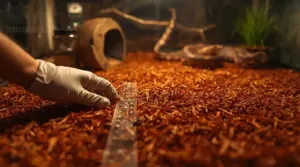
Cypress mulch compacts 20 to 30 percent within four to six weeks, so the layer you pour today won’t be the layer your boa lives on next month.
Start with a substrate depth of 2 inches, the practical minimum for humidity retention and burrowing. Skimp and you’ll fight dry spots; go too deep and shed skin can get trapped. Keep enclosure humidity around 60-70%, raising it to 70-80% during shedding and checking it with a digital hygrometer.
Here’s how to nail the enclosure setup:
- Measure your floor and buy about 10 percent extra, since settling and spot-cleaning will eat into it.
- Pre-moisten the mulch, roughly 1 to 2 cups of water per 4-quart bag, and mix thoroughly.
- Spread it evenly and tamp lightly, leaving it loose enough to dig through.
- Level everything so water can’t pool in dips.
Maintain Boa Humidity Without Waterlogged Bedding
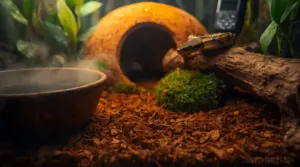
Cypress mulch holds moisture well, which is exactly why it’s easy to overdo. A soggy enclosure breeds scale rot and mold, so aim for damp air, not wet bedding.
Cypress bedding’s talent for retaining water is also its trap, so keep the air humid and the substrate from turning soggy, or rot and mold will follow
Start with a hygrometer. Keep 50-70% humidity and adjust your misting to match, rather than soaking the surface on a schedule.
Your best humidity control methods don’t involve the substrate at all. A large water bowl evaporates steadily and lifts the whole enclosure. A humid hide packed with moist sphagnum moss gives your boa a damp retreat for shedding, while the rest of the bedding stays dry.
Spot-clean anything wet or soiled right away. Replace only the damp patches so your substrate layering stays deep and moisture retention stays under control.
Adapt Cypress Mulch for Bioactive Boa Enclosures
Cypress mulch can work in a bioactive setup, but loose chips alone won’t get you there. You’ll need a soil-based layer underneath, plus living help to process waste between resets. Here are the two pieces to get right, in the order you’ll build them.
Build a Supportive Soil Base
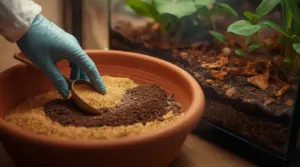
Cypress mulch alone won’t carry a bioactive setup. Mix 1 part sand, 2 parts dirt, and 1 part cypress mulch, and mix it thoroughly before it goes in. This supportive soil base drains well, holds moisture, and resists compaction.
- Roots that grip and spread
- Springtails and isopod colonies thriving
- Steadier humidity control, no swampy corners
- A substrate that feels alive
Establish Cleanup Crews and Live Plants
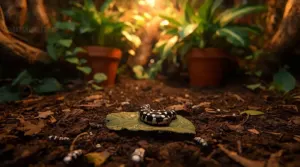
Once the soil’s in, add the cleanup crew first. Release springtails and Dairy Cow isopods, then give them a full month to settle before the boa moves in. Scatter leaf litter so they have cover and food.
Next, plant pothos or philodendron brasil in terracotta planters with water catchment, so roots stay put when your boa shifts around.
Spot-Clean Daily and Schedule Full Substrate Changes
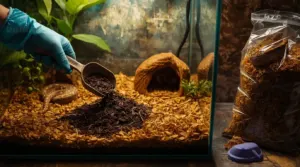
Even with a cleanup crew in place, your boa enclosure setup still needs a daily routine. Scoop feces, urates, and soiled cypress mulch the moment you spot them, and take a generous margin of surrounding chips. Large deposits come out by hand, since the crew works slowly.
Full substrate changes follow a calendar, with a few exceptions:
- Replace everything every 4 to 6 weeks in standard setups.
- Change it immediately if you smell ammonia or see mold, mites, or wall condensation.
- Bioactive tanks can stretch that to three to six months.
Feed your boa in a separate tub on change day, so it doesn’t swallow loose chips. Expect extra hiding afterward, and a skipped meal or two.
Frequently Asked Questions (FAQs)
Is cypress mulch safe if my boa eats some?
You might think a few stray flakes are nothing, since boas swallow whole animals. Fair, but a mouthful of pure cypress mulch is usually fine in a healthy, properly heated boa. Landscaping blends and big gulps are the real danger.
Can cypress mulch cause mites or pests?
Think cypress mulch is automatically mite-proof because it’s wood? It isn’t. Untreated bags can carry mites or eggs, though most hitchhikers are harmless. Bake it at 275-300°F for twenty minutes, then keep it dry.
How much does it cost to fill a boa enclosure?
A full 4’x2’x2′ enclosure holds 16 cubic feet, but you’ll rarely fill it. A 2-inch layer needs just 33 cubic feet, costing $50 to $5 in bulk mulch or $20 to $40 in reptile-grade bags.
What temperature should a boa enclosure stay at?
Keep the cool end at 75-80°F and the basking spot at 88-92°F. Ambient air should average 80-85°F. Let nights drop to 70°F, and add a ceramic heat emitter if the room runs colder.
Conclusion
Buy it pure. Lay it deep. Mist it smart. That’s the whole routine for a cypress mulch boa enclosure that works with you instead of against you.
Check humidity with a hygrometer, not a hunch. Spot-clean daily, and swap the full substrate on schedule so odors and mold never get a foothold.
Do those few things consistently and your boa gets a safe, steady home. You get fewer surprises and more time to just watch.