This site is supported by our readers. We may earn a commission, at no cost to you, if you purchase through links.
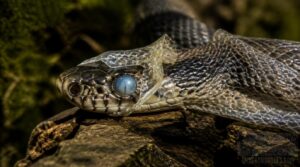
A milky-eyed snake mid-shed rarely alarms anyone; the spectacle clouds, clears, and the animal moves on.
But when your snake won’t shed eyes properly, leaving dull, wrinkled caps stuck fast days after the rest of the skin peels away cleanly, that’s a different problem entirely, one rooted in humidity gradients, hydration status, and keratin biology rather than simple bad luck.
Retained spectacles trap debris against the cornea and can compound with each subsequent shed if left unaddressed.
Understanding what separates a normal shed from a stalled one, and knowing exactly which interventions are safe versus which risk permanent eye damage, makes the difference between a quick fix and a vet visit.
Table Of Contents
Key Takeaways
- Retained eye caps almost always trace back to low humidity or dehydration, so fixing your enclosure’s moisture levels and keeping fresh water available solves most cases before they start.
- Never pull or peel a stuck eye cap yourself—it’s fused to the cornea, so tugging at it tears living tissue and risks permanent blindness.
- A humid hide and a lukewarm soak (80-85°F for 15-20 minutes) are your safest first moves, giving stuck spectacles a real chance to loosen on their own.
- If a cap lingers past 48 hours, or you notice swelling, discharge, redness, or appetite loss, it’s time to call a vet rather than keep waiting it out.
Why Won’t My Snake Shed Eye Caps?
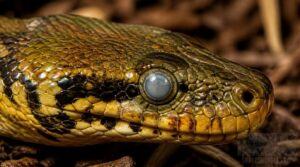
Cloudy eyes don’t always mean trouble; sometimes it’s just biology doing its job. But when that milky film sticks around past its welcome, you’re dealing with something else entirely. Here’s what separates a normal pre-shed haze from actual retained eye caps.
If the cloudiness lingers well beyond a normal shed cycle, it’s worth reviewing this guide to identifying and safely removing retained eye caps before it affects your snake’s vision.
Normal Cloudy Eyes Before Shedding
Cloudy, blue-grey eyes are ecdysis doing its job, not a warning sign. Fluid pools beneath old eye caps, blinding your snake for 24-72 hours before clearing on its own.
- Milky, blue-grey coloring
- Temporary blindness (near-zero acuity)
- Appears 1-3 days pre-shed
- Clears without intervention
- Differs from permanent cataracts
If the cloudiness persists after the body shed finishes, your snake may be dealing with retained eye caps, which need gentle intervention rather than time alone.
No action needed. Vision restores instantly once caps shed.
Signs of Retained Eye Caps
So how do you know it’s not just pre-shed cloudiness anymore? Persistent cloudiness that lingers after the body shed finishes is your first clue.
Look closer: wrinkled texture, a dull matte finish instead of glossy clarity, and irregular edges you can spot with a flashlight. Nervous behavior, head-rubbing, and missing eye caps in the shed itself all point toward retained spectacles needing intervention.
One Eye Versus Both
A single capped eye usually points to localized trouble: an old injury, a stuck skin fold, or debris trapping just that spectacle. Both eyes clouded together? That’s classic low humidity across the whole enclosure.
Watch for these clues:
- One eye, normal appetite: monitor and soak
- Both eyes, food refusal: vision loss likely
- Asymmetry: check for injury
- Bilateral swelling: call your vet
Checking The Shed Skin
Don’t toss that shed. Hold it to the light and look for two clear, eye-shaped openings near the head, your eye hole inspection. Present and intact? Full separation, job done.
Missing or cloudy patches mean caps stayed put. Check the whole length too: a shed completeness check catches retained rings the eyes alone won’t reveal.
What Causes Retained Eye Caps?
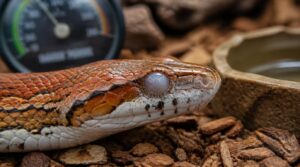
Retained eye caps rarely happen by accident; something in the setup or the snake’s health usually falls short. The good news is that most causes trace back to a handful of fixable factors. Here’s what actually drives this problem.
Enclosure Humidity Too Low
Dry air is the number one culprit behind stuck spectacles. Below 40-50% relative humidity, that old eye cap simply won’t loosen.
If your snake’s eye cap is stuck during a shed, checking a guide on snake shedding behavior and feeding can help you understand the whole process better.
Check your hygrometer daily, not just at a glance. Mist twice daily, adjust substrate moisture, and balance ventilation so humidity doesn’t vanish through gaps. Poor humidity levels turn a normal shed into a battle your snake can’t win alone.
Dehydration and Limited Water
A neglected water dish does as much damage as bone-dry air. Snakes can’t absorb moisture through their skin, so oral intake is everything.
Hydration signs matter: sunken eyes, dented caps, skin that stays wrinkled when pinched. Bowl placement near a hide encourages soaking behavior. Change water twice weekly. Dehydration paired with low humidity leaves eye caps with nowhere to go.
Incorrect Enclosure Temperatures
Where you place that thermostat probe matters more than the number on the dial.
Even with proper humidity levels, a skewed gradient stability check, hot surface temp readings, or erratic night temp swings stalls skin loosening around the eyes.
Get the thermal gradient wrong and eye caps stay put, no matter how humid the substrate moisture feels.
Illness or Poor Nutrition
A snake’s eyes reveal what’s happening inside its body long before you’d ever notice it elsewhere. Vitamin A deficiency thickens keratin over the spectacle; calcium imbalance weakens shedding layers; malnutrition disrupts fluid separation.
- Immune compromise slows healing
- Metabolic disorders skew shedding timing
- Poor appetite compounds nutritional decline
Persistent ocular spectacle retention despite good husbandry often means it’s time for vet intervention.
Layers From Previous Sheds
Think of each missed shed as a coat of varnish.
Eye cap accumulation happens when new keratin bonds to old, hardening into stacked layers that interlock and resist separation. A single retained cap softens easily; three layers turn cloudy, grainy, and bulbous, risking corneal damage. Proper humidity levels prevent this compounding mess entirely.
Safe Steps for Retained Eye Caps
Once you know why those caps are stuck, the next question is what you actually do about it. The good news: you’ve got real control here, and none of it requires guesswork or heroics. Here’s exactly how to handle it, step by step.
Provide a Humid Hide
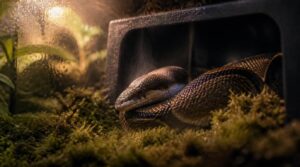
Humidity fixes what dry air breaks. Line a hide with New Zealand long-fiber sphagnum moss, damp but not soggy, tucked in a corner away from heat. Replace it every 4-6 weeks. Fluff weekly, remist when dry.
That’s your eye caps’ best shot at loosening on their own before you intervene further.
Offer a Lukewarm Soak
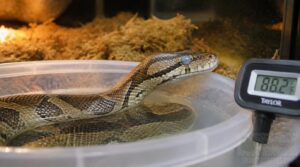
Sphagnum moss buys time. If caps linger past a few days, run a soak: water at 80-85°F, deep enough to cover the body but never the head, for 15-20 minutes. Check temperature with a thermometer, not your wrist. This softens stuck spectacles and rehydrates skin, prepping caps for gentler removal afterward.
Increase Humidity Safely
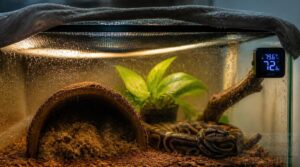
A soak helps, but the enclosure itself needs work too. Push humidity to 60-80% during active shedding using a few tactics together:
- Mist twice daily with a fine-spray bottle, avoiding direct eye contact
- Drape a damp towel over screen tops for steady evaporation
- Add a humid hide packed with moist sphagnum moss
Check readings with a hygrometer, not guesswork.
Never Pull Eye Caps
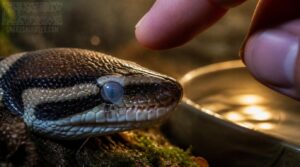
Good humidity work sets the stage, but the temptation to finish the job with your fingers is where real damage happens.
The spectacle sits fused to the cornea. Pulling tears living tissue, not dead skin.
A retained eye cap is fused to the cornea, so pulling it tears living tissue, not dead skin
| Action | Risk | Outcome |
|---|---|---|
| Pulling cap | Corneal tear | Possible blindness |
| Soaking | Softens cap | Safe release |
| Vet removal | Sterile tools | Full healing |
Patience protects sight. Force doesn’t.
Monitor Eyes Afterward
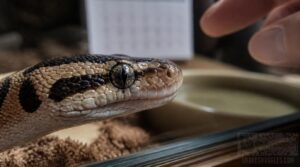
Once the vet or soak resolves the cap, the work isn’t done. Run a daily eye clarity check for three days, watching for visual symmetry between eyes.
Track three things:
- Cloudiness fading by day two
- Feeding behavior returning
- No swelling or discharge
Cloudy eyes past 72 hours mean it’s time for vet intervention again.
Prevent Eye Caps Next Shed
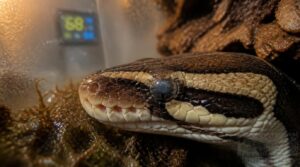
Retained eye caps aren’t random bad luck; they’re almost always a sign that something in the enclosure needs adjusting.
The good news is that once you know what your snake needs, prevention becomes a routine rather than a guessing game.
Here are the five habits worth building into every shed cycle.
Follow Species-Specific Humidity
One humidity setting doesn’t fit every species, and treating your ball python like a corn snake invites retained spectacles.
Tropical species need 50-70% humidity, but ball pythons want 60-80% during shedding, while green tree pythons demand a steep 70-90%.
Use fogger-free humidity control methods for snake enclosures to maintain species-appropriate levels without oversaturating the substrate.
Corn snakes tolerate 40-60%; king snakes prefer drier 30-50% ranges.
Match the range, or eye caps stick.
Use a Reliable Hygrometer
Rarely does a $15 gadget matter this much: your hygrometer is the difference between a clean shed and a vet visit for retained spectacles.
Choose digital capacitive sensors over analog dials, they respond faster and read closer to true RH.
Placement matters too, keep it at snake eye level, away from vents and heat sources, letting it acclimate 15 minutes before trusting any reading.
Keep Fresh Water Available
A dry bowl is a silent saboteur; snakes soak to loosen every layer, spectacles included.
- Change water daily to curb bacteria
- Choose HDPE or ceramic, never porous
- Keep bowls stable, away from substrate
- Serve water at room temperature
Hydration during shedding isn’t optional. Skip it, and retained eye caps become far likelier.
Maintain Proper Temperature Gradient
Skin liquefies on schedule, or it doesn’t, and temperature calls the shots. Build a real thermal gradient: warm side per species range, cool end 10-15°F lower, checked at substrate level, not air. Nighttime drop of 5-10°F helps circadian rhythm. Place heat sources for even coverage.
Skip this, and sheds stall regardless of humidity or mist frequency.
Inspect Every Complete Shed
That crumpled skin in the corner isn’t trash, it’s a diagnostic report. Unroll it fully and check five things:
- Shed integrity (one piece, no tears)
- Eye cap remnants near the head
- Scale pattern clarity
- Length versus your snake’s body
- Ventral surface condition
Retained spectacles hiding in an "intact" shed mean your next fix is a vet visit, not a soak.
When Eye Caps Need Veterinary Care
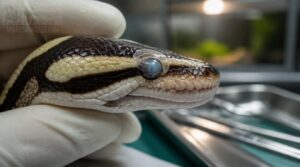
At-home care takes care of most retained caps, but not all of them—some situations call for a vet, plain and simple. Knowing where that line sits protects your snake’s eyesight and keeps a minor issue from turning into a real emergency. Here’s when it’s time to stop soaking and start dialing the phone.
Persistent Caps After Shedding
A cap still clinging past 48 hours isn’t patience, it’s a problem. Cap accumulation compounds fast, and soak effectiveness drops with each cycle.
| Timeframe | Home Care | Outcome |
|---|---|---|
| 24-48 hrs | Soak, humidity fix | Often resolves |
| 48+ hrs | Vet intervention needed | Prevents vision impairment |
| Multiple layers | Professional removal | Reduces infection risk |
Swelling, Discharge, or Redness
Past the 48-hour mark, watch the eye itself, not just the cap. Swelling, discharge, or redness signals inflammation, and inflammation under a retained spectacle means trapped bacteria doing damage.
Red flags demanding a vet visit:
- Puffy, bulging eye tissue
- Cloudy or colored discharge
- Redness ringing the eyecap
- Eye looks warm or irritated
These aren’t wait-and-see symptoms.
Multiple Retained Cap Layers
One shed cycle missed is manageable. Two or three, and you’ve got stacked eye caps, concentric rings of hardened tissue trapping fluid and pressure against the cornea.
Chronic humidity below 40% during shedding drives this buildup. Look for translucent discs, rough wrinkled texture, or a hazy film obscuring the pupil.
Don’t attempt removal yourself. Layered caps need veterinary instruments and magnification.
Appetite or Behavior Changes
Vision matters more than you’d think. A snake wearing stacked eye caps can’t judge distance or threat, so it turns jumpy, refuses food, or vanishes into its hide for days.
That’s not stubbornness. It’s a stress response to impaired sight, and lethargy often rides along with it. Behavior shifts like these mean the eyes need a professional look, not another wait-and-see week.
Professional Removal and Aftercare
Once a jumpy, hiding snake lands on your exam table, the vet confirms retained spectacles under magnification, checking for swelling or discharge.
A lukewarm soak softens caps before gentle removal with cotton swabs or fine forceps, followed by ophthalmic ointment.
A humid hide helps recovery, with follow-up checks at 24-48 hours confirming healing.
Frequently Asked Questions (FAQs)
Can retained eye caps come off on their own eventually?
Yes, often. Correct humidity to 60-70%, and a natural detachment timeline of one to two shed cycles usually resolves single retained spectacles. Layers stacked beyond that rarely self-release, meaning veterinary help becomes the safer bet.
Is it normal for shedding frequency to vary by age?
Funny enough, growth rate calls the shots here. Juvenile ball pythons shed every 4-6 weeks fueling rapid growth, while adults stretch to months as growth slows, so yes, age-based variation is entirely normal and expected.
Does diet affect how well a snake sheds overall?
Absolutely. Nutrient balance and prey variety build strong skin layers, while hydration impact keeps tissue supple.
Poor gut health or protein shortfalls weaken shedding, so a well-fed snake, especially a juvenile ball python, sheds cleaner and faster overall.
How long can a retained eye cap safely remain?
Think of it as borrowed time, not a free pass. Retained spectacles can linger up to 24-48 hours safely with corrected humidity; beyond that critical window, infection risk climbs fast, demanding prompt vet intervention.
Conclusion
It’s no coincidence that the same fixes preventing dysecdysis also keep your snake thriving overall.
When your snake won’t shed eyes cleanly, humidity and hydration are almost always the real culprits, not bad luck. Fix the microclimate, offer a soak, and resist the urge to peel anything yourself. Your hands aren’t the right tool here.
Trust patience, trust moisture, and call a vet when caps linger. That’s genuine mastery, not chance.