This site is supported by our readers. We may earn a commission, at no cost to you, if you purchase through links.
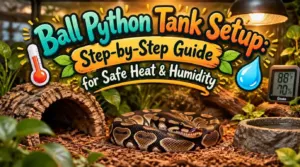
Your ball python can’t tell you the enclosure is wrong. It just stops eating, sits in a tight coil, and stretches a bad shed over three weeks.
Most of those problems trace back to the ball python tank setup, not the snake. A basking spot that runs 5°F too hot burns skin, while humidity that sags below 50% leaves stuck shed on the eyes and tail tip. Both mistakes are quiet, and both are easy to prevent.
You don’t need a fancy rack or a pricey kit. You need the right size, the right substrate, and a thermostat that keeps heat and humidity steady. Start with the enclosure itself.
Table Of Contents
- Key Takeaways
- Choose The Right Ball Python Enclosure Size and Material
- Add Moisture-Retaining Substrate, Snug Hides, and Enrichment
- Set Up Safe Ball Python Heating and Lighting
- Maintain Ball Python Humidity and Fresh Water
- Test, Clean, and Adjust Your Ball Python Tank Setup
- Frequently Asked Questions (FAQs)
- What is the best tank setup for a ball python?
- What do ball pythons like in their tanks?
- What size tank does a ball python need?
- Is owning a ball python easy?
- Is a 40 gallon tank too big for a baby ball python?
- What is the best enclosure setup for a ball python?
- What quarantine period is needed for new ball pythons?
- How often should ball python tanks be completely cleaned?
- Can multiple ball pythons share the same enclosure safely?
- What signs indicate a ball python is stressed or sick?
- Conclusion
Key Takeaways
- Build a temperature gradient with a 95°F basking spot, an 88-92°F warm side, and a 74-80°F cool side, and tape your thermostat probe to the substrate at snake level so heat stays safe and steady.
- Keep humidity at 50-60% (70-80% during shedding) with at least 4 inches of moisture-holding substrate, a humid hide, and a hygrometer on the cool side, since low humidity causes stuck shed.
- Give your snake an enclosure that fits its size, from a 20x11x13 inch tub for hatchlings to 48x24x24 inches for adults, and choose PVC with secure doors since it holds heat better than glass and cuts stress.
- Add snug hides on both the warm and cool sides, run the enclosure empty for 24 to 48 hours to confirm your numbers, and spot-clean daily so problems get caught before your snake shows them.
Choose The Right Ball Python Enclosure Size and Material
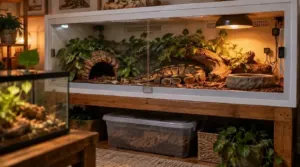
The right Enclosure Size keeps your ball python secure and gives you room to build a proper Thermal Gradient. Hatchlings under 300g do well in a 20x11x13 inch tub or 10-gallon tank. Juveniles under 3 feet need at least 36x18x18 inches. Adults over 3 feet need 48x24x24 inches minimum, and longer snakes need an enclosure at least as long as their stretched body.
Since ball pythons are terrestrial and care more about floor space than height, this ball python tank size guide can help you plan an enclosure as your snake grows.
Enclosure Material matters just as much. PVC holds heat and humidity well, and its solid panels cut down on startle stress. Glass loses heat fast, and reflections can spook shy snakes. Enclosures with acrylic doors that hold heat better than glass help keep temperatures steadier.
Pick sturdy front-opening doors and secure locks, since strong snakes push lids open. Good airflow helps Humidity Control, and PVC keeps a Basking spot reliably warm.
Add Moisture-Retaining Substrate, Snug Hides, and Enrichment
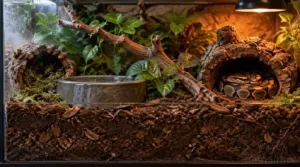
Once your enclosure is ready, fill it with the right stuff. Start with substrate. Coconut husk, coconut fiber, and cypress mulch all offer strong moisture retention and give you a naturalistic enclosure. Spread at least 4 inches of substrate so your snake can burrow and the substrate moisture stays steady. Mixing in husk or mulch prevents compaction.
Next, add hides. Your ball python wants to touch the walls and ceiling when it’s coiled up, so pick snug ones.
- Place one hide on the warm side and one on the cool side. If you’d rather not buy ready-made hides, DIY snake cave alternatives can give you simple, low-cost options that work just as well on either side. Before buying hides, it helps to calculate your snake’s enclosure space so the floor is big enough for a hide on each side.
- Fill one with moist sphagnum moss to create a humid hide box.
- Add cork bark, branches, and fake plants for enrichment.
- Use a heavy ceramic water bowl that can’t tip.
Rearrange decor occasionally, but only slightly.
Set Up Safe Ball Python Heating and Lighting
Your ball python can’t make its own heat, so you’re the thermostat. Get this part right, and your snake will eat, shed, and settle in with confidence. Here’s what to set up, starting with temperature gradients and then lighting options.
Pairing a thermostat with the right heat source matters just as much as the numbers, so this ball python heating and lighting guide compares your options.
Your ball python can’t make its own heat, so you’re the thermostat, and getting it right brings a snake that eats, sheds, and settles in confidently
Temperature Gradients and Thermostat Placement
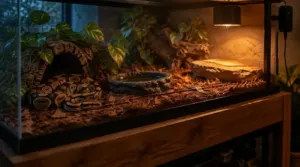
Picture a sunlit rock fading into shade. Your enclosure needs that same temperature gradient.
A reptile heating pad for boa constrictor habitats placed under one end of the tank creates that warm zone while leaving the other side cool.
Start with Heat Source Placement: warm one end only. Thermostat Placement matters most, so tape the probe to the substrate at snake level.
Thermal Gradient Establishment takes patience.
| Zone | Target | Check |
|---|---|---|
| Basking Spot | 95°F | Gun |
| Warm side | 88-92°F | Probe |
| Cool side | 74-80°F | Probe |
| Night | Stable | Probe |
Lighting Cycles and UVB Options
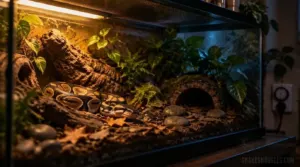
Heat sorted? Now give your snake a clear day and night. Aim for a 12hour lightdark cycle, with a slight summer stretch and winter trim. Photoperiod consistency helps a healthy circadian rhythm, so use a timer.
If your setup includes UVB, pair that steady light-dark routine with fresh bulbs, since why UVB lighting matters for snakes comes down to both output and timing.
UVB lighting isn’t required, but it helps. Choose a T5 HO tube, mount it above mesh over the warm end, and keep a shaded hide.
Maintain Ball Python Humidity and Fresh Water
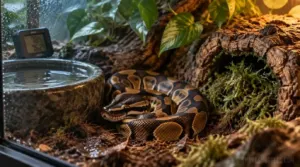
Why does humidity matter so much? Because ball pythons shed, breathe, and hydrate better when you hold it steady at 50–60%.
Good substrate moisture retention does the heavy lifting. Mist lightly 2–3 times a week, and push humidity to 70–80% during shedding. Never let the substrate turn soggy.
Here’s your routine:
- Place a hygrometer on the cool side, and plan on hygrometer calibration once a year.
- Set a heavy ceramic water bowl away from heat.
- Refill it daily with dechlorinated tap, spring, or bottled water.
- Offer a humid hide box with damp sphagnum moss.
- Check readings morning and evening.
Keep vents open, too. Place them opposite each other to avoid harsh drafts. Fresh airflow stops mold without stealing your moisture.
Test, Clean, and Adjust Your Ball Python Tank Setup
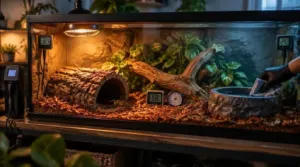
Run your enclosure empty for 24 to 48 hours before the snake moves in. Use that window for thermal gradient establishment. Check the warm and cool ends with digital probes, and confirm your thermostat delivers reliable temperature regulation without hot spots.
Verify your hygrometer next. Hygrometer calibration matters because cheap gauges drift, so test yours against a second unit. Then watch substrate moisture retention. If the mix dries out, mist it. If a humidity spike follows, vent a little and let it settle.
Clean daily. Remove feces and urates right away, and swap the water every morning. Scrub the bowl weekly with a reptile-safe disinfectant.
Tap your branches and hides, and check lids for gaps. Inspect cords weekly for fraying.
Frequently Asked Questions (FAQs)
What is the best tank setup for a ball python?
Start with a 4’x2’x2′ PVC enclosure for your adult ball python. Use undertank heaters on a thermostat to build temperature gradients, with an 88-92°F basking spot.
Keep humidity control at 50-60% and provide proper ventilation.
What do ball pythons like in their tanks?
Ball pythons like feeling hidden and warm.
Give them snug hiding spots at both ends, a thermal gradient from 76 to 92°F, and a basking spot. Good heat retention and humidity control keep them comfortable.
What size tank does a ball python need?
A coiled python is a closed fist, waiting to open. Give it room to unfurl.
Tank Size starts at 4x2x2 feet for adults. That space fits a Thermal Gradient, Basking spot, Hides, and steady Humidity.
Is owning a ball python easy?
Yes, but "easy" doesn’t mean without work.
Ball pythons are calm and hardy, though you’ll need humidity control, temperature gradients, proper ventilation, and substrate moisture for thermal regulation. Get those right, and daily care stays simple.
Is a 40 gallon tank too big for a baby ball python?
Yes, a 40 gallon tank works, though it’s the 40 gallon minimum for adults, not juveniles. Clutter it with snug hides and foliage. Keep proper ventilation, thermal gradient establishment, and substrate moisture steady, watch feeding.
What is the best enclosure setup for a ball python?
What does a ball python truly need? A secure home. Choose PVC enclosures, then focus on thermal gradient establishment, proper ventilation, and a humid hide box.
Digital thermometer-hygrometer combos let you verify everything each day.
What quarantine period is needed for new ball pythons?
Plan a 90-day quarantine period, not Follow an isolation protocol: separate room, dedicated gear, disease isolation from residents. Do a substrate safety assessment, log weight and feeding, and make housing adjustments based on behavior.
How often should ball python tanks be completely cleaned?
Deepclean monthly for solid pathogen control. Spotclean waste immediately and disinfect the water dish weekly. Rinse thoroughly, because disinfection efficacy means little if residue irritates your snake. Extend this routine through any quarantine period, too.
Can multiple ball pythons share the same enclosure safely?
No. Ball pythons are solitary creatures, and sharing a tank breeds stress, fights over heat and hides, and shared germs. Separate enclosures with secure lids keep each snake stressfree, safe, and easy to monitor.
What signs indicate a ball python is stressed or sick?
Up to 7% of some collections show shedding problems, so watch your snake closely. Defensive posturing, lethargy, feeding strikes, and respiratory infections signal stress-related issues.
Wheezing or open-mouth breathing means you’re calling a vet immediately.
Because snakes hide illness so well, this guide to ball python labored breathing symptoms can help you recognize trouble before it becomes an emergency.
Conclusion
Picture Mara checking her probe on day three: 89°F basking, 58% humidity, and a snake that’s finally poking its head out of the hide. That’s what a dialed-in ball python tank setup looks like.
Keep checking those numbers weekly. Spot-clean waste right away, refill fresh water, and tweak your thermostat when seasons shift. Small adjustments beat big fixes every time.
Your snake won’t thank you, but it will eat well and shed in one piece.