This site is supported by our readers. We may earn a commission, at no cost to you, if you purchase through links.

That soggy patch under the water bowl isn’t just gross. It’s a bacteria factory waiting to happen. Snakes spend nearly their whole lives in direct contact with their substrate, so a dirty liner does more damage than most owners realize.
Knowing how often to change substrate liner setups depends on more than just a calendar date. Paper towels break down fast. Reptile carpet hides waste in ways you won’t spot right away. Your snake’s size, feeding schedule, and even shed cycle all shift the timeline.
Get the routine right and you’ll catch problems before they start.
Table Of Contents
- Key Takeaways
- Change Snake Substrate Liners Weekly or When Soiled
- Spot-Clean Between Full Liner Changes
- Adjust Changes for Your Snake
- Watch for Immediate Replacement Signs
- Follow Each Liner Type’s Schedule
- Change Liners Without Stressing Your Snake
- Prevent Bacteria, Mold, and Odors
- Build a Reliable Liner Care Routine
- Frequently Asked Questions (FAQs)
- Conclusion
Key Takeaways
- Change disposable liners like paper towels every 1-3 days, wash reusable liners weekly in hot water, and swap anything soiled, damp, or torn right away since bacteria and mold can take hold within hours.
- Your snake’s size, feeding schedule, and humidity needs all shape the real timeline, so a fed snake or a larger species will dirty its liner faster than the calendar suggests.
- Watch for warning signs like lingering odors, visible feces or urates, damp gray stains, fuzzy mold patches, or tiny crawling mites, and treat any of these as a signal to change the liner immediately, not later.
- Build steady habits around liner care by doing 30-second daily checks, scheduling one full weekly change, tracking recurring damp spots, and keeping at least three clean spares ready so you’re never caught off guard.
Change Snake Substrate Liners Weekly or When Soiled
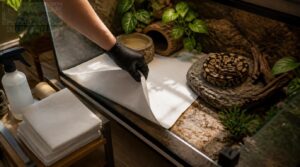
A weekly liner change keeps your snake’s home fresh, but soiling doesn’t wait for a schedule. Your routine depends on what type of liner you’re using and how quickly it gets dirty. Here’s what to know about each situation.
If you’re unsure whether spot-cleaning is enough or a full swap is overdue, this guide on how often to change snake bedding breaks it down by liner type and mess level.
Disposable Liners Every Seven Days
Set a seven-day replacement routine for paper towels, newspaper, or nonwoven pads. This cycle curbs ammonia odors and keeps waste absorption reliable between changes.
Weekly swaps also renew moisture control, supporting stable humidity in the enclosure. Fresh liners mean a dry, low-slip surface, so your snake stays comfortable and your cage stays predictably clean week to week.
Clean Reusable Liners Weekly
Reusable liners follow a different rhythm than paper. Wash them once a week in hot water, 60 to 90°C, using a mild, animal-safe detergent and rinsing twice. Skip scented or dyed products, snakes are sensitive to residue. Air dry completely before reuse.
While washing, check for thinning fabric or fraying seams, early signs it’s nearing replacement.
Replace Soiled Liners Immediately
Washing on a schedule is one thing, but soiling doesn’t wait for laundry day. The moment you spot feces, urates, or a spill, pull that liner within minutes. Swap in a clean one sized to match your enclosure, no gaps allowed. Bag or launder the soiled liner right away.
Fast action stops bacteria from multiplying and keeps odor from settling in.
Never Leave Damp Liners
Soiled liners get your quick attention, but moisture deserves the same urgency, since a damp liner left in place turns into a mold breeding ground faster than you’d think. Watch for condensation on walls or fogged glass, both warning signs.
- Swap damp liners within the hour
- Air-dry spares before reuse
- Check humidity levels daily
- Boost ventilation if moisture lingers
Spot-Clean Between Full Liner Changes
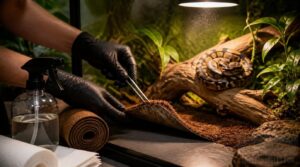
A weekly change doesn’t mean you ignore the cage in between. Small messes need quick attention, or they turn into bigger problems fast. Here’s what to watch for every single day.
Remove Waste Promptly
A dirty liner is a health risk waiting to happen. Scoop feces, urates, and shed bits the moment you spot them, don’t wait for the weekly change.
For a practical comparison, substrate liners versus loose snake bedding highlights the cleaning and humidity trade-offs.
Fast waste removal stops odor, blocks bacterial growth, and keeps ammonia smells from building. Quick cleanup also protects skin and respiratory health, since damp waste breeds mold and irritants your snake shouldn’t touch.
Check Beneath Hides
Rarely do snake owners think to look under hides, yet that’s where trouble hides best. Moisture pockets and waste accumulation build fast in these dark corners.
Lift each hide weekly and check for:
- Soggy or darkened substrate
- Shed skin flecks near the base
- Foul odor signaling mold risk
- Scaling or irritation on your snake
Clean Spilled Water
Water bowls tip over more than you’d think, soaking substrate fast. Absorb spilled water immediately with a dry towel, then dry surface thoroughly underneath. Check hidden dampness at the edges too.
| Action | Timeframe |
|---|---|
| Absorb water | Within 15 min |
| Dry & disinfect | Immediately after |
| Increase airflow drying | Until fully dry |
Remove Shed Skin
That papery skin left behind isn’t harmless clutter. Remove shed skin promptly using clean hands or soft tweezers, never sharp tools that could nick your snake.
Check under hides for stuck fragments. Left too long, skin sticks to substrate, breeding bacteria and clouding water quality in nearby habitats. Sanitize tools after each use to keep handling safe and hygienic.
Inspect Daily for Moisture
Moisture hides in corners you won’t notice until it’s a problem. Make a daily habit of checking damp spots, especially near water bowls and hides.
Catching these damp patches early matters, since recognizing early signs of fungal infection in snakes can help you treat lesions before they spread.
- Dark, damp patches on the liner
- Fogging or condensation on enclosure walls
- Soft, slimy substrate texture
Monitor humidity trends with a hygrometer and inspect substrate dampness before it turns musty or moldy. Keeping a moisture inspection checklist can help you track these patterns consistently over time.
Adjust Changes for Your Snake
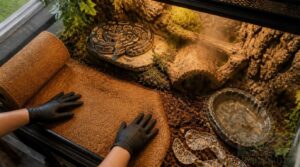
No two snakes follow the exact same schedule. Your cleaning routine should bend around your snake’s specific needs, not a one-size-fits-all calendar. Here’s what actually shifts the timeline.
Snake Size and Species
A ball python and a reticulated python don’t share a cage size, so why would they share a liner schedule?
Larger species produce more waste and need bigger substrate liner surfaces changed more often. Juveniles grow fast their first year, so size up tank size and substrate depth as they grow. Match liner frequency to your snake’s actual footprint, not a generic calendar.
Feeding and Digestion
Feeding schedule matters too. Most snakes pass feces 3-5 days after a meal, so a fed snake means a dirtier liner soon. Hot-side temps of 88-92°F speed digestion; cooler tanks double passage time to 7.5 days.
Check liners more often after meals, especially with larger prey that extends waste output.
Humidity Requirements
Beyond digestion, your snake’s humidity needs shape liner changes too. Most species do best between 50-70% humidity, and that moisture keeps liners damp fast.
Watch for these signs:
- Sagging paper liners
- Musty odors
- Visible mold spots
- Retained shed skin
- Cloudy hygrometer readings
Good ventilation prevents dampness buildup while still supporting healthy sheds.
Quarantine and Illness
A new snake needs its own liner schedule entirely. During quarantine, change liners daily and use disposable paper towels only, never reusable fabric.
Watch closely for illness symptoms like regurgitation or odd stool. Quarantine usually runs 60 to 90 days, sometimes longer, with disease testing and strict cross contamination habits like dedicated tools and separate hands-washing.
Enclosure Size Matters
Quarantine aside, size drives your whole schedule. Larger enclosures improve thermal gradient optimization and humidity stability, but more floor space means faster liner soiling.
Bigger cages need:
- More surface checks daily
- Larger liner pieces on hand
- Room for natural behaviors
- Flexible enrichment placement
Bigger tanks support better air quality but demand sharper maintenance habits to protect substrate longevity.
Watch for Immediate Replacement Signs
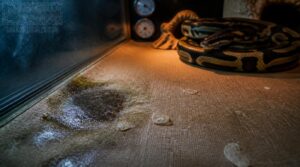
A set schedule helps, but your snake’s cage can send you signals of its own. Some problems can’t wait for the next planned change and need action right away. Here’s what to watch for.
Strong or Lingering Odors
Sniff test time: any smell that lingers past a quick air-out means trouble brewing underneath.
Ammonia-like sharpness signals urine breakdown in trapped waste. Rotten egg odor points to anaerobic pockets forming in damp substrate. Poor ventilation and high humidity trap these gases instead of letting them escape.
Don’t mask odors with sprays. Improve airflow, dry the enclosure, and change the liner immediately.
Visible Feces or Urates
Take a close look before you assume the liner’s fine. Fresh feces run soft, brown to dark brown, 0.5 to 2 cm long. Urates show up chalky white or pale yellow.
- Dark, smeared clumps
- Crumbly white urate bits
- Streaks near hides
- Mucus-coated waste
- Repeated spots in one corner
Any of these means it’s change time, not tomorrow.
Damp or Stained Areas
Run your fingers over the liner regularly, cool, touchable moisture means trouble brewing underneath. Stains shift from light brown to dark gray as dampness lingers.
| Sign | Feel | Action |
|---|---|---|
| Damp patch | Cool, wet | Change now |
| Gray stain | Dry, discolored | Replace liner |
| Musty smell | N/A | Improve ventilation |
Persistent dampness invites microbial growth and material breakdown, don’t wait it out.
Mold or Mildew Growth
Fuzzy green or black spots on your liner mean mold’s already colonizing, and that happens within 24 to 48 hours once moisture sets in.
- Fuzzy patches in green, black, or white
- Musty odor clinging to the enclosure
- Discolored rings spreading outward
- Soft, weakened liner texture
- Spores drifting onto nearby furnishings
Pull that liner immediately. Sanitize surfaces, boost ventilation, and dry everything fully before restocking your snake’s home.
Mites or Other Pests
Tiny specks crawling across your liner? That’s your cue to act fast.
Mites are scavengers related to spiders, often riding in on new substrate or décor. Correct identification matters since species vary.
| Sign | Action |
|---|---|
| Visible specks | Replace liner now |
| Musty odor | Deep clean enclosure |
| Snake irritation | Inspect scales closely |
Dry, clean conditions prevent mite habitat buildup before infestations take hold.
Follow Each Liner Type’s Schedule
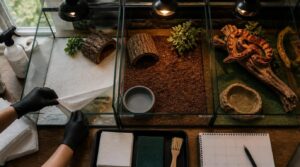
Not every liner works the same way. Each material has its own cleaning routine and lifespan you’ll need to follow. Here’s what to expect from the most common options.
Paper Towels and Newspaper
Cheap doesn’t mean careless. Paper towels beat newspaper for absorbency, while newspaper sheds fibers your snake might ingest.
- Change paper towels every 1-3 days
- Swap newspaper every 1-2 days
- Watch for moisture retention and odor
- Never reuse soiled sheets
Both need frequent substrate cleaning to protect water quality and prevent bacterial buildup in your enclosure.
Reptile Carpet Cleaning
If disposable liners feel too wasteful, reptile carpet is your next step up. Wash it every 3-4 days, or spot clean waste daily to curb odor and bacteria growth.
Inspect fibers weekly for fraying or snags that could trap a snake’s scales or claws. Damaged carpet needs replacing right away to keep your enclosure safe.
Washable Fabric Liners
Carpet’s a step up from paper, but fabric liners take odor resistance further.
Wash on hot, 130°F or higher, then air dry fully before reinstalling. Rinse with mild detergent only, never bleach. Weekly washing prevents staining and bacterial buildup, keeping cotton or microfiber blends fresh cycle after cycle without breaking down fibers.
Nonadhesive Shelf Liners
Fabric’s a wash-and-reuse option, but nonadhesive shelf liners work well too, especially for bioactive-style setups. Choose vinyl or polypropylene for moisture resistance, and check grip effectiveness on smooth surfaces before trusting it under water bowls.
Wipe weekly with a damp cloth. Rinse thoroughly, dry completely, then reinstall. Cut custom sizes to fit snugly around furnishings.
Damaged Liner Replacement
Cutting a custom fit is one thing, but a torn liner is another problem entirely.
Any rip or puncture calls for immediate replacement, not a patch job. Tears trap waste against enclosure surfaces, breaking your moisture barrier and waste containment. Swap in a matching liner, sanitize the surface underneath, and check surrounding areas for hidden damage before restoring your snake’s setup.
Change Liners Without Stressing Your Snake
Liner changes don’t have to rattle your snake. A calm, steady process keeps stress low and makes cleanup faster for you. Here’s how to handle each step from start to finish.
Prepare a Secure Container
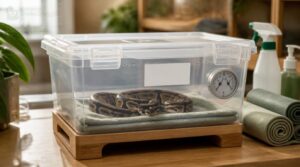
Where does your snake wait during liner changes? A secure container matters as much as the liner itself.
- Tight, tamper-evident seal
- Elevated off the ground
- Away from direct sunlight
- Built-in hygrometer and thermometer
- Owner contact label attached
Just like an aquarium substrate needs stable conditions for beneficial bacteria, your snake needs stability too.
Remove Old Liner Carefully
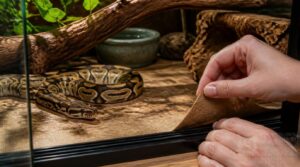
Once your snake settles into its container, work slow. Lift corner gently, then peel back at a steady angle.
| Step | Action | Why |
|---|---|---|
| 1 | Support body loosely | Reduces tension |
| 2 | Check for waste | Prevents spread |
| 3 | Stop if tense | Protects skin |
Avoid sudden pulls. Removing old liner carefully protects scales and keeps your snake calm.
Clean and Disinfect Surfaces
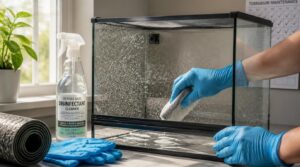
With the liner out, wash the empty enclosure with soap and water first, since dirt left behind blocks disinfectants from working.
Rinse well, then apply an EPA registered disinfectant safe for the surface. Keep it wet for the full contact time listed on the label.
Wear gloves, ventilate the room, and never mix cleaning products together.
Dry The Enclosure Completely
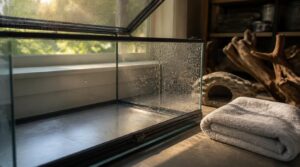
A damp enclosure invites trouble fast. Let it air dry for 1 to 2 hours before reassembling anything.
Wipe horizontal surfaces with a clean towel, and check corners and back panels for hidden moisture. Good airflow circulation speeds surface drying and keeps humidity stabilization on track.
Don’t reassemble until dampness is gone. This ventilation balance protects your snake’s habitat and prevents bacterial growth.
Restore Hides and Furnishings
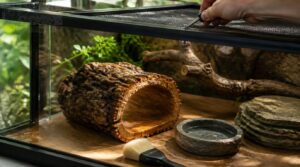
Your snake’s hides matter as much as the liner itself. Wipe smooth surfaces with a soft brush and warm water, no adhesive damage. Dry thoroughly before returning hides, and set them in their original spot to avoid deformation.
Check stability, tighten any loose fasteners, and replace worn furnishings with matching size and texture to preserve the enclosure feel.
Prevent Bacteria, Mold, and Odors
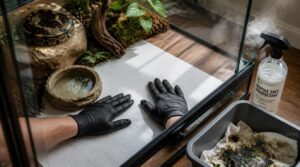
Liner changes only solve half the problem. Bacteria, mold, and odors can still creep in between cleanings if conditions aren’t right. Here’s what to focus on to keep your snake’s enclosure fresh and safe.
Maintain Proper Ventilation
Stale air breeds trouble fast, especially with damp substrate trapped underneath. Good airflow prevents ammonia buildup and mold.
- Check vent placement for cross-flow
- Test fan function monthly
- Replace filters on schedule
- Clear dust from screens
- Watch for stagnant corners
Poor airflow balance invites bacteria and odor problems your liner schedule can’t fix alone.
Monitor Enclosure Humidity
Fans clear the air, but you still need eyes on your numbers. Keep RH between 40-60% for most species, checking a sensor near the substrate daily.
| Reading | Action |
|---|---|
| Below 40% | Mist enclosure |
| 55-60% | Ideal range |
| Above 85% | Add ventilation |
| ±3% drift | Calibrate monthly |
| Trending up | Log and watch |
Sanitize Reusable Liners Thoroughly
Good numbers mean nothing if your liner’s crawling with bacteria. Sanitize reusable liners with a 5% bleach soak, rinse fully, then air dry, since rubber and silicone withstand 121°C autoclaving without damage.
- Bacteria linger in unwashed folds
- Mold spores hide in seams
- Odor buildup signals neglect
- Residue stresses sensitive skin
- Wear spots trap pathogens
Inspect for tears before storing clean liners.
Keep Spare Liners Ready
A clean liner ready to grab beats scrambling mid-change.
Keep at least three spares stocked, stored cool and dry, labeled with purchase dates. Prep disposable, washable, and shelf-liner types separately to avoid cross contamination. Rotate oldest stock first, and always run an enclosure fit check before use, since a poor fit undoes all that careful sanitizing.
Avoid Harsh Cleaning Chemicals
Spare liners won’t help if you scrub them with the wrong stuff. Skip ammonia, bleach, and synthetic fragrances, they irritate your snake’s skin and lungs. Choose plant-based cleaners with disclosed ingredients instead. Keep ventilation high while cleaning, then rinse thoroughly with plain water. Chemical-free sanitation protects your snake without leaving harmful residue behind.
Build a Reliable Liner Care Routine
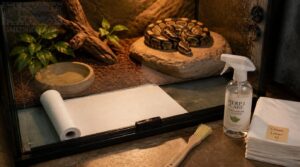
A good routine takes the guesswork out of liner care. You don’t need to remember every rule once daily habits and a weekly rhythm are locked in. Here’s how to build that routine, step by step.
Perform Quick Daily Checks
Thirty seconds, that’s all a solid daily check takes. Scan enclosure integrity for gaps, confirm snake alertness, and check the substrate surface for moisture or odd color.
Look near hides and the water dish for shed fragments, and top off fresh water. This habit catches problems early, before they turn into bigger cleaning jobs down the road.
Schedule Weekly Full Changes
Pick one day each week and stick to it. Full liner swaps on that day build a weekly change routine your snake can predict, which cuts stress over time.
Log liner type and moisture level tracking notes at each change. Consistency here helps enclosure hygiene and steady liner replacement timing, so problems get caught before they grow.
Track Recurring Damp Spots
Damp spots rarely show up randomly. They cluster near water bowls, leaky fittings, or under hides with poor airflow. Note the location, date, and size each time one appears.
This simple moisture mapping reveals condensation patterns and drainage issues before they become mold problems, protecting substrate integrity and your snake’s health.
Replace Worn Liners Permanently
Some liners hit a point of no return. Once compression flattens the padding or crusting sets into the surface, cleaning won’t save it, permanent replacement is your only option.
Check texture and grain match against your existing substrate, prep enclosure surfaces with a glyphosate-free cleaner, and store new liners in a sanitized, dry container to prevent contamination before installation.
Adjust Based on Cleanliness
No fixed schedule beats your own eyes and nose. Waste detection and odor response should drive every decision, not the calendar.
Let your eyes and nose set the schedule, not the calendar
Strong smell or damp patches? Shorten intervals to 3-4 days. Slime or mucus present? Replace and disinfect immediately.
Let cleanliness indicators, not habit, set your routine. Your snake’s health depends on it.
Frequently Asked Questions (FAQs)
Can I use scented liners in snake enclosures?
Think of scented liners as perfume in a den built for scent-tracking. Skip them. Fragrance chemicals irritate skin and airways, mask odor cues you need for health checks, and risk unwanted chemical exposure. Stick with unscented liners for a safer, more natural setup.
What liner materials are safest for snakes?
Stick with reptile-safe options like aspen, coconut fiber, reptile carpet, or plain paper towels and newspaper. These stay free of dyes, oils, and volatile compounds, keeping your snake’s respiratory system and skin safe from irritation.
How do I dispose of soiled snake liners?
Out of sight, out of mind isn’t safe with waste. Seal soiled liners in a leak proof bag, toss them in household trash per local rules, skip the toilet and recycling bin, or ask your vet clinic about acceptance.
Can different snake species share the same liner type?
Yes, if humidity compatibility and cleaning needs line up. Paper towels and shelf liners suit many species, but always match liner material to your snake’s tolerance and enclosure size, not just habit.
Is it safe to reuse liners after illness?
Funny how "clean" liners can still hide danger. Pathogens persist on surfaces, so reuse safety depends entirely on thorough disinfection and complete drying, not appearance. Skip decontamination and you risk re-exposing your snake to the same illness.
Conclusion
That damp corner isn’t just an inconvenience, it’s your snake quietly asking for help.
Master how often to change substrate liner and you master the small habits that keep illness at bay.
Weekly changes, quick spot checks, and a sharp eye for trouble build a routine worth trusting.
Your snake can’t speak up. Its cage tells the story instead. Read it well, and you’ll never miss a page.