This site is supported by our readers. We may earn a commission, at no cost to you, if you purchase through links.

A ball python in a 40-gallon tank can stay on the same aspen for a month, but a garter snake in a similar setup may foul its bedding in two weeks. Same hobby, wildly different schedules.
Dirty substrate does more than smell bad. Ammonia fumes irritate your snake’s respiratory system, and damp bedding breeds mold and mites that lead to scale rot and refused meals. Knowing how often to change snake bedding keeps your animal safe and your enclosure under control.
Your timeline depends on the substrate, the species, the humidity, and the size of the enclosure. Here’s how to match each one.
Table Of Contents
- Key Takeaways
- How Often Should You Change Snake Bedding?
- Bedding Change Schedules by Substrate Type
- Factors That Affect Snake Bedding Change Frequency
- Signs Snake Bedding Needs Changing Sooner
- How to Change Snake Bedding Safely
- Frequently Asked Questions (FAQs)
- How often should I replace my snakes’ bedding?
- Do snakes get attached to their owners?
- How long does it take for a snake to adjust to a new enclosure?
- Do snakes get bored in their enclosure?
- Where do snakes go in October?
- Can old bedding make my snake sick?
- How deep should snake substrate actually be?
- Does bedding affect a snakes shedding process?
- What signs show a snake dislikes its bedding?
- Can you mix different substrate types together?
- Conclusion
Key Takeaways
- Your change schedule depends on your substrate, your snake’s species, your enclosure size, and humidity, so you’ll start with about 3 to 4 weeks for aspen and adjust from there.
- You’ll keep bedding usable between full changes by spot cleaning feces and urates daily and sifting weekly, since hidden waste and ammonia irritate your snake’s lungs.
- You’ll need to change bedding right away, whatever the calendar says, if you smell ammonia, see mold or damp clumps, spot mites, or notice condensation on the walls.
- You’ll protect your snake’s health and avoid respiratory problems, scale rot, and refused meals by keeping humidity under 70% and replacing soiled substrate promptly.
How Often Should You Change Snake Bedding?
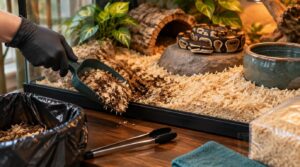
How often you change snake bedding depends on three things: the substrate, your snake’s species, and your enclosure size. Most keepers land on a substrate change frequency of every 3 to 4 weeks for aspen, but that’s a starting point, not a rule.
Between full changes, spot cleaning every day keeps odors down, and this step-by-step snake habitat cleaning guide shows how to disinfect the enclosure safely.
Don’t confuse the two types of cleaning. Spot cleaning means removing feces and urates the moment you see them, and it keeps the rest of the bedding usable. Pair it with weekly spot cleaning checks for hidden waste, especially if your snake burrows.
Full substrate replacement is the reset button. Do it sooner if you smell ammonia, see mold, or notice compacted bedding. A blood python, for example, needs one monthly. Skip it too long and bacteria win.
Bedding Change Schedules by Substrate Type
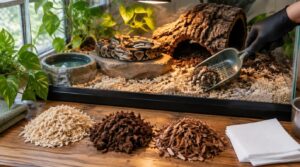
Your bedding change schedule depends on the substrate you’ve chosen, so one timeline won’t fit every enclosure. Below, you’ll find the recommended partial and full changes for four common setups. Match your own substrate to the right entry and you’ll keep your snake’s home clean, safe, and under your control.
Paper Towels and Newspaper
The biggest limit with paper towels and newspaper is saturation. You can’t rely on spot cleaning here, because waste spreads across the whole sheet. Plan on full substrate replacement whenever your snake eliminates, which keeps reptile enclosure maintenance simple:
- Change right after any visible soiling.
- Expect 2-3 changes weekly for active snakes.
- Replace sooner after feeding.
- Choose unprinted newspaper.
Aspen Shavings
Unlike paper, Aspen Shavings let you scoop waste instead of replacing everything. Do daily spot cleaning, then schedule full substrate replacement.
| Task | Frequency | Trigger |
|---|---|---|
| Spot cleaning | Daily | Feces, urates |
| Full replacement | 3-4 weeks | Routine |
| Extended cycle | 1-2 months | Light waste accumulation |
| Immediate change | Anytime | Mold, ammonia smell |
Larger enclosure size stretches the schedule, but never ignore damp or compacted bedding. Sifting every few days is especially important for burrowing species, since buried urates build up beneath the surface of aspen shavings.
Cypress Mulch and Coconut Substrates
Like aspen, Cypress Mulch doesn’t clump, so you’ll spot clean waste weekly and swap the soiled top layer every 4-6 weeks. Coconut Fiber Coco Coir needs daily spot cleaning and a full change monthly.
Since a snake’s bedding choice affects humidity and comfort, this Savu python care sheet is a handy guide for matching substrate, hides, and cleaning routines to your animal.
Your substrate replacement schedule for a 60/40 mix runs every 2 months. Humidity control for snakes keeps mold away. Only a bioactive substrate stretches it longer.
Soil Blends and Bioactive Setups
Soil blends need far less frequent changes than loose bedding. A bioactive substrate relies on beneficial microorganisms and cleanup crews to process waste accumulation. Follow this routine:
- Spot-clean waste daily.
- Top off high-traffic zones every 6-12 months.
- Replenish leaf litter every 4-6 months.
- Check for substrate soiling weekly.
- Replace everything every 3-5 years.
Don’t skip them, because neglect breeds mold.
Factors That Affect Snake Bedding Change Frequency
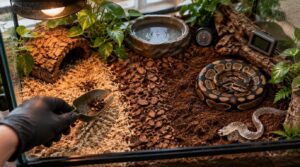
Every snake’s bedding change schedule is different, and a fixed calendar date won’t protect your pet’s health. Six factors decide how often you’ll need to act, and knowing them keeps you in control of your setup. Check each one below against your own enclosure so you can set a routine that fits.
Snake Species
Your snake species sets the baseline schedule. Snakes’ diet and waste production differ widely, so match your routine to the animal.
If you’re unsure how a corn snake’s needs stack up against a ball python’s, this comparison of popular pet snake species shows how feeding and cleaning habits really differ.
| Species | Full Change |
|---|---|
| Garter snake | Every 2-4 weeks |
| Desert boa | Every 3-6 months |
Garters eat often and defecate constantly, so change often. Desert boas produce dry, infrequent waste.
Adjust for enclosure size, bedding type, and spot cleaning frequency.
Bedding Material
Your bedding is your snake’s foundation, and a shaky foundation cracks fast. Substrate absorbency sets your substrate change frequency, so match the schedule to material:
- Paper towels: every 1-2 weeks
- Newspaper: weekly
- Aspen: every 4-6 weeks
- Cypress mulch: every 2-3 months
- Coconut fiber: every 4-8 weeks
Keep bedding depth steady and substrate safety high during reptile enclosure maintenance.
Enclosure Size
Your ball python lives in a 40-gallon tank, and you change its aspen every month. Move it to a 120-gallon setup and that schedule stretches.
Larger Enclosure Size dilutes waste output, but spot cleaning gets harder.
| Tank | Full Change |
|---|---|
| 20 gallons | Monthly |
| 40 gallons | Every 6 weeks |
| 120 gallons | Every 3 months |
Dig through your substrate weekly. Missed waste spoils everything.
Humidity Levels
Humidity doesn’t just affect your snake’s skin. It decides how long your bedding lasts.
Humidity shapes more than your snake’s skin; it quietly determines how long your bedding stays fresh and safe
Above 70%, Mold Growth and bacteria take hold, so plan changes every 2 to 4 weeks. Condensation on the walls means you’re past 80%, so replace part of the substrate right away.
Below 40%, aspen dries out fast. Monitor Substrate Moisture weekly, and check for Ammonia Odors too.
Waste Accumulation
decides your schedule more than the calendar does. Snake urates trap ammonia, so substrate soiling hides until ammonia buildup starts.
Change bedding sooner if you notice:
- Lingering odor after spot cleaning
- Damp clumps around urates
- White mold growth on chips
- Faster bacterial growth in warm, humid tanks
Remove urates and surrounding substrate daily. Waiting too long invites respiratory infections.
Bioactive Setup
Bioactive setups handle waste differently. A bioactive substrate hosts beneficial microorganisms, springtails and isopods that break down urates within hours, so natural balance replaces constant swapping.
Don’t skip enclosure hygiene. Spot-clean weekly and check your cleanup crew.
| Task | Timing |
|---|---|
| Top off substrate | Yearly |
| Add leaf litter | Every 3-4 months |
| Swap half, unplanted | Every 6-12 months |
| Full reset | Every 4-5 years |
Signs Snake Bedding Needs Changing Sooner
A calendar only gets you so far, so let your snake and its enclosure tell you when to act early. Start with the obvious: visible accumulation of feces or urates means spot clean right away, and brownish or gray stains show urine has soaked through.
Then use your nose. A strong odor emanating from the enclosure, whether ammonia or sour, means the substrate is saturated. Press the bedding lightly. If it’s damp or moldy bedding that clumps or feels cool, pull it out today.
Watch your snake too. Presence of mites or other pests, reddish or crusty belly scales, or sudden hiding and refusing food point to trouble. Fuzzy patches, condensation on the walls, or slimy water all signal bacterial and fungal growth. Don’t wait.
How to Change Snake Bedding Safely
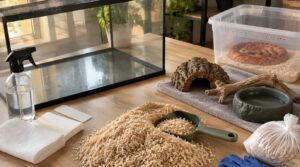
If your snake’s enclosure is showing any of those warning signs, it’s time for a full bedding change. Good substrate maintenance starts with a routine, and a safe substrate change takes about 20 minutes.
- Move your snake into a secure holding container, along with clean, unsoiled bedding so it keeps familiar scents.
- Remove all decor and hides, then scoop out soiled substrate and scrape dried urates with a plastic card.
- Disinfect the empty tank with a 10% bleach solution, then finish with disinfectant rinsing until no chemical smell remains.
- Add fresh bedding, restore decor, and let your snake settle for 10 to 15 minutes before handling.
Seal all waste in bags, clean your tools, and wash your hands well afterward.
Frequently Asked Questions (FAQs)
How often should I replace my snakes’ bedding?
Say you keep a ball python on aspen. Your Full Bedding Change lands monthly. Bedding Type, Snake Species, and Snakes Diet and Waste Production set that pace, and Weekly Spot Cleaning stretches it, so don’t skip it.
Do snakes get attached to their owners?
Think your snake missed you while you were gone? Not quite. Your snake knows your scent and links you with food and safety, but that’s conditioned recognition, not love. Calm handling means comfort.
How long does it take for a snake to adjust to a new enclosure?
Your snake treats a new enclosure like a foreign city, mapping every corner first. Expect 5–7 days before feeding, two weeks before handling.
Keep humidity levels and substrate depth steady to support reptile stress reduction.
Do snakes get bored in their enclosure?
Your snake doesn’t get bored like a mammal does, but a barren setup still causes stress. Give it secure hiding spots, proper heat gradients, and varied décor so natural snake behavior like hunting and exploring stays possible.
Where do snakes go in October?
October is nature’s curtain call, and snakes exit the stage underground. They settle into burrows, rock crevices and woodpiles, where temperature regulation and steady humidity levels hold.
Once it stays below 60°F, brumation truly begins.
Can old bedding make my snake sick?
Humidity above 70% speeds up mold growth fast. Yes, old bedding can make your snake sick. Ammonia buildup and bacterial growth from wet substrate moisture hurt respiratory health and cause painful scale rot. Don’t wait.
How deep should snake substrate actually be?
Think of substrate depth as the ground beneath a home. Give most snakes 3 to 4 inches (8 to 10 cm), going 4 to 6 inches for burrowers. Under 2 inches leaves them exposed.
Does bedding affect a snakes shedding process?
Think your bedding is just a floor? It’s not. Substrate moisture drives shedding success, because proper humidity levels (50-60%, rising to 65-70% during shed) keep old skin loose. Dry paper? Expect stuck shed.
What signs show a snake dislikes its bedding?
Run regular behavior monitoring to catch trouble early. If your snake rubs against decor, avoids the substrate, or keeps trying to escape, the bedding is likely the culprit. Wheezing or open-mouth breathing needs a vet immediately.
Can you mix different substrate types together?
Why risk a bad mix? You can mix substrates, but only in distinct layers. Keep moisture-loving and dry materials apart to prevent mold, and use substrate depth optimization at 3-4 inches for burrowers.
Conclusion
Picture two keepers on the same Sunday. One spot-cleans a ball python’s aspen and leaves the rest alone for a month. The other pulls a garter snake’s paper towels, since waste builds fast.
Both are right. Knowing how often to change snake bedding comes down to your substrate, species, and humidity, plus what’s on the floor. Watch for smells and damp patches, and you’ll act before problems start. A clean enclosure is a quiet one.