This site is supported by our readers. We may earn a commission, at no cost to you, if you purchase through links.

Your snake can’t sneeze, cough, or call in sick. By the time you spot bubbles around its nose or a skipped meal, the trouble has usually been brewing for weeks.
Snakes hide illness like tiny scaly poker players, so your best defense is a setup that keeps their bodies strong long before a problem shows up. A warm basking spot, a clean tub, and a snug hide do more heavy lifting than any supplement on the shelf.
Here’s how to support immune health in pet snakes with five simple steps, starting with the one most keepers get wrong: temperature.
Table Of Contents
- Key Takeaways
- Set Species-Appropriate Temperatures and Humidity
- Feed Whole Prey and Provide Fresh Water
- Keep The Enclosure Clean and Ventilated
- Reduce Stress With Hides and Gentle Handling
- Quarantine New Snakes and Monitor Health
- Frequently Asked Questions (FAQs)
- What supplements are good for snakes?
- What is the most common cause of death in snakes?
- How to treat a sick snake?
- Can you build immunity to snake bites?
- Do probiotics help strengthen a snakes immune system?
- Can pet snakes benefit from UVB lighting?
- How often should snakes see a reptile veterinarian?
- Does shedding affect a snakes immune function?
- Which vitamins and supplements do pet snakes need?
- Conclusion
Key Takeaways
- You’ll protect your snake’s immune system best by getting the species-specific temperature gradient and 50 to 70 percent humidity right, since snakes can’t regulate those on their own and a basking spot that’s too cool can quietly cause weeks of illness.
- You’ll give your snake solid nutrition with appropriately sized frozen-thawed whole prey, fresh daily water, and a steady feeding routine, so you can usually skip supplements and immune boosters unless your vet says otherwise.
- You’ll keep stress and infection risk low by spot-cleaning daily, deep-cleaning monthly, providing snug hides on both sides of the enclosure, and handling gently and sparingly.
- You’ll stop problems early by quarantining every new snake for 60 to 90 days, watching daily for bubbles near the nose, wheezing, or refused meals, and booking regular reptile vet checkups.
Set Species-Appropriate Temperatures and Humidity
Match your snake’s temperature and humidity to its species, because your pet can’t adjust a thermostat by itself. Snakes rely on thermal regulation, moving between warm and cool spots to run digestion and fight off germs.
A simple temperature gradient with a warm basking side and a cooler hide is easier to set up when you follow this ideal temperature and humidity guide for pet snakes.
Build a temperature gradient across the enclosure. Put a heat source on one end for a basking spot, and leave the other end cooler. That way your snake picks its own preferred best temperature zone, like choosing a sunny porch or a shady chair.
Plug every heater into a thermostat, and check both ends with digital probe thermometers. Many species do well with humidity between 50 and 70 percent, but confirm your species’ range. Add a damp hide during sheds for smoother, healthier skin.
Feed Whole Prey and Provide Fresh Water

Once your snake’s temperatures are dialed in, it’s time to fill the food bowl, because a warm snake with an empty belly still can’t build a strong defense against germs. Offer whole prey items sized about as wide as the thickest part of your snake’s body. It packs organs and bone into one meal, giving natural nutritional balance. Choose frozen-thawed over live, because live prey can bite back and injure your snake.
Since feeding schedules shift with your snake’s age, size, and species, a snake feeding frequency guide can help you decide how often to offer meals as your snake grows.
Thaw prey in the fridge, then warm it in a sealed bag in hot water. Never microwave it.
Stick to a steady routine. Feeding schedule consistency helps your snake’s digestion and appetite settle. Mix in prey variety when it suits your species, like mice and rats.
Keep a clean water bowl filled every day, and scrub it weekly. Practice hydration monitoring: wrinkled skin, sunken eyes, or stuck shed can signal your snake needs more moisture. Catch it early.
Keep The Enclosure Clean and Ventilated

Food and water are in place, so now let’s talk about the home your snake eats them in. A clean enclosure is your snake’s first line of defense, because germs love dirty, damp corners.
Spot-clean daily. Scoop waste and shed before it breaks down and sticks in crevices. Wipe up any water spills or leaks, since wet substrate becomes a germ party fast.
Pairing that routine with the right setup helps too, so check these corn snake housing requirements for enclosure size, humidity, and substrate choices that make cleaning easier.
Substrate cleanliness matters too. If odors or stains linger after cleaning, replace it all.
Check your ventilation systems. Fresh, moving air dries damp spots and keeps stale air from building up.
Make a deep clean monthly habit: disinfect surfaces, scrub seams and decor, rinse, and dry everything. Add quick hygiene monitoring daily, and you’ll catch trouble early.
Reduce Stress With Hides and Gentle Handling

A spotless tank is great, but a calm snake needs more than clean walls. Stress weakens immune defenses, so a few smart stress reduction techniques go a long way.
Try these:
- Add hiding spots on both the warm and cool sides, snug enough to hug your snake’s body.
- Set a handling frequency limit, and keep sessions short.
- Skip handling after meals and during shedding.
- Support the whole body, move slowly, and never flip your snake upside down.
- Keep lighting, noise, and vibrations steady, and always shield your snake’s view of other snakes.
Rearranging decor constantly just leaves your snake guessing. Stable surroundings are part of proper husbandry, just like enclosure hygiene. Keep handling gentle, and your snake can finally relax.
Quarantine New Snakes and Monitor Health
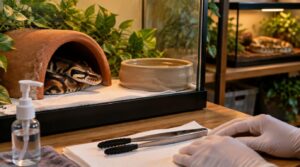
Treat every new snake like a houseguest who might be hiding a cold, and give it its own separate space for at least 60 to 90 days before it meets the rest of your collection. Set up the quarantine tank with paper towels, a hide, and a water bowl, so trouble is easy to spot. Care for your resident snakes first, then the newcomer, and wash your hands and tools between enclosures.
Treat every new snake like a houseguest who might be hiding a cold, and keep it separate for at least 60 to 90 days
Why go to all this trouble? When you quarantine new snakes, you stop mites, respiratory infections, and parasites before they spread. Good enclosure hygiene and proper husbandry keep the newcomer’s stress low while its body settles in.
Sharpen your symptom recognition and watch daily. Look for:
- Bubbles or mucus around the nose or mouth
- Wheezing or open-mouth breathing
- Refusing meals, weight loss, or runny stools
- Tiny specks near the eyes
Book regular vet checkups, including a fecal test, before the quarantine ends.
Frequently Asked Questions (FAQs)
What supplements are good for snakes?
Wondering what supplements snakes need? Usually none. Whole prey covers vitamin A D3 E and calcium, so skip immune boosters.
Vitamin supplementation, like a calcium powder supplement or reptile-safe vitamin supplements, needs your vet’s okay.
What is the most common cause of death in snakes?
Ever wonder what quietly sinks so many snakes? Infection.
Septicemia leads, often after missed respiratory infection signs. Poor temperature and humidity set the stage, so early illness detection, preventive veterinary care and enclosure enrichment matter.
How to treat a sick snake?
Picture a ball python wheezing and refusing rats.
Check respiratory infection signs, then fix temperature and humidity, offer balanced snake nutrition, and skip so-called immune boosters. Early illness detection matters, so call your reptile vet.
Can you build immunity to snake bites?
A snake’s bite is a locked door, not a lesson. No, you can’t build reliable immunity.
Venom varies, so rely on immune function support, temperature-dependent immunity, balanced snake nutrition, a stressfree environment, and quarantine protocols.
Do probiotics help strengthen a snakes immune system?
Probiotics won’t turn your snake into a superhero, folks! Proof they boost snake immunity is thin.
Real immune function support comes from balanced snake nutrition, a nutrientrich diet, a stressfree environment, and vet-guided vitamin supplementation.
Can pet snakes benefit from UVB lighting?
Yes, they can! UVB lighting helps your snake reach vitamin D₃ above 46 ng/mL, supporting calcium use and immunity.
Pair it up with temperature gradients of 78–88°F, humidity between 50–70 percent, and solid reptile husbandry.
Because UVB output fades over time even when a bulb still looks bright, plan on UVB bulb replacement roughly every 12 months.
How often should snakes see a reptile veterinarian?
Your snake’s health is a quiet pond, calm until something ripples.
Book annual veterinary exams, starting with health baseline establishment, fecal screening, and blood work. Sick or new snakes need a reptile vet consultation sooner.
Does shedding affect a snakes immune function?
Wondering if shedding weakens your snake’s defenses? Not directly, but poor shedding can open the door to infection.
Incomplete sheds trap bacteria, so lean on shedding cycle support, skin health maintenance, and temperature and humidity.
Which vitamins and supplements do pet snakes need?
Most healthy snakes need very little. Whole prey covers vitamin supplementation, and UVB bulbs often help. Reserve reptile-safe vitamin supplements for proven gaps, keep calcium-to-phosphorus ratios at 2:1, and avoid vitamin D₃ above 46 ng/mL.
Conclusion
A keeper once brought me a ball python she thought was "just picky." Three weeks of skipped meals later, the culprit was a basking spot ten degrees too cool.
That’s the lesson. Learning how to support immune health in pet snakes isn’t about fancy products, it’s about getting the basics right every single day. Nail the temperature and humidity, feed well, keep things clean, give them hides, and quarantine newcomers.
Then illness can’t hide anywhere.