This site is supported by our readers. We may earn a commission, at no cost to you, if you purchase through links.

A snake stops eating for three weeks straight, and the owner cycles through every explanation except the right one: the tank sits four feet from a subwoofer that thumps every movie night. Vibration stress is real, and it’s measurable, showing up as refused meals and glass-surfing long before anyone thinks to blame the living room speaker.
Placement isn’t a footnote in snake husbandry. It’s the foundation. Temperature swings of even 6-8°F, foot traffic near the enclosure, or a draft from a nearby window can undo weeks of careful feeding and lighting work.
So where should i put my snake enclosure? The answer involves room selection, vibration control, and airflow, each with specific numbers that separate a thriving snake from a stressed one.
Table Of Contents
- Key Takeaways
- Place Your Snake Enclosure in a Quiet, Temperature-Stable Room
- Avoid Sunlight, Drafts, and Temperature Swings
- Elevate The Enclosure to Reduce Vibration
- Compare The Best Rooms for Snake Enclosures
- Check Airflow, Safety, and Maintenance Access
- Frequently Asked Questions (FAQs)
- What do snakes like in their enclosures?
- Where is the best place to keep a snake?
- Do snakes prefer vertical or horizontal enclosures?
- Can I put my snake enclosure on the floor?
- Where to put my snake while I clean the tank?
- How to set up a snake habitat?
- Where do I put my pet snake?
- How does artificial UVB lighting affect snakes?
- Can snakes be housed in high-traffic areas?
- Do different snake species have unique enclosure needs?
- Conclusion
Key Takeaways
- Pick a quiet, low-traffic room that stays between 65-80°F, since noise and temperature swings are two of the biggest hidden stressors for snakes.
- Keep your snake at least 6 feet from speakers and appliances, and raise the enclosure to bench height (24-28 inches) to cut vibration stress by 40-60%.
- Avoid windows, vents, kitchens, and laundry rooms, since sunlight, drafts, humidity, and fumes can all throw off your snake’s thermal gradient fast.
- Plan for GFCI outlets, ventilation clearance, and easy cleaning access from the start, so daily care and safety checks stay simple once the enclosure is in place.
Place Your Snake Enclosure in a Quiet, Temperature-Stable Room
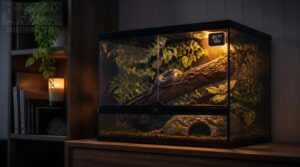
Where you place your snake’s enclosure matters just as much as what’s inside it. Room choice directly shapes your snake’s stress levels, thermoregulation, and daily routine. Here’s what to look for when picking the right spot in your home:
For a deeper dive into layout and placement, this guide to setting up an indoor snake habitat walks through choosing a location that keeps temperature and noise levels in check.
Choose a Low-Traffic Area
Snakes read foot traffic as danger, so seclusion matters more than square footage. Select a quiet corner away from entryways and hallways; low-traffic rooms show 30% more natural behavior.
- Avoid main pathways
- Limit door traffic
- Reduce hallway noise
- Choose secluded spot
- Mind room acoustics
Good vibration damping starts here, before elevation even enters the picture.
Maintain Consistent Room Temperatures
Room selection solves noise, but temperature is the next threat to environmental stability. Pick rooms holding 65-80°F, avoiding drafty walls. Ambient room insulation prevents nighttime swings exceeding 5-10°F.
Verify digital thermometer placement at warm and cool zones, run a thermostat calibration routine every 3-6 months, and manage nighttime temperature dips carefully to protect your thermal gradient. Using a smart thermostat scheduling system can further help maintain consistent room temperatures by automatically adjusting to reduce swings throughout the day and night.
Keep Electrical Outlets Nearby
Once temperature holds steady, wiring becomes your next concern. Every heat source your snake enclosure needs draws power nearby, so plan outlet access before placement.
- Install GFCI outlets for water-adjacent setups
- Use protective faceplates on all outlets
- Confirm three-prong grounded cords
- Prevent outlet overload with wattage limits
- Schedule regular outlet inspections for warmth or buzzing
Allow Easy Daily Observation
Wiring sorted, think next about what you’ll actually see. An eye level stand at bench height puts the viewing window right where daily checks happen naturally, no crouching required.
Pair clear viewing glass with a quick access door and removable feeder tray, then log findings in a daily observation log for reliable reptile monitoring.
Restrict Children and Pets
A curious dog’s nose or a toddler’s fingers can undo weeks of careful husbandry in seconds, so an escape-proof enclosure with secure lids and childproof locks isn’t optional. Pair the quiet room with a pet barrier design and clear signage marking the zone off-limits.
Set supervision protocols: adults only, always. Zone color coding on the door reinforces reptile security for every visitor.
Avoid Sunlight, Drafts, and Temperature Swings
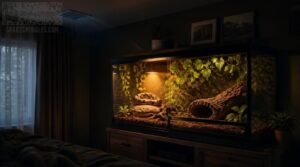
A quiet room solves half the problem, but placement within that room matters just as much. Windows, vents, and unshielded heat sources can undo your thermal gradient in minutes, stressing your snake’s thermoregulation without you noticing. Here’s exactly what to avoid, and why it makes such a difference.
For a room-by-room breakdown of safe placement and airflow that won’t disrupt your enclosure’s temperature zones, check out this guide to setting up proper airflow in a snake habitat.
Stay Away From Windows
That sunny window seat might look cozy, but it’s a thermal trap for your snake enclosure. Glass magnifies heat, spiking temperatures 6-12°F above room average while nighttime drafts drop them 5-8°F, wrecking temperature stability.
Choose a low-traffic room instead:
- Block direct sunlight
- Add window safety barriers
- Limit window cleaning access
- Reduce window noise reduction gaps
Avoid Heating and Cooling Vents
A vent blasting hot or cold air directly onto glass or mesh turns your careful setup into chaos.
Keep vent placement distance at least one meter away, and use furniture as draft shielding solutions.
Redirecting airflow diversion methods protects thermal stability, since HVAC cycle timing alone can swing temperatures well past safe ranges.
Protect The Thermal Gradient
A stable thermal gradient is the backbone of good husbandry, not an afterthought.
Keep warm and cool zones within 2°C of target using proper heat source placement away from drafts. Add insulation strategies like reflective backing, and rely on gradient monitoring tools with dual sensors placed at snake level for accurate temperature regulation.
Use Thermostatically Controlled Heating
A thermostat is your snake’s autopilot for thermal regulation. Correct sensor placement near the basking zone allows precise gradient control, while overheat protection cuts power before temperatures spike:
- Prevents deadly overheating
- Stabilizes your snake’s world
- Cuts wasted energy costs
- Lets you sleep easy
Thermostat programming automates day-night cycles, keeping location-specific temperature stability locked in year-round.
Plan Safe Lighting Schedules
Your snake’s internal clock runs on light, not the calendar. Mimic nature with a 12/12 light cycle and UVB lighting for 10-12 hours daily. Keep night light lux between 0-5, and stretch dawn-dusk timing to 15-30 minutes. A programmable timer locks in consistency, protecting the temperature stability your low-traffic room already provides.
For safer setup choices, see the difference between UVB and UVA lighting for snakes, including their distinct effects on skin.
Elevate The Enclosure to Reduce Vibration
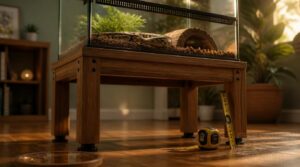
Snakes feel the world through vibration, picking up ground-borne frequencies between 50 and 1,000 Hz through their bellies. Floor-level placement puts your enclosure right in the path of every footstep, so height matters more than you’d think. Here’s how to get your setup elevated and stable, step by step.
Snakes sense footsteps through vibration, so elevating their enclosure matters more than most owners realize
Choose Bench-Height Placement
Floor level puts your enclosure right in the path of every vibration your house produces.
Bench-height placement, roughly 24-28 inches, cuts that vibrational stress by 40-60% while keeping the tank at eye level observation height. You get daily checks without bending, and enough foot traffic distance from the floor to matter. That’s real husbandry payoff, not just convenience.
Use a Sturdy Level Stand
Getting the height right means nothing if the stand itself flexes under weight. Look for Load Capacity rated well above your tank’s total weight, plus Non-Slip Feet and Level Adjustment for uneven floors.
Steel or reinforced aluminum offers Torsional Rigidity that prevents wobble, protecting both your bench-height placement and the enclosure’s contents from unnecessary vibrational stress.
Add Vibration-Dampening Pads
A rigid stand aids weight, but pads absorb the vibrations wood and steel transmit. Rubber pads resist moisture and heat; neoprene holds cushioning under load; cork composite dampens naturally but bears less weight.
- Match thickness to enclosure weight
- Confirm stand compatibility before installing
- Test placement in your quiet room
Evaluate performance after a week: reduced skittishness confirms lower vibrational stress.
Avoid Speakers and Appliances
Padding won’t help if a subwoofer sits three feet away. Speaker distance placement matters: keep enclosures 6+ feet from audio equipment.
| Source | Vibration Risk | Action |
|---|---|---|
| Subwoofers | High | Relocate or isolate |
| Refrigerators | Moderate | Avoid shared walls |
| TVs/Speakers | Low-Moderate | Maintain distance |
Appliance interference compounds stress in your quiet room, undermining electronic device shielding efforts elsewhere.
Keep Away From Heavy Footsteps
Walking past the enclosure fifty times a day adds up: every step sends vibrations straight through the floor. Footstep vibration control starts with location, so pick a low-traffic room corner, away from hallways.
- Keep 3+ feet from entryways
- Choose carpeted areas over hardwood
- Verify stable surface setup with a level check
Foot traffic minimization prevents chronic vibrational stress.
Compare The Best Rooms for Snake Enclosures
Not every room in your house makes the cut, and some do a lot better job than others at keeping your snake calm and healthy. Noise levels, temperature stability, and foot traffic all shift dramatically from one space to the next. Here’s how five common room options stack up against each other.
Office or Guest Bedroom
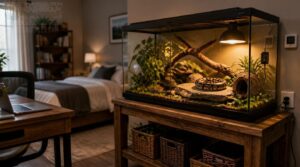
An office or guest bedroom often wins by default: low-traffic room, stable climate, and surge-protected outlets already in place.
Foot traffic stays predictable with a consistent work schedule, keeping ambient noise low. Guest room privacy limits handling disruptions, while bench-height placement suits existing furniture.
No direct sunlight, no temperature swings, just year-round stability between 65-75°F.
Dry Temperature-Controlled Basement
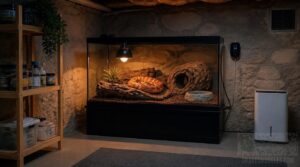
Basements naturally excel at temperature stability, holding steady between 60-75°F with minimal daily swing thanks to earth insulation and reduced sun exposure.
Keep the space dry:
- Run a dehumidifier for humidity control (40-60%)
- Install a dedicated basement thermostat near the enclosure
- Add gentle basement ventilation to prevent stagnant air
- Insulate walls to lock in basement temperature stability
Low-Traffic Living Room
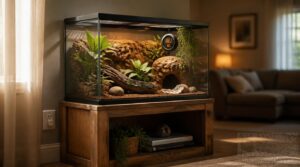
A quiet living room corner can work, but only if foot traffic stays low. Choose a corner placement strategy away from doorways to cut vibrational stress by 40-60%.
Add rugs or soundproofing materials for noise absorption. Check stand stability, verify GFCI outlets nearby, and use temperature monitoring tools to confirm the space holds steady within ±2°C.
Avoid Kitchens and Laundry Rooms
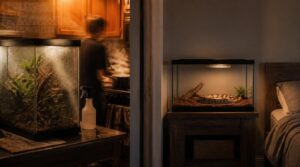
Kitchens and laundry rooms feel convenient, but they stack every stressor a snake dislikes into one space.
- Steam and humidity from cooking or washing distort your enclosure’s gradient
- Chemical fumes from cleaners contaminate air quality
- Appliance vibration and grease splatter add noise and odor contamination
High foot traffic and food odors make thermoregulation and calm behavior nearly impossible here.
Dedicated Reptile Room
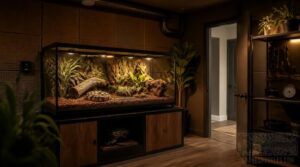
Think of it as reptile husbandry’s standard: a room built entirely around your snake’s needs. Add soundproofing materials, room insulation, and even a dedicated HVAC zone, and you’ve engineered the best low-traffic room.
| Feature | Benefit | Target Range |
|---|---|---|
| Insulation | Stable gradient | ±2°C |
| Separate entrance | Less foot traffic | N/A |
| Viewing panel | Easy checks | N/A |
Check Airflow, Safety, and Maintenance Access
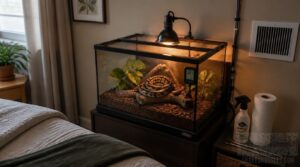
Room choice only solves half the equation; airflow and access finish the job. Trapped moisture, tangled cords, and blocked vents can undo even the quietest, best-placed setup. Here’s what to check once your enclosure is in position:
Keep Ventilation Openings Clear
Vent blockage prevention starts with placement: never push the enclosure flush against a wall.
- 6 inches of clearance around side vents
- No substrate piled near intake or exhaust
- Weekly checks for dust and cobwebs
- Wide-mesh vent covers to limit debris
Regular vent cleaning every two weeks keeps cross-ventilation and airflow steady, preventing stagnant, ammonia-heavy pockets.
Monitor Humidity and Condensation
Clear vents mean nothing if moisture still creeps in unnoticed.
Place your hygrometer at mid-enclosure height, away from water bowls, and log readings daily to catch trends before they become problems. Calibrate monthly with a salt test. Keep humidity between 40-60%, and watch enclosure walls at night, when room temps exceeding 70% often trigger condensation buildup and mold risk.
Leave Space for Cleaning
Good husbandry means room to work. Leave 18 inches of side clearance and 24 inches out front for tools, plus a 24×24 inch substrate change zone nearby.
- Store brushes and gloves within 5 feet
- Use a spill-proof waste bin
- Keep a disposable mat for tracking
- Route cords 12 inches behind
Secure Cables and Heat Sources
With your workspace mapped out, turn attention to what powers the enclosure. Route cords along the back wall in labeled sleeves, away from splash zones.
Keep transformers off the stand, on heat-resistant mats. Install a GFCI outlet on a dedicated circuit. Place heat mats under non-skid barriers; position ceramic heat emitters with 6 inches of clearance. Set thermostat probes inside, monitoring within ±2°F.
Match Species-Specific Placement Needs
Why treat every snake like it has the same floor plan? It doesn’t. Arboreal height needs call for vertical space and climbing branches, while ground dweller shelves suit low, stable benches instead.
- Desert basking spot: dry heat zone near 90°F
- Tropical humidity zone: 60-80% moisture retention
- Venomous escape proof: reinforced, lockable enclosures
- Species-specific ventilation: adjusted vent placement strategies
- Species habitat matched to your enclosure placement strategy
Frequently Asked Questions (FAQs)
What do snakes like in their enclosures?
Snakes thrive with proper hide placement, safe substrate choice, climbing structures, and a full water bowl.
They need a stable temperature gradient, controlled humidity, enrichment items, and a low-traffic room location that keeps stress and disruptive placement issues to a minimum.
Where is the best place to keep a snake?
Aim for a low-traffic room with stable temperatures, away from direct sunlight and drafts. Reliable outlets, controlled humidity, and a secure, bench-height stand all support thermoregulation and mimic your snake’s natural habitat.
Do snakes prefer vertical or horizontal enclosures?
Neither, exclusively: your snake needs both. Ground-dwellers crave horizontal floor space for coiling; climbers like corn snakes need vertical enrichment with branches. Balance enclosure dimensions around your species’ natural history, not a single orientation preference.
Can I put my snake enclosure on the floor?
Floor placement isn’t ideal: cold draft risk, ground moisture, and radiant floor effects disrupt thermal gradients, while poor floor insulation and foot traffic raise vibrational stress.
Choose bench-height placement instead, it improves stability and prevents tipping in low-traffic rooms.
Where to put my snake while I clean the tank?
A ventilated tub with a secure lid, fresh water, and a hide works best: pick a low-traffic, bench-height spot away from foot traffic, watch for stress signs, and return your snake within 20-40 minutes.
How to set up a snake habitat?
Match enclosure size to your snake’s full length, then layer in substrate selection, secure hide placement on both ends, a sturdy water dish, and UVB lighting. Position everything in a low-traffic room, away from direct sunlight.
Where do I put my pet snake?
Like choosing a den for a wild animal, room selection matters most: pick a low-traffic room with stable temperature, bench-height placement, easy power access, low noise levels, no direct sunlight, and simple cleaning routine access.
How does artificial UVB lighting affect snakes?
UVB lighting drives vitamin D synthesis, supporting calcium metabolism and bone health. Needs vary by species, so pair correct bulbs with bench-height placement in a low-traffic room, a clear basking gradient, and safe exposure practices to prevent overexposure.
For most species, running UVB for 10–12 hours daily best mirrors natural conditions — see this guide on how long to run UV light for snakes to dial in the right schedule.
Can snakes be housed in high-traffic areas?
Technically yes, but it’s not ideal. Foot traffic near the tank raises noise, vibration, and stress hormones fast. A low-traffic room or dedicated reptile room cuts defensive behaviors by up to 32%, supporting calmer, healthier thermoregulation.
Do different snake species have unique enclosure needs?
One size never fits all: arboreal climbers need branches and vertical height, burrowing species want deep substrate, desert dwellers tolerate lower humidity, and forest snakes need higher moisture, appropriate ventilation, and species-matched enrichment.
Conclusion
Snakes don’t do drama, and neither should their real estate. Once you’ve settled where should i put my snake enclosure, the rest of husbandry gets easier: feeding improves, colors brighten, and glass-surfing stops. A quiet room, stable temperatures, and a vibration-free stand aren’t luxuries; they’re the baseline your snake needs to thrive. Get placement right once, and troubleshooting stress later becomes rare. That’s the real payoff: calm snake, calm keeper.