This site is supported by our readers. We may earn a commission, at no cost to you, if you purchase through links.
That coiled shape in the grass isn’t just resting. It’s a loaded spring, and every second you spend deciding what to do next matters more than you think. Venomous snakebites send roughly 8,000 Americans to emergency rooms each year, and most of those bites happen during the exact moment someone tried to move a snake themselves instead of backing away.
Here’s the truth few want to hear: there’s no such thing as learning how to hold a venomous snake and not get bitten safely with bare hands. Professional herpetologists rely on tools, distance, and discipline, not bravado.
What follows are the exact protocols experts use to control risk when human hands should never touch fangs.
Table Of Contents
- Key Takeaways
- The Safest Method: Never Hand-Hold Venomous Snakes
- Steps to Take During an Encounter
- Professional Tools, Training, and Containment
- Warning Signs and Handling Mistakes
- What to Do After a Venomous Bite
- Frequently Asked Questions (FAQs)
- How to hold a snake so it can’t bite you?
- Can you hold a venomous snake?
- Can a snake bite you if you hold it by the tail?
- What material can snakes not bite through?
- What are the potential risks and dangers of holding a venomous snake?
- How can one ensure their own safety while holding a venomous snake?
- What are some common mistakes to avoid when handling venomous snakes?
- How do you safely transport a venomous snake?
- What should you do if a snake escapes?
- How do you clean and disinfect after handling?
- Conclusion
Key Takeaways
- There’s no safe way to hand-hold a venomous snake—professionals rely on hooks, tongs, distance, and teamwork instead of grip skill.
- Most bites happen when someone tries to capture, kill, or move the snake themselves, so backing away and calling a wildlife expert is the safest move. Learning to distinguish look-alikes like the rattlesnake versus gopher snake can prevent the panicked misidentification that leads to dangerous handling attempts.
- Keep at least six feet of distance, since a coiled snake can strike over half its body length in a blink.
- If bitten, call 911 right away, stay calm and still, remove nearby jewelry, and avoid tourniquets, ice, or suction—speed to real medical care is what saves lives.
The Safest Method: Never Hand-Hold Venomous Snakes
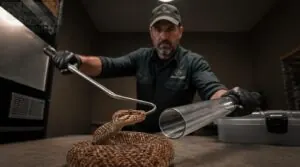
Want to know the real secret to handling venomous snakes safely? There isn’t one, not in the way most people imagine. What actually keeps you safe comes down to a few hard rules professionals never break.
Using proper snake hooks, tongs, and secure enclosures, alongside guidance like these essential snake handling safety tips, turns risky guesswork into a controlled, repeatable routine.
No Bite-Proof Handling Technique
No grip is bite-proof. Every "expert" technique out there still relies on human hands, human timing, and a snake that owes you nothing.
- A hand that hesitates for half a second
- Tongs slick with rain
- A coil no one saw coming
Equipment fails. People misjudge. Snakes stay unpredictable. That’s why professionals treat proximity itself, not grip strength, as the real danger.
Never Pin or Grip Heads
Instinct says pin the head, control the threat. That instinct gets people bitten. Head Pinning Hazards come from restrained snakes lunging when pressure hits the neck.
| Myth | Reality | Result |
|---|---|---|
| Pin head, stay safe | Neck pressure triggers strikes | Envenoming risk |
| Grip firmly | Free head jaw closes fast | Bite |
| Hands control snake | Hooks and tongs control distance | Steady nerves |
Prevent head contact. Trust equipment, not fingers.
Maintain at Least Six Feet
So how far is far enough? Six feet, full stop, no exceptions.
That’s roughly two cart-lengths or an outstretched arm plus a stride back. Keep a safe distance using barriers like a parked car or fence post, and always map your escape route before you freeze in place.
- Use visual cues like arm-span for spacing
- Position at a right angle when retreating
- Keep a barrier between you and the snake
- Establish a perimeter for others nearby
Leave Handling to Professionals
Once you’ve backed off, resist the urge to play hero. Solo handling risks outweigh any bragging rights. A licensed wildlife removal service brings certified handlers, insurance coverage, and legal compliance you simply don’t have.
Professional supervision isn’t overkill, it’s risk assessment training in action. Call a professional, then let public safety awareness (and their liability coverage) do the rest.
If a snake’s already in view and you need to keep your distance safely, choosing the right snake handling hook for outdoor encounters can buy you time until the pros arrive.
Steps to Take During an Encounter
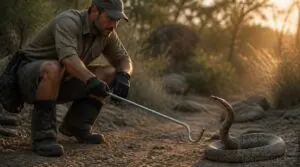
So you’ve spotted one—now what? Your next moves matter more than you think, and panic is the enemy here. Follow these five steps, in order, and you’ll turn a dangerous encounter into a controlled one.
Stop and Back Away
Every muscle screams "grab it," but that’s the worst move you can make.
The right response is a slow retreat, eyes locked on the snake, watching for coiling, hissing, or a striking posture. Keep distance, give it an unobstructed escape route, and clear obstacles behind you. Never turn your back. Sudden moves invite the strike you’re trying to avoid.
Secure Children and Pets
Kids mimic what they see, so your calm becomes their calm. Pull them behind you, quietly, and hold on.
Leash pets immediately; dogs investigating brush face real strike risk. If your dog’s off-leash, call it to you now, no chasing.
Keep a safe distance for everyone. Teach kids child snake ID basics early: knowing local species builds real confidence. If a snake does strike, learn the pressure immobilisation technique so you can respond quickly while waiting for emergency help.
Isolate The Immediate Area
Once everyone’s clear, treat the space like a live wire zone. Perimeter setup matters: mark a boundary at least 10 feet out using tape, furniture, or whatever’s handy. Post warning signs at entry points. This isn’t overkill, it’s escape prevention, keeping both people out and the snake contained until your expert arrives.
Call a Venomous Snake Expert
Who’s actually trained to grab a venomous snake by pressure points near the jaw? Not you, not your neighbor with the "snake stick." Call a professional immediately: dial your local wildlife line or animal control.
- State your exact location
- Describe the snake’s size and pattern
- Confirm everyone’s distance
Proper hand placement and snake hooks belong to experts only.
Monitor From a Distance
Waiting isn’t passive. It’s active watching.
Keep your six feet of distance, use binoculars if you’ve got them, and read the snake’s body language: coiling, hissing, that unmistakable strike posture. Watch for tail thrashing or flattening, both defensive signals worth respecting. Note terrain and escape routes. Stay in radio contact with others until professionals arrive and confirm the area’s clear.
Professional Tools, Training, and Containment
So what actually stands between a professional and a bite? Specialized gear, disciplined technique, and protocols built from decades of close calls. Here’s what the real toolkit looks like.
Snake Hooks and Handling Tubes
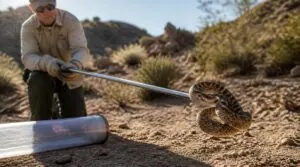
Distance is a professional’s best friend. Snake hooks (3-6 feet, aluminum or fiberglass shafts) and clear handling tubes keep you safely away from strike range.
- Hook tip design: shallow curve cradles without harming the snake
- Tube end caps: allow quick, controlled release
- Balanced weight: reduces fatigue, sharpens control
This isn’t gear for amateurs.
Tong and Glove Limitations
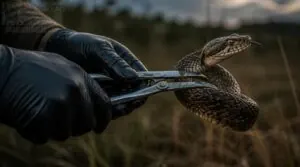
Tongs and gloves aren’t magic. Wet or venom-slicked gloves wreck tong grip stability, and tight gloves kill dexterity right when you need it most.
Double gloving? It mutes tactile feedback, so you misjudge strike range. Nitrile resists oils but degrades near extraction solvents. Bottom line: inspect gear before every encounter, because protective gear effectiveness fades fast, and fading gear gets handlers bitten.
Secure Transport Containers
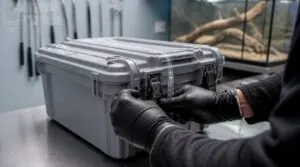
Once secured, a snake needs a container built for containment, not convenience. Rigid-shell boxes with double-wall insulation resist crushing and thermal swings alike, while integrated clasps hold seals tight through turbulent handling.
Tamper-evident seals, standardized sizing, and clear exterior labeling round out protocol. Skip any of these, and containment becomes a gamble.
Two-Handler Safety Protocols
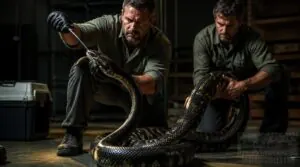
Ever watch two handlers work a venomous snake in tandem? It looks like choreography, not chance.
Role assignment keeps one on head control, one on the body’s lower third. A designated stance, feet planted, backs a backup retreat. Clear signals, "stop," "pause," replace guesswork. Proper hand placement targets pressure points; nothing improvised, nothing solo.
Equipment Cleaning and Maintenance
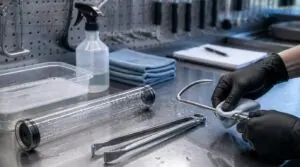
Good choreography means nothing if the gear fails mid-routine.
Wipe tools with mild detergent, rinse clean, dry with lint-free towels. Disinfect with veterinary-grade solutions rated for metal and plastic. Lubricate hinges lightly, wipe excess. Store dry, off the floor. Inspect monthly for rust or cracks. Log every service date.
Sloppy maintenance turns reliable equipment into liability.
Warning Signs and Handling Mistakes
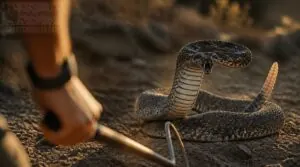
A snake rarely strikes without warning first—it just doesn’t always look like a warning to the untrained eye. Every hiss, coil, and twitch of the tail is information, and misreading it is how experienced handlers end up in the emergency room. Here’s what to watch for, and the mistakes that turn a tense standoff into a bite.
Coiling and S-Shaped Postures
That tight loop isn’t napping, it’s loading a spring. Coiling stores elastic energy for a strike, while an S-curve places the head ahead of the body for maximum reach. Watch for:
- Compact, muscular coils
- A rigid, cocked neck
- Sudden stillness before motion
Read that posture wrong, and you won’t get a second chance to read it right.
Hissing, Rattling, and Tail Whips
When a snake forces air through its glottis, that hiss isn’t background noise, it’s a countdown. Larger-bodied snakes push out louder, rougher exhalations, often paired with body flattening for effect.
True rattles click through interlocking keratin segments, while tail-whippers against dry leaves mimic that same acoustic threat display. Either way: sound plus coiling means back off, now.
Misjudging The Strike Range
Because a coiled body looks harmless, most people badly misjudge strike distance. That S-curve can launch over half its body length forward in a blink. Glare, tall grass, and slanted ground all warp depth perception, making close snakes look distant.
A raised head means readiness, coiling, hissing, or striking posture demands you keep six feet minimum, always.
Attempting Solo Snake Handling
Ever wonder why professionals never work alone? Solo handling risks spike instantly, no partner to secure the body while you control the head. One person handling both ends invites startle-triggered strikes, since snakes lunge up to one-third body length.
There’s no such thing as going solo safely. Proper pinning technique demands two sets of hands for real head and body control.
Trying to Kill or Capture
The urge to end the threat yourself is exactly what gets people bitten. Most envenomations happen during capture attempts, not passive encounters. Cornered snakes strike erratically toward hands or feet.
Most snakebites happen not in passive encounters, but in the moment someone tries to capture or kill the snake themselves
Killing venomous snakes carries real legal consequences in many regions. Skip the hero act. Call professional intervention, let hooks and tongs handle relocation, and back away.
What to Do After a Venomous Bite
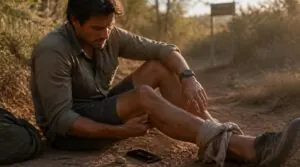
So you followed every rule, kept your distance, and it still happened—now what? The next few minutes matter more than almost any decision you’ll make that day, and panic is your worst enemy here. Here’s exactly what to do, in order, the moment fangs meet skin.
Call Emergency Services Immediately
Every second counts. Call 911 immediately, don’t wait for symptoms. Report:
- Bite time
- Breathing trouble
- Spreading swelling
- Weak pulse
- Dizziness or nausea
Also call Poison Control (1-800-222-1222). Rural response averages 13 minutes, sometimes 30. Antivenom works best within hours, so speed dictates outcome. Don’t drive yourself; symptoms can worsen fast.
Stay Still and Remain Calm
The dispatcher’s on the line, so now what? Stay still. Panic spikes your heart rate, and a racing pulse pumps venom faster through your bloodstream.
Remove rings and tight clothing before swelling sets in, and if you’re curious how fast a bite like this can progress, how quickly black mamba venom acts on the body shows why every calm minute counts.
Try controlled breathing: in for four counts, out for six. Keep muscles relaxed, posture steady, focus fixed on one point. A brief calm visualization works wonders here. This isn’t weakness, it’s survival strategy.
Remove Jewelry Near Bites
While you breathe, check your body. Rings, watches, anklets, tight socks: get them off now, before swelling turns removal into surgery.
- Fingers swell fastest, so rings come off first
- Watches and bracelets choke circulation on arm bites
- Can’t slide it? Push gently away from the wound
- Stuck tight? Let responders cut it, don’t force it
Retained jewelry risks tissue necrosis.
Avoid Tourniquets, Ice, and Suction
Jewelry’s off. Now fight the urge to "fix" the wound yourself, because old cowboy remedies do real damage.
Never apply a tourniquet: it traps venom, starves tissue of blood, and raises amputation risk by 50%. Skip the ice: frostbite sets in within 30 minutes. And forget sucking out venom, you’ll just invite bacteria. Proper first aid means stillness and speed to real medical help.
Identify Snakes From Distance
While waiting for help, note the snake’s head shape, pupil slits, and banding pattern from a safe distance. These visual clues aid species identification for responders.
Watch habitat and movement, rocky terrain or sudden coiling matters. Never approach for a closer look.
Report defensive signals like hissing calmly, then let professionals confirm what bit you.
Frequently Asked Questions (FAQs)
How to hold a snake so it can’t bite you?
Truth is, there’s no bulletproof grip. Never hand-hold a venomous snake. Leave pinning and pressure-point control to trained handlers with gloves, boots, and hooks. Stay six feet back. Your safest move is distance, not daring.
Can you hold a venomous snake?
Only trained, certified professionals should ever attempt it, using snake hooks, tongs, or a firm but measured grip behind the jaw. Bare-handed contact remains needlessly risky, no matter how skilled you feel.
Can a snake bite you if you hold it by the tail?
Picture a whip cracking loose, that’s the tail. Yes, absolutely, tail grip hazards leave the head free to lunge, coil, and strike within a fraction of a second, fangs fully armed for venom delivery.
What material can snakes not bite through?
None is truly bite-proof. Kevlar snake guards and puncture-resistant fabrics offer real protection in protective clothing and boots, but fangs under pressure can still pierce cotton, nylon, and even thin leather.
What are the potential risks and dangers of holding a venomous snake?
One bite risks venom toxicity, tissue necrosis, and uncontrolled bleeding. Mechanical injury from fangs, containment failures, and eye exposure compound the danger.
Delayed antivenom raises mortality risk, and survivors often face nerve damage or lasting tissue loss.
How can one ensure their own safety while holding a venomous snake?
Real safety isn’t a grip trick, it’s distance and discipline: protective gear, snake hooks or tongs, a calm demeanor, constant stress assessment, and rehearsed emergency protocols long before your hands ever get close.
What are some common mistakes to avoid when handling venomous snakes?
Between 10 and 44 percent of rattlesnake bite survivors face lasting injury. Underestimating strike distance, using bare hands, ignoring warning signs, and skipping equipment inspection all invite disaster. Stay sharp, stay disciplined, and never assume a snake’s calm.
How do you safely transport a venomous snake?
Ironically, the "dangerous" part of transport is the box, not the bite. Use a ventilated, escape-proof container with secure sealing, padded lining, and upright positioning, keeping temperatures between 60 and 80°F throughout the trip.
What should you do if a snake escapes?
Retreat calmly, don’t chase. Seal entryways, use barriers like towels or furniture, clear the room, and alert neighbors. Call trained handlers with snake hooks and tongs. Never attempt containment protocol execution yourself, seek medical help if bitten.
How do you clean and disinfect after handling?
Wash hands with soap and water, disinfect tools with veterinary-grade disinfectant, wet-clean and rinse the enclosure, apply chlorhexidine at 1:32, then let it air dry before waste disposal.
Conclusion
Ninety percent of venomous bites happen within striking range of someone who thought they’d control. That number should haunt you.
True mastery of how to hold a venomous snake and not get bitten means never touching one at all: distance, tools, and trained hands do the work bare fingers can’t.
Respect the coil, respect the range, and walk away. The snake was never your fight to win. Your safest grip is the one you never take.