This site is supported by our readers. We may earn a commission, at no cost to you, if you purchase through links.

A corn snake that refuses food for three weeks straight isn’t being "picky." It’s telling you, in the only language it has, that something in its world feels wrong. Snakes can’t whine or pace at the door, so their distress shows up in subtler ways: a flattened head near the glass, a body pressed into a hide at 2pm feeding time, scales left half-shed and clinging.
I’ve watched owners chase symptoms for months, tweaking diet or handling schedules, when the real issue sat in the enclosure itself. Creating a low stress snake environment isn’t about elaborate setups or expensive gear. It comes down to reading your snake’s signals correctly and building a space where hypervigilance simply has no reason to take hold.
What follows will help you spot the warning signs early, and fix them at the source.
Table Of Contents
- Key Takeaways
- Recognize Your Snake’s Stress Signals
- Build a Secure, Species-Appropriate Enclosure
- Stabilize Temperature, Humidity, and Lighting
- Add Enrichment Without Sacrificing Security
- Create Calm, Predictable Care Routines
- Frequently Asked Questions (FAQs)
- How do I make my snake less stressed?
- How to create a snake habitat?
- What smells calm snakes?
- What is the ideal environment for a snake?
- How long does snake stress acclimation typically take?
- Can two snakes share the same enclosure safely?
- What substrate types work best for picky snakes?
- How often should I rearrange enclosure furnishings?
- Do snakes recognize their owners over time?
- Conclusion
Key Takeaways
- Your snake can’t tell you it’s stressed with words, so watch for behavioral cues instead, like refusing food for weeks, glass surfing, or hiding at feeding time, since these signals usually point back to something wrong in the enclosure itself.
- A secure setup means getting the basics right: proper floor space, snug hides at both warm and cool ends, and safe substrate depth, since these details do most of the stress-prevention work before you even step into the room.
- Snakes rely entirely on you to maintain their thermal gradient and species-appropriate humidity, so unstable conditions create constant low-grade stress even when nothing looks obviously wrong on the surface.
- Building trust comes down to predictable routines and patience, like giving a new snake 48-72 hours before handling and letting it initiate interaction, since choice and consistency matter more than any single enrichment item.
Recognize Your Snake’s Stress Signals
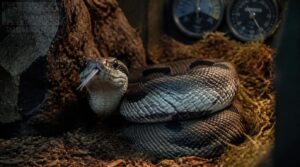
Snakes can’t tell you when something feels wrong, so their bodies and behavior do the talking instead. Learning to read those signals early gives you a real chance to fix small problems before they become big ones.
Skin is one of the clearest windows into a snake’s health, so any rough, raised, or discolored patches are worth checking against this guide to abnormal snake skin texture.
Knowing what to watch for is only half the battle — safe pain relief options for injured snakes are far more limited and species-specific than most owners realize.
For practical guidance, see how to adjust your snake’s feeding schedule for temperature changes without mistaking normal adaptation for illness.
Knowing what to watch for makes all the difference, and this guide on how to tell if your ball python is sick breaks down the key warning signs.
Your snake can’t tell you something’s wrong, so its body and behavior speak first
Here’s what to watch for, from subtle shifts in appetite to signs that mean it’s time to call your vet.
Changes in Appetite
A refused meal is often the first red flag of stress in snakes. Inappetence can stem from environmental appetite triggers like noise, poor hides, or handling impact on eating, so monitor and adapt before assuming illness.
- Recent rehoming or feeding schedule adjustments
- Shedding cycle effects on feeding response
- Prey size mismatched to body condition
Track patterns closely; persistent refusal beyond three weeks warrants concern. Snakes may refuse food due to picky eating habits based on wild diet preferences Common Reasons for Snake Appetite Loss
Defensive Body Language
An empty food bowl tells one story; a coiled, hissing snake tells another. Defensive posturing includes tail vibration, flattened heads, and bluff strikes covering 15 to 30 centimeters.
Watch for S-shaped coils or rapid hissing. These aren’t aggression, they’re stress signals asking for space. Chronic defensiveness during routine care often points to environmental discomfort, not temperament.
Excessive Hiding or Restlessness
Sometimes the opposite of defensiveness shows up instead: your snake vanishes and won’t come out, or paces the glass like it’s looking for an exit that isn’t there.
- Constant hiding, even during feeding windows
- Glass surfing or repetitive edge walking
- Nose rubbing against enclosure walls
- Refusing hides that don’t match thermal needs
- Circling the same bare corner for hours
Secure hides and environmental enrichment usually resolve this fast.
Shedding and Activity Changes
Not every quiet spell means trouble, though. Pre-shed eye clouding, dulling skin, and a sudden appetite drop often explain the withdrawal, especially paired with rubbing against branches or hide walls. This is your snake’s natural shedding cycle, not distress.
Keep humidity stable and hides secure, and that stillness should resolve within a week as new skin emerges.
When Stress Needs Veterinary Care
While mild stress often resolves with quiet time, some signs cross into emergency territory. Watch for: Before things reach this point, though, it helps to catch the subtler warning signs first, like the defensive postures and behavioral red flags that signal a stressed snake.
- Open-mouth breathing or wheezing (respiratory distress)
- Neurologic signs like head tremors or loss of coordination
- Shock lethargy, cold and unresponsive
- Facial swelling or foul discharge
- Inability to right itself
Chronic stress weakens immune function too, so schedule annual wellness exams and document changes.
Just as your body needs consistent care to handle stress, your terrarium needs steady airflow, so check out this guide on preventing moisture buildup with proper cross-flow ventilation to protect its inhabitants year-round.
Build a Secure, Species-Appropriate Enclosure
Once you can read your snake’s signals, the next step is making sure their home isn’t sending the wrong ones. A well-built enclosure does most of the stress-prevention work before you even step into the room, quietly telling your snake it’s safe. Here’s what that setup actually needs to get right.
Proper Enclosure Size

Bigger isn’t always better. Give your snake at least 2 to 3 times its length in floor space, with length-to-width favoring a rectangular layout for natural movement.
Add vertical height for arboreal species, plus a 10-20% growth buffer.
Keep 6-12 inches of access clearance around it too, so routine care doesn’t turn into a wrestling match.
Snug Warm and Cool Hides
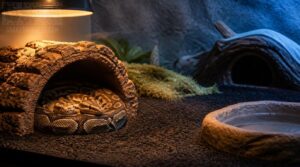
Think crevice, not cave. A snug fit helps your snake feel pressure on all sides, easing hypervigilance.
- Warm hide: cork bark, 90-100°F
- Cool hide: sealed wood, 70-75°F
- Humid hide: middle zone, shedding support
- Reachable without crossing water bowls
Placement for thermoregulation matters as much as material; maintain the thermal gradient so your snake self-regulates confidently.
Safe Substrate Depth
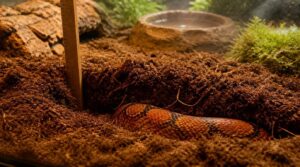
Depth matters more than most owners assume. Aim for 3-4 inches for corn snakes and kingsnakes, since both burrow naturally and need loose substrate to tunnel through without compacting it.
Ball pythons do fine with 2 inches minimum, though 4 inches improves humidity retention. Keep depth under 5 inches to prevent mold and heat pressure, and allow easy spot-checks during health monitoring.
Ventilation and Escape Prevention
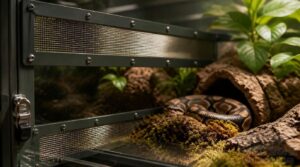
Fresh air matters as much as fresh water, yet many owners overlook it entirely. Cross-flow ventilation (low intake, high exhaust) drives natural convection, matching CFM targets for your enclosure’s volume.
Secure every vent with:
- Heavy-gauge mesh (openings under 1/4 inch)
- Screws or rivets, never adhesive
- Locking clips snakes can’t manipulate
Check gasket compression monthly, since loose seals invite both escapes and humidity crashes.
Species-Specific Habitat Needs
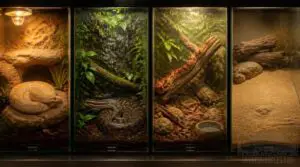
No single blueprint fits every snake. A Ball Python’s needs differ sharply from a Rainbow Boa’s, which is why species-specific research matters before setup.
| Species | Key Habitat Need |
|---|---|
| Ball Python | Warm hide, moderate humidity |
| Rainbow Boa | High humidity, burrowing substrate |
| Corn Snake | Broad thermal gradient |
| Sand Boa | Deep, loose burrowing substrate |
Match enclosures to natural habitat replication, not convenience.
Stabilize Temperature, Humidity, and Lighting

Once your enclosure’s built, the next job is keeping its internal climate steady, because snakes rely on external conditions to regulate everything from digestion to shedding. A tank that swings between too hot, too cold, too dry, or too humid puts constant, low-grade stress on your snake’s body, even when nothing looks obviously wrong.
Here’s what stable, species-appropriate conditions actually require.
Creating a Thermal Gradient
Since snakes can’t shiver or sweat, they rely entirely on you to build a proper thermal gradient: a warm end near 30-34°C and a cool end around 22-26°C, spaced 10-15 cm apart. Keep heat source placement consistent, unobstructed, and shielded.
This gradient stability lets your snake move freely to self-regulate, easing hypervigilance and supporting genuine thermal regulation.
Thermostats and Digital Monitoring
Building the gradient is only half the job; holding it steady is where thermostat-controlled heating earns its keep. Place probes near the basking surface, not the air, for accurate readings.
Digital hygrometers and apps log temperature trends and trigger alerts for drift. Battery backup keeps monitoring active during outages, protecting your snake from dangerous swings.
Species-Appropriate Humidity Levels
Temperature isn’t the only gradient worth watching. Ball pythons need 55-70% ambient humidity, spiking to 75-85% in humid hides, while desert species tolerate far drier air. Corn snakes struggle below 35%.
Match substrate selection and misting systems to your species’ native range, since generic humidity guesses cause dysecdysis and respiratory irritation faster than most keepers realize.
Healthy Lighting and Photoperiods
Light matters as much as heat. Most pet snakes need UVB bulbs emitting 2-5% UVB (290-320nm), mounted 9-18 inches above basking spots, no glass blocking rays.
Choose T5/T8 fluorescents over incandescents, they simply don’t emit usable UV.
Keep a steady 12-hour light/dark cycle, replacing bulbs every 9-12 months.
Since hatchlings need more than just floor space to thrive, check out this guide on choosing the right enclosure size for hatchlings to see how dimensions affect lighting placement and heat distribution.
Preventing Sudden Environmental Changes
Snakes thrive on routine predictability, so protect that secure predictable environment year-round.
Practice seasonal change planning: adjust thermostats 2°F weekly, avoid shock.
Keep enclosures clear of HVAC vents and windows.
Add reflective insulation in winter, cutting heat loss 15%.
Install a backup heat circuit for outages.
Watch appetite and hiding, your snake’s habitat mimicry cues reveal gradient stress.
Add Enrichment Without Sacrificing Security
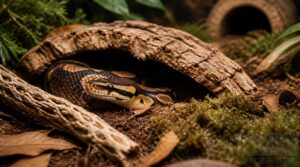
An enriched enclosure isn’t a cluttered one; it’s a thoughtfully arranged space where your snake still feels hidden and protected. Enrichment works best when it mimics natural behaviors, like burrowing, tracking scent, or squeezing through cover, rather than adding novelty for its own sake.
Here are the additions worth prioritizing, and how to introduce them without triggering a stress response.
Foliage, Branches, and Clutter
A jungle of greenery isn’t just decoration, it’s psychological armor. Foliage for security works by breaking sightlines, so nervous species like Rainbow Boas feel shielded rather than exposed. Layer branches at 1 to 3 inch diameters for secure grip, creating canopy tiers.
Wipe leaves weekly; mold buildup irritates respiratory tissue and undoes the calming effect you’re after.
Burrowing and Digging Opportunities
Digging isn’t fidgeting, it’s instinct. Give burrowers like Sand Boas a dig box with substrate depth of 4 to 6 inches, kept slightly moist so tunnel networks hold their shape.
- Coarse bark for large-bodied diggers
- Coco fiber blends for shallow burrows
- Loose pockets mimicking soil strata
- Sunk hides doubling as entrances
- Weekly tunnel inspections for collapse
Scent Trails and Textures
A snake reads its world through smell and touch more than sight. Scent trail mapping lets your snake patrol confidently, so rotate branches gradually rather than scrubbing everything at once.
Vary substrate: rough bark near hides, smoother patches elsewhere. This tactile substrate variation creates microhabitats, supporting exploration without overwhelming a species like a Corn Snake with unfamiliar odors all at once.
Safe Foraging Activities
Hunting instincts don’t switch off just because dinner arrives in a bowl. Match foraging activities to species: bullsnakes locate prey quickly, while pythons follow scent trails deliberately.
Try puzzle feeders with food-grade compartments, buried meals in moist substrate, or scattered containers. Skip live prey unless you’re supervising closely, since unattended crickets can bite and injure your snake.
Introducing Enrichment Gradually
Patience pays off here. Start simple with rearranged decor, then wait 48-72 hours before adding anything new.
Observe tongue-flicking and exploration; if ignored for three days, adjust and try something else. Progress toward scent trails or puzzle feeders only once your snake shows genuine comfort, since gradual acclimation through choice-based interactions builds lasting confidence, not overwhelming habitat complexity.
Create Calm, Predictable Care Routines
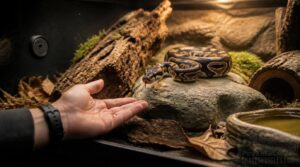
Snakes thrive on routine, and predictability does more for their nervous system than almost any enrichment item you could add. Your daily habits, from how you approach the enclosure to when you clean it, shape whether your snake feels safe or constantly on guard. Here’s how to build a rhythm your snake can actually rely on.
Gentle Acclimation After Arrival
When a snake first arrives home, resist the urge to hold it. A hands-off period of 48-72 hours lets physiological stress settle before normal handling begins.
Replicate its previous substrate, hide placement, and feeding schedule for familiar setup cues. Monitor appetite and hiding behavior daily to establish a baseline, then progress toward gradual acclimation once calm signals appear.
Choice-Based Handling Practices
Once your snake settles in, let it choose. Allow the snake to initiate interaction rather than reaching in first, watching for tongue flicks or movement toward your hand as genuine consent.
- Wait for voluntary emergence
- Start with 30-second sessions
- Support the full body
- Notice retreat as a signal
- Keep sessions calm and brief
Thoughtful handling builds trust gradually, minimizing stress hormones over time.
Stress-Free Feeding Strategies
Mealtime carries its own stress if you let it. Feed in the enclosure itself, using tongs to offer prey near room temperature, and simply leave it without coercion. If your snake turns away, respect that, especially during shedding pauses. Watch portion size relative to midsection width, then walk away. Choice-based interactions build trust here too.
Consistent Cleaning and Maintenance
Once feeding settles into rhythm, hygiene becomes the next pillar of trust. Wipe waste daily, sanitize water bowls weekly, and deep clean monthly using reptile-safe disinfectants, never harsh chemicals.
Rotate substrate management on schedule, checking hides and ventilation hygiene for mold. Confirm proper enclosure closure after every session.
Keep a data logging sheet noting dates and tasks, it builds a reliable care history.
Tracking Behavior and Body Condition
Numbers don’t lie, and that’s the gift of consistent monitoring. Weight tracking apps flag deviations over 10%; feeding pattern analysis reveals refusals preceding sheds by a week. Pair this with body condition scoring and shedding cycle logs, and chronic stress indicators surface early. Activity monitoring sensors catch lethargy assessment too. This behavioral monitoring habit transforms guesswork into genuine insight about stress in snakes.
Frequently Asked Questions (FAQs)
How do I make my snake less stressed?
What does calm actually look like in a snake? It means secure hides, a stable thermal gradient, gentle handling, predictable feeding, and gradual acclimation, giving your snake control and reducing stress reduction barriers naturally over time.
How to create a snake habitat?
Start with habitat layout design: sized enclosure, secure hides on each end, proper lighting and heating for a temperature gradient, ventilation, suitable substrate, and gradual acclimation once your snake settles into its new space.
What smells calm snakes?
No scent actively "calms" a snake, but neutral, natural odors support easy scent introduction and stress reduction.
Avoid harsh smells like clove, cinnamon, ammonia, vinegar, or predator scent trails, which trigger defensive, hypervigilant behaviors during natural exploratory behaviors.
What is the ideal environment for a snake?
Picture a properly sized enclosure with a thermal gradient, snug hides on both ends, species-appropriate humidity, safe substrate, and gentle enrichment. That combination gives your snake choice, cover, and stability, the real foundation of a secure environment.
How long does snake stress acclimation typically take?
Most snakes need about a one-week adjustment period to settle in. Give a stable, secure environment and predictable routine; if hiding, appetite loss, or defensive behavior persists beyond that, reassess husbandry and consult your reptile veterinarian.
Can two snakes share the same enclosure safely?
Cautiously, cohabitation can work, but only with rigorous species compatibility assessment, strict feeding separation protocol, and duplicated enrichment items. Watch behavioral success indicators closely; without them, solitary housing remains safer for most snakes’ genuine wellbeing.
What substrate types work best for picky snakes?
For fussy eaters, try aspen shavings for burrowing comfort, cypress mulch for humidity retention, or coconut fiber for moisture-loving species. Paper towels work well temporarily during quarantine, reducing stress while you research species-specific substrate needs.
How often should I rearrange enclosure furnishings?
Aim for every 3-6 months, adjusting for age and species: young or curious corn snakes tolerate monthly rotation, while ball pythons prefer fewer, steadier changes, always timed outside active shedding cycles to protect completion.
Do snakes recognize their owners over time?
Think of a compass needle settling home. Yes, through scent based familiarity and visual recognition cues, your snake learns you. Ball pythons especially show calmer tongue flicking, quicker settling, and voluntary emergence, genuine, trust built through thoughtful handling.
Because that forked tongue samples airborne particles, you can see how snakes recognize your scent and why wearing the same shirt while handling helps your snake feel secure.
Conclusion
The calmest snake is the one you barely notice, and that quiet is the whole point. Real safety looks boring: steady heat, snug hides, food eaten without hesitation.
Creating a low stress snake environment isn’t a single fix, it’s dozens of small, correct choices repeated daily until hypervigilance has nowhere left to grow. Watch closely, adjust gently, and let calm become your snake’s new normal.