This site is supported by our readers. We may earn a commission, at no cost to you, if you purchase through links.
A snake that sheds in one clean pull is a healthy snake. When that pull leaves behind stuck patches, cloudy eye caps, or ragged skin clinging to the tail tip, humidity is almost always the culprit.
Most keepers focus on temperature and feeding schedules, but moisture levels quietly run the show during every shed cycle. Too dry, and the old skin loses elasticity before it can lift cleanly—it grips instead of releasing.
Getting humidity and healthy shed right isn’t complicated, but it does require understanding what your snake actually needs and when.
Table Of Contents
Key Takeaways
- Humidity does more than temperature during a shed — when it drops too low, old skin dries out and grips instead of releasing, causing stuck patches and retained eye caps.
- Each species has a specific humidity range: ball pythons need 55–65% daily and up to 80% during shed, corn snakes 40–60%, and boas 60–70%, so don’t guess — know your snake’s sweet spot.
- A damp hide on the warm side, moisture-retaining substrate at 3–4 inches deep, and a probe hygrometer checked twice daily during pre-shed are your three most reliable tools for a clean shed.
- Too much moisture is just as dangerous as too little — stagnant damp air causes mold and scale rot, so pair any humidity boost with proper cross-flow ventilation.
During shed especially, ball pythons benefit most from targeted moisture boosts — a humidity box for shedding snakes can make hitting that 75–80% window much easier.
Why Humidity Matters for Shedding

Humidity isn’t just a comfort thing — it’s what makes or breaks a shed. When the moisture level drops, your snake’s old skin doesn’t loosen the way it should, and that’s when problems start stacking up.
When the air gets too dry, that whole process stalls — here’s a closer look at why low humidity causes incomplete snake sheds and what you can do about it.
Here’s what’s actually happening inside that enclosure, and why it matters more than most keepers realize.
How Hydration Supports a Complete Shed
Hydration shedding isn’t magic — it’s mechanics. When your snake’s outer skin stays properly moistened, moisture gradient maintenance kicks in: water moves evenly between layers, boosting skin elasticity and enabling scale adhesion reduction.
That means the old skin peels as one clean sheet.
Water intake synergy matters here too. A well-hydrated snake sheds smoothly, with less rubbing and fewer stuck patches.
Providing shallow water dishes helps maintain proper skin hydration.
What Happens When Humidity is Too Low
Dropping relative humidity too low and the problems stack up quickly.
- Dehydrated skin elasticity suffers — dry air pulls moisture out faster than your snake can replace it, leaving skin brittle and dull.
- Scale edge stickiness increases as the outer layer clings instead of lifting.
- Behavioral restlessness and mouth opening frequency rise, signaling respiratory irritation.
A humidity sensor catches these drops before damage sets in.
How Low Humidity Causes Stuck Shed and Eye Caps
Stuck shed starts with dry air — it’s that simple. Low relative humidity accelerates tear evaporation, stressing the eye surface and triggering Meibomian gland stress that disrupts the oily protective layer. Without moisture-dependent shedding mechanics working properly, corneal barrier disruption follows, locking eye caps tight.
Dry air locks eye caps tight by stripping moisture and breaking the skin’s natural shedding barrier
| Problem | Cause | Result |
|---|---|---|
| Dry shed | Low relative humidity | Retained skin patches |
| Stuck eye caps | Meibomian gland stress | Vision obstruction |
| Inflammatory cycle amplification | Corneal barrier disruption | Prolonged discomfort |
Poor ventilation systems trap stagnant air, blocking natural moisture pathways and worsening every outcome above.
The Link Between Humidity, Skin Health, and Comfort
Your snake’s outer layer — the keratin — needs steady moisture to stay flexible. That’s Keratin Hydration doing its job.
When Barrier Moisture Retention drops below your enclosure’s sweet spot, the skin tightens and comfort tanks. Think Microclimate Skin Balance and Thermal Skin Sensation shifting together. Eye Mucous Comfort follows the same logic.
A calibrated hygrometer, solid ventilation, and humidity control keep everything working right.
Ideal Humidity by Snake Species
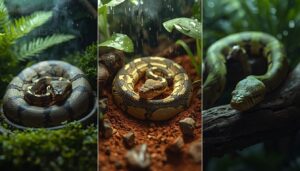
Not every snake needs the same humidity level, and getting it wrong — even slightly — can mean a rough shed. The sweet spot varies by species, and it’s worth knowing exactly where yours falls.
Here’s what each one actually needs.
Ball Python Humidity Needs for Easy Shedding
Ball pythons are more forgiving than people think — but humidity still has a sweet spot. Day-to-day, keep relative humidity between 55% and 65%. During shed cycles, push it toward 70–80%.
If you’re switching snake species or just second-guessing your setup, humidity needs by python species breaks down exactly why ball pythons sit in a different range than most of their relatives.
Use Hygrometers and Thermometers with Sensor Calibration Tips in mind — place them centrally, not near heat sources.
Microclimate Placement matters too:
- Set a humid hide on the warm side
- Use moisture-retaining substrate throughout
- Apply Humidity Gradient Control across the enclosure
- Let Heat Source Influence drive natural evaporation from a larger water dish
Age-Based Humidity needs shift slightly — juveniles benefit from the higher end consistently.
Corn Snake Humidity Ranges and Enclosure Balance
Corn snakes don’t need tropical levels — baseline relative humidity threshold sits around 40–60%, rising to 65–75% during shedding.
Your ventilation strategy matters as much as moisture. Poor airflow management lets damp air stagnate, inviting mold growth.
Think of Microclimate Zones: one drier side, one humid hide.
Run a Sensor Calibration Routine weekly, and Seal Gaps Effectively to keep humidity control consistent.
Boa Constrictor Humidity Goals for Healthy Sheds
Boas run a slightly higher baseline than corn snakes — your relative humidity threshold sits at 60–70%, climbing to 75–85% during shedding. Thermal Humidity Balance matters here: warm air holds more moisture, so pair your humidistat fan with a smart monitoring system to stay accurate.
Keep these in check:
- Seal Integrity on doors and vents
- Moisture Absorption Materials like coconut substrate
- Smart Controllers for automated adjustments
- Regular Humidity Calibration using a digital hygrometer
Your ventilation strategy prevents stagnant, overly damp air.
When Species-specific Needs Change by Age or Season
Age changes everything.
Juveniles shed far more often, so their Juvenile Humidity Needs stay critical year-round — even small dips cause problems. Adults have slower cycles, but Winter Dryness Management becomes essential when heating tanks strip moisture quickly.
Summer Humidity Surge can push levels too high without proper ventilation and climate control.
Smart monitoring solutions for temperature and humidity help you make Growth Phase Adjustments before shed season hits.
Signs Your Snake Needs More Humidity

Snakes can’t tell you when something’s off, but their bodies do. Low humidity shows up in a handful of ways that are easy to spot once you know what to look for.
Here are the most common signs your enclosure needs a humidity boost.
Patchy or Retained Shed
Patchy shed isn’t random — it usually means humidity dropped at the wrong moment. Low Humidity Sticking causes the shed layer to dry out before it fully loosens, leaving Moisture Barrier Gaps across the body.
Watch for these three warning signs:
- Incomplete "bands" of shed from Scale Edge Snagging along textured scales
- Skin flaps clinging near toes — early Secondary Skin Inflammation risk
- Shed tearing into small stuck pieces from Mechanical Friction during rubbing
Dull Skin Before Shedding Starts
Dull skin is your snake’s first quiet signal that a shed is coming. A Hormonal Shift triggers new layer formation beneath the old skin, changing how light hits the surface. Color Fading follows, alongside early Eye Caps and shifts in Skin Texture.
That’s your cue to dial in humidity control before problems start.
| Pre-shed Sign | What You’re Seeing | What It Means |
|---|---|---|
| Color Fading | Muted, washed-out scales | New layer forming underneath |
| Eye Caps forming | Bluish, cloudy eyes | Separation cycle underway |
| Skin Texture shift | Surface looks dull, flat | Old layer beginning to detach |
| Pre-shed Behavior change | Less activity, hiding more | Snake entering full shed mode |
Wrinkled Skin or Dehydration Signs
Wrinkled skin tells you more than dull scales ever could. When humidity drops too low during a drying cycle, your snake’s skin loses its moisture buffer fast. You’ll notice papery texture, surface tightness, and fine lines that shouldn’t be there. Elasticity lag is the real tell — pinch gently, watch if skin snaps back slowly.
Five dehydration signs to watch:
- Papery texture along the sides and belly
- Visible fine lines between scale rows
- Skin dullness that persists outside pre-shed
- Warped surfaces where scales look puckered or uneven
- Elasticity response during a light skin-pinch test
Moisture monitoring now — not after the shed goes wrong.
Stuck Eye Caps and Tail-tip Issues
Eye cap appearance tells you exactly where humidity control failed. A retained eye cap looks cloudy or milky — not clear. At the tail tip, stuck shed acts like a tourniquet, cutting circulation through constriction.
| Warning Sign | What It Means |
|---|---|
| Cloudy eye post-shed | Retained eye cap |
| Tail tip darkening | Circulation restricted |
| Foul odor or swelling | Necrosis warning signs |
| No improvement after humidity support | Vet assessment timing |
Smart ventilation and maintaining ideal shed humidity and temperature prevent condensation buildup that worsens these issues.
Excessive Soaking or Unusual Rubbing Behavior
Beyond eye caps and tail tips, behavior shifts are often the clearest skin irritation indicators. When humidity drops, snakes seek relief. Watch for:
- Prolonged water dish depth submersion — over-soaking infection risk rises fast
- Stress rubbing against hides, rocks, or corners repeatedly
- Restless movement without real progress on loosening the shed
Fix your temp humidity balance first. Everything else follows.
Raise Humidity Without Overdoing It
Getting humidity right is less about doing more and more about doing it smarter. A few targeted changes to your setup can make a real difference without tipping into soggy, mold-prone territory.
Here’s where to start.
Choose Moisture-retaining Substrate
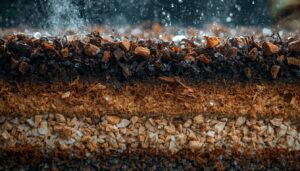
Substrate does more work than most keepers realize. A mix of coco coir, cypress mulch, and perlite hits the right balance — solid water holding capacity without waterlogging.
Particle size mix matters here: varied sizes create substrate aeration and drainage balance that prevents soggy bottom layers.
Aim for 3–4 inches of substrate depth. That depth buffers humidity steadily between sessions without tipping into rot territory.
Add a Proper Humidity Hide
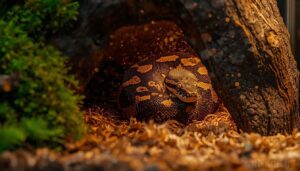
well-built humidity hide does the heavy lifting during shed cycles. Match the Hide Entrance Size to your snake’s body width — tight enough to retain moisture, smooth enough to avoid skin tears. Fill it using Moisture Retaining Materials like damp sphagnum moss or coconut fiber. Temperature Placement matters too.
- Position it on the warm-to-mid side
- Maintain Ventilation Balance so condensation doesn’t pool
- Replace damp substrate weekly — your Cleaning Routine prevents mold
- Check dampness every few days
Use a Larger Water Dish Safely

A larger water dish adds surface area for evaporation — a simple, passive boost to humidity control. Choose a non-porous material like ceramic for easy cleaning and stable placement in a corner to help with spill prevention.
Keep water below the rim.
Good airflow integration stops condensation from building nearby moisture pathways into soggy substrate.
No dehumidifier needed when ventilation stays balanced.
Mist Only When Needed
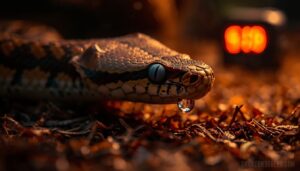
Mist timing matters more than mist volume. Apply small amounts during pre-shed — when eyes cloud over — and stop once your humidity level holds steady moisture.
Microclimate targeting beats soaking the whole enclosure.
Controlled mist volume keeps substrate from staying wet, which prevents mold and scale rot.
If you’re using IoT sensors or triggered mist alerts, let the hygrometer do the deciding.
Avoid over-misting.
Improve Ventilation to Prevent Damp Air Buildup
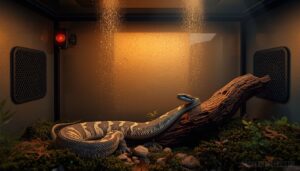
Good airflow is what keeps humidity honest. Cross‑flow ventilation — fresh air in low, damp air out high — stops moisture from pooling on walls and substrate.
- Use high‑low vent placement on opposite walls
- Size openings with adjustable vent sizing for fine control
- Add a humidistat fan or vent fan for consistent air exchange
- Seal air leaks so fan speed control actually works
Monitor, Adjust, and Prevent Problems

Getting humidity right is only half the job — keeping it right is where most keepers slip up. Small changes in season, substrate moisture, or enclosure placement can shift conditions faster than you’d expect.
track and adjust so your snake’s next shed goes smoothly.
Use a Hygrometer to Track Enclosure Humidity
You can’t fix what you can’t measure. A probe-style hygrometer gives you real data — not guesswork.
Sensor placement matters: set it mid-level, away from airflow, on top of the substrate. Run a second probe inside the humid hide.
| What to Track | Why It Matters |
|---|---|
| Ambient RH % | Reflects overall enclosure conditions |
| Humid hide RH % | Confirms shedding microclimate quality |
Calibration methods like the damp-pack test keep your readings trustworthy. Enable alert thresholds so spikes don’t catch you off guard.
Check Humidity During Pre-shed Cycles
Pre-shed is when your hygrometer earns its keep. Once you spot the blue phase, increase your spot reading frequency — check ambient and hide sensors twice daily.
Mechanical units drift badly, so calibration procedures matter more than ever here.
Data logging practices help you catch the humidity-temperature correlation before it causes a stuck shed. Enable alert threshold settings so you’re never caught off guard.
Adjust Seasonal Humidity Changes
Seasons shift your baseline, and your enclosure doesn’t adjust itself. Winter dryness strategies matter because cold outdoor air carries less moisture indoors, dropping humidity fast. Summer moisture management works the other way — heat accelerates evaporation, pushing levels up.
Seasonal ventilation adjustments and temperature humidity balance both need attention:
- Reduce ventilation slightly in winter to retain warmth and humidity
- Increase airflow in summer to prevent damp air buildup
- Adjust pre-shed humidity scheduling based on current seasonal baseline
- Use dehumidifiers or humidifiers as the season demands
Monitoring helps prevent issues before they affect your snake’s shed.
Prevent Mold and Scale Rot From Excess Moisture
Too much moisture flips from helpful to harmful fast. Stagnant air lets mold colonize substrate and triggers scale rot — a bacterial infection that damages your snake’s belly scales directly.
| Problem | Cause | Fix |
|---|---|---|
| Mold growth | Poor crossflow ventilation | Improve airflow design |
| Scale rot | Chronic wet substrate | Add vapor barrier layer |
| Bacterial buildup | Sealed damp air | Use a dehumidifier |
humidity controlled, not just raised.
Create a Steady Routine for Healthier Sheds
Consistent routines beat reactive fixes every time.
Log humidity morning and evening — Daily Humidity Logging takes thirty seconds and reveals patterns you’d otherwise miss. Build in Routine Temperature Checks, a Consistent Mist Schedule, and Scheduled Soak Sessions during pre-shed.
Regular Enclosure Cleans prevent bacterial buildup before it starts.
Monitoring helps prevent issues that cost real time and stress later.
Frequently Asked Questions (FAQs)
How do I keep the humidity out of my shed?
Think of your shed like a sponge — seal it right, and it stays dry.
Use vapor barriers, close door gaps, add cross ventilation, raise the floor, and run a dehumidifier when needed.
Can humidity affect a snakes appetite during shedding?
Yes, it can. During pre‑shed hunger drops, appetite suppression is normal.
Low humidity causes stress‑induced fasting.
Good moisture‑driven feeding returns once the shed completes and hydration appetite link stabilizes.
Does room temperature influence enclosure humidity levels?
Room temperature absolutely does.
Ambient temperature fluctuations drive vapor pressure variation inside the enclosure — when temperatures drop, dew point changes trigger condensation. Heat driven evaporation adds moisture; cooler air raises relative humidity fast.
How often should substrate be fully replaced?
Every one to three months works for most setups. Spot cleaning impact extends that window.
Watch for odor buildup schedule cues — smell and visible soiling tell you more than the calendar ever will.
What lighting setups work best for humid enclosures?
Sealed LED fixtures with moisture-rated luminaires handle humid enclosures well. Ventilated light placement prevents fogging.
UVB vapor protection, use purpose-built guards. Heat-controlled lighting limits condensation prevention issues and maintains steady temperature regulation.
Conclusion
shed gone wrong is just your enclosure telling you something needs adjusting. Listen to it.
humidity and healthy shed work together, the old skin lifts like a sleeve — clean, whole, smooth.
Get your substrate holding moisture, your hide placed correctly, and your hygrometer actually checked.
Do that consistently, and stuck sheds become something that used to happen.
Your snake won’t thank you, but the perfect shed every cycle is thanks enough.