This site is supported by our readers. We may earn a commission, at no cost to you, if you purchase through links.

A snake that refuses to eat, hides in corners, or produces a stuck shed isn’t being difficult—it’s telling you something about its environment. Security and humidity sit at the foundation of captive snake health, and the hide is where both of those needs intersect.
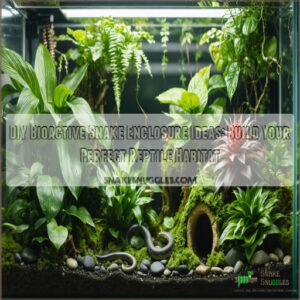
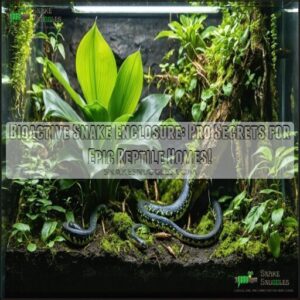
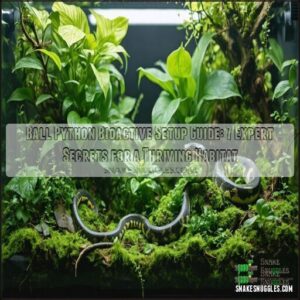
In a bioactive enclosure, that intersection grows more complex: your hide must coexist with live plants, beneficial microfauna, and fluctuating moisture without molding, warping, or disrupting the thermal gradient you’ve worked to perfect.
Choosing the right snake hides for bioactive setups demands thinking beyond size and shape, toward materials, stability, and how each hide functions as part of a living system.
Table Of Contents
- Key Takeaways
- Top 10 Bioactive Snake Hides
- 1. FCALIVV Large Reptile Hide Box
- 2. USMOLA Mossy Cave Hide for Terrarium Reptiles
- 3. Hollima Yellow Mossy Reptile Hide
- 4. Repti Zoo Large Reptile Hide Cave
- 5. Jungle Bird Skull Terrarium Hide
- 6. Orchid Valley Large Reptile Hide Log
- 7. Large Humid Hide Cave for Reptiles
- 8. Natural Cork Bark Reptile Terrarium Decor
- 9. Jihaqua Medium Terrarium Reptile Hide
- 10. Lucky Critter Reptile Viewing Cave
- Choosing Bioactive Snake Hides
- Humid Hides for Healthy Shedding
- Species-Specific Hide Setup Tips
- Bioactive Placement and Maintenance
- Frequently Asked Questions (FAQs)
- Conclusion
Key Takeaways
- In a bioactive setup, your hide’s material matters as much as its shape — non-porous resin and cork resists mold and stabilizes humidity, while painted wood and porous surfaces quietly work against the living system you’ve built.
- A hide that fits too loose defeats its purpose; your snake should feel snug and cradled, with a low ceiling, curved walls, and a stable base that won’t shift when the animal moves through it.
- Every species brings its own instincts to hide selection — ball pythons need dark, tight retreats away from light, hognose snakes need deep burrowing substrate, and rosy boas need rocky crevice geometry that mirrors their semi-arid homeland.
- Placement along the thermal gradient, partial embedding in substrate, and live plant framing transform a hide from a placed object into a functioning microhabitat that supports shedding, clean-up crews, and long-term snake health.
Top 10 Bioactive Snake Hides
Not all hides are built the same, and in a bioactive setup, that difference really matters. The ten options below span a range of materials, sizes, and styles to fit different species and enclosure goals.
From cork bark to ceramic caves, exploring the full range of types of boa constrictor hides helps you match the right option to your snake’s size and stress levels.
Here’s what made the cut.
1. FCALIVV Large Reptile Hide Box
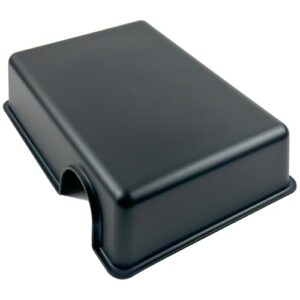
The FCALIVV Large Reptile Hide Box earns its spot on this list through sheer practicality. Its polypropylene construction resists moisture without warping — a genuine concern in bioactive setups with fluctuating humidity.
The 13.5 × 9 × 4.5-inch footprint fits comfortably against enclosure walls, while the 4.0 × 3.5-inch entrance accommodates medium to large snakes without forcing awkward entry angles.
Cleanup is straightforward: the nonporous surface wipes down fast, and it’s dishwasher-safe. At $9.98, you can outfit multiple hides without second-guessing your budget.
| Best For | Budget-conscious reptile keepers who need a clean, functional hide for snakes, geckos, bearded dragons, or tarantulas without spending a lot. |
|---|---|
| Material | Rigid plastic |
| Price | $9.98 |
| Dimensions | 9.45×6.89×2.17 in |
| Species Suitability | Snakes, geckos, dragons |
| Ease of Cleaning | Easy, rinse and sanitize |
| Bioactive Compatible | Yes |
| Additional Features |
|
- At just $9.98, it’s easy to grab a few and set up multiple hides across different enclosures.
- The smooth plastic surface is quick to wipe down or rinse out, keeping things hygienic with minimal effort.
- The low-profile cave design gives reptiles a snug, enclosed space that helps reduce stress and encourages natural resting behavior.
- The look is pretty plain — if you want something that blends into a naturalistic or bioactive setup, this probably won’t cut it.
- Only one entrance, so you’ll want to double-check it’s wide enough for your specific animal before buying.
- Plastic doesn’t hold or transfer heat the way cork or wood does, which matters for species that rely on contact surfaces for thermoregulation.
2. USMOLA Mossy Cave Hide for Terrarium Reptiles
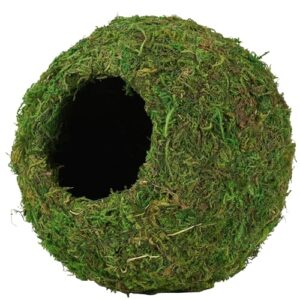
Where the FCALIVV leans utilitarian, the USMOLA Mossy Cave Hide leans naturalistic — and for smaller species, that distinction matters.
At 4 × 4 × 4 inches, it suits hatchlings, juvenile colubrids, and small frogs comfortably, though it won’t fit an adult ball python.
The synthetic moss exterior resists UV fading and holds its shape when misted, making it genuinely bioactive-friendly.
It places easily in tight vivariums, partially embedded in substrate for a tunnel effect, and cleans up quickly without soaking.
| Best For | Small reptile and amphibian keepers who want a natural-looking hide that fits hatchlings, juvenile colubrids, small frogs, or other tiny critters without taking up much tank space. |
|---|---|
| Material | Natural moss |
| Price | $11.99 |
| Dimensions | 4x4x4 in |
| Species Suitability | Frogs, baby snakes, spiders |
| Ease of Cleaning | Requires regular misting |
| Bioactive Compatible | Yes |
| Additional Features |
|
- Made from real moss that holds humidity well and looks great in a naturalistic setup
- Tiny footprint makes it easy to tuck into a crowded vivarium or layer multiple hides
- Handles UV lighting and regular misting without falling apart
- Too small for adult reptiles — definitely not a ball python or leopard gecko hide
- Needs consistent misting to stay moist; dry moss loses its appeal fast
- The 4×4×4 size can catch buyers off guard, so measure your animal first
3. Hollima Yellow Mossy Reptile Hide
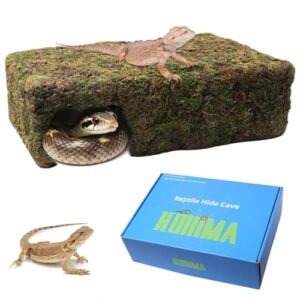
The Hollima Yellow Mossy Reptile Hide is ideal for mid-sized snakes, offering both realistic looks and reliable humidity. Measuring 11 × 7.7 × 3.15 inches, it comfortably accommodates small-to-mid-sized colubrids and juvenile pythons.
Its moss exterior maintains 60–70% interior humidity, promoting cleaner sheds without oversaturating the substrate. This design ensures a healthier environment for reptiles during shedding cycles.
The hide features a removable top panel for easy inspections and a high-density resin core that withstands routine misting and bioactive conditions, ensuring long-term durability.
| Best For | Small pet owners looking for a natural-looking hide that gives reptiles, amphibians, or small mammals a secure, stress-free spot to rest, shed, or breed. |
|---|---|
| Material | Polyester & dried moss |
| Price | Not listed |
| Dimensions | 11.02×7.68×3.15 in |
| Species Suitability | Snakes, lizards, small mammals |
| Ease of Cleaning | Light cleanup before use |
| Bioactive Compatible | Yes |
| Additional Features |
|
- The dried moss exterior looks natural and blends well into terrarium setups
- Steel support inside keeps it stable and resistant to tipping over time
- Non-toxic materials make it safe for a wide range of small pets
- Loose moss particles shed initially, so you’ll need to do a quick cleanup before use
- The side entrance is on the smaller side, which some animals may find tricky to get in and out of
- Low profile design won’t work well for larger or taller species
4. Repti Zoo Large Reptile Hide Cave
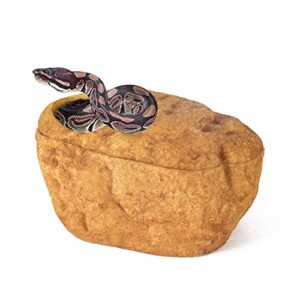
Where the Hollima leans into moss and color, the Repti Zoo Large Reptile Hide Cave takes a different approach — raw rock realism with serious structural bones.
At 11 × 7 × 6 inches and weighing 4.55 lb, it doesn’t budge when an active ball python or corn snake pushes against it. The food-grade resin resists moisture, cleans fast, and blends naturally into bioactive setups. Its smoothed interior edges and deep cavity give medium-sized snakes the secure, enclosed feeling they instinctively seek.
| Best For | Medium-sized snakes like ball pythons and corn snakes that need a heavy, stable hide they can’t knock around. |
|---|---|
| Material | Resin |
| Price | Not listed |
| Dimensions | 11x7x6 in |
| Species Suitability | Ball pythons, corn snakes |
| Ease of Cleaning | Smooth flat base |
| Bioactive Compatible | Yes |
| Additional Features |
|
- Built tough — at 4.55 lb, it stays put no matter how active your snake gets
- Easy to clean and sterilize thanks to smooth surfaces and a flat base
- Deep interior gives snakes that snug, enclosed feeling they actually want
- The magnetic closure is strong enough to startle a snake mid-removal — two hands required
- Yellow/tan color won’t work in every terrarium setup
- Sizing is a bit tricky — too big for juveniles, potentially too small for large adults
5. Jungle Bird Skull Terrarium Hide
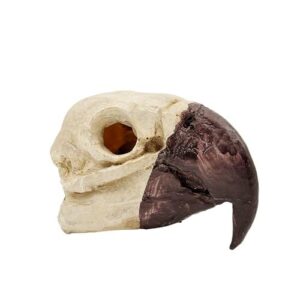
The CTWPets Jungle Bird Skull Hide proves that novelty doesn’t require sacrificing function. Crafted from reptile-safe ceramic and measuring just 3 × 1 × 2 inches, it’s purpose-built for micro-species like dart frogs, mourning geckos, and juvenile snake hatchlings. Its compact design provides a dark, snug retreat tailored to their needs.
If you’re raising a ball python, you’ll want to check out these best snake hides for ball pythons once your hatchling outgrows this snug little skull.
The hide features a weighted base that remains stable during misting cycles, ensuring it stays securely in place. For enhanced realism, you can partially bury it in coco coir or surround it with live moss to mimic a decaying jungle floor.
Before use, sand any rough mold lines—ceramic edges may be sharper than they appear, posing a risk to delicate species. This simple step ensures a safer habitat for your pets.
| Best For | Hobbyists keeping micro-species like dart frogs, mourning geckos, or juvenile snake hatchlings in jungle-themed or bioactive terrariums. |
|---|---|
| Material | Ceramic |
| Price | Not listed |
| Dimensions | 3x1x2 in |
| Species Suitability | Dart frogs, micro-species |
| Ease of Cleaning | Easy, odor-free |
| Bioactive Compatible | Yes |
| Additional Features |
|
- Looks great in a bioactive setup — the bird skull shape adds a real "decaying jungle floor" vibe without looking cheap
- Stable enough to stay put during misting cycles, so you’re not constantly repositioning it
- Ceramic is easy to clean and won’t leach chemicals or hold odors over time
- Mold lines can leave sharp edges inside — you’ll want to sand those down before dropping it in your enclosure
- Only one hide per pack, so bigger setups will cost more to fill out
- Too small for anything beyond micro-species; medium or large reptiles won’t get any use out of it
6. Orchid Valley Large Reptile Hide Log
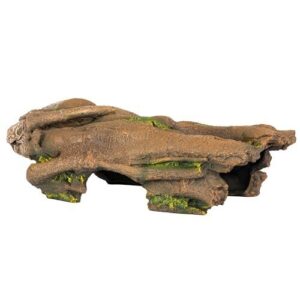
The Orchid Valley Large Reptile Hide Log masterfully balances form and function. Its 25 cm hollow interior and dual entry points provide mid-to-large-sized snakes with essential escape routes, significantly reducing defensive behavior in more secretive species.
The moisture-resistant, wood-composite exterior ensures durability in humid bioactive setups, while the smooth inner lining protects delicate shed skin from snagging.
You can partially embed the log in deep substrate, encouraging springtails and isopods to thrive underneath. This transforms the hide into a functioning microhabitat, maximizing its utility in terrarium ecosystems.
| Best For | Reptile and small pet owners who want a natural-looking hide that doubles as a climbing surface for bearded dragons, geckos, snakes, and similar critters. |
|---|---|
| Material | Resin |
| Price | Not listed |
| Dimensions | 15.55×7.36×5.75 in |
| Species Suitability | Snakes, geckos, tarantulas |
| Ease of Cleaning | Warm water wash |
| Bioactive Compatible | Yes |
| Additional Features |
|
- Textured bark-like exterior gives reptiles something to grip and climb, while the smooth inside keeps them safe during rest.
- Three openings (both ends plus a side peek hole) make it easy to keep an eye on your pet without disturbing them.
- Simple to clean — just rinse with warm water and you’re good to go.
- Interior edges can be sharp, so you may need to file them down before introducing a snake or other sensitive species.
- At just over 15 inches long, it might feel cramped for larger adult lizards or snakes.
- Resin won’t suit every keeper’s setup, and it needs a quick wash out of the box to get rid of any packaging residue.
7. Large Humid Hide Cave for Reptiles
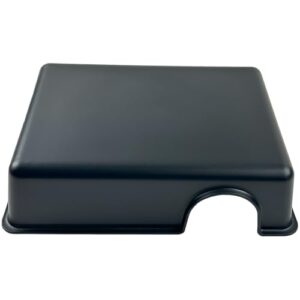
A well-placed humid cave performs quiet, essential work. It maintains interior humidity between 70 and 90 percent—the precise microclimate snakes require during shedding cycles. Position it on the cooler side of the enclosure, away from direct heat sources, and line the interior with damp sphagnum moss to stabilize moisture levels.
Constructed from nonporous resin, this hide resists mold growth, cleans effortlessly, and prevents chemical leaching into bioactive substrates. Its durable yet safe composition ensures longevity without compromising terrarium integrity.
Safety features include smooth edges to protect delicate scale margins and an entrance height optimized for stress-free access by mid-to-large snake species. These design choices prioritize both functionality and animal welfare.
| Best For | Reptile keepers who want a reliable humid hide for geckos, ball pythons, bearded dragons, or other mid-to-large species that need help with shedding and stress-free shelter. |
|---|---|
| Material | High-density resin |
| Price | Not listed |
| Dimensions | 11.5×7.8×2.7 in |
| Species Suitability | Geckos, ball pythons, dragons |
| Ease of Cleaning | Durable, simple cleaning |
| Bioactive Compatible | Yes |
| Additional Features |
|
- Holds moisture well, keeping humidity in that 70–90% sweet spot snakes and geckos need during shed cycles
- Smooth edges and solid resin construction make it safe, easy to clean, and resistant to bites and scratches
- Comes in multiple sizes, so it works for juveniles all the way up to adult tortoises and bearded dragons
- The X-Large can feel too roomy for small or slender snakes, which may make them feel exposed rather than secure
- Only comes in black, so it might clash with lighter or more colorful terrarium setups
- Not a great fit for burrowing species that need natural substrate to dig into rather than a hard resin shell
8. Natural Cork Bark Reptile Terrarium Decor
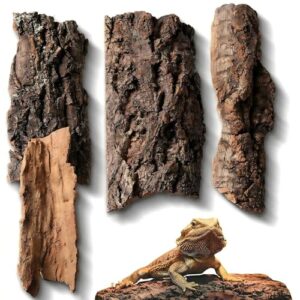
Cork bark doesn’t just look natural — it is natural, and your snake can tell the difference. The Homoyoyo pack delivers four irregular pieces, each roughly 3 to 5.5 inches long, with a textured surface that aids climbing, shedding, and genuine concealment.
In bioactive setups, cork resists mold, anchors live moss, and stabilizes local humidity as it slowly releases trapped moisture.
For larger species, stacking pieces or partially embedding them in substrate creates deeper, more convincing retreats without extra cost. Keep expectations realistic for these setups.
| Best For | Small reptile and amphibian owners setting up nano or bioactive terrariums who want natural-looking hides and decor on a budget. |
|---|---|
| Material | Natural cork bark |
| Price | $13.99 |
| Dimensions | 3–5.5 in pieces |
| Species Suitability | Reptiles, amphibians, isopods |
| Ease of Cleaning | Low-maintenance, no rot |
| Bioactive Compatible | Yes |
| Additional Features |
|
- Four unique cork pieces per pack give you variety right out of the box — no two look the same.
- Naturally resists mold and rot, so it holds up well in humid enclosures without extra maintenance.
- Works as a hide, climbing surface, background decor, or humid-hide cover — a lot of flexibility for $13.99.
- Pieces are thin and fragile — active or larger pets can crack or crumble them pretty quickly.
- The 3 to 5.5-inch size works great for small species but falls short for anything medium or larger.
- Random sizing means what shows up in your pack might not match what you were picturing.
9. Jihaqua Medium Terrarium Reptile Hide
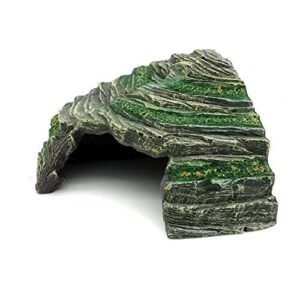
The Jihaqua Medium Terrarium Reptile Hide earns its spot through quiet reliability. At 6.7 × 6.7 × 4 inches, it fits comfortably into mid-sized builds housing corn snakes or ball pythons under three feet.
Its resin exterior mimics natural rock convincingly, blends with live moss and bioactive substrate, and cleans with a damp cloth after misting events.
Its enclosed design traps humidity well, supporting shedding cycles without soaking the whole enclosure. Plant coverage near the entrance turns it into a genuinely convincing retreat.
| Best For | Owners of small to medium reptiles like leopard geckos, corn snakes, or ball pythons under three feet who want a hide that looks natural and holds humidity well. |
|---|---|
| Material | Resin/hard-plastic |
| Price | Not listed |
| Dimensions | 6.7×6.7×4 in |
| Species Suitability | Geckos, corn snakes, ball pythons |
| Ease of Cleaning | Smooth non-porous interior |
| Bioactive Compatible | Yes |
| Additional Features |
|
- Realistic rock look blends into bioactive setups without looking cheap or out of place
- Smooth interior makes cleaning easy — no scrubbing out stubborn grime after misting
- Heavy enough to stay put when your reptile climbs in or out
- The wide opening might feel too exposed for shy species that like a snug, tight fit
- Could eat up a lot of floor space in tanks smaller than 20 gallons
- Long-term UVB exposure may cause the color to fade over time
10. Lucky Critter Reptile Viewing Cave
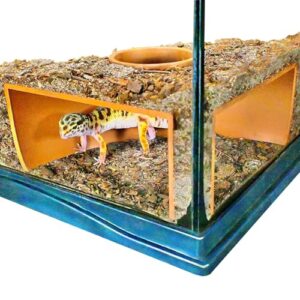
The Lucky Critter Viewing Cave lets you watch your snake settle in without cracking the lid. Its curved tunnel with dual entry points suits snakes that like to feel enclosed but still scout their surroundings.
Constructed from durable resin, it blends naturally with bioactive substrate and plants, while its smooth interior ensures straightforward cleaning.
Weighing approximately 420 grams, it stays put in moist substrate. It is best suited for enclosures 12–18 inches tall, ensuring adequate tail clearance.
| Best For | Small reptile owners who want to keep an eye on their pet without disturbing the enclosure, especially those with species that need a cozy corner hide. |
|---|---|
| Material | Non-toxic plastic |
| Price | Not listed |
| Dimensions | 6x6x3 in |
| Species Suitability | Small reptiles, amphibians |
| Ease of Cleaning | Standard rinse |
| Bioactive Compatible | Yes |
| Additional Features |
|
- The transparent panel lets you watch your reptile without lifting the lid or stressing them out.
- Fits neatly into a tank corner and goes partially underground, so it doesn’t eat up much usable floor space.
- Made from reptile-safe, non-toxic plastic that’s easy to wipe down.
- The interior is pretty small — adult or larger reptiles will likely find it too cramped.
- It doesn’t hold moisture well, so if your reptile needs a humid hide, you may need a separate one.
- Some buyers feel it looks smaller in person than it does in photos, and the plastic build feels a bit lightweight.
Choosing Bioactive Snake Hides
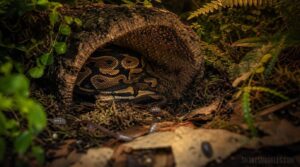
Not every hide earns its place in a bioactive setup — the wrong choice can disrupt humidity, frustrate your cleanup crew, or leave your snake feeling exposed. A good hide has to work with the living system around it, not against it.
Here’s what to look for before you commit to one.
Snug Interior Fit
Size selection matters more than people think — a hide that fits too loosely compromises its purpose entirely. Your snake should feel cradled, not rattled around. Three interior qualities to prioritize:
- Curved Sidewalls that guide natural coiling
- Low Profile Ceilings that prevent head-sticking
- Wide Base Distribution for even pressure
Soft Lining Fabrics and Non-porous Interiors — found in quality options like the Kages Formed ABS Log Reptile Hide Box — keep custom PVC reptile enclosures and jumbo hide boxes performing their best in a customizable habitat.
Mold-resistant Materials
Material choice is critical for the success of a bioactive setup. Resin and ABS hide—such as the Kages Formed ABS Log Reptile Hide Box—share the same nonporous matte finish, similar to PVC’s durability in quality enclosures. This design logic resists fungal colonization even under sustained humidity.
| Material | Mold Resistance | Best Use |
|---|---|---|
| ABS/Resin | High | Humid hides |
| Cork bark | Moderate | Dry zones |
| Painted wood | Low | Avoid in bioactive setups |
For dry zones, cork bark offers moderate mold resistance, while painted wood should be avoided entirely in bioactive environments due to its low mold resistance.
Easy Cleaning Surfaces
Non-porous materials make all the difference when cleanup day arrives. A smooth finish—whether on a plastic hide, durable ABS plastic, or non-porous matte finish surface—won’t trap waste, bacteria, or substrate the way textured or porous materials do.
This advantage is critical inside custom PVC reptile enclosures, where humidity runs high, amplifying the risk of trapped contaminants.
- Wipe clean with a damp cloth in seconds
- Resist staining and prevent microbial buildup
- Disinfection compatibility with EPA-registered cleaners keeps surfaces safe long-term
- Antimicrobial coatings and stain-resistant design reduce how often deep cleaning is needed
Stable Hide Weight
Weight matters more than most keepers realize. A plastic hide that shifts every time your snake enters it disrupts the entire bioactive snake habitat — unsettling substrate, stressing cleanup crews, and breaking humidity pockets you’ve worked hard to maintain.
| Factor | What to Look For | Why It Matters |
|---|---|---|
| Base Footprint | Wide, flat contact surface | Prevents wobble on uneven substrate |
| Center of Gravity | Low-profile construction | Resists tipping under snake weight |
| Ballasting Techniques | Sand fill or partial burial | Stabilizes lightweight or hollow hides |
Material density guides your best choice — solid cork and weighted base designs stay planted where you put them.
Naturalistic Enclosure Blending
When a hide looks like it belongs, your snake behaves like it does too. Texture Harmony between cork, stone, and substrate surfaces creates Smooth Substrate Integration that feels continuous rather than staged.
Color Palette Matching earthy tones to local materials, Camouflaged Fixture Placement, and Integrated Lighting Design all reinforce ecosystem balance in terrarium environments — reducing stress for reptiles through naturalistic habitat design with live plants in vivarium settings. Incorporating layered substrate benefits improves moisture regulation and mimics natural microclimates.
- Match hide colorations to your substrate blend — sandy tans for arid builds, dark browns for humid setups
- Use cork bark and textured resin together to break up uniform lines
- Position live plants in vivarium corners to frame hides naturally
- Align lighting angles so shadows fall across hide entrances, mimicking forest floor dappling
- Embed hide edges into substrate to eliminate the "placed object" look in your bioactive snake habitat
Humid Hides for Healthy Shedding
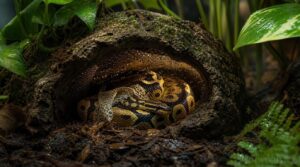
Shedding problems often trace back to one thing: not enough moisture when it matters most. A humid hide provides your snake with a dedicated space to soak up the extra humidity it needs, without turning the whole enclosure into a swamp.
Here’s what to know before you set one up.
Sphagnum Moss Lining
Sphagnum moss is one of the hardest-working materials you can add to a bioactive terrarium. Packed into a humid hide, it delivers moisture retention — holding up to 20 times its weight in water — while its fibrous matrix provides airflow benefits that prevent anaerobic pockets beneath cleanup crew organisms.
Sphagnum moss holds up to 20 times its weight in water while keeping bioactive hides fresh and breathable
| Property | Benefit |
|---|---|
| Acidic Microclimate (pH 5–6.5) | Slows mold and pathogen growth |
| Temperature Buffer | Stabilizes hide warmth near 24–28°C |
For longevity maintenance, mist and rotate the lining every few weeks.
Local Humidity Pockets
Master airflow regulation and moss moisture diffusion, and humidity pockets form naturally in sheltered corners, raising local relative humidity (RH) by 5–20 points for hours. Temperature-humidity sync is critical—warm zones accelerate evaporation, sustaining a genuinely humid microclimate around hides.
Position your humidity sensor near these pockets to monitor conditions accurately. Practice corner pocket mitigation through careful substrate moisture control, ensuring excess water doesn’t accumulate. This balance fosters an environment where cleanup-crew organisms thrive alongside your snake, maintaining terrarium health.
Shed Support Benefits
A well-designed humid hide quietly does several jobs at once. Moisture balance inside the shelter loosens retained skin gradually, improving shedding efficiency without manual intervention.
Rounded interior surfaces offer scale protection as your snake rubs and works through the shed.
Consistent shelter availability aids stress reduction for reptiles by keeping temperature gradient access predictable — a cornerstone of solid snake husbandry basics and long-term health monitoring.
Entrance Size Considerations
Entrance size is where a lot of keepers quietly get it wrong. For hatchling snakes, a proportionate opening prevents escape attempts while supporting growth; for adult ball pythons, aim for a 3–4-inch diameter with adequate height clearance to ensure smooth entry.
A rounded entrance with edge reinforcement eliminates snag points. Balanced ventilation maintains stable humidity without drying the interior.
Placement Near Warm Zones
Placement matters more than most keepers realize. Position your warm-side hide placement within 2–6 inches of heat projector lamps, radiant heat panels, or basking bulbs, maintaining a 1–2 inch safety gap to prevent contact burns.
This microclimate temperature tuning—ambient warm integration sitting between 28–32°C—facilitates natural shedding cycles.
Cost-effective hides with moss lining make temperature regulation easy here.
Species-Specific Hide Setup Tips
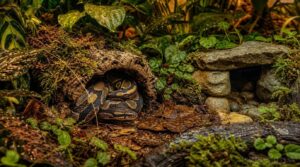
Every snake species carries instincts shaped by the landscape it evolved in, and your hide setup should reflect that. A ball python’s need for tight, dark retreats differs significantly from a hognose’s drive to burrow or a rosy boa’s preference for rocky crevices.
Here’s how to match your hide placement to what each species actually needs.
Ball Python Privacy
Ball pythons, Python regius, rely on darkness and enclosure as their primary stress reduction tools — a fact that should shape every decision in your reptile habitat design. For your Ball Python Python regius Bioactive Vivarium Kit, prioritize a two-hide reptile terrarium setup with Hide Entrance Orientation facing away from room light for Privacy Lighting Control.
Watch Stress Signal Indicators like repeated nosing or refusal to settle, and respect Handling Frequency Limits to preserve your snake’s Nighttime Retreat Choice.
Corn Snake Climbing Access
Unlike the ball python’s preference for staying low and hidden, Pantherophis guttatus actively explores vertical space — so your Corn Snake Pantherophis guttatus Bioactive Vivarium Kit benefits from deliberate height gradation and secure perches.
Use branch attachment points anchored to walls, varying climbing angles with diagonal and horizontal runs for vertical grip. This reptile terrarium setup keeps your bioactive-ready reptile habitat design genuinely functional.
Hognose Burrowing Hides
Where corn snakes climb, the Heterodon nasicus burrows — the Western Hognose Snake Heterodon nasicus Bioactive Vivarium Kit rewards patience with a genuinely self-sustaining bioactive vivarium kit, built around depth. These hardy North American colubrids dig 4–6 inches down, utilizing post-feeding digging periods to process meals underground.
- Prioritize Burrow Depth with 5+ inches of substrate
- Blend Substrate Composition using sand and coconut fiber
- Distribute entrances across warm and cool zones
- Align hides with your temperature gradient
- Skip substrate shields for unobstructed humidity retention
Kingsnake Secure Retreats
Kingsnakes are escape artists by nature, so your enclosures need Escape‑Proof Construction with a Locking Lid Design that holds firm under pressure.
Whether you’re setting up a Florida King Snake (Lampropeltis getula floridana), California kingsnake (Lampropeltis getula californiae), or Mexican black kingsnake (Lampropeltis getula nigrita), prioritize a Bioactive Vivarium Kit with Abrasion‑Safe Surfaces, Camouflaged Mounting, and Microclimate Stabilization.
Achieve this through strategic herpetology enclosure design and thoughtful reptile housing placement.
Rosy Boa Rocky Crevices
For Lichanura trivirgata, rocky crevice hides are non-negotiable. Your Rosy Boa bioactive vivarium kit should incorporate a Rocky Substrate Mix of sandy loam and granite fragments, delivering Microclimate Stability and Predator Shielding.
Pairing a Basking Ledge Design with tight crevice openings ensures Crevice Camouflage, supporting stress reduction for reptiles through natural concealment that mirrors their semi-arid homeland.
Bioactive Placement and Maintenance
Where you place a hide inside a bioactive setup matters just as much as which hide you choose.
Small positioning decisions shape temperature stability, cleanup crew movement, and how comfortably your snake actually uses the space.
Here’s what to keep in mind for each key aspect of bioactive placement and maintenance.
Deep Substrate Embedding
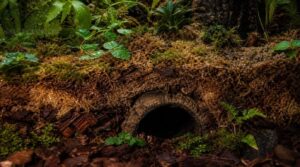
Embedding hides beneath the surface are where Layered Substrate Design becomes your real competitive advantage. A well-anchored hide sits flush, stable, and wrapped in a Moisture Retention Strategy that facilitates every shed cycle.
- Blend coco fiber, sphagnum, and orchid bark for Burrowing Stability Factors
- Depth-tune placement for Microclimate Creation around each hide entrance
- Plan Substrate Longevity Management with 12–18 month replacement cycles
Live Plant Cover
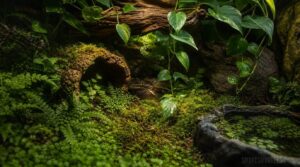
Layering live plants transforms your hide placement from functional to fully alive. A Leafy Ground Cover of low ferns or creeping species stabilizes the substrate, while a Vining Plant Canopy of pothos trails across logs, creating terrestrial and arboreal elements that mirror your snake’s native humid environment.
Add a Herbaceous Border Layer, Moss Litter Carpet, and Aquatic Edge Plants near water features. These bioactive-ready reptile enclosure accessories practically maintain themselves.
Cleanup Crew Access
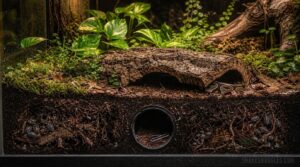
Your cleanup crew does the heavy lifting — but only if you’ve set things up to let them work. Use Labeled Access Doors and Service Hatch Locations to reach substrate without disturbing your snake.
Substrate Removal Ports near hide bases, paired with Tool Caddy Placement nearby, make Cleanup Schedule Coordination efficient.
A self-sustaining bioactive vivarium kit practically maintains itself when ventilation considerations support healthy microfauna activity.
Temperature Gradient Positioning
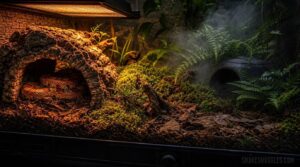
Position your hides along a deliberate thermal map, with Basking Spot Placement on the warm end and Cool End Location on the opposite side. Ensure a Gradient Length Ratio spanning roughly one-half the enclosure.
Vertical Gradient Layering adds depth near heat lamp alternatives like radiant panels. This approach enhances thermal diversity within the habitat.
A reliable thermostat and thermometer, paired with a smart Sensor Spacing Strategy, maintains consistent thermostatic control. This setup keeps your snake’s metabolism regulated and healthy.
Routine Spot Cleaning
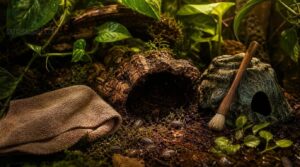
Bioactive hides don’t clean themselves — but with the right cleaning routine, they practically do.
Start with quick Stain Identification daily, then match your Tool Selection to the surface: microfiber for nonporous matte finishes, soft brushes for cork or moss.
Surface Treatment stays minimal when you spot-clean often.
A consistent Cleaning Schedule and Preventive Maintenance turn any easy-to-clean enclosure into genuine maintenance convenience.
Frequently Asked Questions (FAQs)
Can snakes have a bioactive enclosure?
Yes, snakes thrive in bioactive enclosures. Live plants, substrate moisture, and microfauna benefits combine to create a self-sustaining bioactive vivarium kit that facilitates stress reduction, humidity control, and naturalistic reptile husbandry effortlessly.
Can multiple hides coexist without stressing snakes?
Multiple hides absolutely coexist — in fact, hide variety across multi-hide zones reduces stress by giving snakes temperature choices.
This diversity also enables competition mitigation in shared setups, further alleviating tension among snakes.
Additionally, humid retreats support shedding without forcing exposure to open space, ensuring safety during vulnerable periods.
How often should bioactive hides be replaced?
Most bioactive hides last 12 to 18 months, though humidity impact and material degradation can shorten that. Regular inspection schedule checks beat fixed calendars — replace when you spot cracking, mold, or warping.
Do hides affect isopod and springtail populations?
Absolutely — hides shape microhabitat complexity in ways that directly affect moisture retention, substrate proximity, and population stability for both isopods and springtails thriving inside any self-sustaining bioactive vivarium kit.
Which hide materials retain heat most effectively?
Cork’s air pockets make it a natural insulator, while dense stone and clay store heat like a slow-burn reservoir, releasing warmth gradually.
These materials serve as ideal alternatives to ceramic heat emitters or the Arcadia Reptile Deep Heat Projector.
Can hides double as egg-laying sites?
Yes, hides can absolutely double as egg-laying sites. Nesting Substrate Moisture, Clutch Capacity Fit, and Heat Spot Nesting all matter — a secure, warm, damp hide gives your snake exactly the conditions she needs to lay.
Conclusion
Even Aristotle, cataloguing creatures by the firelight of ancient curiosity, understood that an animal reveals its health through behavior long before obvious symptoms appear.
The snake hides for bioactive enclosures you choose aren’t decorative afterthoughts—they’re functional anchors in a living system. Proper material, moisture, and placement transform a mere box into a habitat.
Getting the material, moisture, and placement right ensures the enclosure stops being a container and becomes a true environment. This shift marks where real husbandry begins.