This site is supported by our readers. We may earn a commission, at no cost to you, if you purchase through links.

Most rescue boas arrive with zero documentation—no feeding records, no weight history, no clue whether they’ve been eating live prey or nothing at all for months. That uncertainty makes the first feeding attempt one of the highest-risk moments in a rescue placement. Get it wrong and you’re dealing with regurgitation, stress response, or a bite you didn’t see coming.
Selecting the right boa constrictor feeders for rescue owners isn’t just about nutrition—it’s about rebuilding trust with an animal that may have every reason not to cooperate. The protocols here cut through the guesswork.
Table Of Contents
Key Takeaways
- Always use frozen-thawed rodents from certified suppliers—live or wild-caught prey introduces injury, parasites, and stress that a rescue boa simply can’t afford.
- Match every meal to your boa’s widest body diameter and cap prey weight at 10% of its body weight, because oversized feeders cause regurgitation and can set recovery back weeks.
- Rescue boas rarely come with feeding histories, so start with a body condition score and build a schedule from what you observe—not from guesswork or a calendar.
- Watch for regurgitation, open-mouth breathing, or repeated meal refusals, and don’t hesitate to call a reptile vet—catching problems early is what separates a full recovery from a crisis.
Choose Safe Rescue Boa Feeders

Feeding a rescue boa isn’t just about dropping in a rodent and walking away—what you feed matters as much as how often. Some feeders are genuinely risky, and the wrong choice can set back a snake that’s already been through a rough start. Here’s what to look for before anything goes into the enclosure.
Timing matters just as much as prey choice, so it’s worth consulting a solid baby boa feeding schedule before you establish any routine with a new rescue.
Frozen-Thawed Rodents
Frozen-thawed rodents are the best practice for rescue boa feeders — and for good reason. They eliminate injury risk entirely. Nutritionally, they’re complete and consistent.
Store them at -20°C or colder to preserve texture and safety. Always check that packaging is vacuum-sealed with no spoilage signs, and look for batch lot numbers so you can trace any supply issues back to the source.
When preparing them, follow safe thawing procedures to guarantee the prey is completely soft and pliable.
Avoid Live Feeding
Live prey is where things go sideways fast. A rodent that bites back can tear your boa’s mouth tissue — and for a rescue animal still settling in, that’s a serious setback.
Live prey dangers include:
- Bites and scratches causing oral injuries
- Erratic movement triggering defensive strikes
- Parasite and pathogen transfer during feeding
- Escaped feeders hiding and stressing the enclosure
- Conditioning fear responses around meal time
Certified Feeder Suppliers
Once you’ve cut live feeders out of the picture, sourcing matters just as much.
Look for suppliers with GMP certification or FSSC 22000 — these aren’t just badges. They mean third-party audits, documented food safety systems, and lot number tracking on every batch. If something goes wrong, a certified supplier can trace that feeder back to its source fast.
Feeder Packaging Checks
When that certified package lands at your door, don’t just toss it in the freezer. Check it first.
Look for intact seals and no punctures, a visible lot number, and a use-by date. Cold packs should still be firm. Certification marks confirm approved handling.
Any sign of freezer burn or moisture damage? Discard it — no exceptions.
Avoid Wild-Caught Prey
Skip wild-caught rodents entirely — they’re a gamble you can’t afford in a rescue setting. Wild mice and rats can carry parasites, bacteria, and toxins absorbed from pesticide-treated fields, and those threats aren’t visible. Inconsistent size and condition make proper prey matching nearly impossible.
Frozen-thawed certified feeders give you control, consistency, and safety every single time.
Match Prey to Boa Size
Getting prey sizing right is one of the most important things you can do for a rescue boa’s health. Too big and you’re risking regurgitation; too small and you’re leaving them underfed. Here’s what works for each stage of their life.
As feeding intervals shift from weekly for hatchlings to every two weeks for adults, pairing the right prey size with the right schedule makes all the difference—this guide to reptile enclosure setups and husbandry basics can help you dial in the full routine.
Widest Body Diameter

The widest body point — that thick midsection just behind the front limbs — is your measuring target. Adult females can reach 2.0 to 2.5 inches in diameter; juveniles commonly measure 0.5 to 1.2 inches. Here’s what to track:
- Measure at the midsection, not the head or tail
- Use a soft tape measure for accuracy
- Adult males commonly show less girth than females
- Well-nourished boas reach upper diameter ranges faster
- Reassess diameter monthly alongside your body condition score
Match your boa constrictor feeders to that measurement first.
Ten Percent Weight Rule

One simple rule keeps portion sizes honest: never exceed 10% of your boa’s current body weight per meal. Weigh your Boa constrictor first — that number drives everything.
A 2 kg rescue boa’s maximum prey weight caps at 200 g. That’s your ceiling, not your target. Adjust downward if their body condition score signals they’re already carrying too much.
Hatchling Feeder Sizes
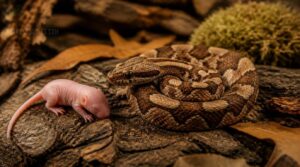
Hatchlings are tiny — but prey size still matters enormously.
For snakes weighing 50–200 g, offer feeders between 3–6 g, roughly matching the snake’s widest girth. Pinkie mice work perfectly here.
Start small, track weight monthly, and adjust upward gradually. Too large a prey item risks regurgitation and real esophageal injury — don’t rush growth.
Adult Male Feeder Sizes
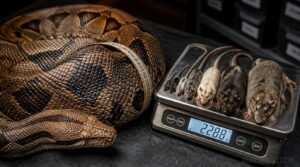
Adult males bring a different challenge — they’re built like coiled muscle, and their girth varies wildly.
For an 8–10 ft male, offer rats weighing 300–700 g, matched to the snake’s widest body diameter. Thicker midbodies may need 500–800 g. Stay within 10–12% of body weight and increase prey size gradually — jumping feeder weight too fast triggers regurgitation every time.
Adult Female Feeder Sizes

Female boas are the heavyweights of the species — and their feeder size needs reflect that. A healthy adult female weighing 2.5 kg does well on prey between 250–500 g, matched to her widest body point.
Post-birth, drop feeder animals slightly smaller until she regains condition. Seasonal adjustments matter too — scale back during brumation periods.
Set a Rescue Feeding Schedule

Rescue boas rarely come with a feeding history, so you’re often starting from scratch. The schedule you set now will shape their recovery, growth, and long-term health. Here’s what works at each life stage.
Unknown Feeding Histories
Most rescue boas arrive with no feeding records — no prey size, no schedule, no history at all. That blank slate matters more than people realize. Without it, you’re guessing, and guessing wrong means overfeeding, underfeeding, or missing a health problem entirely.
Start with body condition scoring before you feed anything, and let what you observe — weight, spine visibility, midbody thickness — guide your first steps.
Hatchling Feeding Frequency
Once you’ve assessed that blank slate, the smallest boas demand the tightest rhythm. Feed hatchlings every 5–7 days — enough to fuel rapid growth without overwhelming a still-developing digestive system.
For a size comparison across species, this guide on what baby corn snakes eat shows how prey size scales with a hatchling’s growing appetite.
Watch the shed cycle closely; appetite often dips beforehand. If a shed is coming, wait.
Consistent weight gain monitoring each month confirms the schedule is working.
Juvenile Feeding Frequency
As hatchlings grow past their first several months, the rhythm shifts. Juveniles digest more slowly than hatchlings, so feeding every 10 to 14 days gives their system enough time to fully process each meal before the next one arrives.
- Watch body condition monthly — steady weight gain means the schedule is working
- Reduce frequency if your boa thickens faster than expected
- Increase meals gradually if the boa stays consistently thin
- Temperature drops slow digestion — extend intervals during cooler periods
- Regurgitation means the next meal waits until full recovery
Adult Boa Meal Timing
By the time your Boa constrictor reaches adulthood, the feeding schedule stretches out considerably. Most adult boas do well on meals every 3 to 4 weeks, but only after full digestion—meaning no food until they’ve defecated.
Adjust intervals based on weight trend analysis, temperature, and body condition, not the calendar. Cooler enclosures slow metabolism, so extend gaps accordingly.
Gravid Female Feeding
Caring for a gravid female means reading her body, not the calendar. Offer prey every 2 weeks, but size down—smaller prey reduces regurgitation risk since digestion slows during gestation. If she refuses, wait. Don’t escalate. Refusal is normal. Stress isn’t.
Keep her warm side at 88–92°F, water bowl full, and handling minimal.
Prepare Feeders Without Stress

How you prepare a feeder matters just as much as what you feed. A stressed or improperly thawed rodent can trigger regurgitation, defensive strikes, or a flat-out hunger strike from a rescue boa that’s already on edge. Here’s exactly what to do before the tongs ever touch the enclosure.
Getting the basics right from the start makes all the difference, so brushing up on safe feeder selection and prep for juvenile boa constrictors gives you a solid foundation before tackling the hands-on work.
Safe Refrigerator Thawing
The fridge is your safest thaw zone — but only if you use it correctly. Keep the temperature at or below 40°F (4°C) throughout the entire process.
A 1–2 pound feeder takes 12–24 hours. Larger prey needs up to 48 hours.
Use a dedicated, leak-proof container, and keep it away from any human food to prevent cross-contamination.
Proper Water Bath Warming
Once your feeder is fully thawed, a warm water bath brings it to the right feeding temperature — safely and evenly.
- Fill a container with water held steady at 98–102°F
- Keep the rodent sealed in packaging during submersion
- Warm for 20–25 minutes, checking for cold spots
- Never use a microwave — it creates dangerous hot spots
Sixty words. Done right, your Boa constrictor feeds without stress.
Feeding Tongs Safety
The right feeding tongs aren’t optional — they’re your boa’s first line of dental protection. Choose rubber-tipped or silicone-tipped tongs, 12–18 inches long, to keep your hand clear of the strike zone. Present the frozen-thawed rodent at the very tip, extending the prey beyond the metal grip. Move slowly and steadily — no jerking.
Sanitize tongs after every feeding with diluted bleach, rinse thoroughly, and dry completely.
Dim-Light Presentation
Boas feed more confidently in dim light conditions — it mimics their natural crepuscular hunting environment. Dim the room enough to feel secure, but keep enough visibility to track the head and strike zone.
Present your boa constrictor feeders slowly and at nose level, letting scent and sight work together. If the boa starts tracking, hold the prey still.
Remove Uneaten Prey
If your boa doesn’t strike within a reasonable window, don’t leave it to chance. Remove uneaten prey within 12–24 hours — no exceptions.
Here’s why prompt removal matters:
- Decomposition starts fast, fouling substrate and attracting pests
- Live feeders can gnaw soft tissue, creating injury and infection risk
- Lingering prey disrupts the enclosure’s hygiene and digestive health long-term
- Use feeding tongs for safe, controlled removal — never bare hands
- A clean removal routine builds a clearer feeding history for dietary management
Take note of what happened. Skipped meals can signal stress, illness, or incorrect prey sizing — all worth tracking before the next feed.
Prevent Feeding Health Problems

Feeding your rescue boa correctly is only half the battle—keeping them healthy afterward is where most owners quietly slip up. A few common mistakes can snowball into serious problems fast, and some are easy to miss until the damage is done. Here’s what to watch for and how to stay ahead of it.
Learning to spot subtle stress signals, like an S-curve posture or a quick tail flick, can prevent handling mishaps that often trace back to poor large snake handling techniques.
Avoid Power Feeding
Power feeding kills rescue boas quietly. Stick to your fixed feeding schedule — don’t offer extra meals just because your boa seems interested. One prey item per session, capped by body-width fit, not hunger. Allow a full digestion window between meals.
Power feeding kills rescue boas quietly — one prey item, one session, no exceptions
| Risk Factor | Wrong Approach | Correct Practice |
|---|---|---|
| Frequency | Feed on demand | Fixed intervals only |
| Prey size | Match appetite | Match body diameter |
| Missed meal | Double next portion | Resume normal schedule |
Obese Rescue Boas
Some rescue boas arrive already carrying too much weight — round rather than sleek, with fat rolls near the head or cloaca, even a squishy feel during handling. That’s your signal to adjust immediately.
Reduce meal frequency and keep prey portions small. Think of it as a slow reset, not a crash diet.
Regurgitation Warning Signs
Slowing down the diet is step one — but keeping a close eye on what happens after meals matters just as much.
Regurgitation isn’t just messy. It’s a serious red flag that your boa’s digestion is failing.
Watch for these four warning signs:
- Mouth Food Regurgitation — undigested prey reappears in the mouth shortly after feeding
- Wet Gurgling Sign — noisy, liquid-sounding breathing right after a meal
- Bitter Taste Indicator — a sour smell near the mouth between feedings
- Swallowing Difficulty or Post-Meal Cough — repeated gulping attempts or coughing tied directly to meal times
Any one of these signals that the Ten Percent Rule on prey sizing may need revisiting — or that something deeper is wrong.
Post-Feeding No Handling
Once regurgitation warning signs are on your radar, your next job is simple: leave the boa alone.
After every meal, enforce a 48–72 hour no-handling period. No picking up. No repositioning. Even well-meaning contact during the digestive recovery window can trigger regurgitation or incomplete digestion.
Observe from outside the enclosure instead — that’s your no-contact protocol in practice.
When to Call Vets
Knowing when to call a reptile veterinarian is the final piece of the puzzle.
If you’ve ruled out the most common causes of snake regurgitation and the problem persists, that’s your cue to book an appointment.
Watch for open-mouth breathing, wheezing, or gurgling — those are respiratory emergencies. Facial swelling, repeated vomiting, seizures, or sudden loss of coordination mean call immediately. Pale tongue, burns, or abnormal temperatures above 40°C or below 37.2°C also warrant urgent care.
Don’t wait and wonder.
Frequently Asked Questions (FAQs)
How do I transition feeders between prey types?
Start on the next planned feeding. Swap the new prey type at the same size and warmth your boa expects. If refused, retry once before adjusting. Keep all other conditions identical.
What supplements should I add to feeder rodents?
Dust feeders with a calcium-mineral powder like Miner-All and pair it with a vitamin formula like Vit-All for an amino acid boost. Together, they cover calcium, phosphorus, Vitamin D3, and protein gaps.
How does stress affect a rescue boas appetite?
Stress shuts down a rescue boa’s appetite fast. Elevated corticosterone tells the body to survive, not digest — gut motility slows, hunger disappears, and meals get refused until the snake feels secure.
Can boa constrictors fast safely during shedding cycles?
Yes — boas commonly stop eating during a shed cycle, and that’s completely normal. Once the shed finishes and eyes clear, offer the next meal within 1–2 days.
Conclusion
Test this theory: a boa that eats consistently is a boa that heals. Every choice you make around boa constrictor feeders for rescue owners—prey size, thaw temperature, feeding interval—either rebuilds that animal’s trust or quietly erodes it further. You’re not just filling a stomach.
You’re rewriting a story that started badly. Get the fundamentals right, stay consistent, and watch a defensive, underfed rescue transform into a calm, thriving snake. That’s the real reward.