This site is supported by our readers. We may earn a commission, at no cost to you, if you purchase through links.

A gravid female drops eggs at 2 AM, and your thermostat is the only thing standing between a healthy clutch and a wasted season. Breeders don’t get to guess on temperature. One cold night in an incubation tub can undo months of careful pairing, and a heater that drifts five degrees off target does real damage before you notice.
That’s why under tank heaters for breeders aren’t a luxury item, they’re infrastructure. The right pad or strip delivers steady, contact heat exactly where your animals need it, without the swings that stress reptiles or amphibians during critical development windows.
Below, you’ll find eight heaters worth your money, plus the sizing, thermostat, and installation details that keep every clutch on track.
Table Of Contents
- Key Takeaways
- 8 Best Under Tank Heaters for Breeders
- 1. HITOP 25W Adjustable Aquarium Heater
- 2. YukiHalu Mini Submersible Aquarium Heater 50W
- 3. PremToytics Mini Submersible Aquarium Heater
- 4. SEAOURA 25W Mini Aquarium Heater
- 5. Marina Submersible Heater for Aquarium, Mini, 50-watt
- 6. iPower 8×12 Inch Reptile Heat Pad
- 7. Zoo Med Reptitherm Undertank Heater 6×8
- 8. VIVOSUN Seedling Heat Mat Thermostat Combo
- Choosing The Right Heater Size
- Thermostat Control for Breeding Setups
- Installing Under Tank Heaters Safely
- Comparing Performance, Safety, and Value
- Frequently Asked Questions (FAQs)
- What size heater for a 40 gallon breeder?
- Are under tank heaters good?
- How many watt heater for 60 gallon breeder?
- What is the best heating for dog kennels?
- How long do under tank heaters typically last?
- Can under tank heaters be used with live plants?
- Do under tank heaters work without a thermostat?
- Are under tank heaters safe for all species?
- Should heaters run continuously during breeding season?
- Conclusion
Key Takeaways
- Always pair your heater with an independent thermometer and thermostat, since built-in dials and displays often drift several degrees from actual temps and can’t be trusted alone.
- Match wattage to your coldest room reading and enclosure size, not the average temperature, since a 25W heater struggles below 68°F while 50W roughly doubles output under the same conditions.
- Proper installation makes or breaks performance: clean the mounting surface with alcohol, mount under the warm side only, and check for air gaps to avoid uneven heat and burn risks.
- Run your under tank heater as the primary, thermostat-cycled heat source rather than constant power, since cycling prevents dry fire damage and protects fry from fatal temperature swings.
8 Best Under Tank Heaters for Breeders
Eight heaters made this list, and each earned its spot through wattage, build quality, and real breeding-room performance. Some are submersible aquarium heaters for livebearers and fry tanks, others are flat pads built for reptile and amphibian enclosures. Here’s how they stack up.
For breeders working with limited floor space, this 8-watt pad’s compact footprint pairs well with other reptile heating pads for multi-tank reptile rooms designed to keep stacked setups efficient.
1. HITOP 25W Adjustable Aquarium Heater
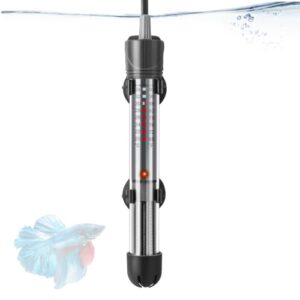
If you’re breeding in the 5 to 10 gallon range, the HITOP 25W is worth a look. Its dial covers 68 to 93°F, and the thermostat auto-shuts once it hits target. Build quality stands out: 2mm quartz glass, 33% thicker than typical heaters, held by three suction cups for secure submersible mounting.
Watch for overshoot, though. Some units run 4 to 7°F hot, and a few reports mention failure within two days. Back it up with an independent thermometer.
| Best For | Aquarium owners with small 5–10 gallon freshwater or saltwater tanks who want a compact, low-maintenance heater with automatic temperature control. |
|---|---|
| Power Rating | 25W |
| Waterproof/Submersible | Yes |
| Temperature Control | Built-in thermostat |
| Target Use | Aquarium |
| Weight | 8.1 oz |
| Overheat Protection | Automatic on/off thermostat |
| Additional Features |
|
- Wide adjustable range (68–93°F) with automatic thermostat shut-off, so no manual monitoring needed
- Durable 2mm thickened quartz glass, 33% thicker than standard heaters
- Compact size with three suction cups for secure, space-saving installation at any angle
- Some units overshoot the set temperature by 4–7°F, so pairing with an independent thermometer is wise
- Reports of premature failure, including some units stopping within just two days of use
- Risk of glass shattering if the heater touches the aquarium glass during setup or operation
2. YukiHalu Mini Submersible Aquarium Heater 50W
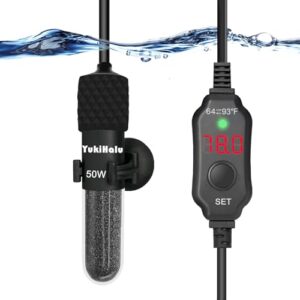
Step up to 10 gallons and the YukiHalu 50W earns its keep. The external controller keeps your hands dry, showing set point and actual temp side by side, with adjustments in single-degree steps.
Dual sensors and power-off memory mean settings survive outages, no reprogramming needed. Quartz tube plus plastic housing at 4.3 inches keeps it compact.
Check suction cups monthly. Some users report shattering or drift within weeks, so an independent thermometer isn’t optional.
| Best For | Owners of 3–10 gallon freshwater or saltwater tanks who want precise, dry-hand temperature control in a compact, discreet package. |
|---|---|
| Power Rating | 50W |
| Waterproof/Submersible | Yes |
| Temperature Control | External controller |
| Target Use | Aquarium |
| Weight | 8.8 oz |
| Overheat Protection | Automatic shut-off |
| Additional Features |
|
- External LED controller lets you adjust temperature in 1°F increments without touching the water
- Dual sensors with power-off memory retain your settings automatically after outages
- Compact quartz tube design (4.3 inches) fits nano tanks while offering automatic overheating and out-of-water shut-off protection
- Suction cups need monthly cleaning and can lose grip over time, risking detachment
- Some users report inconsistent temperature control or premature failure within weeks to months
- Glass tube requires pre-use inspection, and rare reports of shattering or overheating mean an independent thermometer is a smart backup
3. PremToytics Mini Submersible Aquarium Heater
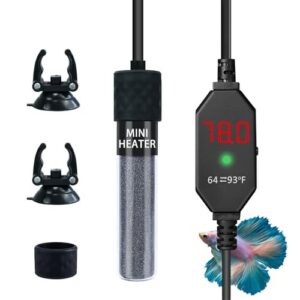
Drop down to a nano tank and the PremToytics 25W fits the job. Fully submersible, it works with freshwater or saltwater, with an external controller keeping your hands out of the water.
±1°F accuracy and memory retention mean settings hold through power blips. Range runs 64 to 93°F, plenty for shrimp or betta breeding projects.
Submerge fully before plugging in. Give it a 10-20 minute cooldown before handling after unplugging, standard practice for glass-element heaters.
| Best For | Nano tank owners keeping bettas, shrimp, or small planted setups who need reliable, space-saving heating without an internal unit crowding the tank. |
|---|---|
| Power Rating | 25W |
| Waterproof/Submersible | Yes |
| Temperature Control | External controller |
| Target Use | Aquarium |
| Weight | 9.1 oz |
| Overheat Protection | Overheat protection cutoff |
| Additional Features |
|
- Compact, fully submersible design works in both freshwater and saltwater tanks up to 10 gallons
- External digital controller offers precise ±1°F adjustment with memory retention through power interruptions
- Built-in overheating protection cuts power automatically if temperatures reach unsafe levels
- Only rated for tanks up to 10 gallons, so larger setups need a higher-wattage model
- Must be fully submerged before powering on and needs a 10-20 minute cooldown before handling after unplugging
- External controller isn’t waterproof and must be kept dry, adding a placement consideration
4. SEAOURA 25W Mini Aquarium Heater
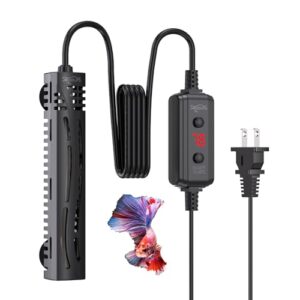
For betta owners specifically, the SEAOURA 25W earns its spot with an explosion-proof quartz tube wrapped in a plastic guard, no glass fragments floating near delicate fins.
Suction cups let you tuck it behind decor, out of sight but still working. The LED display reads real-time temp right on the housing, though don’t treat it as gospel. Readings can drift a few degrees from actual water temp, so keep a separate thermometer handy for breeding accuracy.
If you’re weighing wattage against tank size, this guide on choosing the right reptile heat lamp for beginners breaks down how enclosure setup affects your heating choices.
| Best For | Betta and small tropical fish owners with 1-6 gallon tanks who want a discreet, safety-conscious heater with adjustable external control. |
|---|---|
| Power Rating | 25W |
| Waterproof/Submersible | Yes |
| Temperature Control | External controller |
| Target Use | Aquarium |
| Weight | 7.4 oz |
| Overheat Protection | Auto shutoff at 99°F |
| Additional Features |
|
- Explosion-proof quartz tube with plastic guard keeps glass fragments away from delicate betta fins
- External LED controller offers ±1°F accuracy and easy temperature adjustments without reaching into the tank
- Compact size with suction cups allows discreet placement behind decor while still heating effectively
- Temperature readings can drift several degrees from actual water temperature, so a separate thermometer is recommended
- Decorative front cover may limit angled placement, increasing the risk of fin contact for bettas
- Only suitable for very small tanks (1-6 gallons), limiting use for larger setups
5. Marina Submersible Heater for Aquarium, Mini, 50-watt
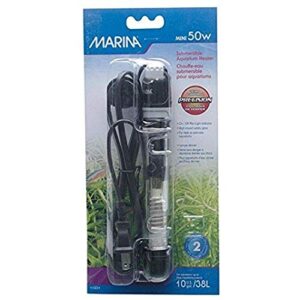
Fifty watts of steady output, and this glass unit covers tanks up to 10 gallons. Impact-resistant construction stands up to bumps without cracking, plus a pilot light confirms it’s actively heating.
Suction cups and bracket keep it locked in place. One catch: actual length runs closer to 7.5 inches, not the advertised 6, so measure your breeding tank before buying. Some units report magnet displacement issues, meaning quality control isn’t perfect. Budget an independent thermometer regardless, since dial accuracy varies unit to unit.
| Best For | Owners of small freshwater or saltwater aquariums (roughly 3–10 gallons) who need a compact, budget-friendly heater for tight spaces like filtration compartments. |
|---|---|
| Power Rating | 50W |
| Waterproof/Submersible | Yes |
| Temperature Control | Manual/external thermometer |
| Target Use | Aquarium |
| Weight | ~7.5 oz (unlisted exact) |
| Overheat Protection | None specified |
| Additional Features |
|
- Impact-resistant glass construction holds up well to everyday bumps
- Compact 50-watt design fits easily into small tanks and tight spots
- Includes a suction-cup bracket for secure, stable mounting
- Actual length runs about 7.5 inches, longer than the advertised 6 inches
- Some units suffer from quality control issues, like magnet displacement
- Temperature dial isn’t fully reliable, so you’ll need a separate thermometer to verify accuracy
6. iPower 8×12 Inch Reptile Heat Pad
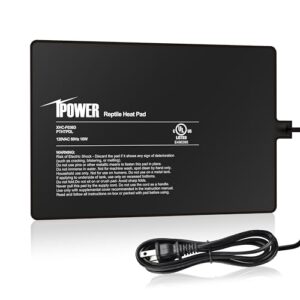
This one’s not for aquariums at all, since it’s a flat mat built for terrariums, sized 8×12 inches for 96 square inches of coverage. At 16 watts, it runs cooler than most fish tank heaters but that’s fine, reptiles need gentle belly heat, not aggressive warming.
PTC heating material means faster heat-up with better energy efficiency. No built-in thermostat though, so you’ll need an external controller for precise regulation. 3M adhesive holds fast to glass or plastic.
| Best For | Reptile, amphibian, and small animal owners who want gentle, consistent belly heat for their terrarium setup. |
|---|---|
| Power Rating | 16W |
| Waterproof/Submersible | Yes |
| Temperature Control | Requires external thermostat |
| Target Use | Terrarium |
| Weight | 12.6 oz |
| Overheat Protection | None built-in |
| Additional Features |
|
- PTC heating material heats up quickly while staying energy efficient
- Strong 3M adhesive backing keeps it securely attached to glass or plastic terrarium surfaces
- Waterproof, moisture-resistant build makes it safe to use and clean in humid environments
- No built-in thermostat, so an external temperature controller is required for precise regulation
- Adhesive can weaken over time, especially if repositioned repeatedly
- Needs proper ventilation (like rubber feet) during mounting to avoid heat trapping and fire risk
7. Zoo Med Reptitherm Undertank Heater 6×8
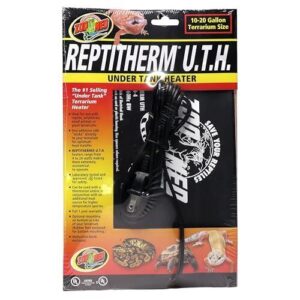
When you need a heater that’s built specifically for reptiles rather than repurposed aquarium gear, this is it. The 6×8 footprint fits standard 10-20 gallon enclosures, and its nichrome heating element delivers steady radiant heat with minimal hot spots.
There’s no built-in shutoff, so pair it with a thermostat. It’s UL/cUL approved, and owners report a lifespan exceeding two years with proper monitoring and regular adhesive checks.
| Best For | This heater is best for reptile owners with leopard geckos, ball pythons, bearded dragons, or other reptiles in 10-20 gallon terrariums who want steady, low-power belly heat. |
|---|---|
| Power Rating | 8W |
| Waterproof/Submersible | No |
| Temperature Control | Requires external thermostat |
| Target Use | Terrarium |
| Weight | 0.44 lbs |
| Overheat Protection | Thermostat recommended |
| Additional Features |
|
- Delivers consistent, low-power heat output at just 8 watts, ideal for long-term use
- Compact 6×8 inch size fits neatly under standard 10-20 gallon enclosures
- Durable build with a reported lifespan of over two years
- Adhesive backing may not stick reliably to glass, sometimes requiring extra securing methods
- Surface temperatures can climb to 120°F quickly, creating a burn risk without a thermostat
- Some units may heat inconsistently, even when paired with a temperature regulator
8. VIVOSUN Seedling Heat Mat Thermostat Combo
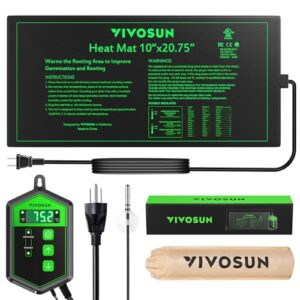
Not built for reptiles, but breeders keep it around anyway. This 10×20.75 inch mat pulls just 20 watts and includes a digital thermostat with external probe, letting you dial soil-range warmth (68-108°F) for incubation boxes or plant-based enclosures.
Overheat protection kicks in automatically. Probe placement affects accuracy though, readings can run warmer than displayed. Fine for supplemental use or hatching setups, not a primary heat source for full-sized breeding tanks.
| Best For | Indoor gardeners looking to speed up seed germination and cutting propagation with reliable bottom heat. |
|---|---|
| Power Rating | 20W |
| Waterproof/Submersible | IP67 rated |
| Temperature Control | Digital thermostat with probe |
| Target Use | Germination/propagation |
| Weight | 16 oz |
| Overheat Protection | Digital thermostat control |
| Additional Features |
|
- Maintains a solid germination-friendly temperature range of 68-86°F (20-30°C)
- IP67 waterproof rating with double-insulated PVC construction for durability
- Digital thermostat with external probe allows precise soil temperature monitoring
- Temperature accuracy can vary, with some users noting deviations of several degrees
- Runs warmer than the displayed setting due to probe placement in the growing medium
- Indoor use only, despite the waterproof rating it’s not meant for submersion or outdoor exposure
Choosing The Right Heater Size
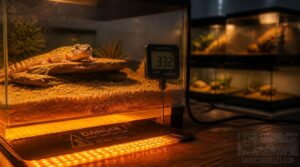
Sizing a heater wrong costs you fry, not just watts. Get it right and the enclosure barely matters, get it wrong and no thermostat can save you. Here’s what actually decides the wattage you need, starting with the enclosure itself.
Size a heater wrong and you lose fry, not just watts; get it right and no thermostat needed to save you
Enclosure Size and Surface Area
Size the enclosure to your breeder’s full-grown length, then double that for margin. Floor space should run at least 2.5 times body length, with width at 1.5 times the widest point, no crowding. Low profile tanks get the most surface coverage for heat transfer.
General enclosure design principles emphasize optimizing floor space and form factor, a consideration that applies just as much to tank layout as to device housings. Skip access panels that eat into your warm zone; every inch of floor matters for thermal gradient setup.
Wattage Versus Ambient Temperature
Wattage means nothing without ambient temperature in the equation. A 25W heater struggles below 68°F room temps, while 50W delivers roughly double the heat output under identical conditions.
Match wattage to your coldest room reading, not the average. Basements and drafty setups demand higher wattage for stable recovery. Warm rooms let you scale down, cutting energy costs without sacrificing thermal stability.
Glass Versus Plastic Enclosures
Room temp isn’t the only variable. What your tank’s made of changes the math too.
Glass holds heat steadily and takes glass tank adhesion well for under tank heaters. Plastic (PVC) heats faster but loses it quicker through thin walls. Glass resists scratches and chemicals; plastic stays lighter for rack moves. Weigh insulation performance against weight durability before picking wattage.
Single Tubs Versus Racks
Material picked, next question: one tub per pair, or a full rack?
Single tubs give heat management flexibility, each tub tuned separately, easy to isolate temperature fluctuation before it spreads. Racks win on space utilization efficiency and scalability for breeding programs.
- Tubs: easier hygiene, cheaper single-unit repairs
- Racks: uniform heat, centralized thermostat accuracy
- Both: watch for suction cup failure on glass mounts
Primary Versus Supplemental Heating
Tub or rack settled, now split heat duty. Your under tank heater should run as the primary source, holding baseline warmth across the whole footprint.
Supplemental heat, like a small ceramic bulb, controls nest zones only. That combo creates a real temperature gradient, keeps thermostat compatibility simple, and stops one unit from overworking during fluctuations.
Thermostat Control for Breeding Setups
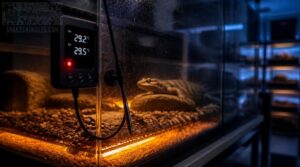
A heater without a thermostat is just a gamble with a cord. Precision matters most in breeding tanks, where a few degrees off can undo weeks of work. Here’s what separates real temperature control from guesswork.
Why Thermostats Prevent Overheating
An unregulated heater is a ticking clock. Thermostats compare water temp to your set point and cut power once the target’s hit, an automatic shutoff that stops overheating before it starts.
- Prevents dry fire damage after water changes
- Maintains fry-safe zones within 1-2°F
- Recovers fast post-water-change
- Uses external controller for hands-off adjustment
Proportional Versus On-off Thermostats
Not all thermostats work the same way. An on-off thermostat flips power fully on or off around your setpoint, creating small swings from hysteresis control. A proportional thermostat adjusts output gradually, 0-100%, based on distance from target.
Proportional units mean tighter temperature stability, faster response time, better setpoint accuracy. Worth the upgrade cost for breeding tanks where fry can’t tolerate swings.
Safe Thermostat Probe Placement
Where you put the probe matters as much as the thermostat itself. Probe warm side, near substrate, away from heater contact. Avoid heat sources causing false readings.
For a deeper walkthrough on getting placement and calibration right from the start, this beginner’s guide to digital thermometers covers the basics every keeper should know.
If you’re weighing which setup fits your hatchling’s enclosure, this guide to choosing the right under tank heater for hatchlings breaks down when a basic mat makes sense versus a thermostat-controlled one.
- Substrate proximity
- Single probe per zone
- Accessible for checks
- Waterproof housing
An external thermostat with a substrate temperature probe gives accurate thermostat temperature monitoring, keeping your temperature control systems honest.
Managing Multiple Breeding Zones
Racks running six tanks need six set points, not one. Give each zone its own thermostat, its own probe, and clear labels, then map dividers to block heat bleed between shelves. Space heaters so warm boundaries don’t overlap.
Wire an emergency shutoff link across zones so one overheating sensor cuts power everywhere, protecting your whole reptile rack system.
Monitoring Temperature Fluctuations
A tank can drift 2 to 4 degrees over 24 hours as room temps rise and fall, so check morning and night. Verify heater thermostat accuracy with an external thermometer, not the built-in display alone.
Watch recovery time after water changes, 5 to 15 minutes is normal.
Fluctuation swings beyond that range raise fry mortality risk fast.
Installing Under Tank Heaters Safely
An under tank heater is only as good as its installation. Sloppy adhesion or bad placement can turn a solid heater into a wasted purchase. Here’s what separates a heater that lasts from one that peels, shifts, or scorches your cords.
Cleaning The Mounting Surface
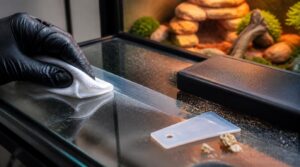
A weak bond ruins everything downstream, so surface prep comes first. Wipe the mounting spot with 70% isopropyl alcohol, one direction only, then let it dry 5 to 10 minutes.
- Scrape old adhesive film with a plastic card
- Recheck for dust or fibers
- Confirm surface is bone dry
- Test adhesive tack before final placement
Skip contamination checks and that heat-resistant surface won’t hold.
Positioning Beneath The Warm Side
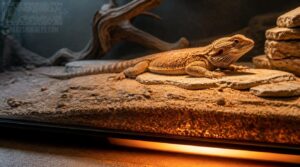
Basking pockets need direct heat, not ambient warmth. Mount the heater under the warm side only, never centered, so belly heat lines up with where your reptile actually rests.
This keeps the thermal gradient stable across the enclosure. Cool zones stay cool, warm zones stay warm, and your reptile self-regulates without fighting a muddled microclimate.
Maintaining Secure Heater Contact
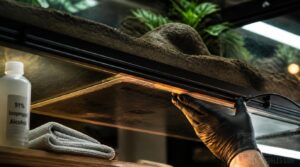
Getting position right means nothing if the bond fails. Adhesive surface prep starts it: clean, dry glass or plastic, free of dust and oils.
Run a thermal contact check with a flashlight, no air gaps allowed.
- Wipe surface with alcohol
- Press 60 seconds firm
- Inspect edges weekly
- Add protective barrier
- Recheck after cleanings
Bond integrity inspection catches lifting before heat distribution suffers.
Protecting Cords and Connections

A solid bond means nothing if a chewed cord kills power mid-cycle. Route wires along the back wall, away from substrate contact, and anchor with cord strain relief every 12-18 inches.
Seal connectors against humidity, inspect guards monthly for cracks, and replace anything showing scorch marks. Heat mat longevity depends on this as much as adhesive quality.
Comparing Performance, Safety, and Value
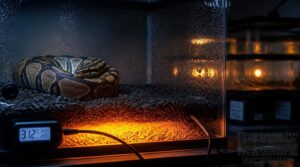
Buying a heater is easy. Trusting it through a full breeding cycle is the real test. Here’s how these units stack up on the details that actually matter.
Temperature Stability and Recovery
When temps drop after a water change, recovery speed separates good heaters from bad ones. A well mounted heater bounces back from a 3°C drop in under 10 minutes.
Watch for:
- Thermal lag of 5-15 minutes between surface and enclosure
- Ambient rooms below 20°C adding up to 3 minutes recovery
- Insulation cutting heat loss 20-40%
Heat Distribution Across Enclosures
Recovery speed tells you how fast a heater works, but distribution tells you how well it works. An under tank heater warms unevenly by nature, so thermal gradient mapping matters more than average temp.
| Zone | Typical Temp |
|---|---|
| Direct contact | 88-93°F |
| 6 inches out | 78-82°F |
| Far corner | 72-76°F |
Surface contact efficiency and air circulation shape this gradient across your reptile enclosure setup.
Adhesive Strength and Durability
That 3M adhesive backing only performs if you prep the surface first. Clean, dry, degreased glass or plastic gives the bond real thermal resistance, rated to 150°C, so it won’t soften under the heating pad.
Skip prep and you’re inviting bond degradation, cracked glass, or a heater that shifts mid-cycle. Moisture tolerance matters too, especially in humid enclosures where longevity depends on it.
Energy Use and Operating Costs
A 25W heater running nonstop pulls about 18 kWh monthly, roughly $7.80 at average rates. Thermostat efficiency cuts that further, cycling power instead of running constant. Pairing your thermostat with proper under tank heater installation techniques ensures accurate probe placement, so cycling stays efficient instead of overcompensating for poor heat readings.
Insulated tubs and reflective wraps trim operating costs up to 15%. Track wattage per gallon monthly.
Surge protectors guard against voltage spikes that spike power draw and shorten heating pad longevity.
Warranty and Replacement Schedule
Most heaters carry a one to two year warranty, some brands stretch to three years if you register within 30 days. Keep proof of purchase and photos ready for claims.
Coverage skips misuse, water immersion, and worn adhesive pads. Budget replacement every 2-3 years anyway. Heating elements degrade quietly, so pair your unit with an independent thermometer.
Frequently Asked Questions (FAQs)
What size heater for a 40 gallon breeder?
Aim for 120 to 200 watts total, or split into dual 100W units for redundancy. Cold rooms push toward the higher end; warmer rooms with canopy cover let you run the lower end safely.
Are under tank heaters good?
Yes, when matched to species needs. They deliver steady substrate warming and support natural reptile thermoregulation, but pair them with a thermostat for real temperature accuracy and safety, since unregulated pads risk uneven heat distribution and burns.
How many watt heater for 60 gallon breeder?
For a 60 gallon breeder, plan on 150 to 300 watts, following the standard 5 to 5 watts per gallon rule. Cold rooms push you toward the higher end. Two smaller heaters beat one large unit for redundancy and even heating.
What is the best heating for dog kennels?
Dogs don’t ask for belly heat like a bearded dragon, but they’ll still shiver without it. A thermostat controlled heat mat under bedding, running 85 to 100°F, beats guesswork for puppy temperature control.
How long do under tank heaters typically last?
Expect 1 to 2 years under heavy breeding use. Quality flexible mats last 3 to 5 years, while submersible plastic shells fail sooner, often 18 to 24 months, from moisture intrusion. Watch for heat drop as your replacement indicator.
Can under tank heaters be used with live plants?
Live plants tolerate gentle warming fine, provided root zone temps stay in the 22-28°C range. Keep heaters off plant stems, use a thermostat for a narrow band, and watch for slowed growth signaling excess substrate heat.
Do under tank heaters work without a thermostat?
Ever plugged in a heater and just hoped for the best? Technically it’ll run, but without a thermostat you get drift, hotspots, and no safety shutoff, so add temperature regulation and check heat mat sizes against your enclosure.
Are under tank heaters safe for all species?
No, not universally. Burrowing species need ambient warmth over direct belly heat, while aquatic species regulate through water temperature, not substrate. Match heater type to species-specific thermoregulation, always with a thermostat and proper substrate barrier to prevent burns.
Should heaters run continuously during breeding season?
Picture a breeding rack holding steady at 78°F through a cold snap. That’s a thermostat cycling power, not constant heat. Continuous run risks overheating and dry fire; cycling protects fry from fatal swings.
Conclusion
The smallest heater in this lineup does the biggest job: keeping temperatures so stable you forget they’re even working. That’s the paradox of good under tank heaters for breeders, the best ones disappear into the background while your clutch develops on schedule.
Pair the right wattage with a reliable thermostat, mount it correctly, and check it weekly. Your incubator won’t need luck. It needs consistency, and now you’ve got the gear to deliver it.