This site is supported by our readers. We may earn a commission, at no cost to you, if you purchase through links.

Your snake’s basking spot might read 95°F on the box label and 88°F in reality. That seven-degree gap sounds small, but it can slow digestion, weaken immunity, or trigger stress in a reptile that depends on precise heat to survive.
Many new owners trust stick-on strips or guesswork instead of real data, and that’s where trouble starts. Digital thermometers for beginners solve this by giving you exact, reliable readings from every corner of the enclosure, not just a rough estimate.
Once you know what separates a basic probe from a smart, app-connected sensor, choosing the right one gets a lot easier.
Table Of Contents
Key Takeaways
- Sticker labels can be misleading, so a digital thermometer gives you the real temperature in your snake’s enclosure instead of a guess.
- Checking multiple zones matters since basking spots, cool areas, and hides can all run at different temperatures within the same tank.
- Look for practical features like a backlit display, waterproof housing, and memory recall, since these make daily monitoring easier and more reliable.
- Regular upkeep, like cleaning probes, calibrating against ice water, and placing sensors away from water and heat lamps, keeps your readings accurate for years.
Why Snake Owners Need Digital Thermometers

Your snake depends on you to get the temperature right, and guesswork just won’t cut it. A digital thermometer takes the mystery out of enclosure care, giving you real numbers instead of hopeful assumptions. Here’s why every beginner should have one on hand.
Before you buy one, it’s worth comparing options side by side, and this guide to digital terrarium thermometers for corn snakes breaks down which features actually matter.
Monitoring Enclosure Temperature Zones
A snake’s tank isn’t one space, it’s several. Basking spots, hideouts, and floor areas each need separate checks, since thermal gradient mapping reveals real gaps between them.
A reliable digital thermometer with proper sensor spacing catches shifts other tools miss:
- Confirms basking zones stay accurate
- Flags cool-side drift early
- Builds confidence in daily care
Many probes are thermocouples or RTDs, which affects how precisely each zone’s temperature is actually measured.
Preventing Health Risks From Poor Heat
Heat stress sneaks up fast. Lethargy, heavy breathing, and refusing food often signal trouble before you notice a temperature spike yourself.
| Warning Sign | Likely Cause | Your Action |
|---|---|---|
| Lethargy | Overheated enclosure | Cool zone, check hydration |
| Heavy breathing | Poor ventilation | Improve airflow, fan placement |
| Refusing food | Sustained heat stress | Log readings, adjust setup |
Daily monitoring aids real risk assessment and faster emergency response.
Beginner-Friendly Reasons to Upgrade
Once you’ve caught those warning signs a time or two, an upgrade starts making sense. Look for easy setup, clear icons, and auto calibrate features that skip the guesswork.
A backlit display, memory recall for daily trends, and a waterproof, flexible tip round out a beginner-friendly toolkit, especially with step-by-step guides included.
Pairing that setup with proper care, like wiping probes with a dry cloth and mounting displays outside the enclosure, helps you get the most from our guide to choosing the best snake cage thermometers.
Types of Digital Thermometers for Terrariums
Not all digital thermometers work the same way inside a terrarium, and knowing the differences makes shopping much easier. Some measure temperature at a single spot, while others read a whole surface or track humidity alongside heat. Here’s a closer look at the main types you’ll come across.
Probe-Style Digital Thermometers
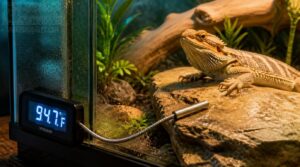
Think of it as a thermometer with a long reach. Probe-style digital thermometers use a flexible tip and cable, so the temperature sensor sits right at the basking spot or cool zone while you read results from outside the enclosure.
Choosing probe length matters, and material durability (stainless steel resists corrosion) plus waterproof, shielded cables keep readings accurate for years.
Infrared Non-Contact Thermometers
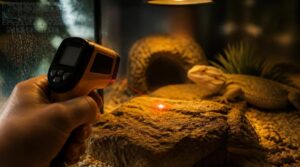
A quick point-and-click gives you a surface reading in a fraction of a second, no waiting required.
- Basking rock hot spot
- Cool hide corner
- Glass wall drafts
- Substrate warmth
Watch distance to spot ratio and emissivity settings; reflective surfaces skew results. Check ambient drafts, and calibrate this noncontact infrared sensor periodically for accurate infrared thermometry.
Digital Thermometer-Hygrometer Combos
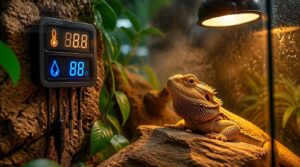
Since reptiles need both warmth and moisture dialed in, a combo unit controls enclosure climate control in one glance. These pair dual sensors for temperature and humidity, some adding dew point readings for extra insight.
| Feature | Benefit |
|---|---|
| Dual Sensor Accuracy | ±0.5–1°C, ±2–5% RH |
| Humidity Trend Tracking | 24-72hr history |
Battery life runs 6-12 months usually.
What to Look for in a Digital Thermometer
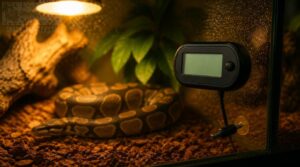
Not every digital thermometer suits a reptile enclosure, so a few key features matter more than others. Beginners especially benefit from a model that’s simple to read, tough enough for daily use, and reasonably priced. Here’s what to check before you buy one for your snake’s terrarium.
Easy-to-Read Backlit Displays
Can you read a dim tank at midnight without squinting? A good backlit display with 100 to 1000 nits brightness, adjustable contrast, and anti-glare coating makes it simple.
- Digital Thermometer Model 1: bright white LEDs
- Digital Thermometer Model 2: large digit visibility
- Digital Thermometer Model 3: high-contrast numerals
Digital Thermometer Model 4 adds glare resistance near windows.
Durable, Enclosure-Safe Design
A humid terrarium is tough on electronics, so your thermometer needs armor, not just accuracy. Look for IP rated seals, waterproof housing, and shock resistant latches that survive daily handling.
A flexible tip probe resists cracking near heat lamps. Magnetic covers offer tool free access, while thermal insulation keeps readings steady without weakening the enclosure’s seal.
Price Versus Value for Beginners
The lowest price tag isn’t always the best deal. Budget vs accuracy matters: entry level options save cash upfront but may cost more later through replacements.
Compare Digital Thermometer Models 1 through 5 by:
- Battery life
- Response speed
- Durability
- Warranty length
Long term savings come from balanced feature cost and steady value over time, not just sticker price.
Additional Features to Consider
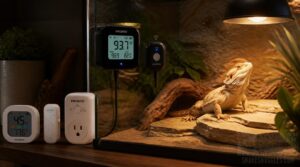
Once you’ve got the basics covered, a few extra features can make daily care even easier. These add-ons aren’t essential, but they can save you time and give you peace of mind. Here’s what’s worth considering.
Memory Recall for Temperature Trends
Ever wonder if your basking spot is drifting warmer each week without you noticing? Memory recall solves that. It stores daily max/min readings and builds weekly trend data, so you catch drift before it stresses your reptile.
Memory recall catches your basking spot’s slow drift before it ever stresses your reptile
The Digital Thermometer Model 1 keeps historical temperature graphs handy, letting you compare today’s zone against yesterday’s at a glance.
Bluetooth Syncing to Smartphone Apps
Some models take memory recall further with Bluetooth connectivity, syncing readings straight to your smartphone. Pairing your thermometer to your phone takes seconds, and once connected, auto reconnect keeps the link active whenever you’re in range.
The app displays temperature logging history, sends notification alerts, and offers data export for vet records, all through a simple interface with smart battery optimization.
High and Low Temperature Alerts
Bluetooth syncing is handy, but you won’t always have your phone nearby. That’s where built-in alert thresholds matter most.
Set your safe range once, and audible warnings paired with visual indicators (lights switching red or blue) flag trouble instantly. Auto-resume alerts reset automatically once temperatures return to normal, so safe range monitoring stays hands-off without you babysitting the tank all day.
Auto Shut-Off for Battery Life
Alerts keep watch, but batteries still need protection. Power saving mode kicks in through auto shutoff, cutting power after inactivity to stretch battery life between changes.
Digital thermometer model 1 offers a basic sleep timer, while digital thermometer model 2 and model 3 add auto wake-up on button press. Energy efficiency this good means fewer battery swaps and more reliable monitoring.
Placement, Hygiene, and Maintenance Tips

Owning a great thermometer is only half the job, since where and how you use it matters just as much. Good habits keep your readings accurate and your snake safe for years to come. Here’s what you need to know about placement, cleaning, and upkeep.
Ideal Probe Placement in Enclosures
Where you place the probe matters as much as the thermometer itself. Set one on the warm side and one on the cool side, at mid-height, at least six inches apart for accurate gradient monitoring.
For sizing guidance, compare under-tank heater wattage for breeder enclosures against your room’s coldest temperatures.
Keep the flexible tip vertical, away from water bowls and heat lamps, and check microhabitats near hiding spots to catch true temperature trends.
Cleaning Digital Thermometer Probes
Wipe the probe with rubbing alcohol or a disinfectant wipe after every use, this simple habit prevents cross-contamination between enclosures.
- Clean with 70% isopropyl alcohol
- Dry fully with a lint-free cloth
- Air dry 30 seconds before reuse
- Use disposable probe covers for extra hygiene
Store dry, away from sunlight, and never submerge the probe. Regular cleaning keeps readings accurate and your reptile’s habitat truly safe.
Checking and Replacing Batteries
When your display looks faint or readings seem sluggish, it’s time for battery replacement. Power off first, check polarity, and clean any corrosion with a dry cloth before inserting new cells.
Most probe thermometers run on coin-cell batteries lasting years. Store spares at room temperature, away from sunlight, and never mix old with new for reliable battery life.
Calibrating Readings for Accuracy
Trust but verify. Test your thermometer against ice water (0°C) and boiling water, adjusting for altitude, to catch sensor drift early. Log each reading with date and deviation. Recalibrate if off by more than 1 degree, after battery swaps, or when room conditions shift.
Some hobbyists tinkering with analogRead sensors even apply the Steinhart-Hart equation for sharper Celsius-to-Fahrenheit accuracy.
Frequently Asked Questions (FAQs)
How often should I check the enclosure temperature?
Studies show most reptile deaths trace back to unnoticed heat swings, not disease. Check morning and evening, plus a midday warm period check. New arrivals need monitoring every 4 hours until settled into a consistent daily routine.
Can one thermometer work for multiple reptile tanks?
Yes, with a data hub setup and multiple probes for zone-specific readings. Check probe sharing options, battery life needs, and multi-tank calibration first, like the Digital Thermometer Model 1 with memory recall and a backlit display.
Do digital thermometers need any special calibration tools?
Ever wonder why two thermometers in the same tank disagree? Most don’t need special tools since factory calibration checks cover accuracy. For DIY calibration methods, an ice water test works fine. Recalibrate yearly, or sooner if readings drift.
Whats the average lifespan of a digital thermometer?
Most digital thermometers, including Models 2 through 6, last 1 to 3 years with proper care. Battery replacement frequency, backlight use, and power saver mode all affect lifespan, while durable enclosures and warranty coverage add extra peace of mind.
Are waterproof thermometers necessary for humid terrariums?
For humid terrariums, waterproof, flexible tip probes matter most. Condensation impact analysis shows moisture ruins unsealed sensors fast.
Look for solid waterproof ratings, proper probe sealing methods, and a compact design with a built-in temperature alarm for reliable, long-term durability.
Conclusion
A thermometer is your snake’s compass, guiding every decision about heat without you ever guessing blind. Trust in that accuracy, and your enclosure becomes a stable, predictable world instead of a gamble. That’s the real value of digital thermometers for beginners: they turn uncertainty into confidence.
Check your probes regularly, calibrate when needed, and place them where your snake actually rests. Small habits like these protect your pet’s health for years. Good data leads to good care, plain and simple.