This site is supported by our readers. We may earn a commission, at no cost to you, if you purchase through links.

Why does a snake that looked perfectly healthy yesterday now have a cluster of clear blisters along its belly? Those bubbles under snake scales aren’t a cosmetic quirk, and your snake can’t tell you they hurt.
Left alone, a single blister can break open, let bacteria in, and push infection toward the bloodstream within days. A damp corner of substrate or a heat mat running too hot is often all it takes, and the early signs hide in plain sight.
Here’s how to identify what’s causing them, spot the warning signs, and act before a small problem turns critical.
Table Of Contents
- Key Takeaways
- Why Are There Bubbles Under My Snake’s Scales?
- How to Recognize Abnormal Snake Scale Bubbles
- What to Do About Bubbles Under Snake Scales
- When Snake Scale Bubbles Need Veterinary Care
- How to Prevent Bubbles Under Snake Scales
- Frequently Asked Questions (FAQs)
- Can scale rot go away on its own?
- What are the early signs of scale rot in ball pythons?
- What are the common causes of death in ball pythons?
- What are the signs that a snake is unhealthy?
- Can snake scale bubbles spread to other snakes?
- Is it safe to handle a snake with bubbles?
- Can humans catch infections from blistered snake skin?
- Will bubbles under snake scales pop on their own?
- How much does veterinary treatment for snake blisters cost?
- Conclusion
Key Takeaways
- Bubbles under your snake’s scales are never cosmetic, since wet substrate, overheated heat sources, or look-alikes like mites and retained shed can each cause them, and a bacterial infection can reach the bloodstream within days.
- Don’t pop the blisters, and move your snake to dry, bare housing with 50-60% humidity and daily lukewarm antiseptic soaks while you work out whether it’s scale rot or a burn.
- Call a reptile vet right away if the fluid turns yellow or pus-filled, ulcers or crusts appear, or your snake refuses more than two meals, and head to an emergency clinic for open-mouth breathing or limpness.
- You can prevent most cases by spot-cleaning daily, keeping substrate damp but never wet, putting every heat source on a thermostat, and quarantining new snakes.
Why Are There Bubbles Under My Snake’s Scales?
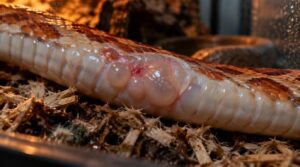
Bubbles under your snake’s scales are never cosmetic, and every day you ignore them gives a bacterial infection more time to move from the skin into the bloodstream.
Scaleless snakes also need extra attention to humidity, substrate, and enclosure hygiene, so a detailed scaleless snake care guide can help you catch skin and breathing problems early.
The list below covers the three most common explanations, from wet-substrate disease to heat injury to look-alike conditions that fool even careful keepers.
Read each one against what you’re seeing on your animal’s belly, because the right response depends entirely on the right cause.
Blister Disease and Scale Rot
The fluid-filled lesions on your snake’s belly aren’t cosmetic. Blister disease is the early stage of scale rot, and wet, dirty substrate triggers it within days.
Left alone, bacterial infections and fungal colonization turn clear blisters into pus, ulcers, and septicemia. Don’t pop them.
Move your snake to dry paper towels today, before this spreads. Every hour of delay matters.
Thermal Burns and Fluid-Filled Blisters
Not every blister comes from dirty substrate. Thermal burns from unregulated heat mats, heat rocks, or bulbs cause fluid-filled blisters too, and signs can take days to appear. Blister formation means second-degree damage, with scale edema and a failed cutaneous barrier function.
If you notice blisters, swelling, or stuck shed, comparing them with these snake skin infection symptoms can help you tell a burn from an infection before treating.
Keep the blister roofs intact. Photograph the faulty heat device, then cool the area.
Other Skin Problems Resembling Bubbles
Before you blame every bump on blister disease or a burn, know that mites, retained shed, and early scale infections can all mimic bubbles under your snake’s scales, and missing the real cause can cost your animal days it doesn’t have. Look closer before you panic. Three impostors fool owners constantly:
- Retained shed traps moisture, creating raised, cloudy patches that mimic fluid-filled lesions.
- Mites hide beneath scales, causing irritation and pitted swellings.
- Early bacterial infections or fungal colonization can resemble blister disease and progress into scale rot.
Don’t guess. Your snake needs a proper veterinary diagnosis, and fast.
How to Recognize Abnormal Snake Scale Bubbles
Now that you know the likely causes, check your snake’s belly in good light, because early fluidfilled lesions are easy to miss and brutally quick to worsen.
If you spot blisters, discoloration, or swollen scales, this guide to skin lesions in pet snakes can help you tell mild irritation from infection before calling your vet.
- Clear or pink blisters on the belly scales, often several at once, signal early blister disease.
- Brown, crusty, eroded scales point to established scale rot, not a passing blemish.
- Yellow, bloody, or whitened lesions mean deeper tissue damage and bacteria already advancing.
Watch behavior too. A snake that soaks constantly, hides more, or refuses food is telling you the cutaneous inflammation is real, not cosmetic.
Compare any dull patches against retained shed and mites before deciding, because other scale abnormalities mimic blisters. Foul odor or spreading red patches? Act fast.
What to Do About Bubbles Under Snake Scales
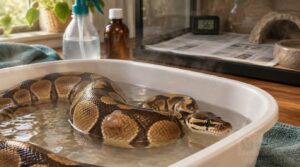
Leave every fluidfilled lesion untouched, because the blister roof is your snake’s last sterile barrier, and popping it invites bacterial infections.
Leave blisters on your snake untouched, because each intact blister roof is its last sterile barrier against infection
Move your snake to a bare enclosure with newspaper, drop humidity to 50–60%, and start the antiseptic soak protocol: a daily 30-minute lukewarm soak, one part Betadine to ten parts water.
Dry your snake afterward and apply a pet-safe antimicrobial spray several times daily. Don’t cut scales off, ever.
| Situation | Action |
|---|---|
| Mild scale rot | Soaks and dry housing |
| Burn blisters | Cool water, no creams |
Mild cases often clear within one or two sheds. Blister disease with ulceration, though, demands antibiotic treatments, ceftazidime or enrofloxacin, sometimes for eight weeks, so don’t gamble on home care while infection spreads like wildfire.
When Snake Scale Bubbles Need Veterinary Care
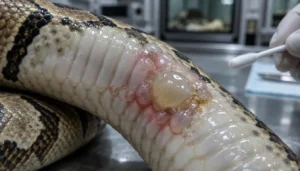
You shouldn’t wait on fluid-filled blisters once the fluid turns yellow, opaque, or pus-filled, because that shift means bacteria have invaded and blister disease is advancing toward septicemia.
Call a reptile veterinarian today if you see belly discoloration, yellow crusts, open ulcers, a suspected cutaneous abscess, or a refusal of more than two meals.
Go to an emergency clinic immediately for gaping mouth, open-mouth breathing, purplish gums, limp muscle tone, tiny purple petechiae on the belly, or a snake that can’t right itself. Small snakes can crash within days.
Your vet will swab the lesion for culture and sensitivity, because the wrong drug can easily kill. Never start antibiotic treatments yourself. Expect injectable courses lasting four to eight weeks.
How to Prevent Bubbles Under Snake Scales
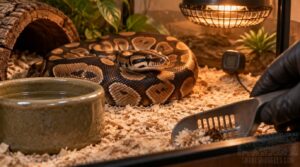
Picture a ball python kept in a tub where a tipped water bowl soaks the bedding on Monday and nobody notices until Friday. By then, tiny blisters dot its belly, and you’re racing against bacteria.
Don’t let that be your snake. Prevention is simple, but it demands discipline every single week:
- Practice daily spot-cleaning and weekly enclosure sanitation, using clean substrates that stay damp, never wet.
- Keep proper humidity near 50-60% for ball pythons, verified with digital probes in several spots.
- Wire every heat source to a thermostat, and guard lamps so your snake can’t touch hot bulbs.
- Quarantine newcomers and treat mites fast, since open skin invites infection.
Strong humidity control and shedding assistance techniques protect every single shed.
Frequently Asked Questions (FAQs)
Can scale rot go away on its own?
Ironically, the only cure for scale rot is the snake itself. Mild cases may clear over one or two shedding cycles once you fix humidity. Blisters or odor mean bacterial infections need antibiotic treatments.
What are the early signs of scale rot in ball pythons?
Picture your ball python’s belly after a damp week: one scale looks pink. That’s early scale rot.
Watch for abnormal snake skin texture, raised scales, granular patches, and a moist sheen. Act today. Don’t wait.
What are the common causes of death in ball pythons?
Your ball python can die from blister disease, where fluidfilled blisters and scale rot invite systemic sepsis. Mites, respiratory infections, inclusion body disease, and dehydration kill too, so don’t wait to call your vet today.
What are the signs that a snake is unhealthy?
Watch your snake’s belly for fluidfilled blisters, swelling, or skin lesions. Blister formation signals trouble, and scale rot follows fast.
Refusing meals, lethargy, or wheezing means you’re out of time. Call a reptile vet today.
Can snake scale bubbles spread to other snakes?
Say you spot blisters on one ball python in a rack of four. Blister disease and scale rot rarely jump snake to snake, but mites, fungal infections, and pathogen proliferation can.
Use quarantine protocols now.
Is it safe to handle a snake with bubbles?
Handling a blistered snake is playing with fire. Don’t touch.
Blister disease and scale rot hurt, so your snake may bite, and skin infection in snakes can hide a subcutaneous abscess. Check dermal turgor later.
Can humans catch infections from blistered snake skin?
Rarely, but don’t gamble. Blister disease and Snake Fungal Disease (Ophidiomyces ophiodiicola) seldom spread to you, yet any skin infection in snakes carries zoonotic potential through Aeromonas. Wash your hands and shield your broken skin.
Will bubbles under snake scales pop on their own?
Urine-soaked bedding can raise blisters within 48 hours. They may pop or not, but popping heals nothing.
Broken vesicles invite abscesses, scale rot, and skin lesion progression, so don’t pick raised scales. Fix the enclosure.
How much does veterinary treatment for snake blisters cost?
One owner’s belly-rot bill hit $ Expect $65–$200 for the exam, $100–$300 for culture, and $150–$400 for antibiotics. Topical treatments cost $20–$60, but hospitalization for septic snakes runs $200–$500 daily. Regular vet checkups prevent bills.
Conclusion
Picture a single blister, thin as a soap film, swelling against your snake’s belly while bacteria wait just beyond the surface. That’s the clock you’re racing. Bubbles under snake scales rarely resolve by themselves, and every untreated day lets infection tunnel deeper toward the bloodstream.
Fix the damp substrate, check your heat source, and call a reptile vet at the first sign of fluid-filled blisters. Your snake can’t ask for help, so you notice first.