This site is supported by our readers. We may earn a commission, at no cost to you, if you purchase through links.
Your corn snake doesn’t care about your vacation plans. She cares that the car stays warm, the container stays dark, and nobody opens the lid on the highway. Hawaii bans snakes outright. The EU wants a 48-hour exam. One cold rest stop can turn a calm ball of muscle into a stressed, wheezing patient.
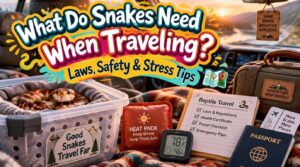
So what do snakes need when traveling? Paperwork, steady heat, an escape-proof carrier, and a calm head on your end of the leash (okay, the bin).
Get those four right and your snake rides like a tiny, scaly VIP. Here’s how to pack for her.
Table Of Contents
- Key Takeaways
- What Do Snakes Need When Traveling?
- Check Snake Travel Laws and Transport Options
- Choose and Secure Your Snake’s Travel Container
- Maintain Safe Temperatures Throughout Your Snake’s Trip
- Reduce Travel Stress and Help Snakes Settle
- Frequently Asked Questions (FAQs)
- What 7 scents do snakes hate?
- How should I travel with my snake?
- What material can snakes not bite through?
- Can I leave a snake alone for a week?
- Can snakes travel safely after eating a meal?
- How long can snakes go without water traveling?
- Should I bring my snakes regular shed hide?
- Can I travel with multiple snakes in one container?
- What emergency supplies should I pack for snake trips?
- Conclusion
Key Takeaways
- Check the legal rules and get your paperwork sorted before you go, since bans like Hawaii’s, the EU’s 48-hour exam, and CITES or Lacey Act permits can get your snake seized if you skip a step.
- Keep your snake’s temperature steady by insulating the carrier and using heat or cold packs that never touch the container, because she can’t regulate her own body heat.
- Use an escape-proof setup, like a knotted pillowcase inside a latching bin, and skip the water bowl and the meal so the ride stays safe and calm.
- Have a vet check her before you leave and postpone if she’s wheezing, digesting, or shedding, then give her water, warmth, and a week before her first meal to settle in after you arrive.
What Do Snakes Need When Traveling?

Snakes need warmth, security, and calm, and they can’t ask for any of it.
Because heat sources work so differently, it helps to understand the difference between a heating pad and a heat lamp for snakes before choosing how to keep yours comfortable.
A snake depends entirely on you for warmth, safety, and peace, and it has no way to ask
Your snake can’t adjust its own body heat, so temperature control comes first.
Keep the ambient range above 64°F and never let a heat source touch your snake.
Pick a snug carrier with solid ventilation, like a pillowcase inside a latching box.
Skip the water bowl and the meal.
Plan ahead for a health certificate, too.
Since not every reptile is legal in every city or state, confirm the local reptile legality rules with your destination’s City Clerk before you travel.
Smooth trips come down to stress management.
Quiet, dark, and steady wins.
Check Snake Travel Laws and Transport Options

Before you pack the tub, you’ve got to know the rules of the road. Your snake’s trip depends on local laws and carriers, and they don’t always play nice. Here’s what to check next, so your scaly buddy gets there safe and sound.
If you’re still weighing whether this is the right pet for you, this guide on whether garter snakes make good pets covers their temperament, care needs, and legal considerations.
Car Travel and Airline Policies
You’ve got two ways to move a snake: car or plane. Car wins, hands down.
Airlines? Tough crowd. Most ban snakes in the cabin, and not every airline takes reptiles at all. Cargo is usually your only shot, so confirm first.
Before booking, lock down these:
- A health certificate dated within 10 days of departure
- A cargo booking made 24 hours to 35 days ahead
- A carrier meeting IATA Live Animal Regulations
- Your own seat on the same flight
Driving? Keep temperature control steady, stay legal, dodge stress.
Interstate and International Travel Requirements
Once your snake’s booked, paperwork’s next. Stay legal at every border.
Before you leave, check each destination’s rules on exotic pets, and this guide to transporting a pet snake safely covers temperature, containers, and travel tips.
Crossing state lines? Check each state’s rules, and get a Lacey Act permit if your species is listed.
Going abroad? Request CITES documentation months ahead, since approval can take up to a year.
| Move | You need | Watch for |
|---|---|---|
| Interstate | State rules, permit | Hawaii bans snakes |
| Into EU | Health certificate | 48-hour exam |
| International | CITES documentation | Border validation |
| Destination | Import permit | Quarantine, possession bans |
Skip one document and officials can seize your snake. Double-check everything and travel worry-free together.
Choose and Secure Your Snake’s Travel Container
Rules sorted? Good. Now let’s talk container selection, because your snake’s ride matters as much as the route.
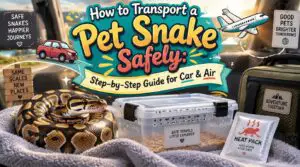
Think snug, dark, and solid. A pillowcase, knotted tight, goes inside a latching bin. Two layers means one slip-up still leaves your buddy safely enclosed. Line the floor with paper towels.
Your pet carrier should be:
- Escapeproof, with firm latches
- Well-ventilated, using many tiny holes
- Free of loose décor or heavy water bowls
Big snake? Skip the bag and use a locking tote.
Maintain Safe Temperatures Throughout Your Snake’s Trip

Heat packs are your best friend on chilly trips, but they’re not magic. For cold days, use a 30-hour pack, tape it on all four sides, and keep it off your snake’s container. Packs warm the air, not the animal.
Good temperature control starts with insulation. Line a styrofoam box, and punch four small holes so the pack can breathe.
Check daytime highs at both ends, plus hub stops. Below 70°F, add warmth. Above 80°F, switch to a cold pack. Offer a temperature gradient by placing one pack on one side.
Reduce Travel Stress and Help Snakes Settle

A calm snake makes for a smoother trip, and you’ve got more control over that than you might think. Two things matter most here: checking your snake’s health before you go and helping it settle once you arrive. Let’s walk through both so you know exactly what to do.
Health Checks and Postponing Travel
Would you pack a sick snake into a cold car? Nope. Book a PreTravel Exam with your veterinarian first, and ask for health certificates plus records.
Ask about parasite screening too. Then check your snake for:
- Wheezing or bubbles at the nose, because breathing trouble is scary.
- A lump midbody, meaning dinner’s still digesting.
- Shed in progress, so your snake feels vulnerable.
Spot any of these? Postpone. Waiting a week beats a stressed, shaky snake and a rough posttravel recovery. Your snake will thank you later, I promise.
Post-Travel Acclimation, Hydration, and Feeding
Picture a ball python named Moss, fresh from a 30-hour trip. He slithers out, looks wobbly, and sulks in the hide. Sound familiar? That’s normal.
Posttravel acclimation starts with water. Do a quick hydration assessment: sunken eyes or wrinkly skin signal dehydration. Offer a full bowl right away and bump humidity to about 65% for a few days.
Skip the heat lamp at first. Keep under-tank heat on, because good temperature control helps your snake acclimate. Wait about a week before the first meal. A refusal? Don’t panic.
Frequently Asked Questions (FAQs)
What 7 scents do snakes hate?
A mere 1% cinnamon oil spray sends a snake packing.
Your seven hated scents: cinnamon, clove, garlic, cedarwood, peppermint, lemongrass, vinegar. Use them around exotic pets with care, stay legal, and skip any travel stress.
How should I travel with my snake?
Ready to hit the road with your scaly sidekick? Check legal rules first, then use a secure container in a ventilated tub. Handle temperature control and vehicle preparation, keep trips calm, and cut travel stress.
What material can snakes not bite through?
Think of a snake’s fangs as thumbtacks, not drills. Rigid polycarbonate and lock-top plastic totes stop them cold. For snakeproofed travel safety, add tightly woven canvas or ballistic nylon inside that secure container.
Can I leave a snake alone for a week?
Yes, most adult snakes handle a week alone just fine. Feed a few days before you leave, set heat on timers, and fill a heavy water dish. Have a sitter peek in, just in case.
Can snakes travel safely after eating a meal?
Not really, so skip the feast before you roll. A fed snake that gets jostled can regurgitation its meal, which is rough on its gut. Fast your snake for about a week first. Keep the container warm, and handle nothing.
How long can snakes go without water traveling?
Most pet snakes, like ball pythons and corn snakes, handle one to two weeks without water. Don’t push it, though. Dehydration sneaks up fast, so plan travel breaks and keep temperature control steady.
Should I bring my snakes regular shed hide?
Skip the shed hide unless your snake’s actually in shed. It’s a humid box, not a travel hide, so it just adds bulk. For travel stress, toss in a familiar cloth instead. Easy peasy!
Can I travel with multiple snakes in one container?
Nope, don’t cram them together. Give each snake its own individual bag or container, then nest those inside one secure enclosure. Sharing space invites crushing, stress, and escape. Safe container selection, temperature control, and legal compliance all depend on it.
What emergency supplies should I pack for snake trips?
Think any chemical hand warmers will do in a pinch? Nope, they guzzle oxygen and heat wildly. Pack reptile-safe heating pads, cooling packs, and a digital thermometer in your emergency kit, plus betadine and gloves.
Conclusion
Picture a corn snake curled in a dark, warm bin, riding the back seat like a sleepy burrito. That’s the goal.
So, what do snakes need when traveling? Legal paperwork, steady heat, a locked carrier, and you staying calm. Nail those, and the road feels short.
Check the laws early. Keep the temperature steady. Let her settle after you arrive, with water close and food later.
Then relax. She’s already dreaming of her warm hide.