This site is supported by our readers. We may earn a commission, at no cost to you, if you purchase through links.

Your snake is coiled in a cloth bag, the car heater hums, and the clock keeps ticking. Every minute counts.
So how long can a snake stay in a travel bag? With the right temperature control, 4 to 12 hours. Skip the extra heat and that window shrinks to 4 to 5 hours, and only when the air stays above 60°F. A ball python shrugs off a chilly cabin. A tropical species sulks fast.
Species, size, bag choice, and warmth all change the answer. Get them right and your snake arrives calm, hydrated, and ready to settle in. Here’s how to plan the trip.
Table Of Contents
- Key Takeaways
- How Long Can Snakes Stay in Travel Bags?
- What Affects Safe Travel Bag Duration?
- Which Bags and Containers Suit Snake Travel?
- How Should You Control Snake Travel Temperatures?
- What if Your Snake’s Journey Gets Delayed?
- What Care Does Your Snake Need Afterward?
- Frequently Asked Questions (FAQs)
- Can you legally bring a snake on a plane?
- How far can snakes travel in one day?
- Can you put a snake in a bag?
- Can I leave a snake alone for a week?
- Is it legal to carry snakes on airplanes?
- Can you take a snake through airport security?
- Do snakes need to eat before traveling?
- How can you keep a snake calm while traveling?
- Should snakes be handled during long trips?
- Conclusion
Key Takeaways
- A snake can safely stay in a travel bag for 4 to 12 hours with proper heat control, but that drops to 4 to 5 hours without added warmth, and only when the air stays above 60°F.
- Put the cloth bag inside a latching, ventilated plastic tote, and keep the cabin around 75 to 80°F, using wrapped heat packs below 69°F and a cold pack past 92°F.
- Fast your snake for at least 72 hours beforehand, skip food and water bowls on the road, and keep the carrier dark and unopened to prevent regurgitation and stress.
- After the trip, move your snake into its enclosure and leave it alone for 24 to 48 hours, then check for dehydration or signs of illness before offering water or food.
How Long Can Snakes Stay in Travel Bags?
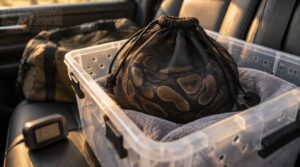
A snake can stay in a cloth travel bag for 4 to 12 hours, as long as temperature control stays on point. That’s your safe window. Think of it as a short commute, not a vacation.
If you’re still deciding which species suits your lifestyle, this guide to choosing your first pet snake, with pictures and costs helps you plan for travel needs before you buy.
Without supplemental heat, stick to 4 to 5 hours when the air sits above 60°F. Colder than that? Plan on less.
Cotton bags work well because the dark, snug space brings real stress reduction. Still, a bag isn’t a fortress. Tuck it inside a secure ventilated container with plenty of ventilation holes, and you’ve got a backup if your escape artist gets clever. Reptile rescue experts recommend placing the bagged snake inside a latching plastic bin lined with a small towel for traction.
Going past 12 hours? Switch to a ventilated plastic bin with monitored heating. Treat the bag as a short-haul travel container.
What Affects Safe Travel Bag Duration?
That 4 to 12 hour window isn’t a promise. It shrinks or stretches depending on a few things, so check them before you zip anything shut.
Species restrictions matter first. A hardy ball python shrugs off cooler air, but tropical species want 25°C or warmer. Size counts too, since bigger snakes burn more oxygen.
Since digestion slows down when it’s too cool, it helps to know what to do after your snake eats, including how long to leave it undisturbed.
Next, weigh temperature control and airflow. A fasted snake, about a week without food, uses less oxygen and leaves your bag clean.
Picture the worst moments:
- Your snake goes limp in a stuffy bag.
- Your snake arrives stressed and striking at everything.
- Your snake chills overnight because you guessed at the heat.
Prevent all three with a secure ventilated container, stress reduction, and a emergency protocol.
Which Bags and Containers Suit Snake Travel?
You’ve checked the variables. Now pick the gear, because the bag is where the three worst moments either happen or don’t.
Start with a snug cloth bag. Hessian or canvas breathes, and a double-stitched one with sewn bottom corners keeps your fingers safe at release. Then slip it inside a latching plastic tote. That’s your escapeproof enclosure, and it’s the best snake carrier setup for reptile transport.
| Setup | What goes wrong | What goes right |
|---|---|---|
| Loose pillowcase alone | Escape under a car seat | Never, so skip it |
| Bag plus latched tote | A bag slips, nothing escapes | Calm snake, calm you |
| Snug lock-top tote, air holes | Too roomy and he slides around | Safe arrival |
Pack newspaper around the bag. Drill tiny air holes. Good Travel With Snakes habits start here.
How Should You Control Snake Travel Temperatures?
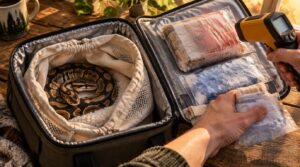
Your bag’s packed, so now let’s talk heat. Snakes rely on thermal regulation from their surroundings, and a closed tote takes that choice away.
If the heat or travel stress leaves your snake looking dried out, this guide to hydrating a sick snake walks you through safe ways to restore moisture.
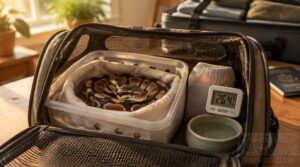
Aim for a comfortable cabin around 75 to 80°F. Above 91°F, skip heat sources, and add a wrapped cold pack past 92°F. Below 69°F, rely on insulated transport methods and place a wrapped heat pack on the lid, which creates temperature gradient zones.
- Use temperature monitoring devices, like an infrared thermometer, to keep heat sources at or below 86°F.
- Test packs on your bare arm. Can’t hold it 60 seconds? It’s too warm.
- Wrap packs in plastic, then newspaper, to manage condensation.
- Never leave the tote in a parked car.
That’s ideal temperature zone maintenance, sorted.
What if Your Snake’s Journey Gets Delayed?
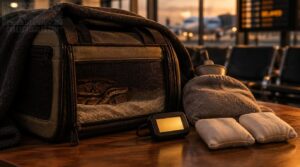
A delay doesn’t have to become a disaster. Emergency preparedness is your secret weapon, so pack cloth-wrapped hand warmers and a towel-wrapped hot water bottle before you leave. Tuck temperature monitoring devices inside the bag too, and keep backup heat below 30°C (86°F).
Minimize handling above all else. Cover the carrier with a dark cloth, keep noise down, and resist peeking. That’s stress reduction at its simplest, and it keeps regurgitation off the menu.
Skip the food and the water bowl. Eating in transit raises regurgitation risk, and spills cause chilling. Lightly damp paper towels give humidity without the mess.
Past 48 hours, call a vet. Carrier familiarization beforehand helps, and thermal gradient establishment, even a warm corner, gives options.
What Care Does Your Snake Need Afterward?
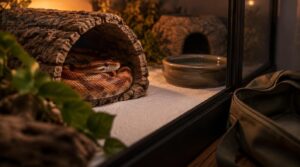
Why does the first day home matter so much? Because posttravel recovery starts the second that lid comes off. Move your snake into its enclosure, then walk away for 24 to 48 hours. That quiet time is your best stress reduction tool.
After a journey, your snake’s best medicine is silence, so settle it into its enclosure and leave it alone for a day or two
Skip handling, feeding, and water at first. Line the tank with paper towel so you can spot regurgitation or injury fast, and offer plenty of snug hides.
Once your snake’s settled, do a quick hydration assessment. Wrinkled skin or sunken eyes? Offer fresh water. Feed a normal meal only after normal basking resumes.
Watch for wheezing, open-mouth breathing, or weight loss over 10%. Keep veterinary health documentation handy, and review container size and snake comfort for next time.
Frequently Asked Questions (FAQs)
Can you legally bring a snake on a plane?
A snake’s coiled patience mirrors the paperwork ahead. Yes, plane travel works, but only in cargo. Airline regulations ban cabin snakes outright. Always use a snake carrier, a legal compliance checklist, and Live Animal labels.
How far can snakes travel in one day?
But my snake’s in a bag, so who cares how far it roams?" Fair, though it matters. Most snakes cover under a mile daily, and some barely creep 200 meters. Warmer weather pushes them farther.
Can you put a snake in a bag?
Yes, snakes have been stuffed into bags since the dawn of time, and most survive it fine. Traveling with a snake works when you use a secure container, tied cloth bag inside, plus steady temperature control.
Can I leave a snake alone for a week?
Yes, a healthy adult snake can handle a week alone. Food isn’t the issue, since fasting is normal. Your job is stable heat and fresh water. Check temperature control twice before you leave.
Is it legal to carry snakes on airplanes?
Sure, your corn snake can fly, just not with you. Cabins are off limits, so cargo is your only legal route. Check destination laws, permits, quarantine rules, species restrictions, and international pet health documentation first.
Can you take a snake through airport security?
Picture a coiled python gliding down the X-ray belt. Nope. Airport security stops live snakes cold. Book cargo instead, with a travel container, temperature control, stress reduction in snakes, and legal compliance for animal transport.
Do snakes need to eat before traveling?
Nope, your snake won’t starve on the road. Skip the farewell mouse.
Follow a feeding postponement protocol: fast 72 hours minimum, since a full belly plus stress means regurgitation. Then watch for stress signs, too.
How can you keep a snake calm while traveling?
Lean on stress-reducing darkness: tuck your snake into a cloth bag, then a snug container.
Focus on minimizing handling stress and stable positioning. Watch for stress signs, stress indicators in captive snakes, like frantic movement.
Should snakes be handled during long trips?
Picture a snake dozing in a dark burrow. Don’t poke it. Minimizing handling stress means keeping the travel container shut. Peeking invites stress indicators in captive snakes, like regurgitation. Check temperature only by digital thermometer.
Conclusion
Picture a corn snake riding home from a reptile expo, snug in a pillowcase inside a cooler, with a heat pack warming the lid. Six hours later, she slithers out calm and curious. That’s the payoff of planning.
So how long can a snake stay in a travel bag? Long enough for the trip, if you control warmth and check often. Pack smart, keep it dark, and your snake will barely notice the whole ride.