This site is supported by our readers. We may earn a commission, at no cost to you, if you purchase through links.

Your ball python sits wrapped in a stuck, ragged shed, and the hygrometer reads 42%. One water dish, parked in the wrong spot, caused it.
Water dishes for humidity control do more than quench thirst. A ball python needs 50-60% humidity, rising to 70-80% during shed, while a sand boa thrives at 20-40%. Dish size, material, and position all push those numbers up or down.
You hold more control than you think. The right dish, a humidity tray, and a few inches of movement toward the basking spot can fix your levels. Here’s how to dial them in.
Table Of Contents
- Key Takeaways
- Measure Humidity Against Your Snake’s Species Needs
- Choose Water Dish Materials, Size, and Depth
- Top 10 Humidity Tray Components: Safety Checks
- 1. YISZM 2LB Succulent Cactus Gravel Pebbles
- 2. Pinkunn Bonsai Humidity Tray 2-Pack
- 3. Brussels 8 Humidity Tray with Rocks
- 4. PSW Pot Collection AP35TC Plant Saucer
- 5. Suwimut 6 Inch Terracotta Plant Saucers
- 6. Arcadia 10-inch PSW Plant Saucer
- 7. YISZM 2LB Jade Succulent Pebbles
- 8. NUPICK 3lb Colorful Pebbles for Plants
- 9. YISZM 2LB Black Polished Pebbles
- 10. FANTIAN 2 lb Mixed Color Pebbles
- Position Water Dishes to Adjust Humidity Safely
- Troubleshoot Humidity With Ventilation and Substrate Adjustments
- Clean Water Dishes and Maintain Safe Water
- Frequently Asked Questions (FAQs)
- Do humidity trays actually work?
- Do bowls of water help humidity?
- What pulls humidity out of a house?
- What type of pebbles are best for a humidity tray?
- How often should I replace a cracked water dish?
- Can a water dish alone raise humidity enough?
- Do I need a hygrometer to monitor dish effectiveness?
- Is distilled water safer than tap for humidity?
- What should I do if my snake tips the dish?
- Conclusion
Key Takeaways
- Match your humidity to your species (ball pythons need 50-60%, rising to 70-80% during shed), and check it with a digital hygrometer mounted at mid-tank height away from the water dish and heat sources.
- Choose a wide, stable ceramic dish and place it nearer the warm side to raise humidity or the cool side to lower it, moving it in small steps and rechecking after each change.
- A dish or pebble tray alone only nudges humidity up a few percent, so pair it with 1-2 inches of damp coconut husk or sphagnum moss, and change just one variable at a time.
- Keep the setup safe by swapping the water daily, scrubbing the bowl weekly to remove bacterial biofilm, and replacing any cracked dish right away.
Measure Humidity Against Your Snake’s Species Needs
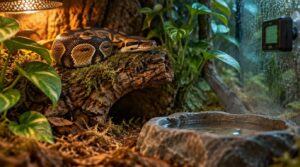
How do you know your enclosure is actually right? You measure it. Every snake has its own humidity range, and guessing costs you.
Once you know your species’ target range, this step-by-step guide to maintaining humidity in a snake tank shows how to raise or lower levels without constant guesswork.
Ball pythons want 50-60%, climbing to 70-80% during a shed. Corn snakes do best at 65-75%. Sand boas and kingsnakes need just 20-40%, while tropical green tree pythons demand 80-90%. Check your species sizing guidelines before you buy anything, since needs shift with origin and life stage.
Next, hygrometer placement matters. Mount a digital unit at mid-tank height, away from water dishes and heat sources, and calibrate it regularly. Because heat affects how much moisture the air holds, a proper temperature gradient of about 90°F (32°C) at the basking spot and 75–82°F (24–27°C) in the cool zone helps keep your readings steady.
Too dry brings bad sheds and dangerous respiratory infections. Too wet quickly invites scale rot. Solid enclosure humidity control and steady water quality management keep you in range.
Too dry brings bad sheds and respiratory infections, too wet invites scale rot, so steady humidity and clean water keep your snake healthy
Choose Water Dish Materials, Size, and Depth
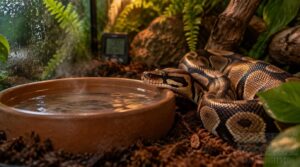
Once you know your target range, your water dish becomes your first humidity tool. Pick it wisely. Four things matter most:
- Material: A ceramic dish holds steady and resists tipping. Foodgrade resin works too. Both are nonporous materials, so they’re easy to disinfect.
- Size: Wider bowls expand evaporation surface area. Adult ball pythons need about 16 oz.
- Depth: Neonates need ¾ to 1 inch. Adults should soak fully, so go deeper.
- Stability: Choose a low rim design with a wide base. Lightweight plastic tips, soaks substrate, and breeds bacteria.
Plastic heats faster over a heat source, so humidity climbs unpredictably. Ceramic gives you control. Match the bowl to your snake, then watch your hygrometer for a week before changing more.
Top 10 Humidity Tray Components: Safety Checks
Not every humidity tray part is safe for your snake, and a few can hurt it. Before you buy, check each pick below for safe materials, stable footing, and easy cleaning. Here’s how these ten components stack up, so you stay in control of your setup.
1. YISZM 2LB Succulent Cactus Gravel Pebbles
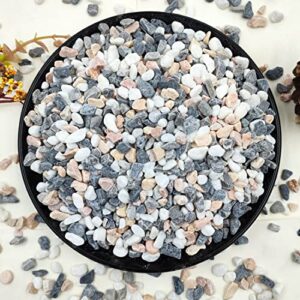
Picture a shallow tray of speckled stone, water pooling between the grains and slowly breathing moisture into your snake’s enclosure. That’s what these pebbles do best.
Each pebble runs about 1/5 inch, and the 2-pound bag fills a tray fast. They’re natural stone with no dyes, oils, or fillers. Rinse them first, since the surfaces attract dust. Expect slight size and color variations, because the stone is natural.
Set them in a saucer beside your water dish, never left loose.
| Best For | Succulent and cactus owners who want a natural, dye-free pebble layer for drainage in pots, planters, and terrariums. |
|---|---|
| Material | Natural stone |
| Size | 1/5 inch pebbles |
| Quantity | 2-pound bag |
| Color | Mixed tones |
| Indoor/Outdoor Use | Indoor and outdoor |
| Drainage Role | Prevents root rot |
| Additional Features |
|
- Provides drainage that helps prevent root rot in succulents and cacti
- Made from natural stone with no dyes, oils, or fillers added
- Works in vases, planters, terrariums, indoor decor, and outdoor spaces like gardens and walkways
- Stone surfaces attract dust, so the pebbles need rinsing before use
- Not recommended for fish tanks unless rinsed thoroughly first
- Size and color vary slightly because the stone is natural and packed by hand
2. Pinkunn Bonsai Humidity Tray 2-Pack
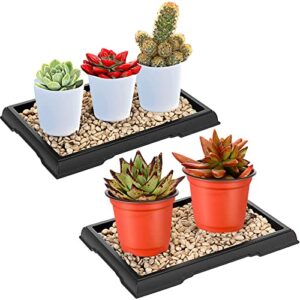
Pebbles need a tray, so here’s one. The Pinkunn set gives you two rectangular saucers, each 7.8 x 5.5 inches outside with about 7 x 4.9 inches of loading area. They’re sold without stones, so pair them with the pebbles above.
Since these saucers will sit in a reptile enclosure, wash and disinfect them with the same care as the rest of your kit, following these safe ways to clean a snake enclosure.
The plastic is corrosion-resistant, but reviews are mixed. Some owners call it average. Check for cracks before every use, and skip this tray for large, heavy dishes. Small ones fit fine. Keep it right beside your snake’s water dish.
| Best For | Plant owners with small bonsai, cacti, succulents, or houseplants who want to protect their furniture from drips while adding a bit of extra humidity. |
|---|---|
| Material | Corrosion-resistant plastic |
| Size | 7.8 x 5.5 inches |
| Quantity | 1 tray |
| Color | N/A |
| Indoor/Outdoor Use | N/A |
| Drainage Role | Collects pot runoff |
| Additional Features |
|
- Catches excess water from drainage holes so it doesn’t stain or damage furniture
- Holds water that evaporates to help maintain humidity around plants
- Fits multiple small pots in about 7 x 4.9 inches of loading space
- Customer reviews on material quality are mixed
- Some owners describe the plastic as only average quality
- Not suitable for very large or heavy pots
3. Brussels 8 Humidity Tray with Rocks
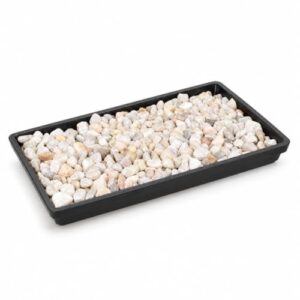
The Brussels 8 is a compact humidity tray with included decorative rocks, and it’s built for small plants, not snake enclosures. Place your plant on the rocks, water from above, and let evaporation lift the moisture around it. It also catches runoff, so your furniture stays dry.
Here’s the catch. At 8 inches across, it runs smaller than some buyers expected, and bigger bonsai won’t fit. Some users report wobbling during use, so test it on a level surface first.
| Best For | Bonsai, orchid, and begonia rex owners with small plants who want to boost humidity in dry or windy spots, indoors or out, while keeping runoff off their furniture. |
|---|---|
| Material | High-quality plastic |
| Size | 8-inch diameter |
| Quantity | 1 tray with rocks |
| Color | Polished beige |
| Indoor/Outdoor Use | Indoor and outdoor |
| Drainage Role | Catches excess runoff |
| Additional Features |
|
- Raises humidity around the plant by letting water from the tray evaporate
- Catches excess water so it doesn’t drain onto furniture
- Comes with decorative rocks and a polished beige finish, and works indoors or outdoors
- At 8 inches across, it can be smaller than some buyers expect
- Too small for larger bonsai specimens
- Can wobble during use, so it needs a level surface
4. PSW Pot Collection AP35TC Plant Saucer
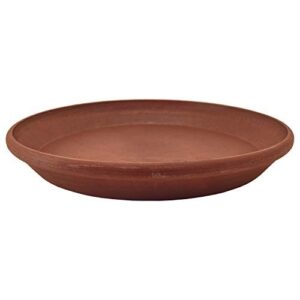
This saucer works as a wide, shallow humidity tray base. At 14.4 x 14.4 x 1.5 inches, it fits pots up to 12 inches and weighs just 1 pound.
It’s undrilled, which is exactly what you want for holding water. The recycled plastic, stone powder, and wood dust mix shrugs off UV, frost, and ice. It isn’t real terra cotta, though. Some buyers received used or dirty units, so scrub yours with hot water before it goes near your enclosure.
| Best For | Plant owners who want a lightweight, weatherproof tray to catch water under pots up to 12 inches, or to use as a humidity tray base or simple bird bath. |
|---|---|
| Material | Recycled plastic composite |
| Size | 14.4 x 14.4 x 1.5 inches |
| Quantity | 1 saucer |
| Color | N/A |
| Indoor/Outdoor Use | Indoor and outdoor |
| Drainage Role | Protects surfaces from spills |
| Additional Features |
|
- Fits pots up to 12 inches and weighs only 1 pound, so it is easy to move
- Resists UV rays, frost, and ice, making it fine for indoor or outdoor use
- Can be drilled with standard drill bits if you ever want drainage holes
- Has no pre-drilled drainage holes
- Is not real terra cotta, and the material mix may vary
- Some buyers received used or dirty units, so it needs a good scrub before use
5. Suwimut 6 Inch Terracotta Plant Saucers
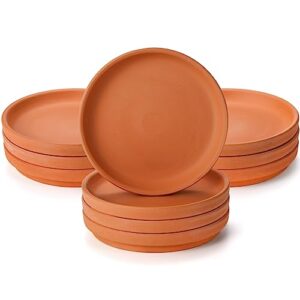
Picture a pile of warm, rust-colored clay discs stacked on your workbench, ready to hold water and pebbles. That’s this pack. You get 10 terracotta saucers, each 6 inches across with a 5.3-inch inner diameter and a 1-inch height.
Here’s the catch. They’re thinner than typical garden center saucers, and some units arrive chipped or broken. Inspect every one before it goes near your enclosure.
Don’t trust the crack-resistance claim either. Handle them gently, and check them often for cracks.
| Best For | Plant owners who want an inexpensive set of small terracotta saucers for 5 to 6 inch pots and are willing to handle them gently and inspect each one on arrival. |
|---|---|
| Material | Terracotta clay |
| Size | 6-inch diameter |
| Quantity | 10 saucers |
| Color | Terracotta |
| Indoor/Outdoor Use | Indoor and outdoor |
| Drainage Role | Collects excess water |
| Additional Features |
|
- Comes as a pack of 10 saucers, each 6 inches across with a 1-inch height, so you can cover several pots at once.
- Fits 5, 5.5, and 6 inch pots with drainage holes, and works indoors or outdoors with ceramic, terra cotta, glass, and fabric pots.
- Catches excess water and soil spillage, and the terracotta allows airflow for root aeration.
- Some units may arrive broken or chipped, so every saucer needs a check before use.
- They are thinner than typical garden center terracotta saucers.
- They are not guaranteed to be crack-resistant, despite the high-temperature baking claim.
6. Arcadia 10-inch PSW Plant Saucer
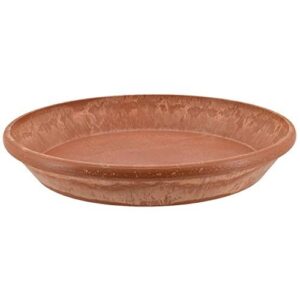
Picture a wide, shallow terra cotta bowl sitting under your enclosure, quietly breathing moisture into the air. That’s the Arcadia 10-inch PSW Plant Saucer. It’s 1.5 inches tall and holds up to 50 ounces of water, so you refill less often.
It’s a plastic composite, not real terra cotta, so it’s lightweight, durable, and UV resistant. Expect slight color variation from the recycled material mix. There are no pre-drilled holes, which suits a water tray. Need drainage? Grab a drill.
| Best For | Plant owners who want a lightweight, durable saucer to protect indoor or outdoor surfaces from spills under pots up to 8 inches wide. |
|---|---|
| Material | Recycled plastic composite |
| Size | 10-inch diameter, 1.5 inches tall |
| Quantity | 1 saucer |
| Color | Terra cotta marbling |
| Indoor/Outdoor Use | Indoor and outdoor |
| Drainage Role | Protects surfaces from spills |
| Additional Features |
|
- Protects indoor surfaces from water spills and stains
- Lightweight yet durable and UV resistant, so it works indoors and outdoors
- Drillable with a standard drill bit if you want to add drainage holes
- Has no pre-drilled drainage holes, so you have to drill them yourself if needed
- Made of a plastic composite, not real terra cotta
- Appearance varies slightly because of the recycled material blend
7. YISZM 2LB Jade Succulent Pebbles
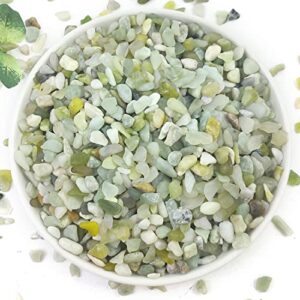
Want a humidity tray that looks as good as it works? These jade pebbles deliver.
Each 2-pound bag holds natural stone pebbles, roughly 1/5 inch across, in a uniform jade tone. Set them in a water-filled saucer and they help moisture evaporate near your enclosure.
Wash them first. Rinse until the water runs clear, just like you would for a fish tank.
The size is the catch. Some owners find these pebbles too small, so keep them in a saucer.
| Best For | Succulent and cactus owners who want a natural jade-colored pebble layer for drainage in vases, planters, or landscaping. |
|---|---|
| Material | Stone |
| Size | 1/5 inch pebbles |
| Quantity | 2-pound bag |
| Color | Jade |
| Indoor/Outdoor Use | N/A |
| Drainage Role | Prevents overwatering |
| Additional Features |
|
- Helps with drainage, which can prevent root rot and overwatering in succulents and cacti
- Natural stone in a uniform jade tone that looks good in vases, planters, and landscaping
- Comes in a 2-pound bag of roughly 1/5 inch pebbles
- Should be washed before use in a fish tank
- Color is a single uniform jade tone, with no variety
- Some customers find the pebbles too small for their needs
8. NUPICK 3lb Colorful Pebbles for Plants
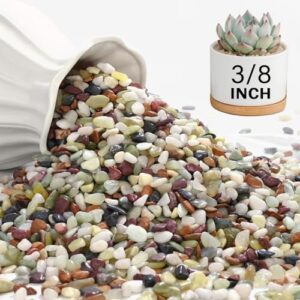
Need a humidity tray that won’t mess with your setup? NUPICK 3lb Colorful Pebbles (model 38C3) give you plenty of material to work with. Each pebble measures 3/8 inch, and they’re dye and oil-free, resisting fading when washed or used in water.
Rinse them first to remove the chalky film. Then layer them in a tray to regulate soil humidity and improve drainage. Keep them away from children under 5, and ask a professional before using them in water-based applications.
| Best For | Plant owners who want a clean, fade-resistant pebble topping or drainage layer for succulents, flower pots, vases, and indoor or outdoor décor projects. |
|---|---|
| Material | Stone |
| Size | 3/8 inch pebbles |
| Quantity | 3-pound bag |
| Color | N/A |
| Indoor/Outdoor Use | Indoor and outdoor |
| Drainage Role | Aids drainage |
| Additional Features |
|
- Dye and oil-free, so the color resists fading when washed or used in water
- Smooth, polished surface with minimal dust, ready for immediate use
- Works on top of soil to deter pests and hold moisture, or at the bottom to improve drainage and aeration
- Needs a rinse before use to remove a chalky film
- Small size makes them unsuitable for children under 5
- Requires professional advice before use in water-based applications like aquariums
9. YISZM 2LB Black Polished Pebbles
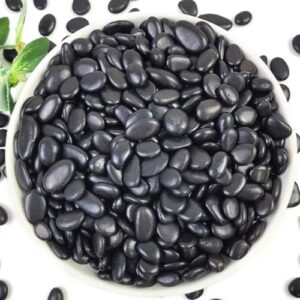
Want a darker, cleaner look in your tray? YISZM 2LB Black Polished Pebbles fit the bill. Each stone runs about 3/8 inch, and the material is non-toxic with no dyes or oils, so you’re skipping the questionable extras.
Wash them in hot soapy water before they touch an aquarium or water tray. Then spread them evenly and add water.
One catch: a 2 lb bag won’t cover large trays, and buyers report mixed value for money. Measure first, buy second.
| Best For | Succulent and cactus growers, plant lovers, and decorators who want a dark, polished pebble for drainage, planters, vases, or small garden areas. |
|---|---|
| Material | Stone |
| Size | 3/8 inch pebbles |
| Quantity | 2-pound bag |
| Color | Black |
| Indoor/Outdoor Use | N/A |
| Drainage Role | Prevents overwatering |
| Additional Features |
|
- Non-toxic stone with no dyes or oils
- Provides drainage and helps prevent overwatering and root rot in succulent and cactus pots
- Works in vases, planters, gardens, and landscaping
- Needs a wash in hot soapy water before aquarium use
- Customers report mixed feedback on value for money
- A 2 lb bag may not cover large areas
10. FANTIAN 2 lb Mixed Color Pebbles
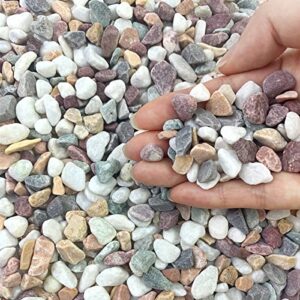
Prefer color over black? FANTIAN 2 lb Mixed Color Pebbles give your tray a brighter look, and the 3/8 inch stones sit evenly under a water dish.
Rinse them two or three times. Light rock dust is normal, but you don’t want it clouding your water. The green stones carry a wax coating, so boil them first. Some buyers report flaking and murky water when they skip that step.
Two pounds covers one or two medium pots, so measure first.
| Best For | Plant owners who want a bright, mixed-color top dressing or humidity tray filler for one or two medium pots and don’t mind rinsing the stones first. |
|---|---|
| Material | Crushed stone |
| Size | 3/8 inch pebbles |
| Quantity | 2-pound bag |
| Color | White, red, yellow, gray, green |
| Indoor/Outdoor Use | N/A |
| Drainage Role | Base layer drainage |
| Additional Features |
|
- Natural crushed stone with no dyes or oils, in five colors: white, red, yellow, gray, and apple green
- Uniform 3/8 inch size sits evenly under a water dish or on top of soil
- Versatile enough for succulents, terrariums, vase fillers, crafts, and garden paths
- Needs two to three rinses to remove the light rock dust before use
- The green stones have a wax coating that must be boiled first, and some buyers report flaking and murky water when it’s skipped
- A 2 lb bag only covers one or two medium pots, so larger setups need more bags
Position Water Dishes to Adjust Humidity Safely
Safe parts are only half the job. Where you set the dish matters just as much. Water dish placement shapes your humidity gradient, so use it on purpose.
Start at the enclosure center. Watch your hygrometer for 24 hours, then adjust. Ball pythons usually like warmer spots; corn snakes and desert species want it cooler.
| Position | Evaporation rate | Your payoff |
|---|---|---|
| Cool zone placement | Slow | Clean water, dry air |
| Middle | Moderate | Balanced humidity |
| Warm zone positioning | Fast | Damp air, daily refills |
Too dry? Slide the dish toward the hot side. Too damp? Move it cooler in small steps. Then recheck. Never cut air temperature to fix humidity. Set the dish on the belly heat source instead and keep your gradient intact.
Troubleshoot Humidity With Ventilation and Substrate Adjustments
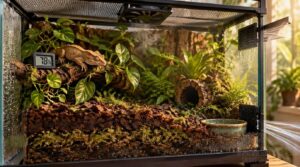
Dish placement only goes so far. When humidity control still misses, look at airflow and substrate next.
Humidity stuck too high? Start with ventilation adjustments. Add a small fan at the enclosure top, or open a high exhaust vent while keeping the low intake. That cross-flow pulls out stale, damp air without stripping your heat. Go slowly, because too much airflow cools the enclosure and can cause scale rot.
Too dry? Substrate adjustments work fast. Add 1 to 2 inches of coconut husk or sphagnum moss, damp below and drier on top. Skip aspen and sand. They hold almost no water and kick up dust.
Change one thing at a time. Then check your hygrometer for a full day before touching anything else.
Clean Water Dishes and Maintain Safe Water
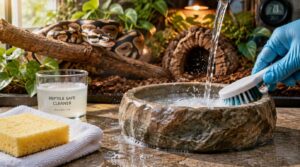
Dump your snake’s water every morning and refill it with conditioned tap water. Daily water changes protect water quality, and they’re the simplest habit you’ll build.
Don’t wait for a weekly scrub if you spot feces, shed skin, or debris. Swap the water immediately.
Once a week, scrub the bowl with a reptile-safe disinfectant. That slime you feel on the surface? It’s bacterial biofilm, and rinsing alone won’t remove it. Soak the bowl in diluted bleach for two to three minutes, then rinse until no smell remains. Vinegar takes care of mineral deposits.
Keep a dedicated brush for reptile gear, never shared with human dishes. Cleaning efficiency means fewer germs, and mold prevention starts with a dry, well-placed dish away from heat.
Frequently Asked Questions (FAQs)
Do humidity trays actually work?
Yes, but only modestly. Pebbles expand surface area, which boosts evaporation and raises humidity about 1-4% in tested enclosures.
Don’t expect miracles. Pair them with moisture retention and warm placement, and you’ll shape the microclimate.
Do bowls of water help humidity?
A water bowl works like a lake breathing into your enclosure. Yes, it helps. Evaporation lifts humidity, especially in a warm, small microclimate.
Keep the water level up, watch water quality, and don’t expect miracles.
What pulls humidity out of a house?
Air moves moisture out. Exhaust fans and open windows create a humidity gradient that flushes damp air outdoors, while air conditioners and dehumidifiers condense it on cold coils. Fix leaks so substrate moisture balance holds.
What type of pebbles are best for a humidity tray?
Go with smooth, non-porous pebbles like river rocks or polished stones. They won’t harbor bacteria, and they rinse clean fast. Keep them small, 3-5mm, so your pebble trays stay stable and your humidity stays steady.
How often should I replace a cracked water dish?
A crack is a welcome mat for germs. Replace a cracked water dish immediately, not on a schedule. Bacterial biofilm clings inside the damage, so daily water changes can’t keep water quality safe. Structural stability matters, too.
Can a water dish alone raise humidity enough?
Ball pythons need 60% relative humidity, climbing to 70% during shedding. Rarely does a dish alone deliver that.
Evaporation surface area helps, but screen tops leak it. Pair misting synchronization with a deeper water level.
Do I need a hygrometer to monitor dish effectiveness?
Yes. Don’t guess.
Visual checks like condensation can’t tell you the real numbers. A hygrometer shows whether your evaporation surface area and water level create a usable humidity gradient, and whether misting synchronization causes spikes.
Is distilled water safer than tap for humidity?
Yes, for misting. Distilled water stops mineral dust and clogged nozzles.
Tap works for drinking bowls after chlorine removal with a water conditioner. Check your water quality with pH testing, and watch filtered water interaction.
What should I do if my snake tips the dish?
Is a tipped dish just a wet floor? Not quite. Spill-induced acidity can sour damp substrate, so mop up fast and refill.
Add tipping prevention: a weighted dish, low rim design, never escape rim design.
Conclusion
Picture a keeper in Phoenix whose ball python kept shedding in ragged strips. She swapped a tiny plastic bowl for a wide ceramic dish, slid it closer to the warm side, and added a pebble tray. Within a week, her hygrometer held 60%.
Smart water dishes for humidity control work like that. Small changes, measured results. Check your readings, match your species, and adjust one variable at a time. Clean, whole sheds mean you’ve won.