This site is supported by our readers. We may earn a commission, at no cost to you, if you purchase through links.
Picture a ball python halfway out of its skin, the old layer clinging to its eyes like a stocking that refuses to budge. Stuck shed is a miserable sight, and it almost always traces back to what’s under the snake.
Your substrate does more than carpet the floor. It holds the moisture that keeps humidity near 65-70% when your python starts to cloud over. Get terrarium substrate mixes for shedding support right, and skins peel off in one clean, satisfying piece.
Here’s how to match the mix to your species, layer it so it never turns soggy, and pick products worth your money.
Table Of Contents
- Key Takeaways
- Set Species-Appropriate Humidity for Healthy Shedding
- Choose Safe, Moisture-Retaining Terrarium Substrate Ingredients
- Mix and Hydrate Substrates for Shedding Support
- Layer Terrarium Substrate Without Creating Waterlogging
- 5 Terrarium Substrates for Shedding Support
- Maintain Substrate Moisture and Cleanliness Between Sheds
- Frequently Asked Questions (FAQs)
- Conclusion
Key Takeaways
- Match your humidity to your species, with ball pythons needing 65-70% during shed, corn snakes about 70%, and boas 75-85%, and track it with digital hygrometers rather than unreliable analog dials.
- Choose natural, untreated, moisture-holding substrates like coco coir, cypress mulch, and sphagnum moss, kept damp but never soggy, with a damp sphagnum hide giving your snake a humid spot on demand.
- Prevent waterlogging by layering a drainage base such as LECA with a mesh or moss barrier beneath loose, unpacked substrate, and check the reservoir weekly to remove any standing water.
- Keep the enclosure healthy between sheds by spot-cleaning daily, watching for mold or odors, and using a humid hide instead of soaking the whole setup, since dusty, moldy, or soggy substrate can harm your snake’s breathing.
Set Species-Appropriate Humidity for Healthy Shedding
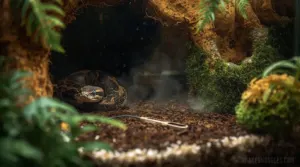
A dry snake in shed is a miserable snake, so let’s get your numbers right. Ball pythons do well at 50-60% day to day, then need 65-70% once those eyes turn milky blue. Corn snakes cruise along at 40-60% and want about 70% when they’re shedding. Boas are the thirsty bunch, sitting at 55-75% normally and craving 75-85% during a shed.
If your enclosure’s readings don’t match your species, this guide to getting shed humidity right shows practical ways to adjust them.
Skip the cheap analog dial. They’re notoriously unreliable, and guessing is how retained eye caps happen. Put a digital hygrometer probe mid-enclosure, and a second one inside the humid hide.
Speaking of which, a hide packed with damp sphagnum moss gives your snake a little spa to visit whenever it likes. Pretty clever, really. Moisture-retaining substrates like cypress mulch and coconut fiber also help raise enclosure humidity when shedding time arrives.
Choose Safe, Moisture-Retaining Terrarium Substrate Ingredients
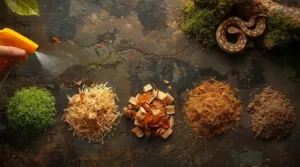
Not every substrate earns a spot in your enclosure. The good ones hold moisture without turning into swamp, and they won’t hurt your snake if a mouthful gets swallowed mid-shed. Here’s your shortlist:
- Sphagnum moss: holds about 20 times its weight in water and releases it slowly. Buy pesticide-free.
- Coco coir: steady moisture, neutral pH, and it resists compaction.
- Cypress mulch: great water retention and slow decomposition. Choose heat-treated bark.
- Leaf litter: crushed leaves add hiding spots and a little extra humidity.
- Organic topsoil: pairs with sand and clay for drier, bioactive setups.
Stick with natural, untreated ingredients and you’re halfway there. Dyed or scented stuff? Bin it. Moss and coir work damp, never soggy. Keep a spray bottle close.
Mix and Hydrate Substrates for Shedding Support
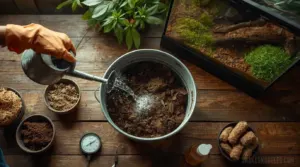
Mixing a substrate is like making porridge: too wet or too dry and everything goes wrong. Below, you’ll find two proven recipes for the snakes that need humidity most, with hydration tips built in. Grab a bucket and let’s get your enclosure shed-ready.
Get the substrate balance right, because soil that’s too soggy or too parched spoils a shed, so build it thoughtfully
Ball Python and Boa Substrate Mixes
Picture a ball python, cloudy-eyed and cranky, rubbing against a bone-dry log. Sound familiar? Fix the enclosure, not the snake.
Boas and ball pythons both love this mix, with a deep, damp layer underneath. Pour water in, don’t mist.
| Ingredient | Share |
|---|---|
| Coco coir and cypress mulch | 90% |
| Sphagnum moss | 10% |
Keep it moist, never soggy, and check your hygrometer daily.
A damp sphagnum moss hide gives your snake a humid spot to retreat to, and this guide to the benefits of a humid hide for ball python shedding explains how to set one up.
Corn Snake Substrate Mixes
Corn snakes are far less fussy than boas, so skip the swamp. Mix 40% organic topsoil, 40% Zoo Med ReptiSoil and 20% play sand. Soak it until muddy, pack it firmly, then dry it completely before the snake moves in.
Go 3-4 inches deep. Keep the baseline humidity at 40-50%, then add a damp sphagnum moss hide on the warm side during shedding.
Layer Terrarium Substrate Without Creating Waterlogging
A soggy bottom ruins more setups than any dodgy heat lamp ever could. Here’s how to dodge it.
Start with a base of LECA, about an inch or two deep. Coarse pebbles keep their shape and let water move freely, unlike sand, which packs down like wet cement. Lay a sheet of fiberglass mesh or a thin pad of sphagnum moss on top. This barrier layer stops your terrarium substrate mix from sifting into the reservoir, yet still lets water pass.
Next, add your substrate, loose and fluffy. Good aeration matters, so don’t tamp it down.
Check the reservoir weekly. If standing water creeps up toward the mesh, pull it out with a turkey baster. Moisture control beats rescue missions.
5 Terrarium Substrates for Shedding Support
Time for the fun part, mate. Below are five shedding-friendly substrates I’d happily put in a terrarium, each one picked for how well it holds moisture without turning soggy. Pick the one that suits your setup and your animal, and your next shed should go much more smoothly.
1. Exo Terra Coco Husk Brick Substrate
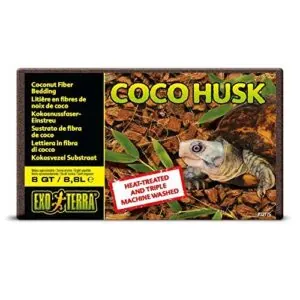
Think of this brick as a sponge with ambition. Soak it in about 3L of water for 30 minutes, stir out any compressed bits, and it swells to fill a 10L bucket. Spread a 2-4 inch layer, and you’ve got a humidity-boosting base that’s 100% natural compressed coconut husk.
Frogs, salamanders and diggers love it. Ball pythons and Russian tortoises get a naturalistic burrowing floor.
It’s not perfect, though. Chunks can run large, and some keepers report mold after a few days. Keep an eye on it.
| Best For | Keepers of frogs, salamanders, and other burrowing or digging animals who want a natural, humidity-boosting substrate for tropical enclosures. |
|---|---|
| Volume | 8 QT (8.8 L) |
| Brand | N/A |
| Model Number | PT2775 |
| Main Material | Compressed coconut husk |
| Humidity Support | Increases terrarium humidity |
| Habitat Type | Tropical reptile/amphibian enclosures |
| Additional Features |
|
- Made from 100-percent natural compressed coconut husk
- Helps raise humidity in terrariums
- Gives burrowing and digging animals a naturalistic environment
- Particle size can be inconsistent, and some users find the chunks too large
- Mixed reports on mold resistance, with some growth appearing after a few days
- Not suitable for every snake, according to some users
2. Flukers Cypress Reptile Bedding 5-Quart
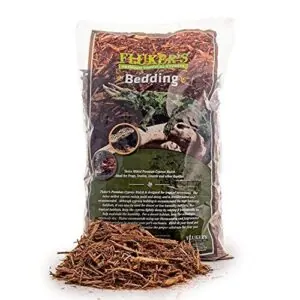
Picture a forest floor after rain: dark, springy, faintly damp. That’s the feel you get from this twice-milled cypress mulch, and your snake will love it.
It works for tropical and desert setups alike. Keep it lightly damp for humidity, or dry for arid habitats. Breeders recommend it, too.
Be honest with yourself, though. Some buyers say the bag runs smaller than other brands, and it isn’t the 10 pounds advertised. Moisture reports vary, too. Some say it holds humidity well, others say it’s super dry. Test it before shed time.
| Best For | Reptile keepers who want a natural-looking cypress mulch they can keep lightly damp for tropical species like frogs and snakes or dry for desert species like lizards. |
|---|---|
| Volume | N/A |
| Brand | Fluker’s |
| Model Number | 36010 |
| Main Material | Cypress mulch |
| Humidity Support | Works for high or low humidity |
| Habitat Type | Tropical and desert terrariums |
| Additional Features |
|
- Twice-milled premium cypress mulch that works in both high and low humidity habitats
- Suitable for frogs, snakes, lizards, and other reptiles
- Breeder tested and recommended
- Some customers report the bag is smaller than other brands
- The weight is not the 10 pounds advertised
- Moisture retention feedback is mixed, with some saying it holds humidity well and others finding it super dry
3. Soil Sunrise Terrarium Potting Soil 4qt
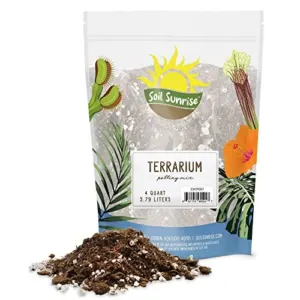
Picture a keen keeper with a new crested gecko enclosure, a stubborn humidity dial stuck at 40%, and a bag of soil that actually helps. That’s this one.
The mix is hand blended from coco coir, pumice, and horticultural charcoal. Coir holds moisture, pumice keeps air moving, and charcoal stops stagnant patches. Result? Balanced humidity gradients without soggy roots.
Four quarts covers about three 6-inch pots, so it suits a modest setup. Some folks find it pricey for the volume. Fair point. It’s also not meant for desert species.
| Best For | Hobbyists building a small open or closed indoor terrarium who want a well-draining, moisture-balanced mix for a modest number of plants. |
|---|---|
| Volume | 4 quarts |
| Brand | Soil Sunrise |
| Model Number | SSKIT097 |
| Main Material | Coco coir, charcoal, pumice |
| Humidity Support | Moisture balance |
| Habitat Type | Closed or open terrariums |
| Additional Features |
|
- The coco coir, pumice, and charcoal blend balances moisture and drainage.
- Good airflow and fast drainage help prevent waterlogged roots.
- It retains nutrients to support plant growth in small containers.
- Some customers find it pricey for the 4-quart quantity.
- Feedback is mixed on whether the amount is enough for multiple projects.
- It is not formulated for desert succulents or cacti.
4. Soil Sunrise Terrarium Potting Soil Mix 8 Quarts
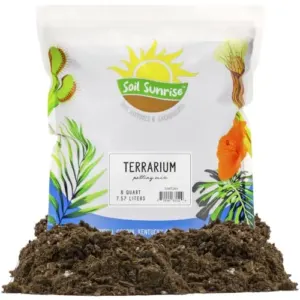
Want a ready-made mix that skips the mixing bucket? This one’s it.
Hand mixed from coco coir, pumice and horticultural charcoal, it’s a 100% natural soilless mix. The coir holds moisture, the pumice keeps air moving, and the charcoal helps break down toxins. That’s a tidy balance for humid setups.
Eight quarts (about 7.6 liters) covers 4.5 square feet at 4 inches deep. Some folks find the price steep for the volume, so measure your enclosure first.
One catch: it’s built for tropical terrariums, not desert setups.
| Best For | Hobbyists building humid, tropical-style terrariums or fairy gardens with ferns, mosses, or African violets who want a ready-made soilless mix. |
|---|---|
| Volume | 8 quarts (7.6 L) |
| Brand | Soil Sunrise |
| Model Number | SSKIT263 |
| Main Material | Coco coir, charcoal, pumice |
| Humidity Support | Moisture balance, humidity-loving plants |
| Habitat Type | Closed or open terrariums |
| Additional Features |
|
- Hand blended with coco coir, pumice, and horticultural charcoal, so there’s no mixing required.
- Balances drainage and moisture to support healthy roots in humid setups.
- Charcoal helps retain nutrients and break down toxins in small containers.
- Some customers find the price high for the amount you get.
- Eight quarts may not stretch across multiple projects, since it covers about 4.5 square feet at 4 inches deep.
- Not suited for desert plants, citrus, cacti, or succulents.
5. Galápagos Bioactive Soil Mix 8QT
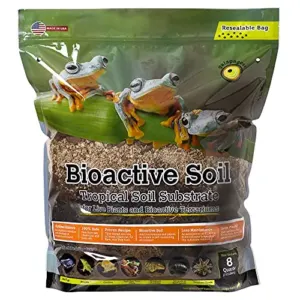
Think of this as the cozy duvet of the substrate world. It’s a mix of tree fern, fir bark, Tropicoco soil, sphagnum moss, and charcoal, and it holds moisture without turning into soup.
Sphagnum keeps humidity steady for shedding, while the bark keeps things airy. It’s free from salt, chemicals, and toxic oils, which matters when your animal’s belly is pressed against it.
Add springtails and isopods, though. Without them, it isn’t truly bioactive. Stick to tropical setups only. Desert and aquatic tanks? Absolutely not.
| Best For | Keepers of tropical reptiles and amphibians who want a moisture-holding, bioactive-ready substrate for live plant and houseplant terrariums. |
|---|---|
| Volume | 8 quarts |
| Brand | Galapagos |
| Model Number | 759834050346 |
| Main Material | Tree fern, fir bark, coco soil, sphagnum, charcoal |
| Humidity Support | Moisture retention and drainage balance |
| Habitat Type | Tropical bioactive terrariums |
| Additional Features |
|
- Balances moisture retention and drainage, so it stays damp without turning soggy
- Free from salt, chemicals, and toxic oils, making it safe for animals that rest against it
- Made with tree fern, fir bark, Tropicoco soil, sphagnum moss, and charcoal, and comes in resealable packaging
- Needs springtails and isopods added before it works as a true bioactive setup
- Only suitable for tropical enclosures
- Not designed for desert or aquatic environments
Maintain Substrate Moisture and Cleanliness Between Sheds
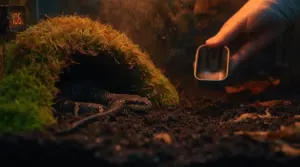
Picked your substrate? Great. Now comes the unglamorous bit, keeping it right.
Start with a digital hygrometer and check it daily. Aim for 40-60% humidity, nudging it up when your snake turns milky-eyed and dull. A damp sphagnum hide does the heavy lifting there, so you’re not soaking the whole enclosure.
Spot-clean every day. Scoop uneaten food, feces and old shed straight away. Mist lightly with dechlorinated water, then let the surface dry a touch before the next round. Damp, never soggy.
Watch for black spots or a funky smell. Spot them? Remove that patch immediately and open up the ventilation.
In bioactive setups, keep your isopods and springtails fed with leaf litter, and check that drainage stays clear. Simple habits beat dramatic overhauls every time.
Frequently Asked Questions (FAQs)
How do I fix stuck shed on my snake?
Raise the enclosure humidity to 70-80% and add a humid hide with damp sphagnum moss. If skin still clings, try a snake sauna: a bin lined with moist coconut husk and 85-90°F water, for 15-20 minutes.
Can substrate mixes cause respiratory problems in snakes?
Over 40 volatile compounds can leak from synthetic carpet alone. So yes, your substrate formulation matters.
Dusty, moldy or phenol-heavy mixes can cause respiratory damage. Keep humidity control steady, and your snake will breathe easy.
What is a bioactive substrate?
Ever seen a tiny springtail munch through a mouldy leaf? It’s weirdly satisfying.
A bioactive substrate is a living system, not just bedding. Soil, plants and a cleanup crew of springtails and isopods work together, recycling waste.
Conclusion
Picture that python again, sliding out of its old skin like a silk scarf pulled from a sleeve. No snags, no stubborn patches, just one tidy ribbon left on the bedding.
That’s what the right terrarium substrate mixes for shedding support make possible. Match the mix to your species, layer it so water never pools, and keep it clean between sheds. Do that, and every shed becomes a clean, fresh start for your scaly friend.