This site is supported by our readers. We may earn a commission, at no cost to you, if you purchase through links.

You pick up your snake and it hangs in your hands like a wet rope. No tongue flicks, no grip, no interest in where you’re taking it. That limp, quiet moment is where most owners start searching for answers.
A snake acting lethargic and weak isn’t always in danger. Cool enclosure temperatures often cause mild sluggishness, and ball pythons naturally move less than corn snakes. But open-mouth breathing, mucus, or a snake that can’t right itself needs a vet fast.
Your next step depends on what you’re seeing. Here’s how to sort a normal rest from a real warning sign, fix what you can at home, and know what a vet visit involves.
Table Of Contents
- Key Takeaways
- When Your Snake Needs Urgent Veterinary Care
- Distinguishing Normal Rest From Abnormal Snake Lethargy
- Correcting Husbandry and Monitoring Mild Snake Lethargy
- Medical Causes of Snake Lethargy and Weakness
- Veterinary Diagnosis, Treatment, and Recovery Costs
- Frequently Asked Questions (FAQs)
- Conclusion
Key Takeaways
- Call an exotic vet right away if your snake is limp, can’t right itself, breathes with its mouth open, has mucus around its nose or mouth, or shows bleeding, burns, or tissue protruding from the vent.
- A healthy snake can rest for hours but still reacts to touch or noise, so lethargy is a concern when it stops responding, grips weakly, or stays off the warm side.
- Low temperatures are the most common cause of mild sluggishness, so check the warm and cool sides with a digital probe (88-92°F for ball pythons, 85-88°F for corn snakes) and confirm humidity, water, and hides before assuming illness.
- If your snake doesn’t perk up within a few days of fixing its setup, a medical cause like a respiratory infection, mites or parasites, egg binding, or dehydration may be involved, and your vet will confirm it with an exam, fecal test, bloodwork, or imaging.
When Your Snake Needs Urgent Veterinary Care
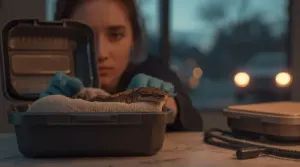
When should you stop watching and start driving? Some signs leave no room for waiting. A limp body, severe weakness, or a snake that doesn’t react when you handle it needs emergency care right away. The same goes for open-mouth breathing, wheezing, or mucus around the nose and mouth, which point to respiratory infections or other airway trouble.
If your snake is breathing with its mouth open, this guide on why snakes breathe with their mouths open explains what it means and when it turns urgent.
Call a vet immediately if you see bleeding or trauma, burns, or tissue protruding from the vent.
A suspected bite from a venomous snake is also an emergency, even if your pet looks fine. Venom can interfere with blood clotting and cause swelling, so learning the signs of snakebite helps you recognize when a pet needs urgent care. Don’t try to identify the snake. Keep your pet cool, calm, and still during transport.
Lethargy and anorexia in a snake lasting a day may need urgent imaging.
Distinguishing Normal Rest From Abnormal Snake Lethargy
If your snake isn’t showing any emergency signs, the next question is whether it’s resting or truly unwell. A healthy snake can lie still for hours, but it stays alert. Touch it or make a noise, and it flicks its tongue, opens its eyes, or shifts position.
A clinical lethargy assessment starts there. A lethargic snake doesn’t respond to these cues, grips weakly, or can’t right itself when gently rolled over. Check where it’s lying. A sick snake often avoids the warm side, while a healthy one moves between warm and cool zones.
Know your species. Ball pythons are naturally sedentary, while corn snakes move more. Pre-shed rest is normal, but lethargy lasting more than a week after shedding isn’t.
Correcting Husbandry and Monitoring Mild Snake Lethargy

If your snake seems mildly sluggish but is still alert, start with its environment. Low temperatures are the most common cause, and they’re also the easiest to fix.
Check that the warm side reaches your species’ range. For ball pythons, that’s 88-92°F. Corn snakes do well at 85-88°F. Confirm the cool side stays cooler, so your snake can move between zones. Then check humidity against the species target.
Since each species has its own temperature and humidity targets, a snake species habitat guide can help you confirm the right numbers for your animal.
Work through this list:
- Measure the warm and cool sides with a reliable digital probe, not a stick-on dial.
- Inspect the heating element and thermostat for faults.
- Offer at least two snug hides, one on each side.
- Replace the water with fresh, clean water.
Recheck temperature readings weekly. If your snake perks up within a few days, the cause was likely environmental. If it doesn’t, the problem may be medical.
A digital reptile thermometer probe makes those weekly checks quick and accurate, especially when you place one probe on each side of the enclosure.
Medical Causes of Snake Lethargy and Weakness

If you’ve fixed your snake’s setup and the lethargy hasn’t lifted, a medical cause may be behind it. Below are the four most common problems vets look for when a snake stays weak. Knowing what each one looks like will help you decide how quickly to act.
Respiratory Infections and Breathing Difficulties
A snake that once coiled calmly now props its head up, mouth gaping, each breath rasping like wet paper.
That picture suggests a respiratory infection, especially with audible wheezing or mucus around the nostrils.
| Sign | Meaning | Action |
|---|---|---|
| Open-mouth breathing | Possible emergency | Call a vet now |
| Mild nasal discharge | Possible infection | Book an exam |
Please don’t wait if breathing looks labored.
Mites and Internal Parasites
Parasites drain a snake’s energy in ways that look like simple tiredness. Mites are the usual external culprit. Check the eyes, chin folds, vent and water bowl for tiny black or dark red specks.
Internal parasites are harder to spot. Weight loss, regurgitation or odd stool may be the only clues, so a fresh fecal sample helps your vet choose the right treatment.
Egg Binding and Reproductive Complications
Some gravid snakes struggle to lay, and that’s often a sign of egg binding. Watch for these signs:
- Straining without producing eggs
- Swelling in the lower body
- Cloacal prolapse or discharge
- Weakness after laying part of the clutch
Contact an exotic vet the same day. Dystocia can turn serious fast, and any delay raises the risk of infection and rupture.
Dehydration, Malnutrition, and Metabolic Problems
Think of your snake as a car running on an empty tank and a dry radiator. Dehydration and malnutrition both drain its reserves, and weakness follows.
A snake without enough water or food is like an engine with nothing left to burn, and it slows to a weak crawl
| Sign | What it may mean |
|---|---|
| Tented skin | Water deficit |
| Chalky urates | Likely dehydration |
| Muscle wasting | Possible malnutrition |
Mild cases often improve with fresh water and humidity. Call a vet if weight loss passes 10%.
A reptile hygrometer for snake enclosures lets you check humidity at a glance, so you can adjust misting or water bowls before dehydration sets in.
Veterinary Diagnosis, Treatment, and Recovery Costs
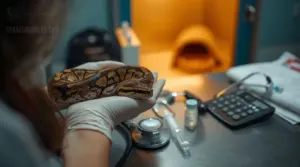
Once you’ve ruled out husbandry problems, a vet visit is the next step toward answers. Knowing what to expect from the exam, the treatment, and the follow-up care helps you plan with less worry. Here’s how each stage usually works, along with what it may cost.
Physical Exams and Diagnostic Tests
Your vet will start by watching your snake from a distance, noting posture, movement, and any weakness. Then comes a hands-on reptile exam: checking skin, nostrils, and mouth, and feeling the ribs and spine.
Expect blood tests, fecal testing, and radiographs. Ultrasound may follow. Lab work helps pinpoint infection, dehydration, or organ trouble before treatment begins.
Cause-Specific Treatment and Supportive Care
Treatment depends on the cause, so your vet won’t guess.
- Respiratory infections: antibiotics chosen by culture, plus thermal support and humidity.
- Mites: ivermectin or moxidectin, plus thorough enclosure cleaning.
- Egg binding: oxytocin or prostaglandin gels, or surgery if medication fails.
- Dehydration: fluid therapy and assisted feeding restore balance and calories.
Severe cases may need hospitalization, so follow your vet’s plan closely.
Follow-Up Monitoring and Expected Costs
Treatment doesn’t end when the medication does. For the first two to four weeks, weigh your snake weekly on a kitchen scale and note appetite and activity daily. Expect a recheck about 7 to 14 days in, usually $50 to $150, plus $20 to $100 per added test. Check enclosure temperature weekly, too. A digital kitchen scale in grams picks up the small weight changes that matter most, especially in hatchlings and smaller snakes.
Frequently Asked Questions (FAQs)
Can stress from handling make a snake lethargic?
Yes, handling stress may leave your snake sluggish. Freezing can look like calm, but it isn’t.
Also rule out enclosure setup, enclosure temperature, and recent feeding history, then reduce handling and add secure hiding spots.
Does brumation affect snakes kept indoors year-round?
A ball python kept warm all winter skipped meals for weeks. Indoor snakes can show mild seasonal slowing, though steady heat and light often mute it. Weakness or labored breathing isn’t brumation. Call a vet.
Should new snakes be quarantined before joining others?
Yes, quarantine every new snake before it meets your others. Keep it in a separate room for at least 30 to 90 days, use paper towels, wash hands between animals, and book a vet exam.
How often should a healthy snake be fed?
Your snake won’t mind skipping dinner more than you’d mind serving it. Healthy adults often eat every 14 to 21 days, while juveniles do better every 5 to 10 days.
Feeding frequency shifts by species.
Conclusion
Picture a corn snake that skips two meals, sits cool in its hide, and perks up once the warm side hits 88°F. That’s a husbandry fix, not an emergency.
A snake acting lethargic and weak deserves attention, not panic. Check temperatures, humidity, and water first. If breathing turns noisy, mucus appears, or your snake can’t right itself, call an exotic vet that day.
You know your snake’s normal best. Trust that baseline, and act early.