This site is supported by our readers. We may earn a commission, at no cost to you, if you purchase through links.

Those tiny black flecks scattered across your snake’s scales aren’t dirt, and they won’t brush off. They’re mites, and by the time you spot them near the eye rims or crusted along the chin, the infestation has likely spread through the enclosure’s seams and substrate. Left untreated, mites cause dehydration, dysecdysis, and stress severe enough to suppress your snake’s immune response.
The good news: you don’t need harsh pesticides to fight back. Natural ways to remove snake mites—from warm water soaks to predatory mite allies like Stratiolaelaps scimitus—work with your snake’s biology instead of against it. Get the sequence right, and you’ll break the mite life cycle for good.
Table Of Contents
- Key Takeaways
- Spot Snake Mites Early
- Start With Safe Snake Soaks
- Use Oils to Smother Mites
- Try Predatory Mite Control
- Clean The Enclosure Naturally
- Frequently Asked Questions (FAQs)
- Will rubbing alcohol kill snake mites?
- Will snake mites infest my house?
- What will eat snake mites?
- How long does full mite eradication typically take?
- Can snake mites spread to other household pets?
- Are natural treatments as effective as chemical pesticides?
- How often should I check my snake afterward?
- Can Nix treatments be used alongside soap soaks?
- Conclusion
Key Takeaways
- Since mite eggs hatch on a roughly 24-hour cycle, daily treatment sessions—not a single soak—are essential to break the infestation before it rebounds.
- A layered natural approach works best: warm water or diluted Betadine soaks loosen and drown mites, mineral or olive oil smothers survivors in scale crevices, and thorough drying afterward prevents skin complications.
- Releasing predatory mites like Stratiolaelaps scimitus offers chemical-free, long-term control since they hunt snake mites through every life stage and naturally die off within about a month once their food source disappears.
- Full eradication typically takes 4 to 6 weeks (sometimes 8) and requires deep-cleaning the enclosure—removing substrate, hot-water washing surfaces, and vacuuming hidden corners—alongside quarantining new reptiles for at least 30 days to prevent reinfestation.
Spot Snake Mites Early
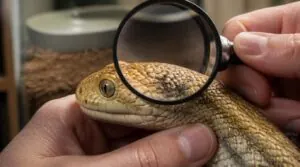
Mites don’t announce themselves loudly, but your snake’s body will give you clues if you know where to look. Catching an infestation early makes treatment faster and far less stressful for both of you. Here’s what to watch for before things get out of hand.
Familiarizing yourself with how mites cause skin damage in snakes helps you recognize the subtler warning signs before an infestation takes hold.
For a full rundown of warning signs and prevention tips, check out this guide on preventing mites on pet snakes before symptoms escalate.
Black Dots on Scales
Ever notice tiny black specks on your snake and wonder if it’s just dirt? Look closer. Snake mites leave stuck, sharply-edged dots—not loose debris that wipes away. They cluster where your snake rests or bends, often looking embedded in the scale surface.
Catching this early warning sign matters: it’s your cue to start natural control before infestation spreads.
Mites Near Eyes
Those specks around the eyes deserve extra attention—this is where mites cause the most trouble. They cluster near the eye rims, triggering irritation similar to blepharitis in humans: redness, swelling, and that gritty, uncomfortable feeling.
Mite infestation signs here often mean deeper trouble brewing.
Watch for:
- Redness around the eye rim
- Swollen or puffy eyelid tissue
- Crusty buildup at the edges
- Excessive rubbing or head-shaking
- Cloudy or irritated appearance
Ashy Scale Dust
Run your thumb along the scales and check for a fine, pale film—that’s ashy scale dust, and it usually means mites have been active a while.
| Sign | Where It Shows | Likely Cause |
|---|---|---|
| Dull residue | Scale folds | Mite debris |
| Gritty texture | Belly, flank | Irritation |
| Spreading patch | Mid-body | Ongoing infestation |
Low humidity worsens buildup, so check your enclosure before assuming the worst.
Poor Sheds
Dust on the scales isn’t the only clue—patchy, incomplete sheds tell you snake mites are interfering with the process itself. Retained eye caps and stuck skin near hide crevices often mean mites are feeding in those protected folds.
Poor humidity microclimates and unclean water dishes make sheds worse, so check both before your snake ends up stressed, irritated, and vulnerable.
Appetite and Energy Changes
Often the first hint isn’t visual at all—it’s behavioral. Feeding behavior shifts show up as hesitation or refusal at mealtime, while stress-induced lethargy leaves your snake drooping instead of basking.
Watch for dehydration risk factors too, since irritated skin disrupts fluid balance. Left unchecked, this metabolic energy decline compounds fast, making prompt Snake mites treatment and natural control essential before rest disruption impact turns mild lethargy into real trouble.
Start With Safe Snake Soaks
Once you’ve confirmed mites are the problem, soaking is your first line of defense, and it’s one you can start tonight with things already in your bathroom.
A warm water soak loosens their grip fast, but if mites keep returning, it may be time to look at creating a snake-friendly meadow habitat that naturally keeps pest populations in check.
A good soak drowns mites, loosens debris, and gives your snake real relief while you tackle the enclosure separately.
Here’s what a safe, effective soak routine actually looks like.
Warm Water Soak
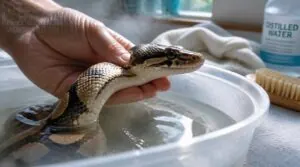
Warm water works because it drowns mites without shocking your snake’s system. Keep temps mild—well below anything that risks burns—and limit the soak duration to a few controlled minutes.
Support the head above the waterline, letting scales take the brunt of contact. Afterward, rinse gently with distilled water and dry thoroughly, since heat recovery matters just as much as the soak itself.
Supervised Betadine Bath
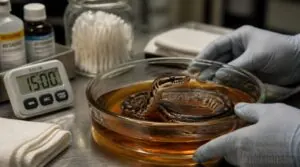
Betadine works, but precision matters: mix a 10:1 water-to-Betadine ratio, never full strength, since undiluted iodine risks thyroid stress and skin burns.
Soak roughly 30 minutes, watching constantly for distress—rapid breathing, thrashing, or lethargy mean stop immediately. Keep solution away from eyes and mouth; mucosal exposure invites irritation, not parasite eradication.
Rinse thoroughly afterward. Disinfecting shouldn’t create new problems while solving your mite infestation.
Gentle Dish Soap Use
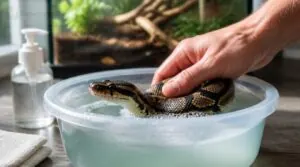
Not every dish soap belongs anywhere near your snake’s enclosure. Choose a gentle formula—one with alkyl polyglucoside surfactants and a skin-balanced pH—to avoid dermatitis from harsher detergents.
Look for glycerin or aloe additives; they cushion scales while cutting mite numbers.
Rinse thoroughly afterward. Leftover residue irritates skin and undermines your pest control efforts, defeating the purpose of treating mite infestation in the first place.
Daily Egg-cycle Repeats

Here’s the catch: a single soak won’t win this fight. Mite eggs hatch on a roughly 24-hour rhythm, so hatchlings emerge daily, feed, and start the cycle again.
A single soak won’t win this fight—mite eggs hatch daily, so the cycle restarts before you know it
That’s why consecutive daily treatments matter more than any single session:
- Kills newly active mites before they reproduce
- Catches hatchlings during their emergence window
- Reduces surviving adults laying new eggs
- Prevents rebound infestations between waves
Drying After Treatment
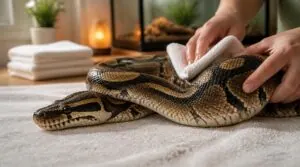
Once the soak’s done, don’t done, don’t tuck your snake away wet. Use a clean, absorbent cloth for gentle patting technique—never rubbing—paying close attention to belly scales and skin folds where moisture hides. Warm, draft-free airflow helps moisture evaporation while preventing chilling. Check multiple body areas before returning your snake home. Sanitize cloths after each use; proper equipment sanitation stops recontamination and helps overall reptile hygiene.
Use Oils to Smother Mites
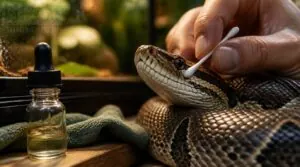
Once you’ve soaked away what you can, oils step in to finish the job by cutting off a mite’s air supply entirely. It’s a simple, low-tech method, but where and how you apply it makes all the difference. Here’s what you need to know before you reach for the bottle.
Mineral Oil Application
Mineral oil works by physically coating snake mites, blocking their spiracles and cutting off airflow until they suffocate. Focus application on scale crevices where mites cluster and hide.
Watch hydration exchange risks — oil left too long can trap moisture underneath scales. This natural control method targets parasites directly without chemical residue, but always rinse thoroughly afterward to prevent shedding process interference.
Olive Oil Option
Kitchen-cabinet olive oil works too, and its higher viscosity actually helps it cling to scale grooves better than thinner oils.
- Coats snake mites, blocking airflow
- Penetrates scale ridges and creases
- Warming slightly improves spread
- Apply lightly—thick pooling complicates cleanup
- Inspect skin post-treatment for stragglers
Cover mite-heavy zones fully; missed patches let parasites dodge the smothering mechanism entirely.
Chin Groove Cleaning
Once the oil’s done its job elsewhere, don’t skip the chin groove—mites love hiding in this narrow crease. Use a soft brush or damp swab, never abrasive tools, to lift debris without irritation. Pat dry fully; leftover moisture invites bacteria and worsens snake mite problems. Watch for redness or swelling afterward, and if crusting persists, that’s your cue for veterinary assessment.
Vent Fold Swabbing
Vent cloaca folds need the same care. Rotate the swab tip gently along creases—never scrub—to lift mites without triggering irritation.
Keep handling brief; stress compounds snake mite problems fast. Check for redness afterward, since skin recovery matters as much as removal in solid reptile health management.
Rinse After One Hour
Sixty minutes on the clock, then it’s time to act. Rinse timing importance can’t be overstated—residue left too long irritates skin.
Use lukewarm water for water temperature safety, covering the full body, not just treated spots.
- Rinse folds thoroughly
- Pat dry gently
- Watch for redness
Post-rinse drying prevents dampness issues. Consider predatory mites afterward—a natural, biological pest control solution supporting long-term habitat disinfection.
Try Predatory Mite Control
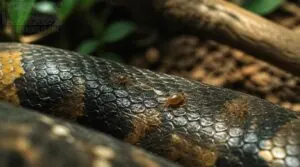
If oils and soaks feel like a lot of manual work, nature actually offers a hands-off alternative. Predatory mites can hunt down the pests living on your snake without a single chemical treatment. Here’s what makes this approach worth considering for your setup.
Stratiolaelaps Scimitus Benefits
Nature already has an answer to your mite problem: Stratiolaelaps scimitus, a soil-dwelling predator sold commercially as Hypoaspis miles. It hunts mites through every life stage—egg, larvae, nymph, and adult—offering biological pest control without chemical residue.
This isn’t instant knockdown; it’s steady, natural population growth working against the infestation. Integrated pest management rewards patience, and these natural predators deliver just that.
Bioactive Enclosure Compatibility
If your terrarium already runs a bioactive setup, releasing predatory mites won’t disrupt it. They coexist peacefully with your cleanup crew, drainage mesh, and false bottom design—no interference with isopods or springtails.
Just confirm all materials are non-toxic and heating devices stay properly guarded. Natural balance actually improves, since these natural predators simply add another layer of pest control to an already functioning micro-habitat.
Ideal Humidity Range
Predatory mites thrive in a specific window — humidity between 50-70% keeps them active and hunting.
- Check readings with a reliable hygrometer at snake level
- Avoid soggy substrate, which invites dampness-loving mites
- Use distilled water when misting to prevent mineral buildup
- Watch for poor sheds, a sign humidity’s drifting off-target
Stable moisture helps both pest control and healthy shedding, keeping your enclosure’s environment balanced.
Safe Temperature Range
Temperature swings do more damage than most keepers realize — they stress both the mites you’re targeting and the snake you’re protecting.
Keep the enclosure between 70-85°F, matching the predator’s activity range while avoiding metabolic strain on your snake.
| Zone | Effect |
|---|---|
| Below 70°F | Predators sluggish |
| 70-85°F | Best for hunting |
| Above 85°F | Snake heat stress |
Thermal stability beats fluctuation every time for effective pest control.
Natural Die-off Timeline
Once mites vanish, your predators starve within weeks — no food source, no colony.
Expect full die-off in about a month, mirroring pathogen load patterns: heavier infestations mean longer clearance, lighter ones resolve faster.
- Week 1: predator numbers peak
- Week 2: mite sightings drop sharply
- Week 3: scattered strays remain
- Week 4: predators starve out
- Post-treatment: resume normal husbandry
This natural exit protects your environment balance without chemical residue.
Clean The Enclosure Naturally
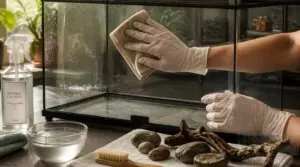
Treating your snake is only half the battle, since mites and their eggs can hide throughout the enclosure long after your snake looks clean. A thorough sanitation routine breaks that cycle for good, cutting off any chance of reinfestation. Here’s exactly what your enclosure cleanup should include.
Remove Infested Substrate
Pulling every scrap of old bedding is step one, and it’s non-negotiable. Double bagging contains any mites still crawling before disposal. Freeze salvageable substrate solid, or steam it, to kill hidden eggs. Managing humidity levels effectively can also help decrease the chances of a mite infestation.
| Method | Purpose |
|---|---|
| Freezing | Kills eggs |
| Steaming | Pasteurizes |
| Sifting | Catches debris |
Sift fines carefully—reinfestation starts small, and prevention beats round two every time.
Hot Water Washing
Once the substrate’s gone, hit every hard surface with water at 130°F (54°C) or higher. This heat boosts detergent solubility, stripping biofilms and organic residue mites hide in.
- Rinse plastic hides and ceramic decor thoroughly
- Keep temperatures consistent to prevent thermal shock
- Air-dry completely before reassembly
Sanitizing shared items this way curbs reinfestation before it starts.
Dish Detergent Cleaning
Hot water alone won’t cut it—dish detergent does the real work. Surfactants lower surface tension, letting water penetrate grime, while forming micelles that trap and emulsify residual oils mites hide in. Look for enzyme-based formulas; they break down organic buildup other cleaners miss.
Biodegradable options limit chemical exposure to your snake. Rinse thoroughly—soap residue irritates skin as much as the mites did.
Vacuum Hidden Corners
Once surfaces are scrubbed, don’t skip the corners mites retreat to when threatened.
- Baseboard seams where dust and eggs collect
- Behind furnishings and resting hides
- Under decor rarely moved during routine cleaning
Use a crevice tool for reach, moving slowly to get the best suction contact. A HEPA filter traps fine particles rather than recirculating them. Vacuum every cleaning cycle, then dispose of debris in a sealed bag outdoors—never indoors.
Quarantine New Reptiles
Bringing home a new snake without a plan is how mite outbreaks start.
Every new arrival should be quarantined in a separate isolation room setup for at least 30 days, using dedicated handling tools and strict sanitization protocols.
Watch closely for ectoparasites and other parasitic insects during this window—it’s preventative husbandry that protects your whole collection before they join the others.
Frequently Asked Questions (FAQs)
Will rubbing alcohol kill snake mites?
Picture mites collapsing like tiny soldiers mid-march: alcohol works fast, often within minutes on contact, but it’s a double-edged sword.
Diluted 1:1 for snakes under 500g, it kills mites and eggs, though toxicity and flammability risks demand real caution.
Will snake mites infest my house?
Yes—via hitchhiking pathways on infested snakes or contaminated gear, then porous decor risks and poor handling hygiene cause indirect transfer risks around your reptile enclosures, letting a small pest infestation spread beyond one habitat into surrounding household spread factors.
What will eat snake mites?
Predatory mite species like Stratiolaelaps scimitus hunt snake mites through microhabitat hunting in bioactive setups—an effective, chemical-free biological control option that helps maintain a healthy environment while soil mite effectiveness naturally curbs infestation without harming your reptile.
How long does full mite eradication typically take?
Patience isn’t just a virtue here—it’s mite management. Full eradication takes 4 to 6 weeks, sometimes 8, since eggs keep hatching after treatment. Symptoms often improve first, but consistency through the entire parasite life cycle prevents recurrence and restores real balance.
Can snake mites spread to other household pets?
These bloodsucking pests are species specific, so true infestation on cats or dogs is unlikely.
Real risk comes from caregiver transfer—handling snakes then pets without washing up—or surface hitchhiking. Keep enclosures separate and quarantine new reptiles to limit cross-species exposure.
Are natural treatments as effective as chemical pesticides?
Chemical pesticides offer faster knockdown speed, but predatory mites and botanical treatments avoid miticide resistance risks, support natural balance, and protect non-target organisms—making them slower yet safer long-term choices for exotic pet care enthusiasts prioritizing whole-enclosure health.
How often should I check my snake afterward?
Check daily for the first two weeks—post-treatment monitoring catches newly emerged mites before reappearance. Watch skin health and shedding closely.
Once you’re using predatory mites for natural balance, weekly checks through one full cycle keep vivarium maintenance and exotic pet care on track.
Can Nix treatments be used alongside soap soaks?
Mixing the two? Not a good idea. Nix (a lice product, not reptile-approved) follows strict application order with conditioner interference risks, so pairing it with soap soaks compromises treatment efficacy—stick to predatory mites or vet-approved options instead.
Conclusion
Some believe mites vanish once symptoms fade, but eggs hidden in scale folds prove otherwise. Breaking that cycle demands patience, not chemicals.
Natural ways to remove snake mites succeed because they respect your snake’s physiology, targeting parasites without punishing the skin, gut flora, or nervous system beneath it.
Soak, oil, release predatory mites, then scrub every enclosure seam. Repeat until nothing crawls back.
Your snake’s calm shed, clear eyes, and steady appetite will confirm the mites are truly gone.