This site is supported by our readers. We may earn a commission, at no cost to you, if you purchase through links.

Those pepper-sized dark specks on your new snake’s chin might be dead skin. Or they might be mites, ready to spread through your entire collection in days. Snake mites drink blood, shed pathogens between animals, and multiply fast enough to turn one wild-caught import into a full-room infestation.
That’s why you need to quarantine new snake arrivals before they meet your established pets, no exceptions, no shortcuts.
Get the setup right, and you’ll catch trouble on day one instead of day sixty. Here’s exactly how to build that safety net, room by room, bowl by bowl.
Table Of Contents
- Key Takeaways
- Set Up a Mite-Safe Quarantine Space
- Inspect Your New Snake Daily
- Treat Mites During Quarantine
- Prevent Mites From Spreading
- End Quarantine Safely
- Frequently Asked Questions (FAQs)
- How long to quarantine a snake with mites?
- Should you quarantine a new snake?
- Should I take my snake to the vet for mites?
- How to get rid of mites on snakes fast?
- How long can snake mites survive without a host?
- Can snake mites infest humans or other pets?
- Is CITES permit required for a wild-caught snake?
- What causes recurring mite infestations despite treatment?
- Can quarantine duration vary by snake species or origin?
- Conclusion
Key Takeaways
- Quarantine every new snake in a separate room with its own escape-proof enclosure, paper towel substrate, and dedicated tools to catch mites before they spread to your collection.
- Inspect your new snake daily by checking its eyes, chin, scale gaps, water bowl, soaking behavior, and weight, since these are the earliest signs of a mite infestation.
- If you spot mites, get a reptile vet involved immediately for safe treatment, and pair it with strict cleaning routines, frequent substrate changes, and reptile-safe (never household) chemicals.
- Don’t end quarantine until 60-90 days have passed with no mite activity, shedding looks normal, and a vet confirms clearance with negative test results.
Set Up a Mite-Safe Quarantine Space
Mites can’t survive without a place to hide and breed, so your setup matters more than you’d think. Before that new snake ever touches its enclosure, you need a space built to stop mites cold. Here’s what that quarantine setup actually requires.
A separate enclosure, easy-to-clean surfaces, and smart airflow all work together for effective off-host mite containment and isolation that keeps the rest of your collection safe.
Separate Room Placement

Pick a room your main collection never enters — that’s non-negotiable.
A separate room with a closed door limits airflow between spaces, so mites can’t hitch a ride on shared HVAC vents or ceiling fans. This cuts traffic limits and accidental surface separation breaks down fast if you’re cutting through your snake room to reach quarantine. Placement distance and environmental stability matter here too — solid biosecurity measures.
Escape-Proof Temporary Enclosure
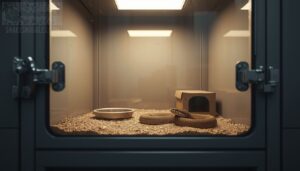
Once you’ve got the room sorted, your quarantine tank needs to actually hold the snake.
A secure latching system with locks at two heights stops escapes and curious fingers alike. Add tight gasket sealing around doors, durable stainless vents (1.2mm mesh), and a safe, non-toxic finish. Mites don’t care about your good intentions — only solid hardware does.
Paper Towel Substrate
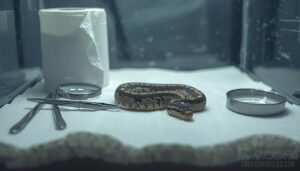
Skip cypress mulch or aspen shavings — locked hardware means nothing if the substrate hides mites. Paper towels let you spot activity instantly, thanks to capillary action pulling moisture (and mite specks) to the surface.
Wet strength keeps them intact during daily disinfection, while recycled pulp options support eco-friendly disposal. Replace daily; it’s cheap, effective biosecurity against snake mites.
Dedicated Tools and Bowls

Your quarantine tank needs its own gear, full stop. Color coded tools and stainless steel bowls stop cross-contamination between snakes, since mites hitchhike easily on shared equipment.
Keep everything in a dedicated storage area, away from your main collection’s supplies.
Run weekly bowl inspections for cracks, and follow replacement schedule guidelines—swap gear every 6-12 months. Non-porous, smooth surfaces resist mite secretions and disinfect cleanly.
Warm and Cool Hides

Give your snake two hides, not one: warm side and cool side, both in plastic or ceramic for easy disinfecting. Snug-fitting interiors let them coil with body contact on multiple walls—security matters as much as temperature.
Place the warm hide closer to the heat source, creating a true thermal gradient. Clean both hides between uses to control mites and prevent mold buildup.
Inspect Your New Snake Daily

Mites don’t announce themselves, so you’ll need to play detective every single day. A quick, consistent check catches trouble before it becomes an infestation. Here’s exactly where to look.
Check Eyes and Chin
Mites love hiding around the eyes and chin, so start every daily check there.
Look for small dark specks near the eye scale edges, and check whether the eye cap looks smooth, not cloudy or flaky. Along the jawline, watch for stuck shed, debris, or tiny moving specks. Handle the head gently—snakes resent rough poking, and stress won’t help your inspection.
Look Between Scales
Where scales overlap, that’s prime real estate for Ophionyssus natricis, the reptile mite. Angle a light source sideways instead of overhead—side lighting throws shadows into scale gaps, boosting contrast so tiny specks stand out.
Check the neck folds, jawline, and belly scutes first; these hotspots trap moisture. Gently part scales without tugging. Moving specks mean mites; stationary debris usually doesn’t.
Watch Water Bowl Specks
A clean water bowl tells you a lot. Watch for tiny dark specks floating on the surface or clinging near the rim—classic mite debris. Clear or light-colored bowls make spotting easier than dark ones.
Stir gently: floating specks scatter, true mites disperse too. Stainless steel resists residue better than scratched plastic. Replace water daily during quarantine; buildup mimics parasite activity and muddies your biosecurity checks.
Track Soaking Behavior
Soaking isn’t random—it clusters into sessions, then tapers off as your snake settles in. Expect more frequent soaking early on, tied to new humidity levels or handling stress.
Watch what follows: does it bask actively, or hide and stay still? Repeated re-soaking within minutes, or rising frequency day to day, often signals skin irritation—an early mite comfort cue worth logging.
Record Feeding and Weight
A gram scale tells you more than your eyes ever will. Weigh on arrival to set your baseline, then track trends weekly using:
- Pre-feed weight accuracy — same time, same scale
- Tracking prey mass — log grams offered and eaten
- Feeding frequency — note gaps and refusals
Correlating weight trends with your quarantine log catches problems early.
Treat Mites During Quarantine
Spotting mites is only half the battle, treatment is where things get serious. You can’t just wing it with random pet store sprays and hope for the best. Here’s what an actual treatment plan looks like, step by step.
Call a Reptile Vet
Pick up the phone before the mites do. When you call, expect questions about species, age, and how long you’ve owned the snake, plus symptoms like flecks or irritated skin.
If your regular vet doesn’t treat reptiles, ask for a referral to an exotics specialist. Prepare a secure, ventilated transport container, and mention diagnostic testing needs when scheduling. You can also use online search tools to locate specialized care in your area.
Use Reptile-Safe Treatments
Not every mite spray is snake-safe. Your vet will likely recommend pyrethrin-based enclosure sprays or diluted ivermectin and fipronil applied topically, avoiding eyes and mouth to prevent toxicity.
- Confirm dosing with your vet first
- Skip essential oils unless verified safe
- Watch for seizures or skin irritation
- Keep sprays off eyes and mouth
- Bathe in water if exposed accidentally
Clean Before Each Dose
Before every treatment, wipe down surfaces in order: shared tools first, then the enclosure itself. Use disinfectant at proper concentration, keeping surfaces wet for full contact time. Never dip soiled cloths back into your solution — that’s how recontamination happens. Wash hands between cleaning and handling. This sequence keeps snake mite eradication effective and consistent.
If you’re unsure which disinfectant is safe around reptiles, this guide to safe cleaning products for snake enclosures explains which options work without harming your snake.
| Step | Item | Contact Time |
|---|---|---|
| 1 | Shared tools | 10 min |
| 2 | Enclosure surfaces | 10 min |
| 3 | Hides | 10 min |
| 4 | Hands | N/A |
Replace Substrate Frequently
Once tools are wiped down, turn to the substrate itself. Paper towel isn’t washed and reused — discard it fully after each soiling, including under hides and around water dishes. Frequent replacement disrupts mite life cycles before eggs hatch, keeps moisture controlled, and removes contamination:
- Trapped eggs waiting to hatch
- Fecal residue harboring bacteria
- Damp corners mites love
- Waste you’d rather not touch again
Seal soiled paper in a trash bag immediately.
Avoid Unsafe Chemicals
Grab reptile-specific products only — nothing from under your kitchen sink.
Ammonia inhalation and bleach vapors damage a snake’s respiratory tissue fast. Skip scented air fresheners and essential oils entirely; those "calming" diffusers are surprisingly toxic to reptiles.
Pesticide transfer risk is real too — treat your yard for ants, then handle your snake, and you’ve contaminated the enclosure.
When in doubt, stick to F10SC.
Prevent Mites From Spreading
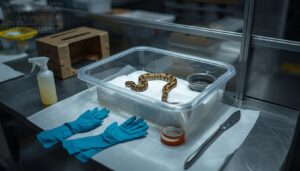
Mites don’t stay put, they hitch rides on hands, sleeves, and tools without you noticing. One careless moment during care can undo weeks of quarantine work. Here’s how to keep those hitchhikers contained to one enclosure.
Handle Quarantined Snake Last
Think of your daily routine like an assembly line: quarantine comes last, always.
Handle the new snake after every established animal, once feeding and spot-cleaning are done. This sequencing keeps mites from hitching a ride on your hands or tools.
- Feed established snakes
- Spot-clean their enclosures
- Handle established snakes
- Handle quarantine snake
- Reset hands and tools
Wash Hands Thoroughly
Soap and water do more mite control than any spray you’ll buy. Lather for a full 20 seconds, scrubbing between fingers, under nails, and across wrists.
| Step | Detail |
|---|---|
| Lather | All surfaces, nails |
| Rinse | Running water |
| Dry | Clean towel |
| Time | 20 seconds min |
Rinse completely, then dry hands fully — damp skin transfers germs faster.
Change Clothing After Care
Those clothes you wore into quarantine? They don’t get to roam free afterward. Disposable coveralls are the smart move here — strip them off at the enclosure boundary and toss them, no second wear.
Reusable shirts go straight into a sealed bag until wash day. Launder separately, hottest water the label allows, then dryer heat — most mites won’t survive it. Rubber boots wipe clean fast; store them apart from household shoes.
Seal Waste Immediately
Mites can survive for days in loose bedding, waiting for their next host. That’s why soiled paper towels go straight into a sealed bag, tied off immediately, no exceptions.
Double bag it for extra insurance, then drop it in a lidded bin dedicated to quarantine waste. Wipe down the disposal area afterward with reptile-safe disinfectant — odor control and mite containment, handled in one step.
Disinfect Tongs and Hides
Every tool that touches your quarantined snake carries risk if it isn’t cleaned properly. Feeding tongs need separate tools with color-coded grips, disinfected after each session using proper contact time — alcohol needs 5 minutes, bleach needs 10.
- Scrub joints and hinges where mites hide
- Test material compatibility before using heat
- Dry hides completely before reuse
- Log each disinfection cycle
Thermal disinfection works well on metal, but skip it on plastics.
End Quarantine Safely
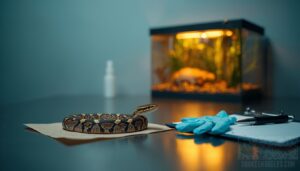
Ending quarantine too early is how mite outbreaks make a comeback. You need clear checkpoints, not just a gut feeling, before your snake rejoins the collection. Here’s what actually needs to happen first.
Wait 60–90 Days Minimum
Sixty days is the floor, not the finish line. This window covers full mite life cycles, from eggs to adults, so isolation procedures actually catch what a quick glance misses.
Sixty days is the floor, not the finish line—give mite life cycles time to fully reveal themselves
| Day Range | Focus | Action |
|---|---|---|
| 1–30 | Active infestation | Daily checks |
| 31–60 | Recurring signs | Substrate swaps |
| 61–90 | Reappearance risk | Final confirmation |
Extend After Mite Activity
That 90-day mark isn’t magic if you spotted mites at day 75. Restart the clock whenever activity reappears, since adult mite mortality from most treatments won’t guarantee snake mite eradication in one pass.
Miticide resistance risks climb with repeated use, so rotate products rather than doubling down.
Translaminar coverage benefits fade eventually; residual efficacy duration varies by product, and disinfection protocols still matter throughout.
Confirm Normal Shedding
A clean shed cycle tells you a lot. Check for continuous skin release, head to tail, with no stuck patches near the eyes or tail tip.
Cloudy eyes should clear fully afterward, and post-shed skin should feel smooth, not flaky.
Consistent shedding cycles signal recovery from external parasites and confirm your daily health checks are paying off.
Get Veterinary Clearance
Good sheds are reassuring, but they’re not a green light. You still need a reptile vet to sign off before this snake joins your collection.
Clearance requires three negative PCR tests over 4–6 months, plus a physical exam checking skin, body condition, and respiratory health. The accredited vet’s signature protects your certificate’s integrity, and their medical records back up that approval if questions arise later.
Monitor After Moving Snake
Moving day isn’t the finish line. Treat the first week post-move as a high-risk window—recheck water bowls, hides, and corners for specks daily.
Track feeding behavior and weight weekly. Watch soaking habits and skin for reappearance warning signs. This isn’t paranoia; it’s long-term mite surveillance protecting your whole collection from a problem you thought you’d already beaten.
Frequently Asked Questions (FAQs)
How long to quarantine a snake with mites?
Rushing this is like defusing a bomb with oven mitts on. Give it 60 to 90 days minimum—longer if mites reappear. Watch the full lifecycle, since eggs hatch weeks later, and premature introduction risks reinfesting your whole collection.
Should you quarantine a new snake?
Yes, always. Even healthy-looking snakes can be asymptomatic carriers of mites, Serpentovirus, or Cryptosporidium. Isolating new arrivals protects your existing collection’s biosecurity, reduces stress-related complications, and gives you a critical observation window before disease spreads unnoticed.
Should I take my snake to the vet for mites?
Call a reptile vet if you spot lethargy, weight loss, or anemia signs. They’ll confirm species-specific dosing, run diagnostic testing, and treat mites safely, reducing reinfestation risks compared to unsafe, generic over-the-counter chemicals.
How to get rid of mites on snakes fast?
Your vet sets a safe parasite medication plan, then you pair it with thorough environmental mite removal—cleaning enclosures, replacing substrate, disinfecting tools. Skip toxic sprays entirely.
Fast results come from consistency, not shortcuts, so monitor treatment efficacy closely between doses.
How long can snake mites survive without a host?
Ironic, isn’t it? Mites can’t survive long without blood, yet they still outlast a rushed quarantine. Deutonymphs hold on for 31 days, protonymphs starve in 15- That gap is exactly why isolation procedures need real time to work.
Can snake mites infest humans or other pets?
Reptile-to-human transfer is real: mites can bite people, causing itchy skin lesions, and readily jump between reptile species, creating multi-species infestations.
Since mites survive off-host in enclosures, cross-contamination happens fast, making isolation and disinfection essential external-parasite prevention steps.
Is CITES permit required for a wild-caught snake?
Only if the species carries Appendix listing status under CITES and you’re crossing an international border. Domestic transport of a wild-caught, non-listed snake usually skips export permit requirements—but always confirm wildlife import regulations before assuming you’re in the clear.
What causes recurring mite infestations despite treatment?
Old habits die hard—mites often bounce back due to incomplete topical coverage, missed eggs surviving treatment cycles, untreated home sources, environmental hiding spots in substrate or decor, and cross-contamination from shared tools, hands, or clothing during care.
Can quarantine duration vary by snake species or origin?
Yes. Wild-caught risks and unclear import history call for longer isolation than captive-bred stability offers. Pythons often need extended timelines, while species-specific shedding patterns affect how quickly you confirm mites are gone before ending quarantine.
Conclusion
Every reptile keeper remembers a Trojan horse story: one calm new arrival, one hidden threat. That’s what mites are, riding in on scales you never thought to check twice.
When you quarantine new snake arrivals properly, you’re not being paranoid, you’re being the vet your collection deserves. Ninety days feels long until you compare it to months of treating every enclosure you own. Patience now saves your whole collection later. That trade-off isn’t close.