This site is supported by our readers. We may earn a commission, at no cost to you, if you purchase through links.

One black speck on your snake’s chin. You brush it with a fingertip, and it crawls away. That tiny menace is a mite, and by the time you spot it, dozens more are likely feeding along the eyes, neck, and vent.
Mites spread through new arrivals, shared water dishes, and even your own hands. One infested snake can turn a tidy rack into weeks of soaking, scrubbing, and constant rechecks.
This snake mite infestation prevention guide gives you the habits that stop them first: sharp early detection, strict quarantine, clean handling order, and a vet-backed plan if mites show up anyway.
Table Of Contents
- Key Takeaways
- Spot Snake Mites Before They Spread
- Quarantine Every New Snake
- Keep Hitchhiking Mites Out
- Clean Enclosures and Equipment Thoroughly
- Manage Substrate and Check Regularly
- Contain Suspected Mites Promptly
- Frequently Asked Questions (FAQs)
- How to get rid of snake mite infestation?
- Will rubbing alcohol kill snake mites?
- Does Dawn soap kill snake mites?
- What kills mites immediately?
- What is the best way to prevent snake mites?
- How do you prevent mite infestation?
- Does F10 kill snake mites?
- Can humans get snake mites from reptiles?
- How long do snake mites survive?
- Do all snake species attract mites equally?
- Conclusion
Key Takeaways
- Quarantine every new snake for at least several weeks in its own container with dedicated tools, and don’t trust one clean check, since mites hide as eggs and nymphs.
- Check your snakes under bright light every few days for black specks that move around the eyes, chin, neck, and vent, because catching mites early keeps an outbreak small.
- Stop mites from hitching a ride on you by handling healthy snakes first and quarantined ones last, washing your hands between enclosures, and never sharing tools, towels, or water dishes.
- If you spot mites, isolate the snake and call a reptile vet right away, and treat the enclosure (never the snake) with proper sanitation, since home remedies like rubbing alcohol or Dawn soap aren’t reliable.
Spot Snake Mites Before They Spread
Catch these tiny menaces early, because early detection is your best weapon. Run quick visual examinations every few days, using bright light and a steady hand.
If you’re unsure what to look for, this guide to identifying snake mites in their early stages shows exactly where they hide and how to confirm them.
Look for black specks that crawl around the eyes, chin, neck, and vent area. If a speck moves, you’ve got a mite. Shed flakes and dust just sit there.
Watch shedding behavior, too. Snakes that soak often, rub constantly, or shed badly are telling you something’s wrong. Recheck the same spots tomorrow to confirm.
Quarantine Every New Snake
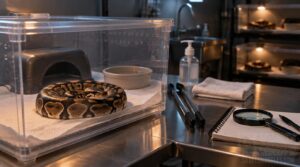
Spotting mites is only half the fight. Stopping them at the door is the other half, and new snakes are the most common way they get in.
Set up a strict quarantine protocol before any newcomer meets your collection. Keep it in its own container, in a separate room if you can, for at least several weeks. Use dedicated tongs, hides, and towels, and practice careful handwashing between animals.
Paper towels make inspecting new arrivals easy, but if mites turn up, switching to the best substrate to prevent mites can keep an outbreak from spreading.
Run visual examinations often and log what you see. Don’t release it after one clean check. Mites hide as eggs and nymphs.
Keep Hitchhiking Mites Out

Even a perfect quarantine protocol can’t save you if mites ride in on your own hands. These tiny menaces cling to gloves, sleeves, and shoes after a brief brush with an infested surface, then drop onto the next snake you touch.
Work clean to dirty. Handle healthy animals first, quarantined ones last. Practice thorough handwashing between every enclosure, and change your shirt after handling a suspect snake.
Keep tools, towels, and the water dish for each enclosure separate, because shared gear is a mite highway.
Clean Enclosures and Equipment Thoroughly
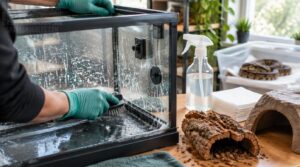
Clean hands mean little if your gear is dirty, so turn to the enclosure itself. Enclosure hygiene starts with scrubbing away feces, shed skin, and hide residue, because that grime shields mites from your disinfectant solution. Mix it at the correct dilution, let it sit for the full contact time, then dry everything completely.
Once the enclosure is spotless, a complete boa constrictor care guide can help you spot early warning signs like cloudy eyes, weight loss, or labored breathing.
Replace porous hides rather than salvaging them. Don’t forget the miss zones: substrate lips, accessory mounts, and the gaps behind the tank.
Spot cleaning between deep cleans keeps trouble small.
Manage Substrate and Check Regularly
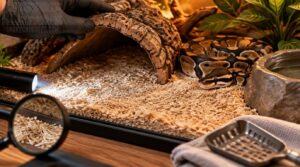
Managing substrate well is your quietest weapon against tiny menaces. Choose a dry, low-fiber option, keep it shallow so you can see movement on the surface, and remove uneaten food and wet patches right away. Good substrate management and enclosure hygiene make mite population control far easier.
Check the enclosure every feeding day. Look under hides and along edges where substrate meets glass. Early detection matters, because live mites mean eggs are in the bedding.
Spot cleaning alone won’t work.
Contain Suspected Mites Promptly
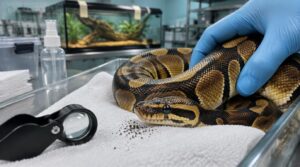
The moment you spot black specks or ash-like dust, treat your snake as a mite host until proven otherwise.
Acting fast is your best weapon against these tiny menaces, because they multiply far quicker than most keepers expect.
Here are two steps that will help you take back control of your setup.
Isolate and Seek Veterinary Advice
Found a suspicious speck crawling near your snake’s eyes? Act now. Isolation is your first weapon against these tiny menaces.
Move the snake into a separate quarantine enclosure, and use dedicated tools, cloths, and feeding equipment so nothing hitchhikes back to your collection. Handle the animal as little as possible.
Call a reptile vet. Veterinary guidance confirms whether you’re dealing with mites at all, and early detection keeps mite population control manageable. Bring photos, body locations, and exposure history.
Consider Predatory Mites for Enclosure Control
Think of predatory mites as a tiny security crew you hire to patrol your enclosure’s back alleys. Biological pest control works when those beneficial mites hunt nuisance mites across the substrate surface, where your eyes can’t follow.
Predatory mites are a tiny security crew patrolling your snake’s enclosure, hunting nuisance mites in the hidden corners your eyes can’t follow
Release them early, in good numbers, and expect repeat introductions, since misting can wash some away. NEVER use acaricides nearby, because they’ll wipe out your allies. Enclosure sanitation still matters, and dedicated tools stop these enthusiastic hunters from hitchhiking into other enclosures.
Frequently Asked Questions (FAQs)
How to get rid of snake mite infestation?
Tiny specks crawl across your snake’s scales like pepper come alive.
Move it into quarantine on paper substrate, spritz Nix from a spray bottle, and follow a weekly substrate replacement strategy until every mite’s gone.
Because mites spread rapidly through direct and indirect contact, quarantining new arrivals for 30–90 days in a simple, light-colored setup is the most important preventive measure.
Will rubbing alcohol kill snake mites?
Rubbing alcohol won’t reliably clear mites. Chemical acaricides rely on cuticle penetration, and alcohol misses eggs and hidden mites.
Skip host-targeted parasiticide application at home. Choose thorough environmental sanitation and call your reptile vet today.
Does Dawn soap kill snake mites?
Dawn soap won’t reliably kill snake mites, and no verified data proves it does. Skip it. Chemical acaricides, reptile husbandry recommended approaches, and biosecurity measures protect your snakes far better, so call your vet first.
What kills mites immediately?
Female mites lay eggs daily, so strike fast. A tepid 30-minute soak drowns them on your snake, especially around the heat pits. Nix, bleach, Reptilesafe disinfectant, and steam sterilization handle the enclosure, never your snake.
What is the best way to prevent snake mites?
Picture a new ball python carrying three mites into your rack. Strict quarantine procedures stop that.
Isolate newcomers for weeks, inspect them under bright light, and keep tools separate. Practice solid reptile husbandry hygiene daily.
How do you prevent mite infestation?
Think mites drift in on the air? Nope, they hitchhike on you, so fomite transmission prevention matters most. Follow strict quarantine procedures for reptiles, use substrate treatment and mechanical removal, and consider biological control agents.
Does F10 kill snake mites?
Wondering if F10 is your mite weapon? Don’t count on it.
Nobody’s verified its ovicide and acaricide efficacy against snake mites, so use it only within a chemical disinfection protocol, plus quarantine procedures for reptiles.
Can humans get snake mites from reptiles?
Tiny menaces can hop from scales to skin and bite. Zoonotic disease risk stays low, but fomite transmission via tongs and tubs spreads them.
After handling, do a clothes change, shoe removal, and body washing.
How long do snake mites survive?
Mite survival without host reaches 31 days, up to 90 days in your enclosure. Life cycle disruption works: poor desiccation tolerance and a 50°C thermal death point doom them, but hostparasite interaction keeps them thriving.
Do all snake species attract mites equally?
No, they don’t. Host specificity and host-parasite interaction mean rough-scaled, stressed snakes carry heavier loads. Cross contamination spreads the rest, so follow reptile husbandry recommended approaches and trust quarantine effectiveness to protect all your snakes.
Conclusion
Think of mite prevention as a locked front door: each habit is another bolt, and one missing bolt invites trouble. Quarantine newcomers, wash your hands between enclosures, and inspect scales, eyes, and vent.
Follow this snake mite infestation prevention guide consistently, and those tiny menaces will find nothing to exploit. If a speck does crawl past, isolate the snake, call your vet, and act fast.
You’re the gatekeeper. Stay vigilant, and your snakes stay healthy.