This site is supported by our readers. We may earn a commission, at no cost to you, if you purchase through links.

Your snake sheds in pieces, and a ring of old skin stays clamped around one toe. Left alone, that ring tightens and cuts off circulation.
Low humidity causes this more often than most keepers realize, and the damage builds quietly. A cheap analog dial can drift 20% off within months, so your enclosure may sit at 35% while the gauge says 60%. Rough, matte skin and hours-long soaks in the water bowl follow.
Learning the signs your snake enclosure is too dry lets you catch the problem early. Here’s what to watch for, measure, and fix.
Table Of Contents
- Key Takeaways
- Common Signs of Low Humidity in Snakes
- Measure Humidity Inside Your Snake Enclosure
- Compare Readings With Species-Specific Humidity Targets
- Why Your Snake Enclosure Dries Out
- Raise Enclosure Humidity Without Sacrificing Airflow
- When Your Snake Needs a Reptile Vet
- Frequently Asked Questions (FAQs)
- Conclusion
Key Takeaways
- Stuck or patchy shed (especially around the toes, tail tip, and eyes), skin that stays rough and tented, and hours-long water bowl soaks are your earliest signs that the air is too dry.
- Measure humidity with a digital hygrometer placed at substrate level beside the humid hide, because analog dials can drift 20% or more and cool front glass gives a falsely comfortable reading.
- Match your readings to your species’ range (30 to 50 percent for arid snakes, 60 to 80 for ball pythons), keep the humid hide at 70 to 80 percent, and raise humidity 10 to 15 points during a shed.
- Fix dryness with deep, moisture-holding substrate like cypress mulch, a damp moss hide, a wide bowl on the warm side, and balanced vents, and call a reptile vet if an eye cap lasts past 48 hours or you see severe dehydration or breathing trouble.
Common Signs of Low Humidity in Snakes
Your snake can’t tell you when the air in its enclosure is too dry, so its body and behavior do the talking. Three signs show up most often, and learning to spot them early keeps a small problem from turning into a serious health issue. Here’s what to look for.
Stuck or patchy shedding is often the first giveaway, and this guide to snake dry skin and humidity problems shows how to match the signs to what your enclosure needs.
Patchy or Stuck Shed
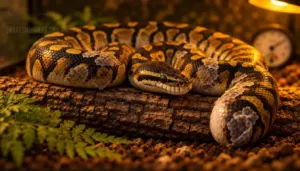
Fragments of old skin clinging to your snake’s body are the clearest sign that humidity has slipped. A healthy shed comes off in one piece, or in a few large sections. When the enclosure is too dry, the skin hardens and tears into flaky patches instead.
During the heating season, indoor air gets drier and enclosure heaters strip out even more moisture, so winter humidity drops are a common cause of poor sheds.
Check the toes, tail tip, and eyes first, because retained shed there can cut off circulation.
Persistent Dull or Wrinkled Skin
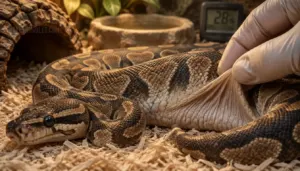
Dullness that lingers after a shed is a different problem. Healthy skin looks dull only before a shed, and the eyes turn cloudy or bluish too.
If your snake’s scales stay rough and matte with clear eyes, check the belly, tail base, and eyelids. Creases there, or skin that stays tented when lifted, point to dehydration.
Keeping humidity and fresh water consistent is the best way to prevent dehydration, and this hognose snake care guide for beginners walks through setting up both.
Unusually Long Water Bowl Soaks
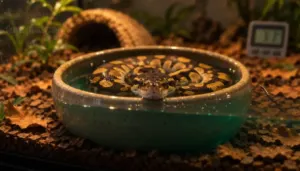
Check your snake’s water bowl habits too. A short soak before a shed is normal, but daily soaks lasting hours are not. Many snakes soak because the enclosure is too dry, so the bowl becomes the only moisture they can find.
Look for specks in the water and tiny dots near the eyes, since mites cause the same behavior. Then check your hygrometer.
Measure Humidity Inside Your Snake Enclosure
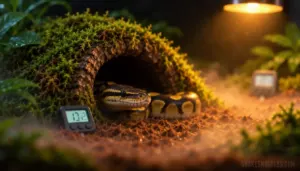
Those signs tell you something is off, but they can’t tell you how far off. For that, you need a number, and the number has to come from the right spot.
Skip the front-glass-at-eye-height default. Glass runs closer to room temperature than the air inside, and cooler air reads higher in relative humidity, so that spot gives you a falsely comfortable figure. Instead, place the probe at substrate level, inside or beside the humid hide where your snake actually spends its time. For arboreal species, mount it in the shade, off the ground, mid-enclosure. A hygrometer with a remote probe lets you tuck the sensor beside the hide while the display stays outside the glass.
Measure humidity where your snake actually lives, down at substrate level beside the humid hide, because cool front glass gives you a falsely reassuring number
Choose a digital hygrometer such as the Govee H5075, which is accurate to ±3% RH. Analog dials can be off by 20% or more and drift every few months. Keep probes away from water bowls and heat lamps, and wait 5 to 10 minutes after moving one before you trust it.
If you’re monitoring several tanks at once, a digital thermometer hygrometer for multiple enclosures lets you track temperature and humidity in each one in real time.
If you can, use two probes: one for open space and one in the hide. The hide should read noticeably higher.
Compare Readings With Species-Specific Humidity Targets
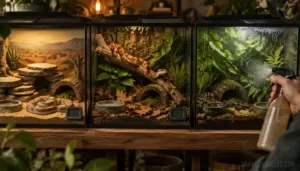
Match your hygrometer readings to the range your species needs, because a number that’s ideal for one snake can harm another. Arid species like rosy boas and hognose snakes do best at 30 to 50 percent. Temperate snakes such as corn snakes, milk snakes and kingsnakes sit at 40 to 60 percent. Tropical species need more: ball pythons at 60 to 80 percent, emerald tree boas at 70 to 90, and rainbow boas at 75 to 90.
Check the humid hide. It should read 70 to 80 percent, even in a desert species’ enclosure. If it matches the ambient number, the moss has dried out. If the moss drips, it’s too wet and invites scale rot.
Adjust for shedding too. When the eyes turn cloudy and the skin dulls, raise humidity 10 to 15 percent above your snake’s normal range. A corn snake at 50 percent needs 60 to 65.
Why Your Snake Enclosure Dries Out
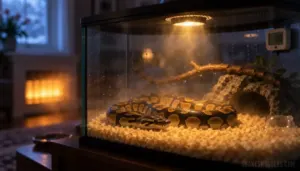
Usually, a dry enclosure comes down to moisture escaping faster than you can replace it. Warm air rises and carries water vapor straight out through a mesh lid, so humidity spikes after misting and crashes within an hour or two.
Three causes show up most often:
- Substrate absorption: paper, sand, and wood shavings hold almost no water and pull moisture from the air, while anything under four inches deep can’t act as a reservoir.
- Room climate: forced-air heating can drop ambient moisture to 35 to 45 percent, which pulls water out through the enclosure walls.
- Heat swings and wall material: a warm spike can cut readings by 10 to 15 points, and glass tanks lose moisture faster than PVC.
Each factor lowers moisture retention, and they stack fast. A glass tank with a full screen top, shallow bedding, and a running furnace won’t hold your humidity range for long.
Raise Enclosure Humidity Without Sacrificing Airflow
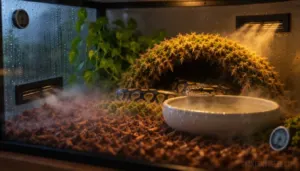
You might worry that adding vents will dry everything out again. It won’t, if you keep ventilation balance in mind and let your moisture sources outwork your air leaks.
Start with vent placement. Put one vent low on the cool side and another high on the warm side. This pulls fresh air in low and pushes warm, damp air out high, without a constant draft across the substrate.
If you’re planning a full build, this red tail boa enclosure setup guide covers sizing, secure lids, and how to keep temperature and humidity steady.
Next, try cypress mulch for steadier enclosure humidity control. It drains excess water downward and releases vapor slowly, so the surface dries between mistings and scale rot stays away.
Move the water dish to the warm side and choose a wide, shallow bowl. Its larger surface area raises the evaporation rate.
Pack a warm-end hide with damp sphagnum moss for microclimate management, springy but never dripping.
Then verify hygrometric accuracy with a second hygrometer, and adjust the vents in small steps.
When Your Snake Needs a Reptile Vet
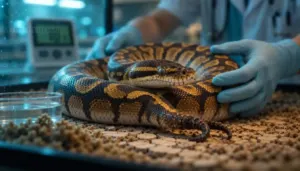
Most dry-air problems clear up at home once you fix the humidity, but a few signs mean your snake needs a reptile vet now. Waiting too long on these can cause permanent damage to the eyes, tail, or lungs. The two situations below are the ones to watch for.
Persistent Eye Caps or Stuck Tail Shed
Some problems won’t fix themselves, and retained eye caps top that list. They stack with every shed, so a thin film today becomes a thick, infection-prone layer later. Never peel one off. The cap is fused to the cornea, and pulling tears living tissue.
Call a reptile vet if a cap lasts past 48 hours, returns over multiple sheds, or comes with swelling, discharge, or a darkening tail tip. Your vet can remove caps safely.
Severe Dehydration or Breathing Trouble
Some warning signs can’t wait for home fixes. If your snake’s skin stays tented for several seconds after a gentle pinch, and the eyes look sunken, call a vet today. Soaking won’t fix severe dehydration alone, and chalky-white urates mean the kidneys are struggling.
Breathing trouble is just as urgent. A healthy snake breathes silently, so wheezing, clicking, bubbles at the nostrils, or open-mouth breathing means go now.
Frequently Asked Questions (FAQs)
Does a humid hide replace raising overall humidity?
No, a humid hide only covers shedding needs in one warm pocket. Your snake still needs enough ambient moisture to stay hydrated and breathe well, so keep enclosure humidity within your species’ recommended range, too.
How do I rehydrate my snake?
Is a longer soak really the cure? Usually not. Snakes drink during soaks rather than absorbing water through their scales, so offer fresh, unsoftened water, and raise enclosure humidity with saturated bedding for 24 to 48 hours.
Can too much humidity be as harmful as too little?
Yes, it can. Stagnant, dirty moisture is the real danger, since it breaks down your snake’s skin integrity and invites bacteria, mold, and respiratory issues. Clean, ventilated humidity is usually tolerated well.
Can low humidity affect my snakes appetite?
Yes, it can. Low humidity dries out your snake’s Jacobson’s organ, so it can’t pick up prey scent. Dehydration also brings lethargy and bad sheds, and both can cause reduced appetite.
Do hatchlings need higher humidity than adult snakes?
Usually not. Most hatchlings thrive at the same humidity as adults of their species, so match the care guide. The exception is Brazilian rainbow boas, which need near 100%. Hatchlings just dry out faster, so check often.
Should I mist my snake directly?
A direct spritz barely moves your digital hygrometer. Those heavy droplets just roll off your snake and drain away. Mist the enclosure walls lightly instead, and stick to a short warm soak for stuck shed.
Conclusion
Trust the hygrometer, not the guess. Watch the shed, not the calendar. Check the numbers, not the label on the dial.
Once you know the signs your snake enclosure is too dry, you can act before a stuck toe ring or a cloudy eye cap turns into a vet visit. Calibrate your gauge, match your species’ target, and seal the leaks. Small, steady corrections protect your snake’s skin, eyes and breathing. Check that reading tonight.