
This site is supported by our readers. We may earn a commission, at no cost to you, if you purchase through links.

A snake that eats in the wrong place can turn a routine meal into a medical problem. Move a snake with a full stomach, and it may regurgitate, losing fluids and strength it takes weeks to rebuild.
That’s why a snake feeding box matters. The right one keeps prey contained, protects your hands, and stops the substrate from ending up in your snake’s mouth. The wrong one cracks, leaks air, or lets a determined head slip through a gap, and the whole body follows.
Some boxes are too flimsy for anything bigger than a hatchling. Here’s how five popular options hold up, and what separates a secure box from a risky one.
Table Of Contents
Key Takeaways
- Most ball pythons and corn snakes don’t need a feeding box, since moving a snake with a full stomach can trigger regurgitation, and hook training prevents bites better than transfers do.
- A good box lets your snake stretch out and coil around its prey, so prioritize floor space over height and choose one with a positive-locking latch, clear PP plastic walls, and vent holes smaller than your snake’s head.
- Most popular options are better suited to temporary transport or smaller animals than to feeding, so check size, lid security, and vent hole width against your snake before you buy.
- Once your snake has eaten, leave it undisturbed until it finishes and then move it gently, clean the box right away with soap and water followed by diluted bleach, and wait 14 days to refeed if it regurgitates.
5 Snake Feeding Box Options Compared
Below are five feeding box options, and each one suits a different kind of keeper and snake. You’ll see how they differ in size, lid security, and portability, which are the traits that matter most when you’re handling a snake with a full belly. Read through them with your own snake’s size and temperament in mind, then pick the one that fits.
To match a box to your snake’s adult size and temperament, check this guide to popular pet snake species first.
1. OMEM Black Reptile Terrarium Container
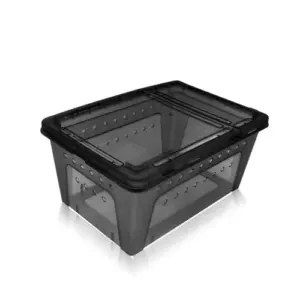
A stackable plastic box like this one works better as a temporary container than a feeding station for most snakes. The large size measures 32 x 22 x 15 cm and weighs just 0.67 kg, so it’s easy to carry outdoors. Translucent walls give you a 360-degree view, and the built-in feeding door helps with trapping or transfers.
Test the lid first. It occasionally sticks, vent holes can let small insects escape, and some users find the plastic quite flimsy.
| Best For | Keepers of tarantulas, geckos, or feeder crickets who need a lightweight, stackable box for short-term housing, transport, or saving shelf space. |
|---|---|
| Material | Plastic |
| Dimensions | 32 x 22 x 15 cm (large) |
| Weight | 0.67 kg |
| Ventilation | Ventilated holes for airflow |
| Visibility | 360-degree viewing |
| Portability | Lightweight for outdoor carrying |
| Additional Features |
|
- Translucent walls give a 360-degree view of the animal inside
- Stackable design with ventilated holes allows airflow and saves space
- Lightweight at 0.67 kg, with a feeding door, so it is easy to carry outdoors
- The plastic is considered flimsy by some users
- Ventilation holes may let small insects escape
- The lid mechanism occasionally sticks
2. Hypeety Reptile Breeding Box
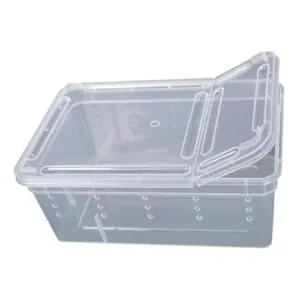
If the OMEM feels too big for your snake, this one swings the other way. The Hypeety measures 7.48" x 4.92" x 3.15" and weighs only 0.08 kg, so it’s really a hatchling or insect container, not a snake feeder.
Three rows of 1mm vent holes keep air moving, and the clear walls let you watch. But the plastic is thin and fragile, and reviewers mention poor build quality. Skip it for anything beyond a tiny snake, and expect to replace it soon.
| Best For | Keepers who need a small, lightweight container for hatching insects, housing hatchlings, or short-term transport of tiny reptiles. |
|---|---|
| Material | Transparent plastic |
| Dimensions | 7.48″ x 4.92″ x 3.15″ |
| Weight | 0.08 kg |
| Ventilation | Three rows of 1mm holes |
| Visibility | High-transparency walls |
| Portability | Portable transport container |
| Additional Features |
|
- Clear walls make it easy to watch what’s inside
- Three rows of 1mm vent holes keep air moving
- Lightweight at 0.08 kg, with a top opening for feeding live insects
- Too small for most reptile species, including anything beyond a tiny snake
- Thin, fragile plastic that you may need to replace soon
- Reviewers cite poor build quality
3. Hamiledyi Reptile Feeding Breeding Box Set
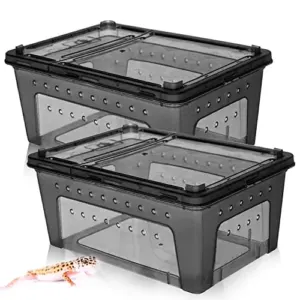
The Hamiledyi set lands in the middle on size, at 12.6" x 8.6" x 5.9", and it’s a two-pack: a transparent PP plastic box with a built-in feeding bowl, plus a plastic-ceramic hide with a humidification sink. That’s more of a gecko, frog, or tarantula kit than a snake feeder.
For an actual snake setup, this beginner-friendly snake housing guide covers secure lids, latches, and whether floor space or height matters more.
Vents and a semi-opening lid give you access, but there’s no positive lock, so don’t leave it unattended. Reviewers split on airflow, size, and value. It suits a small or juvenile snake, not a large one.
| Best For | Owners of small reptiles, amphibians, or tarantulas, such as geckos, frogs, or juvenile snakes, who want a portable, see-through box for breeding, feeding, or transport. |
|---|---|
| Material | Transparent PP plastic and ceramic |
| Dimensions | 12.6 x 8.6 x 5.9 inches |
| Weight | N/A |
| Ventilation | Multiple vents |
| Visibility | 360-degree viewing |
| Portability | Indoor, outdoor, and transport use |
| Additional Features |
|
- Transparent PP plastic lets you view the interior from every angle.
- The hide box includes a ceramic humidification sink that helps keep moisture levels up for easier molting.
- The compact, portable design works for indoor breeding, outdoor carrying, and pet transportation.
- Reviewers disagree on whether the 12.6 x 8.6 x 5.9 inch size is big enough, and it is not suited to large snakes.
- Some users find the ventilation holes provide too little airflow.
- The semi-opening lid has no positive lock, so it should not be left unattended, and customers are divided on whether it is good value for the money.
4. PINVNBY Portable Reptile Terrarium with Wheels
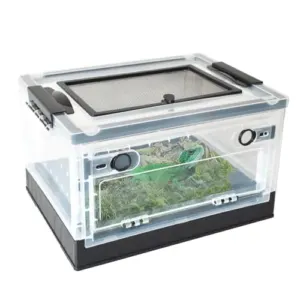
If you want a bigger footprint than the Hamiledyi, this one steps up to 15.6 x 11.6 x 9.5 inches and weighs just 1.3 pounds. Four rolling pulleys let you move it without lifting, and the transparent plastic gives you a full 360-degree view of your snake.
A safety lock on the upper cover keeps escapes in check. Air holes, a mesh cover, and vents handle airflow. The catch: the plastic won’t stand up to heavy biting, and some owners find the lid hard to open.
| Best For | Snake, lizard, or gecko owners who need a lightweight, wheeled enclosure for temporary housing, breeding, or transporting their reptile indoors or outdoors. |
|---|---|
| Material | Transparent plastic |
| Dimensions | 15.6 x 11.6 x 9.5 inches |
| Weight | 1.3 pounds |
| Ventilation | Air holes, mesh cover, and vents |
| Visibility | 360-degree observation |
| Portability | Rolling pulleys for transport |
| Additional Features |
|
- Four rolling pulleys let you move it without lifting
- Transparent plastic offers a full 360-degree view
- Air holes, a mesh cover, and vents provide good airflow
- Plastic may not withstand heavy scratching or biting
- The top can be difficult to open
- Customers report mixed feedback on sturdiness and accessibility
5. Tlence Clear Plastic Reptile Transport Container
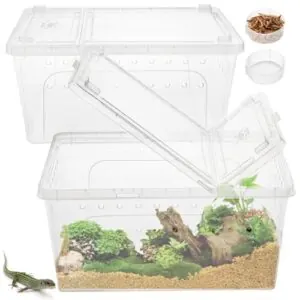
The Tlence set gives you two clear PP plastic containers, each measuring 12.6 x 8.7 x 6 inches, which is roomy enough for most juvenile and adult snakes. The transparent walls let you watch the whole strike and swallow, and the double opening design makes it easier to move a snake in or out. Interlocking tabs stack the boxes securely.
For a permanent home with room to climb and hide, a 4x2x2 snake enclosure is a worthwhile step up from these boxes.
The 0.2-inch vent holes are a problem for hatchlings, which can slip through. Use it indoors only, and never overnight.
| Best For | Owners of snakes, geckos, lizards, frogs, turtles, or tarantulas who need a clear, portable container for indoor transport, viewing, and cleaning. |
|---|---|
| Material | Transparent, odorless PP plastic |
| Dimensions | 12.6 x 8.7 x 6 inches |
| Weight | N/A |
| Ventilation | Ventilated holes, 0.2-inch |
| Visibility | 360-degree field of view |
| Portability | Portable and reusable |
| Additional Features |
|
- Transparent walls give a 360-degree view of your animal.
- The double opening design and ventilated holes allow easy access, airflow, and pet safety.
- Interlocking top tabs let the boxes stack securely, and the reusable design makes transport and cleaning simple.
- The 0.2-inch vent holes are too large for very small animals, which may escape.
- The two feeding bowls come in a random color (black or white), so you can’t choose.
- It is designed for indoor use only.
Does Your Snake Need a Feeding Box?
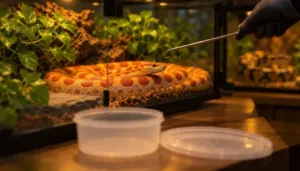
You probably don’t need one for a corn snake or ball python. The old rationale was preventing food association with the enclosure opening, but with docile species that risk is low, and the handling stress risks are real: moving a snake with a full stomach can trigger regurgitation, and many bites happen during transfers. Regurgitation is a last-resort survival response that leaves a snake severely dehydrated and weakened, so avoiding unnecessary post-meal disturbance matters.
Hook training offers better bite prevention methods. Tap your snake with a hook before reaching in, and it switches out of feeding mode.
A species-specific necessity still exists in a few cases:
- You house snakes together and need to stop prey stealing.
- You keep a defensive species like a reticulated python and need a barrier for tongs feeding.
- One individual overeats or refuses food at home.
What to Look for in a Feeding Box
Picture a keeper who buys a cute 8-inch box for a 4-foot ball python. The snake can’t stretch out, bunches against the walls, and refuses the rat. Fit is the first thing to check.
For size specifications, the floor should let your snake extend fully and coil around prey. Floor space beats height for terrestrial species, though arboreal snakes need vertical room to strike.
Ventilation sizing matters too. Aim for roughly 6 to 12 square inches spread across several openings, with mesh holes smaller than your snake’s narrowest body width.
Escape prevention comes next. If the head fits through a gap, the body follows, so choose positive-locking latches over resting lids.
PP plastic is the safe material choice. Clear walls let you watch for stress without opening the lid.
Safe Feeding Box Use and Cleanup
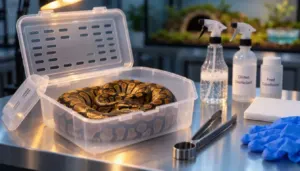
Imagine this: your ball python swallows a rat in its feeding box, and you carry it back to the enclosure ten minutes later. By morning, it’s regurgitated. Handling a snake that’s still in feeding mode raises bite risk and can trigger exactly that, so leave it undisturbed until it finishes, then move it gently.
Clean the box right away. Scrub off blood and organic matter with soap and water first, since it neutralizes bleach. Then apply a 1:32 bleach dilution and respect the disinfectant contact time of 15 minutes before rinsing at least three times.
Your regurgitation response protocol: remove it, photograph the material for your vet, and wait 14 days to refeed. Dedicated tongs per snake aid cross-contamination prevention.
Feeding Safely Inside the Enclosure

Think of your snake’s enclosure as its dining room, and you’re just the waiter who needs to stay out of the way.
Your snake’s home is where it eats in peace, so let it dine undisturbed while you quietly keep clear
Feeding in place spares your snake the stress of a move, which is why regurgitation risk management often favors it for sensitive individuals. Start by giving a quick hook touch, so it knows this is handling, not dinner.
- Dry the prey, so loose coir or bark doesn’t cling to it.
- Set a clean tray or flat stone down, then offer the prey with long tongs, hands fully outside.
- Back away and let the snake approach the food itself.
If it strikes and holds, don’t pull. Withdraw calmly, close the door, and wait.
Tap training works for roughly 90% of snakes, though babies need extra practice.
Frequently Asked Questions (FAQs)
What size feeding box suits a ball python?
Think of a feeding box as a pair of shoes: too tight and the snake can’t move. Match length to your snake’s size, since coiling space needs grow quickly. Juveniles do fine at 6", but adults need 35 inches or more.
Can a feeding box double as a temporary habitat?
Some keepers think a feeding box works as a temporary habitat, but that’s only partly true. It’s fine for 24 to 72 hours in a real emergency, though thermal gradient necessity rules out longer stays.
Can I use a feeding box for multiple snakes?
Yes, but only with strict cross-contamination prevention. Clean, disinfect with 1:30 bleach, rinse, and dry the box between snakes. Stagger feedings so one snake isn’t digesting. Feed your healthiest snake first.
How do I get a stressed snake to eat?
Many nervous snakes refuse meals for weeks, then strike within minutes once the room goes quiet.
Create a calm feeding environment, dim the lights, use tongs to jiggle thawed prey, try scenting it with lizard.
Conclusion
Picture a ball python striking a thawed rat, then nosing through a loose lid gap while you scramble for the container. A secure snake feeding box prevents that. Choose one with a tight latch, ventilation holes too small for a snout, and walls that won’t crack.
Then feed calmly, wait before handling, and clean everything afterward. Your snake doesn’t need drama at dinner. It needs a safe, quiet meal and a keeper who planned ahead.