This site is supported by our readers. We may earn a commission, at no cost to you, if you purchase through links.

Most snakebites happen to the hand, not because snakes strike first, but because someone reached where they shouldn’t have. A good hook keeps your hands out of that equation entirely. I’ve spent years in the field, and the right tool changes everything: distance becomes your best friend, and control replaces guesswork.
Picking snake hooks for field herping isn’t about grabbing whatever’s cheapest at the outdoor store. Shaft length, material, and grip style all matter, and the wrong combination can turn a routine encounter risky.
Here’s what separates a reliable field hook from one that’ll let you down when it counts.
Table Of Contents
- Key Takeaways
- 10 Best Snake Hooks for Field Herping
- 1. DocSeward Copperhead Snake Hook 43 Inch
- 2. Groveland Geckos Ultralight Snake Hook
- 3. Ultralight 20 Inch Snake Hook Green
- 4. Dutypro Snake Hook Catcher Stick
- 5. Butterfly Ultralight Viper Hook 20 Inch
- 6. Groveland Geckos Butterfly Ultralight Viper Hook
- 7. Groveland Geckos Hydra Hook 40in
- 8. Smarkey Snake Hook Grabber Tool
- 9. Pink Reptile Hook 18.5 Inch Rubber Handle
- 10. COOPHYA Aluminum Snake Hook Tool
- Compare Field Hook Materials and Construction
- Match Hook Length to Snake Size
- Choose Hook Styles for Terrain
- Handle Wild Snakes More Safely
- Pick Your Best Herping Hook
- Frequently Asked Questions (FAQs)
- Conclusion
Key Takeaways
- Match your hook’s length to the snake you’re working with: shorter hooks (12–20 inches) suit small snakes, while longer ones (48–60 inches) give you safe reach on bigger, heavier-bodied snakes.
- Build quality matters more than price, since aircraft-grade aluminum, rounded snag-free tips, and weather-resistant grips hold up far better in the field than budget materials.
- No hook, glove, or boot makes you bite-proof, so keeping your distance and reading the snake’s body language matters just as much as the tool in your hand.
- Good technique protects the snake too, meaning you should support its body evenly, keep handling time under a minute, and skip hooking any animal that’s already injured or distressed.
10 Best Snake Hooks for Field Herping
Every field herper has a hook or two they trust, and the reasons why usually come down to fit and feel in the hand. Length, weight, and grip all matter more than most beginners realize until they’re out on the trail. Here are ten hooks worth knowing before your next trip into the field.
1. DocSeward Copperhead Snake Hook 43 Inch
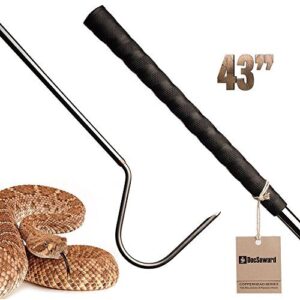
When you need reach without sacrificing feel, the DocSeward Copperhead 43 Inch earns its spot. The stainless steel shaft pairs with a copper ferrule for balance, keeping the tool light at 8 ounces despite its length. That rounded tip slides under a snake’s body without the puncture risk cheaper hooks carry.
If you’re handling reptiles as part of a larger collection, pairing this hook with sound venomous snake breeding safety protocols makes routine handling far less stressful for both of you.
The rubber grip stays put even when your hands are sweaty. At 43 inches, you’re working snakes from 3 to 9 feet with a safe margin, not crowding the animal.
| Best For | Reptile handlers, herpetology enthusiasts, and property owners who need a reliable way to safely relocate non-venomous snakes in yards or wooded areas. |
|---|---|
| Length | 43 in |
| Weight | 8 oz |
| Material | Stainless steel, copper |
| Grip Type | Rubber grip |
| Target Snake Size | 3-9 ft |
| Primary Use | Field herping |
| Additional Features |
|
- Lightweight 8-ounce build with a stainless steel hook and copper ferrule makes it easy to maneuver without arm fatigue
- Rubber grip provides secure, comfortable handling even in sweaty or humid conditions
- 43-inch length offers a safe working distance for snakes ranging from 3 to 9 feet
- Not intended for venomous snake handling unless the user has proper training
- Doesn’t retract or collapse, making it less convenient to store or transport
- Longer length may feel unwieldy at first for users used to shorter, lighter hooks
2. Groveland Geckos Ultralight Snake Hook
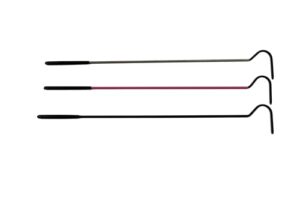
Long reach is great, but some days you need to move fast and light. That’s where the Groveland Geckos Ultralight comes in, built with an aircraft grade aluminum shaft and a non-rotating design that keeps your orientation steady mid-lift.
The rounded, forged tip protects the animal, and a molded grip holds firm in wet or muddy terrain. Weight sits near your hand for precise control, so hours on the trail won’t wear out your wrist.
| Best For | This lightweight stainless steel snake hook is best for keepers who handle hatchlings, juveniles, and small reptile species that need gentle, close-contact control. |
|---|---|
| Length | 24 in |
| Weight | 3.2 oz |
| Material | Stainless steel, PVC |
| Grip Type | PVC grip |
| Target Snake Size | Hatchlings/juveniles |
| Primary Use | Small reptile care |
| Additional Features |
|
- Rust-resistant stainless steel shaft holds up well to regular use in humid or wet reptile enclosures
- At just 3.2 ounces, it’s easy to carry along for field herping, expos, or travel
- The PVC grip handle offers a secure, non-slip hold even during quick or defensive movements
- Not built for large or heavy-bodied snakes, since the lightweight design can’t support extra weight
- The 24 inch length may come up short in taller or deeper enclosures
- Excessive lateral force or twisting can bend the shaft over time
3. Ultralight 20 Inch Snake Hook Green
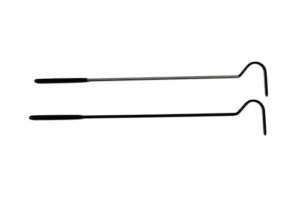
Where the Ultralight shines is small-bodied work: hatchlings, juveniles, geckos, and lizards that don’t need heavy strength. The lightweight aluminum shaft keeps fatigue low on long field sessions, and that smooth rounded tip protects delicate bodies during quick lifts.
At 20 inches, reach stays compact enough for tight cover. The non-slip grip holds steady even in wet conditions, and the corrosion-resistant finish shrugs off humidity. Just know it’s not built for thick-bodied snakes or larger prey items.
| Best For | Reptile keepers who need a lightweight, portable hook for safely handling hatchlings, juveniles, geckos, and other small-bodied lizards. |
|---|---|
| Length | 20 in |
| Weight | 3.2 oz |
| Material | Stainless steel, PVC |
| Grip Type | PVC grip |
| Target Snake Size | Hatchlings/juveniles |
| Primary Use | Small reptile care |
| Additional Features |
|
- Stainless steel shaft is rust-resistant and built to last
- PVC grip handle stays secure and non-slip during use
- Compact, lightweight design (3.2 oz) is easy to pack for travel or fieldwork
- Not strong enough for large or heavy-bodied snakes
- 2-inch hook opening may be too small for larger prey or thicker reptiles
- PVC grip can degrade over time with heavy UV exposure or harsh chemicals
4. Dutypro Snake Hook Catcher Stick
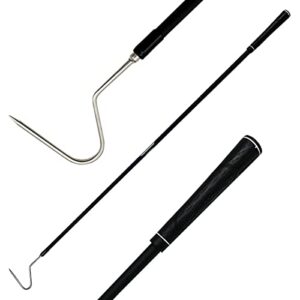
Step up in size and you land on the Dutypro Catcher Stick, built for handlers who want reach and backbone in one tool. A carbon steel spine stiffens the shaft, so flex stays minimal even under load.
The stainless hook resists rust and keeps a rounded, snake-safe edge. Textured rubber grip holds firm through gloves or wet hands. At 0.25 kg, it’s still light enough for long hikes despite the added rigidity.
| Best For | This stick is best for reptile enthusiasts, campers, and hikers who need a lightweight, reliable tool for safely handling or relocating snakes at a distance. |
|---|---|
| Length | 44 in |
| Weight | 0.25 kg |
| Material | Stainless steel |
| Grip Type | Rubberized handle |
| Target Snake Size | Moderate size |
| Primary Use | Snake relocation |
| Additional Features |
|
- Stainless steel construction resists corrosion while staying lightweight at just 0.25 kg
- Duckbilled hook design offers a secure, snake-safe grip that won’t harm the animal
- Rubberized handle provides non-slip control, even during extended use
- Not built for lifting or restraining very large or aggressive snakes
- Rubber grip can degrade over time with prolonged sun exposure or harsh cleaning
- Doesn’t come with gloves or other protective gear, so you’ll need to buy those separately
5. Butterfly Ultralight Viper Hook 20 Inch
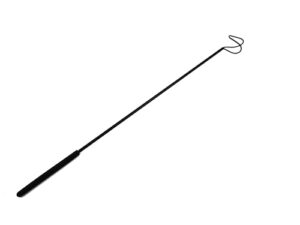
Here’s a hook shaped differently than anything else on this list. The butterfly-shaped head spreads contact points for better control, while the aircraft-grade aluminum shaft keeps total weight near 3 ounces.
That slender, polished tip reduces snagging on brush and reaches without excess force. Rubberized grip sections hold up in wet conditions, and the non-rotating shaft keeps the tool steady mid-lift.
Whether you lean toward titanium’s featherweight handling or stainless steel’s rugged durability, this guide to choosing the right snake hook for large collections breaks down which build suits your daily routine best.
At 20 inches, you’re working close, so this one suits smaller-bodied snakes rather than heavy specimens.
| Best For | Reptile keepers and field herpers who need a lightweight, low-stress tool for handling small to medium-sized snakes during daily care and travel. |
|---|---|
| Length | 20 in |
| Weight | 3.04 oz |
| Material | Not specified |
| Grip Type | Not specified |
| Target Snake Size | Up to 1000g |
| Primary Use | Daily handling |
| Additional Features |
|
- Butterfly-shaped head improves handling control and spreads contact points
- Ultra-lightweight at about 3 ounces, making it easy to carry and use for extended periods
- Low-stress profile helps minimize defensive behavior during handling
- Not designed for snakes over 1,000 grams or large, heavy-bodied specimens
- No locking mechanism or adjustable length feature
- Limited to handling tasks only, not suited for probing or digging
6. Groveland Geckos Butterfly Ultralight Viper Hook
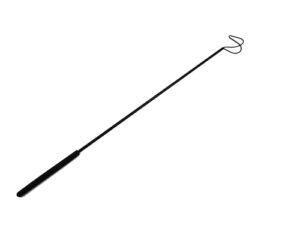
Where the previous hook favors minimal reach, this version stretches to 20 inches with an 8 mm aircraft-grade shaft, keeping weight under 12 ounces while adding stiffness for handling snakes up to 1,000 grams.
The welded head resists loosening, and rounded edges protect midsection contact points. A non-reflective finish keeps you concealed from wary specimens.
Field herpers working brushy terrain will appreciate the curved tip’s snag resistance, a small detail that saves real frustration on long treks.
| Best For | This hook is best suited for reptile hobbyists, breeders, and field herpers who need a lightweight, portable tool for daily handling of small to medium snakes up to 1,000 grams. |
|---|---|
| Length | 18 in |
| Weight | 3.04 oz |
| Material | Not specified |
| Grip Type | Not specified |
| Target Snake Size | Up to 1000g |
| Primary Use | Daily handling |
| Additional Features |
|
- Ultra-lightweight design makes it easy to carry and use for extended periods
- Butterfly viper hook shape improves handling efficiency and control
- Low-stress design helps reduce defensive behavior in snakes during handling
- Not suitable for snakes over 1,000 grams or larger, heavy-bodied species
- Intended for behavioral handling only, not for medical or veterinary procedures
- The lightweight build may feel different for users used to heavier hooks
7. Groveland Geckos Hydra Hook 40in
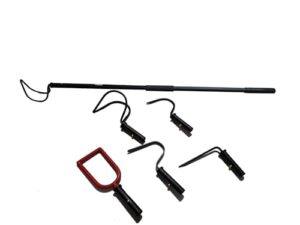
Reach matters most once you’re covering real ground, and this 40-inch hook gives you that distance without dragging you down. The aircraft-grade aluminum shaft pairs with a hardened steel tip built to resist bending under load, while a reinforced ferrule keeps wobble out of extended reaches.
The rubberized grip stays put in wet conditions, and rounded edges protect snakes during lifts. For serious field days, that anodized finish shrugs off mud and rain without complaint.
| Best For | breeders, keepers, zoos, and reptile professionals who want one tool that swaps between multiple head styles instead of carrying a full set of separate hooks. |
|---|---|
| Length | 40 in |
| Weight | 2.1 lb |
| Material | Not specified |
| Grip Type | Not specified |
| Target Snake Size | Small to heavy |
| Primary Use | Enclosure maintenance |
| Additional Features |
|
- Push-button head swaps let you switch between Pinner, Flat Single, Field, Single, and Double Hook styles without any tools
- One 40-inch platform cuts down on gear clutter, so you’re not hauling around a handful of single-purpose hooks
- Versatile enough to handle everything from small snakes to heavy-bodied ones, plus flipping cover objects in the field
- Swapping heads takes a manual step, which can slow you down if you need to switch quickly between tasks
- Since heads aren’t sold separately, losing or damaging one means replacing more of the system than you might like
- The 40-inch length can feel unwieldy in tight enclosures or for anyone who’d rather work with a shorter tool
8. Smarkey Snake Hook Grabber Tool
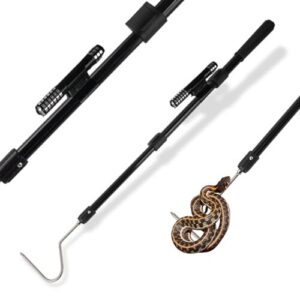
When distance is your top priority, this tool answers the call. The Smarkey extends from 43 to 59 inches, giving you serious reach across open ground or brush.
Its curved jaw design cradles snakes instead of pinching them, and a locking collar holds your extension steady mid-approach. Aircraft-grade aluminum keeps the shaft corrosion-resistant, while the textured grip stays secure even with gloved hands.
Just remember, this tool isn’t bite-proof. Trained judgment still matters most.
| Best For | This tool is best for reptile enthusiasts, campers, and hikers who need a safe, lightweight way to handle snakes from a distance. |
|---|---|
| Length | 35.4 in |
| Weight | 1.15 lb |
| Material | Aluminum alloy, stainless steel |
| Grip Type | Non-slip handle |
| Target Snake Size | Venomous/non-venomous |
| Primary Use | Snake removal |
| Additional Features |
|
- Telescoping pole extends to 35.4 inches for safer, hands-off snake handling
- Lightweight aluminum alloy build with a durable stainless steel hook
- Built-in LED light adds visibility for low-light or nighttime use
- Some users note the pole feels less sturdy when fully extended
- The hook tip may be sharp enough to scratch or injure snakes
- LED light instructions are reportedly unclear, and grip strength can be inconsistent with larger, more active snakes
9. Pink Reptile Hook 18.5 Inch Rubber Handle
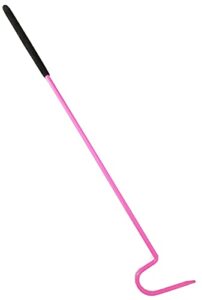
Small snakes call for small tools, and this one fits the bill. At 18.5 inches, it’s built for hognose snakes, kingsnakes, and juvenile ball pythons, not heavy-bodied adults.
The rubber handle stays grippy even in wet conditions, and the rounded tip protects the animal during contact. Its polished finish resists corrosion in humid environments.
Some buyers reported color mix-ups or bent shafts on arrival. Worth inspecting on delivery, especially if you’re working with anything larger than a small colubrid.
| Best For | Keepers who handle small to medium reptiles like hognose snakes, kingsnakes, and juvenile ball pythons and want a lightweight, easy-grip hook for everyday enclosure work. |
|---|---|
| Length | 18.5 in |
| Weight | N/A |
| Material | Rubber handle |
| Grip Type | Rubber non-slip |
| Target Snake Size | Small-medium |
| Primary Use | Small reptile handling |
| Additional Features |
|
- Rubber handle provides a secure, non-slip grip even during extended use
- Polished finish resists corrosion and holds up well in humid environments
- Lightweight build reduces wrist strain over long handling sessions
- Not sturdy enough for larger or heavy-bodied ball pythons
- Some units arrive bent or misshapen
- A few buyers received the wrong color (green instead of pink)
10. COOPHYA Aluminum Snake Hook Tool
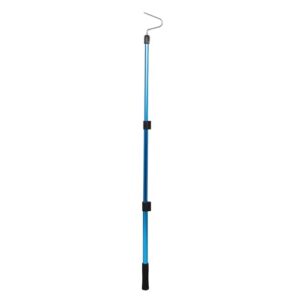
Solid aluminum gives this hook its edge: corrosion resistance and a strength-to-weight ratio that holds up through rain and humidity alike.
The curved tip cradles snake bodies without puncturing scales, and the anodized shaft shrugs off scratches from brush and debris. A molded grip cuts hand fatigue on longer treks.
Its jointless design means fewer snag points in vegetation. For herpers who spend hours in the field, that durability under wet conditions makes COOPHYA a dependable, low-maintenance choice.
| Best For | Herpetologists, wildlife handlers, and homeowners who need a safe, non-invasive way to capture or relocate non-venomous snakes. |
|---|---|
| Length | 23.2-45.7 in |
| Weight | 11.36 oz |
| Material | Aluminum alloy |
| Grip Type | Non-slip grip |
| Target Snake Size | Various sizes |
| Primary Use | Field/residential capture |
| Additional Features |
|
- Telescoping design adjusts from 23.2 to 45.7 inches, making it easy to store and transport
- Lightweight at just 11.36 ounces, reducing hand and arm fatigue during extended use
- Non-slip grip handle and high-visibility blue finish support secure, safe handling in the field
- Not intended for venomous snake handling without extra safety gear
- Grip may become slippery in wet conditions, despite the non-slip design
- Aluminum alloy construction can bend if exposed to excessive force or impact
Compare Field Hook Materials and Construction
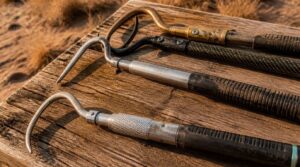
A good hook lives or dies by what it’s made of. Cheap metal bends, plastic cracks, and grips wear out right when you need them most. Here’s what actually matters when you’re checking the build quality on a field hook.
Aircraft-Grade Aluminum Strength
Metal matters more than most handlers realize. Aircraft-grade aluminum strength comes from 7xxx and 2xxx series alloys, heat treated for tensile strengths rivaling steel.
That treatment also boosts corrosion resistance and fatigue durability, so your hook survives years of cyclic stress. The nonrotating shaft keeps control steady, staying lightweight and strong, and it’s built safe for snake and snakehandler alike, extendable from 10 to 24 inches.
Lightweight Carry Weight
Ounces add up fast on a long hike, and your arm feels every one of them by mile three. Hollow aluminum shafts cut mass without losing stiffness, and slim diameters shave grams while staying rigid. Compact grips trim another 0.2 to 0.5 ounces per tool.
Most ultralight configurations stay under 1.5 pounds, lightweight and strong enough for all-day field herping.
Non-Rotating Shaft Stability
Weight only tells half the story. Anti-rotation design keeps the hook from twisting mid-lift, thanks to a machined spline and keyed mounting.
- Shaft straightness precision within 0.02mm
- Torque stabilization under 25N load
- Vibration resistance on quick swings
- Load tolerance tested to 50 cycles
- Angular play under 0.5 degrees
That stability means confident control on any snake handling hooks you trust in the field.
Rounded Animal-Safe Hook Edges
A stable shaft means nothing if the hook edge hurts the animal on contact. Edge safety design matters just as much: radii run 3 to 6mm, deburred smooth, non-toxic coated.
This rounded edge benefit prevents snagging on scales, reducing reptile stress during capture. Good herpetology field gear protects the snake you’re handling, not just your grip on it.
Weather-Resistant Handle Grips
Rain and mud don’t wait for good weather, and neither should your grip. Weather-resistant handle grips using silicone or TPE stay tacky year-round.
Look for:
- Silicone surface durability (-20°F to 150°F)
- Foam padding for vibration control
- Nonslip texture for wet gloves
Rubber grip comfort rounds out solid herpetology field gear built for real conditions. For grips exposed to harsh outdoor conditions, selecting materials with proven corrosion resistance performance ensures long-term reliability in wet and muddy environments.
Match Hook Length to Snake Size
Hook length isn’t a one-size-fits-all choice. The right size depends on how long the snake is and how far you want to stay from its business end. Here’s how to match your hook to the snake in front of you.
Mini Hooks for Small Snakes
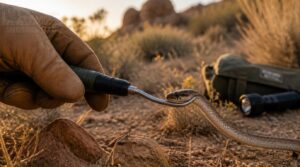
Small snakes need small tools. A 12 to 20 inch mini hook gives you precise control without overpowering a neonate or small rattlesnake. The curved tip cradles the head, never pinches it.
Look for rubberized ergonomic grips and corrosion-resistant steel, like the Pangea 18 Mini Snake Hook.
Right-sized gear means less stress on you and the snake.
24–36 Inches for Short Snakes
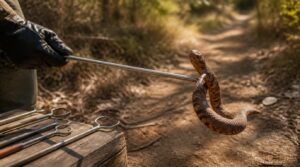
Three feet of reach changes everything once you’re working a copperhead or young rat snake. Hook length selection here balances control and safe handling distance, with 24 inches keeping you close and 36 giving room to work.
- Better terrain maneuverability in brush
- Reduced snake stress from quick repositioning
- Secure grip control on the head
36–48 Inches for Medium Snakes
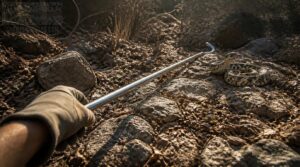
Once a snake stretches past four feet, you need real reach. A 36 to 48 inch hook works well for medium-bodied snakes with room to spare, keeping your hands roughly 2 to 3 feet from striking range.
Most run aircraft-grade aluminum, weighing under a pound. Straight shafts resist flex, giving you steady control across brush, rock piles, or dense cover during field herping.
48–60 Inches for Long Snakes

A six-foot ratsnake or heavy-bodied pine snake calls for real length. 48 to 60 inch hooks reach mid-body without crowding the head, and extended reach keeps you clear of thrashing coils.
Aircraft-grade aluminum stays rigid under that force. Rounded, hardened tips cradle without puncturing, letting you guide long bodies through brush with confidence built from real field testing.
Maintain a Safe Working Distance

Ten feet. That’s the working number to keep in your head before you ever raise a hook.
- Stand behind cover when you can
- Watch tail and coiling for agitation
- Keep your retreat path clear
- Never chase a retreating snake
Safe distance basics matter more than reach. Read terrain, coordinate with your team, and let the hook, not your hands, close the gap.
Choose Hook Styles for Terrain

The right hook length gets you in the ballpark, but terrain and body type decide the rest. A hook that works great on a rocky ridge might feel all wrong in dense brush or on a heavy-bodied snake. Here’s how to match your hook style to where you actually herp.
Collapsible Hooks for Long Hikes
When trail miles pile up, a collapsible design earns its keep fast. Segments nest down to about 18 inches, sliding into a pack pocket without fuss. Thumbscrew locks keep each joint rigid mid-capture, no wobble.
Chrome shafts shrug off wet trail conditions, and weight distribution stays balanced across segments, easing wrist strain on those long, dusty herping days.
Narrow Hooks for Tight Spaces
Rock crevices and brush piles call for a slimmer profile. Narrow hooks slide in without crowding the animal, thanks to tapered shaft geometry and a rounded tip that won’t snag scales.
Rubberized grips keep grip steady, and slight shaft flex absorbs shock as you nudge past stone edges. This narrow snake hooks category keeps safety clearance tight and control precise.
Wide Hooks for Heavy Bodies
A big-bodied rat snake or bull snake needs more than a slim tip. Pressure distribution matters here, tips run 1 to 2 inches wide, edges under 2mm, so weight spreads instead of digging in.
Look for:
- Reinforced shaft strength
- Curved hook bend design
- 18+ inch grip length
That’s real reptile safety gear.
Double Hooks for Added Stability
Some snakes just won’t sit still for a single hook. That’s where a double snake hook earns its keep.
Two contact points mean better force distribution, less pressure on any one scale, and real scale protection during the lift.
The Pangea 24 Double Snake Hook extends from 60 cm to 255 cm and adds a builtin wristband. That’s stability enhancement and handling precision working together for solid load bearing in the field.
Ultralight Hooks for Remote Herping
When the terrain gets remote, every ounce on your hip matters. Ultralight hooks deliver extended reach with a thin shaft that slips through dense vegetation without much fuss.
Less weight means less fatigue on those long treks, so your grip stays steady hour after hour. That’s lightweight maneuverability and remote handling safety working together in one dependable herpetology tool.
Handle Wild Snakes More Safely

A good hook is only half the equation, your technique matters just as much. Even seasoned handlers get complacent, and that’s usually when something goes wrong. Here are five habits worth building into every encounter with a wild snake.
Decide When Handling is Unnecessary
Not every snake needs your hook. If it’s calm, contained, and no threat to anyone, observe from afar instead.
Assess snake behavior first: defensive posture or hissing means back off. Check weather, sightlines, and escape routes. Confirm safe distance before deciding.
Learning to spot aggressive snake warning signals like coiling, tail rattling, and a flattened head helps you read the situation before it escalates.
Some species carry legal protections too, so review guidelines before acting.
Avoid Hooking Injured Snakes
An injured snake’s body language tells you to stop, not reach for your hook. Skip injury assessment protocols on the spot, since amateur handling worsens trauma.
Keep several body lengths back. Use passive containment, not force. Then call a licensed herpetologist for proper rescue coordination. Your best tool here isn’t the hook, it’s restraint.
Support The Snake’s Body
A dangling snake feels unstable, and instability breeds strikes. Use your hook for front body support, then cup a hand under the midsection for midsection stability. Distribute weight along the spine, never pinch one point.
Good field herping gear, paired with steady hands, keeps the animal calm and your grip secure while you work.
Minimize Handling Time and Stress
Every second counts once a snake is in hand. Aim for under sixty seconds with calm, non-threatened animals, using quiet, efficient snake hooks and minimal contact principles.
Skip the extra handling, get your read, and release. Stress-free handling means a quick capture, a calm approach, and returning the animal to its habitat within two minutes when it’s safe to do so.
Never Assume Bite-Proof Protection
No hook, glove, or boot makes you bite-proof. That’s a myth worth retiring.
No hook, glove, or boot ever makes you truly bite-proof
Snakes strike distances beyond what you’d expect, especially when startled. Situational vigilance matters more than gear. Keep your distance, watch body language, and always have a safe retreat route planned. Quality snake hooks reduce risk, they don’t eliminate it. Respect that gap, and field herping stays safer.
Pick Your Best Herping Hook
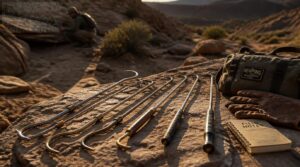
Every herper has different needs out in the field. Your best hook depends on where you work, what you’re catching, and how far you’re willing to walk. Here’s how to narrow down the right choice for you.
Compare Portability and Reach
Before buying, weigh portability against reach. A hook that packs small but can’t extend far won’t earn its keep in the field.
- Check collapsed length for pack fit
- Confirm extended reach for your terrain
- Test weight balance in hand
- Verify shaft rigidity at full extension
Extendable from 10 to 24 inches, telescoping designs deliver transport efficiency without sacrificing reach stability during actual field herping.
Consider Local Snake Species
Reach matters less than knowing what’s on the other end of it. A 50-square-mile patch can hold 12 distinct species, ground dwellers making up 70 percent of sightings.
Match your hook to local habitat, rocky outcrops, riparian edges, grassland margins, and know your venomous species identification cold before you ever lift a hook toward a coil.
Prioritize Durability Over Price
Knowing your species matters little if the hook snaps under a big-bodied constrictor. Material strength beats price every time, forged tips and full tang shafts resist bending better than budget aluminum.
Cerakote or black oxide finishes fight corrosion in muddy conditions. Field-tested gear built from aircraft grade materials costs more upfront, but professional snake handling demands snake capture devices that last seasons, not weeks.
Choose Trusted Handling Equipment
Price and specs only tell part of the story. Look for handler endorsements from working professionals, real field testing results, not marketing copy.
Brands with a genuine quality assurance process and professional grade certification stand behind their snake handling equipment. That trust, built over years of field herping, matters more than any spec sheet.
Frequently Asked Questions (FAQs)
How do you clean and maintain a snake hook?
Would you trust a rusty tool near a venomous snake? Rust prevention and cleaning matter. Wipe with mild soap, dry fully, disinfect with 70% alcohol, then apply silicone spray to keep joints smooth and grips reliable in the field.
Can snake hooks be used on all snake species?
No, not universally. Species-specific handling limits matter: fragile-skinned snakes need rounded cups, heavy-bodied constrictors need wider hooks, and some individuals shouldn’t be hooked at all. Match your tool to the species, and always prioritize safety protocols over convenience.
Whats the proper way to hold a snake hook?
Think of it as an extension of your own arm, not a tool bolted on. Body positioning faces the snake’s side, wrist stays loose, grip firm but relaxed, hook placed under mid-body for balanced, controlled lifts.
Are snake hooks legal in all states?
No, legality varies by state. California, Kansas, and Idaho permit them freely, while permit requirements apply in Pennsylvania and Texas. Illinois restricts protected species. Indiana, Delaware, and Hawaii leave unclear legality for herpers to navigate.
How long do snake hooks typically last?
Clean joints, dry storage, careful use. Quality snake hooks last years, even decades, with proper care.
Tip replacement and rust checks matter more than age. Neglect wears tools out; good habits keep your field herping kit reliable season after season.
Conclusion
That snake coiled in the grass won’t wait for you to fumble with the wrong gear.
Choosing the right snake hooks for field herping comes down to one truth: distance saves hands. Match the shaft to the species, trust the build, and respect every animal you meet.
A hook doesn’t make you invincible. It makes you prepared. Carry the right tool, and the field stops feeling like a gamble. It starts feeling like home.