This site is supported by our readers. We may earn a commission, at no cost to you, if you purchase through links.

A snake’s enclosure tells on you within a day. Missed urates harden into crusty patches, and a wet spot under the hide turns into a smell you notice from across the room.
The right substrate scoop sets for cleaning snake habitats make the difference between a two-minute daily routine and a miserable weekend overhaul. Mesh that’s too fine clogs on aspen, while mesh that’s too coarse lets waste slip straight through sand. Handle length and head shape matter just as much in a crowded, hide-filled layout.
Here are six scoops worth your money, and how to match each one to your setup.
Table Of Contents
- Key Takeaways
- 6 Substrate Scoop Sets for Snake Habitats
- Matching Scoop Mesh to Snake Substrate
- Scoop Materials, Durability, and Ease of Washing
- Comfortable Scoop Handles for Different Hand Sizes
- Scoop Shapes for Corners and Crowded Habitats
- Spot-Cleaning Snake Habitats With Substrate Scoops
- Frequently Asked Questions (FAQs)
- Conclusion
Key Takeaways
- Match your scoop’s mesh to your substrate, since fine sand needs a fine mesh, aspen and coconut husk need coarser ones, and mesh that’s too fine will clog on damp bedding.
- Choose stainless steel for durability and easy washing, and pick a handle length and grip that suit your hand and your enclosure, with longer handles for deep substrate and shorter ones for tight layouts.
- Spot-clean once a day by lifting waste and soaked substrate within a two to four inch margin, leaving your snake in place, so a two-minute routine stops odor before it starts.
- Keep a separate scoop for each enclosure and check it monthly, replacing it when the mesh tears, the grip loosens or rust appears, so a single problem never spreads through your collection.
6 Substrate Scoop Sets for Snake Habitats
A clean enclosure starts with a scoop that fits your snake’s substrate and your hands. The six sets below cover a range of mesh styles and handle designs, so you can match your choice to your setup. Read through them with your own habitat in mind, and you’ll find one that makes daily cleaning feel manageable and safe.
Knowing your enclosure’s dimensions also helps you pick the right handle length, so check this snake tank size guide by species before you buy.
1. Zoo Med Deluxe Shovel Scooper 0.8 oz
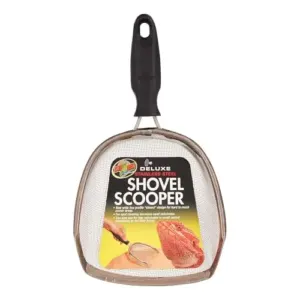
A stainless steel blade gives this scoop the rust resistance and durability you want for daily snake-tank upkeep, while the ergonomic plastic handle keeps your grip comfortable. At 5.6 inches long, 4.5 inches wide and 1.6 inches tall, its low-profile design slips under hides and into tight spots.
It works best for spot-cleaning sand-type substrates, lifting waste and uneaten food. Sifting varies with coarseness, and some keepers find it too small for larger enclosures. Reviews on long-term durability are mixed.
| Best For | Reptile keepers who need a compact scoop for spot-cleaning waste and uneaten food from sand-type substrates in small to medium enclosures. |
|---|---|
| Material | Stainless steel blade, plastic handle |
| Length | 5.6 inches |
| Weight | 0.24 lbs |
| Handle Type | Ergonomic plastic |
| Sifting Design | Low-profile scoop |
| Best Substrate | Sand-type |
| Additional Features |
|
- Stainless steel blade resists rust and holds up to daily use
- Low-profile design reaches under hides and into tight spots
- Ergonomic plastic handle keeps your grip comfortable
- Scoop size can feel too small for larger enclosures
- Sifting ability varies depending on how coarse the substrate is
- Reviews are mixed on long-term durability and value for money
2. Stainless Steel Fine Mesh Scoop
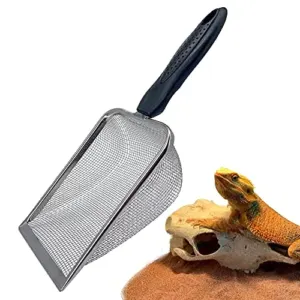
If the first scoop felt a little small for your setup, this one gives you more room to work. Its rust-resistant stainless steel body measures 10.6 inches long, 3.9 inches wide and 2 inches high, and the ergonomic handle keeps your grip steady.
It’s built for sifting sand-type substrates, so waste stays behind while clean sand falls through. Some keepers report the screen holes run too large for very fine substrates, so test it on your own bedding first. It also struggles with stones and gravel.
| Best For | Reptile keepers with sand-based terrariums who want a sturdy stainless steel scoop for sifting out waste from sand-type bedding. |
|---|---|
| Material | Stainless steel |
| Length | 10.6 inches |
| Weight | 4 ounces |
| Handle Type | Ergonomic |
| Sifting Design | Screen holes |
| Best Substrate | Sand-type |
| Additional Features |
|
- Rust-resistant stainless steel body holds up to regular cleaning
- Ergonomic handle keeps your grip steady while you sift
- Larger size (10.6 inches long, 3.9 inches wide) gives more room to work than a smaller scoop
- Screen holes may be too large for very fine substrates, according to some customers
- Struggles with hard mud, stones, big gravel, and gravelly soil
- Not recommended for normal cat litter, only fine substrates
3. Stainless Steel Mesh Scooper Set 4-Piece
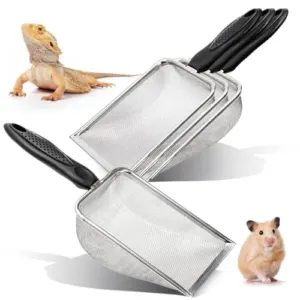
If you’d rather keep a spare within reach, this four-piece set solves that problem. Each piece is one-piece stainless steel with a 1mm perforated mesh, so fine sand sifts cleanly while droppings stay behind. The non-slip handle has a hanging hole, which makes tidy storage easy.
Pair these scoops with one of the best terrarium substrate mixes for reptile owners and spot-cleaning sand gets much easier.
Before you commit, know the limits. It won’t handle heavy substrate or gravel, and the mesh may clog with fine wet sand. Let damp spots dry slightly first. The set weighs about 1.03 pounds and is intended for indoor use only.
| Best For | Small-pet owners and hobbyists who need to sift fine sand indoors, such as for hamster or reptile sand baths, aquarium cleanup, or sorting beach finds. |
|---|---|
| Material | Stainless steel |
| Length | 10.6 inches |
| Weight | 1.03 lbs |
| Handle Type | Ergonomic non-slip |
| Sifting Design | 1mm perforated mesh |
| Best Substrate | Fine sand |
| Additional Features |
|
- The 1mm perforated mesh sifts fine sand cleanly while leaving droppings and debris behind.
- One-piece stainless steel construction means no seams or joints to come apart.
- The ergonomic non-slip handle has a hanging hole for easy storage.
- It is not suitable for heavy substrate or gravel.
- The mesh may clog with fine wet sand, so damp spots need to dry slightly first.
- It is intended for indoor use only, per the product labeling.
4. REPTI ZOO Stainless Steel Reptile Scoop
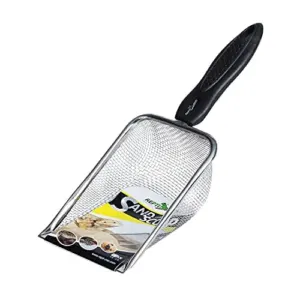
Where the four-piece set gives you backups, this single scoop rewards a steadier hand. Its stainless steel mesh is fine enough to sift waste and debris from sand or litter, and the rust-resistant build holds up to repeated washing.
At 11 inches long, it reaches into corners without forcing your hand into the enclosure, and at 4.2 ounces it’s easy to control around hides. The tradeoff is size. Some keepers find it too small for larger jobs, and no extras are included.
Once you’re set up, it helps to know how often to clean your snake’s water dish so the routine stays quick and easy.
| Best For | Reptile and exotic pet keepers with small to medium enclosures who want a simple, durable scoop for sifting waste from sand or litter. |
|---|---|
| Material | Stainless steel mesh |
| Length | 11 inches |
| Weight | 4.2 ounces |
| Handle Type | Durable |
| Sifting Design | Fine mesh |
| Best Substrate | Sand and litter |
| Additional Features |
|
- Fine stainless steel mesh sifts waste and debris efficiently from sand and litter
- Rust-resistant construction holds up to repeated washing and long-term use
- The 11-inch length reaches into corners without forcing your hand into the enclosure
- Some keepers find it too small for larger cleaning jobs
- Only one scoop is included, with no extra accessories
- Made for reptile habitats, so it’s not suited to general household use
5. SunGrow Reptile Sand Scoop Stainless Steel
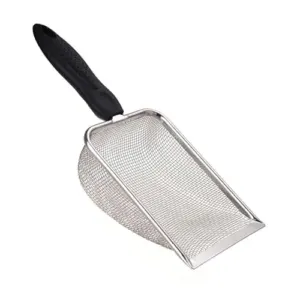
A stainless steel scoop with a fine mesh head gives you precise control over sand-based snake enclosures, sifting out waste while good substrate stays put. The 11-inch non-slip handle keeps your hand well away from the enclosure, which helps you work calmly around a resting snake.
At under 4 ounces, it’s light enough to maneuver and hangs on a hook between uses. Keep in mind it won’t work with pellet or crystal litter, and reviews on sifting performance are mixed.
| Best For | Reptile keepers who use loose sand in enclosures for bearded dragons, geckos, or snakes and want a lightweight stainless steel scoop for quick spot cleaning. |
|---|---|
| Material | Stainless steel, plastic handle |
| Length | 10.67 inches |
| Weight | 3.84 ounces |
| Handle Type | Non-slip black |
| Sifting Design | Fine mesh |
| Best Substrate | Sand |
| Additional Features |
|
- Fine mesh head sifts waste out of sand while leaving the good substrate in place
- Long 11-inch non-slip handle keeps your hand well away from the enclosure
- Light at under 4 ounces, and it hangs on a hook or fits in a drawer
- Does not work with pellet or crystal litter
- Customer reviews on sifting performance are mixed
- Ranked only 20th in the Cat Litter Scoops category
6. 2‑Pack Reptile Substrate Scoop Set
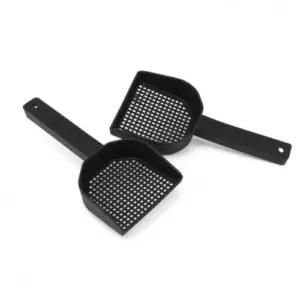
Two scoops in one box gives you a practical way to keep cleaning tools separate, one for the enclosure and one for feeding days. Each has a 2-mm square-hole head that filters waste and screens live feeder insects, so you stay in control of what remains in the tank.
The right-angled, corner-fit head removes waste without scratching walls, and the long handle keeps your hand clear of the enclosure. Plastic works best for daily spot-cleaning of small to medium terrariums, not abrasive substrates.
| Best For | Owners of hamsters, leopard geckos, corn snakes, and other small exotic pets who want an easy way to spot-clean and screen live feeder insects in small to medium terrariums. |
|---|---|
| Material | Solid plastic |
| Length | 7.87 inches |
| Weight | 1.28 ounces |
| Handle Type | Long, hanging hole |
| Sifting Design | 2mm square holes |
| Best Substrate | Fine substrates |
| Additional Features |
|
- The 2-mm square-hole head filters out waste and screens live feeder insects.
- The right-angled, corner-fit head removes waste without scratching tank walls.
- The long handle keeps your hand clear of the enclosure, and the hanging hole makes storage easy.
- The plastic body may not hold up to heavy-duty or abrasive substrates.
- It can be less effective in large enclosures, since it’s designed for small to medium terrariums.
- It comes only in black, with no other colors listed.
Matching Scoop Mesh to Snake Substrate
Picture a hognose keeper who switches to a coarse scoop and watches half her sand vanish into the trash bin with every cleaning. The fix isn’t more effort, it’s a better match between mesh and grain.
Your substrate sets the standard. For fine sand substrates, choose 20-40 mesh so waste lifts out while granules fall through, which suits burrowers like hognoses. Aspen for corn snakes works best at 8-16 mesh, keeping tunnels intact. Aspen also clumps around waste for easy spot-cleaning, but it fails when wet, so moisture-related mould risk means soiled patches need prompt replacement rather than drying. Ball pythons on coconut husk need 4-8 mesh to handle chunky pieces.
Finer isn’t always safer, though. Very fine mesh clogs on damp substrates and slows reptile terrarium maintenance. Test your substrate scoop for reptiles on one corner first, then adjust. Substrate sifting feels smooth, never laborious.
Scoop Materials, Durability, and Ease of Washing
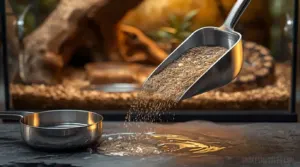
Picture a ball python keeper who replaces a cracked plastic scoop every few months, then notices a stale smell lingering after each wash. Switching solved it.
Material shapes how well your tools hold up and how safely you can clean them. A scoop with stainless steel construction resists corrosion, shrugs off sandy substrate, and won’t hold odors the way scratched plastic can.
- Grade 304 or 316 steel for corrosion resistance
- Smooth, non-porous surfaces that rinse clean
- Dishwasher-safe build for hot sanitizing cycles
- Mesh that stays rigid during substrate sifting
Rinse promptly after any bleach soak, and your scoop will keep its shape for years. It’s easy to wash, and it’s among the more durable pet supplies for reptile habitat maintenance.
Comfortable Scoop Handles for Different Hand Sizes
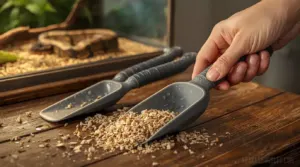
Ever finish a cleaning session with an aching wrist? The handle is usually the reason, and it’s worth choosing with your own hands in mind.
Handle diameter matters most. A good target is about 20% of your hand length, which works out to roughly 1.5 inches for an average male hand. Most grips run between 1.0 and 1.5 inches, so smaller hands do better at the slimmer end.
Length shapes your control, too. Longer grips of 8 to 11 inches give you power in deep substrate, while shorter 5 to 7 inch grips maneuver more easily in tight enclosures.
Look for textured silicone or rubber overmolding, which adds 30 to 40 percent more friction than smooth surfaces and keeps your grip steady when wet. Finger grooves and a thumb rest give you precise sifting control without squeezing hard.
Scoop Shapes for Corners and Crowded Habitats
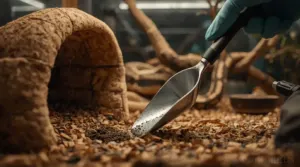
Ever notice how waste always seems to collect exactly where your hands can’t reach? Hides, bowls, and branches crowd snake enclosures, and tight spots hold the most debris. Reaching them helps terrarium sanitation.
A scoop with a right-angle edge sits flush against glass, so you lift waste from habitat corners instead of pushing it deeper. Tapered or pointed tips slip between a hide and the wall, which keeps nearby substrate undisturbed. Flat, shovel-like fronts move material evenly without scraping the tank.
Size matters too. Choose a compact head under four inches wide for crowded layouts, and pair it with an angled handle that lets your wrist move naturally. Good corner scoop design makes spot cleaning calmer, safer, and more precise.
Spot-Cleaning Snake Habitats With Substrate Scoops

Once you’ve matched the scoop to the corner, the routine itself becomes simple. Check the enclosure once a day and lift feces, urates, and any soaked substrate within a two to four inch margin. That generous radius catches the urine that spreads unseen, which is where odor starts.
Odor begins with the urine you can’t see, so clear a generous margin around every mess and the smell never gets started
Work calmly and quickly. A two-minute daily session keeps buildup small and spares you a long cleanup later. Keep your reptile habitat cleaning tools near the enclosure, with a lined bag for waste, and refresh the water bowl while you’re there.
Burrowing species need extra care. With hognose snakes, sift the top layer every few days with a reptile sand fine mesh reptile scooper, since waste often hides below the surface. Spot cleaning helps your deep cleans but doesn’t replace them.
Frequently Asked Questions (FAQs)
Do I need separate scoops for multiple enclosures?
Yes, ideally you do. A shared substrate scoop can carry feces, urates, and mucus from one habitat to the next, so dedicating one to each enclosure keeps a single outbreak from spreading through your whole collection.
Can I use a scoop with bioactive enclosures?
Many keepers assume a scoop will wreck a bioactive setup, but that’s a myth. Yes, you can use one, as long as you stay gentle and lift only soiled top-layer substrate, leaving your cleanup crew undisturbed.
Should snakes be removed during spot-cleaning?
In most cases, no. Leave your snake in place and work calmly around it, since removing it adds stress and injury risk. If waste sits near its resting spot, let it move away on its own first.
How do I dispose of soiled substrate safely?
Seal soiled substrate in a plastic bag before it goes in your regular trash, and wear nitrile gloves while you handle it. Wash your hands afterward, since safe cleaning habits protect you and your household.
How often should I replace my scoop?
Why wait for a failure to force your hand? Check your scoop monthly, and replace it when mesh tears, grips loosen, or rust appears. Stainless steel construction often lasts one to three years; plastic, less.
Conclusion
Choose the mesh that fits your substrate, pick the handle that fits your hand, and match the head to your layout. Each decision shapes how calmly your daily cleaning goes.
The best substrate scoop sets for cleaning snake habitats reward attention, not expense. Start with one reliable scoop, learn how your enclosure behaves, and adjust as you go. Clean spaces keep your snake healthy, and a steady routine keeps you confident. Keep its story boring.