This site is supported by our readers. We may earn a commission, at no cost to you, if you purchase through links.

A real cave holds 11°C (52°F) all year. Seasons barely move it, and daily drift stays around 0.1 to 0.2°C. The air sits still and runs 90 to 100 percent humid.
Your snake’s cave doesn’t get that kind of stability for free. Ball pythons need 88-92°F on the warm side and 74-80°F on the cool side, while a corn snake wants a 90°F basking spot. Miss those numbers and you get stress, bad sheds, or respiratory trouble.
Temperature and humidity in snake caves come down to a few firm rules, and getting them right starts with knowing your targets.
Table Of Contents
Key Takeaways
- Match your snake’s species to its targets, such as 88-92°F warm and 74-80°F cool for ball pythons, because missing them leads to stress, bad sheds, or respiratory trouble.
- Let nights cool by 5-10°F on the warm side, keep the cool side above 65°F, and always give your snake a gradient so it can choose where to sit.
- Keep humidity steady rather than soggy, since too much moisture causes scale rot and respiratory infections just as too little ruins sheds, and use substrate depth and ventilation to manage it.
- Control heat with a thermostat and measure with digital probes placed at snake height, because cheap dial gauges can be off by 10°F or more.
Natural Snake Cave Temperatures and Humidity

Two numbers define a deep cave: about 11°C (52°F) and humidity near saturation. Understanding natural cave temperatures and humidity explains why snakes shelter underground, and it shapes every enclosure setup you’ll build later.
Snakes that overwinter in these stable, frost-free spaces often return to the same dens year after year, as explained in this guide to snake hibernation habits.
Deep passages barely change. Bedrock holds heat so well that seasonal swings often stay under 1°C, and daily drift is closer to 0.1 to 0.2°C. Surface seasons still arrive, just late and muted, with a lag of weeks to months. At Great Basin National Park, Lehman Caves shows a constant year-round temperature of 50°F because the bedrock approximates the average annual surface temperature.
Humidity levels run 90 to 100 percent in deeper sections, where seeping water and still air keep things damp. Near entrances, airflow dries the air and widens temperature swings. That creates a natural thermal gradient from entrance to interior, and snakes simply move along it as needed.
Temperature Targets for Captive Snake Caves
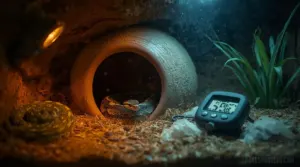
Getting the numbers right inside a captive snake cave starts with knowing what your snake needs. Two things shape every target below: warm and cool zones that fit your species, and the way temperatures shift from day to night and season to season. Here’s how to set up each one.
Species-Specific Warm and Cool Zones
Temperature targets shift with where your snake comes from, so start by matching the species. Desert snakes like Mojave rattlesnakes need a hot spot of 90-110°F and a cool zone of 65-85°F.
Ball pythons want 88-92°F on the warm side and 74-80°F on the cool side.
Getting both zones right is simpler with a clear ball python temperature guide that walks through how to set up your enclosure’s gradient.
Corn snakes do well with a 90°F basking spot and a 75-82°F cool zone.
Nighttime Changes and Seasonal Cooling
Those numbers hold during the day. At night, let the night temperature drop happen. Most species do fine with the warm side falling 5-10°F, but keep the cool side above 65°F.
Fall brings seasonal adjustment. Lower the warm side gradually, a few degrees a week, and never let the enclosure go below 60°F. Always keep a thermal gradient so your snake can choose.
Humidity Requirements Inside Pet Snake Caves
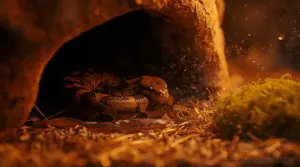
Temperature tells only half the story. Humidity decides whether your snake sheds cleanly, breathes easily, and stays out of the vet’s office.
Match the numbers to your species. Ball pythons do well at 50 to 60 percent, climbing to 65 to 70 percent when they go opaque and start a shed. Corn snakes and milk snakes are more forgiving at 40 to 60 percent. Tropical animals like green tree pythons and boas want 50 to 80 percent.
Dry-climate snakes sit at the other end. Keep them on aspen or paper, which won’t hold excess moisture.
For desert species, aim for humidity between 20 and 40%, and this ideal humidity range for a snake enclosure explains how to hit that target.
Here’s the honest hard part: too much humidity hurts as much as too little. Wet scales invite rot, and stale damp air invites respiratory infections. Aim for steady, not soggy.
Creating Safe Snake Cave Microclimates
A snake cave only works when you control the climate inside it. Two things decide whether that tiny space stays safe: how you heat and place it, and how you manage moisture and airflow. Here’s how to get both right.
Thermostat-Controlled Heating and Hide Placement
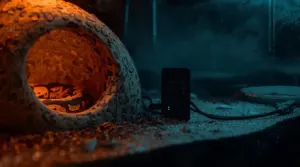
A heat source without a thermostat is a gamble. Good thermostat regulation keeps your temperature gradient steady.
- Put the probe inside the warm hide, or on the floor over the under-tank heater.
- Cover under a quarter of the floor with heat.
- Clip the probe down. Tape insulates it.
Check it weekly, since snakes dislodge probes. Pulse proportional models avoid swings.
Moisture, Substrates, and Ventilation
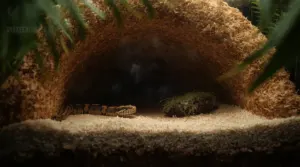
Substrate depth holds moisture below a dry surface, so you get humid retreats without soggy footing. Pair it with ventilation control, because damp, stagnant air breeds mold and respiratory trouble.
| Choice | Best for | Why |
|---|---|---|
| Coconut coir | Tropical species | Holds water |
| Desert sand | Arid species | Stays dry |
| Sphagnum hide | Shedding | Local humidity |
Keep the surface dry and the bottom just damp.
Monitoring Snake Cave Temperature and Humidity
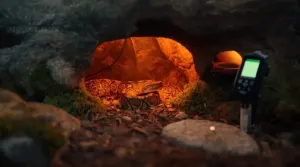
Cheap stick-on dial gauges can miss the true temperature by 10°F or more, which is the gap between a comfortable hide and a dangerous one. Don’t trust them. Swapping in a digital reptile thermometer probe takes the guesswork out, giving you a real reading right where your snake actually rests.
A dial gauge that reads ten degrees off can turn a snake’s cozy hideaway into a hazard, so measure with something you trust
A digital probe thermometer is your best daily tool. Put the probe inside the cave at snake height, not on the wall, and add a second on the cool side. An infrared temp gun checks basking surfaces, though it reads surface heat only.
Track humidity with a digital hygrometer, and keep it away from water bowls and heat sources, since both skew readings. Wipe sensors regularly, replace batteries early, and compare two devices to catch drift.
Treat environmental monitoring as part of enclosure setup, not an afterthought. Log highs and lows daily.
Frequently Asked Questions (FAQs)
What signs show a snake is too cold?
Picture a snake pressed flat against the heat lamp’s glass, motionless, ignoring the mouse you just offered. That’s a cold snake. It refuses food, turns sluggish and stiff, and may regurgitate meals it can’t digest.
How do snake caves handle sudden power outages?
A closed enclosure holds heat longer than you’d think. Leave it shut, keep a hot water bottle wrapped in a towel nearby, and check temperatures with an infrared thermometer. Lethargy signals thermal stress.
How long can snakes remain inside caves during brumation?
Picture a garter snake slipping into a rock crevice in December and emerging in March. Most temperate species stay put about three months, though you shouldn’t let captive brumation run past four months. Weigh weekly.
Can wild snakes survive flooded caves or hibernacula?
Can a snake really ride out a flooded den? Sometimes, yes. Garter snakes have survived submerged hibernacula for up to 5 months, staying hydrated and burning less energy. Drowning still kills when snakes can’t reach air.
Do snakes share caves with other animal species?
Ever wonder who else is hanging in the dark with a snake? Plenty of animals. In Mexican limestone caves, rat snakes share space with six bat species and hunt them in flight. Yes, snakes share caves.
Conclusion
Steady setups save snakes. Temperature and humidity in snake caves aren’t guesswork, they’re numbers you can hit and hold. Pair a thermostat with a probe thermometer and a hygrometer, then check them daily, not whenever you remember.
Trust the readings over your gut. A snake can’t tell you the cool side drifted to 85°F, but a bad shed will. Build for stability, watch the gauges, and your snake gets what a real cave gives: calm.