This site is supported by our readers. We may earn a commission, at no cost to you, if you purchase through links.

You open the enclosure and your snake hasn’t moved since yesterday. Then it hasn’t moved since the day before. A snake not moving much anymore can mean something as harmless as a big meal settling on the warm side, or something as serious as a respiratory infection that spreads fast.
Most snakes spend long stretches motionless, so stillness alone rarely tells you much. What matters is the company it keeps: open-mouth breathing, bubbles at the nose, a limp body that won’t grip your hand, or a tank that runs too cool.
Start with the emergency checks, then work through the likely causes.
Table Of Contents
Key Takeaways
- Check your snake’s breathing and posture first, because open-mouth breathing, nasal bubbles, wheezing, or a limp body that can’t right itself means you need a vet right away.
- Stillness on its own is usually normal, since digestion, pre-shed, brumation, and species habits can all keep a healthy snake quiet for days or even months.
- If nothing alarming shows up, measure your enclosure’s temperature and humidity against your species’ needs, because a cold, dry, or stressful setup is a common and fixable cause of inactivity.
- Don’t wait it out if your snake stays motionless for days or shows other symptoms, since snakes hide illness well and can decline fast, so call an exotic vet.
Check Your Inactive Snake for Emergencies
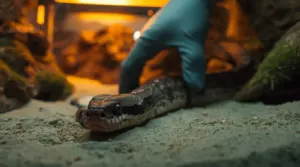
Look at your snake’s breathing and posture first, because those two things tell you how urgent the situation is. Open-mouth breathing, wheezing, or bubbles around the nose and mouth mean you need a vet right away. Quiet breathing that’s normally silent can also give you an early warning, since clicking or gurgling sounds during rest indicate airway obstruction. The same goes for a snake that can’t right itself when you gently roll it, or one that has lost its grip on your arm.
Check the belly next. Pink or red flushing and tiny pinpoint hemorrhages on the scales point to septicemia, which progresses fast.
If the redness looks more like septicemia than a simple irritation, this guide to why a snake’s belly turns red can help you decide when it needs a vet right away.
Then look at temperature. A snake that stays on the cool side and won’t move to the warm end can’t thermoregulate, so call a reptile vet today. Also watch closely for a firm swelling mid-body with no defecation.
Normal Reasons Your Snake Moves Less

If none of those red flags apply, relax a little. Snakes are ambush predators with slow metabolisms, so long stretches of stillness are often normal.
Learning normal vs abnormal snake behavior starts with these four causes:
- Digestion: After a meal, your snake may rest for several days on the warm end. Don’t handle it.
- Pre-shed: Dull skin, cloudy blue eyes, and hiding more than usual are common.
- Brumation: Temperate species slow down and eat less as temperatures drop, and brumation behavior can last months.
- Species and time of day: Ball pythons often stay in one hide, and nocturnal snakes may only move after dark.
Weight records help. If your snake feeds, sheds, and uses its temperature gradient, it’s likely fine. A digital kitchen scale for snakes that reads in single grams makes it easy to log weekly weights and spot gradual drops early.
If you’re newer to keeping snakes, this ball python beginner’s guide explains what normal feeding, shedding, and basking habits look like.
Correct Enclosure Problems That Reduce Snake Activity
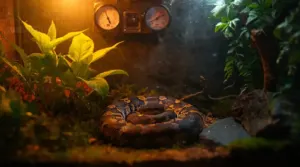
Once you’ve ruled out normal causes, look at your snake’s enclosure next. Setup problems are common, fixable, and often to blame for a snake that stays still. Work through the two checks below, starting with temperature and humidity, then move on to lighting, enrichment, and stress.
Species-Specific Temperature and Humidity Checks
Picture a corn snake lying still in an enclosure that reads 22°C and 25% humidity. That’s too cold and too dry.
| Species | Temperature | Humidity |
|---|---|---|
| Corn snake | 25–30°C | 40–60% |
| Boa constrictor | 28–31°C | 60–90% |
Measure the basking spot and cool end digitally, then check humidity with a hygrometer. Compare both against your snake’s species-specific needs and correct any gap before assuming illness.
If your readings fall outside the ideal range, a species-specific snake humidity guide can help you adjust the enclosure until it matches your snake’s needs.
Lighting, Enrichment, and Stress Reduction
Once temperature and humidity check out, look at light and stress. Give diurnal species a UVB source delivering 2–5%, and switch off white lights at night, since constant glow disrupts activity and raises stress.
Add multiple hiding spots, which can cut corticosterone by 25–35%. Cover the enclosure’s sides so outside movement doesn’t unsettle your snake. Rotate branches or objects every 7–10 days.
Recognize Illness Signs Beyond Reduced Movement
Look for changes that show up alongside the inactivity, because a snake not moving much is rarely the only sign of a real problem.
Open-mouth breathing, wheezing, bubbles at the nostrils, or a neck stretched upward point to respiratory disease. Gurgling and excess saliva make it more urgent.
Check the skin and belly next. Blistered, discolored, or dark belly scales suggest scale rot from damp bedding, and red ventral scales can signal septicemia. Retained eye caps or patches of unshed skin mean the last shed went wrong, so check shedding status and husbandry problems.
Treat neurological signs as emergencies. Stargazing, tremors, corkscrewing, or failing to right itself when flipped need attention today. Regurgitation, weight loss, or severe dehydration matter too.
Seek Veterinary Care for Persistent Snake Lethargy
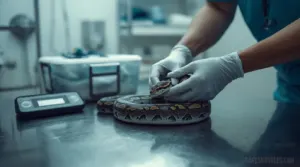
If your snake stays still for days and the usual fixes haven’t helped, it’s time to call a vet. Reptiles hide illness well and can decline fast, so waiting it out rarely pays off. Below, you’ll find how to prepare for the appointment and what to expect once your snake is examined.
Because snakes conceal sickness so well and can worsen overnight, a pet that stays motionless for days needs a vet, not more time
Preparing for Your Snake’s Veterinary Visit
Good prep makes a vet visit easier on your snake.
- Use a ventilated, escape-proof container, like a pillowcase inside a locking tub.
- Keep it warm with insulated bottles placed outside direct contact.
- Skip feeding for 24 to 48 hours beforehand.
- Note appetite, shedding, and enclosure conditions.
- Bring a fresh fecal sample in a sealed container.
Jot down vet appointment questions.
Diagnostic Tests and Cause-Specific Treatment
Your vet will test, not guess. Blood work shows infection, dehydration and organ strain. Fecal testing finds parasites. Radiographs reveal blockages and swollen organs. Cultures and viral PCR name specific pathogens.
Treatment follows the result. Parasites get targeted medication, bacteria get antibiotics chosen by sensitivity testing, and blockages need prompt veterinary intervention. Follow every dosing instruction exactly.
Frequently Asked Questions (FAQs)
Should I offer food to a motionless snake?
Oddly, the snake that looks least interested in dinner may be the most ready. If it’s alert, relaxed and on its normal feeding schedule, offer food.
If lethargy brings wheezing or swelling, call a vet.
How long can a healthy snake go without moving?
A healthy snake can stay mostly still for 2 to 4 months during brumation. If your enclosure temperature is right and your snake still rouses to drink, that’s perfectly normal. Lethargy outside the cooling season isn’t.
How to fix a dehydrated snake?
For mild dehydration, soak your snake in lukewarm water, 80 to 84°F, for 15 to 30 minutes, then offer fresh water. If eyes look sunken or skin stays tented, see a vet for fluid therapy.
Conclusion
So what should you do when your snake goes still? Start with the basics. Check the temperatures, confirm the humidity, and look closely for open-mouth breathing, nasal bubbles, or a body that hangs limp. A snake not moving much anymore is often just digesting or shedding, but your observations decide which.
Fix what’s wrong in the enclosure, and call an exotic vet if symptoms linger. Quick action protects a snake that can’t say it’s struggling.