This site is supported by our readers. We may earn a commission, at no cost to you, if you purchase through links.

Your corn snake has spent three days wedged against the heat mat, barely moving, and ignoring the mouse you offered last night. That isn’t a snake enjoying a cozy spot. It’s a cold-blooded animal begging for warmth.
Reptiles can’t generate body heat, so every meal they digest and every move they make depends on the temperatures you provide. Even a few degrees too low can slow digestion and weaken immunity. Spotting signs your snake needs more heat early lets you fix the problem before it becomes dangerous.
Here’s what to watch for, how to confirm the numbers, and how to raise heat safely.
Table Of Contents
- Key Takeaways
- Reduced Activity May Signal Insufficient Heat
- Poor Appetite Can Indicate Low Temperatures
- Persistent Heat-Seeking May Reveal Inadequate Warmth
- Confirm Your Snake’s Heat Requirements
- Restore Safe Heat Without Overheating
- Know When Your Snake Needs a Vet
- Frequently Asked Questions (FAQs)
- Conclusion
Key Takeaways
- Sluggishness, refused meals, and pressing against the heat source are your snake’s main signals that it’s too cold, though you should rule out normal rest, shedding, or digestion first.
- Check your species’ targets with an infrared temp gun for surface heat and a probe thermometer for air, such as 82-88°F on a corn snake’s warm side and 72-78°F on the cool side.
- Raise heat slowly by adjusting a thermostat 1 to 2 degrees at a time, wait a full day to judge results, and always keep a cooler zone so your snake can regulate itself.
- Get to a reptile vet right away if your snake wheezes, breathes with its mouth open, has a blue or grey mouth, or still refuses food after three weeks of correct temperatures.
Reduced Activity May Signal Insufficient Heat
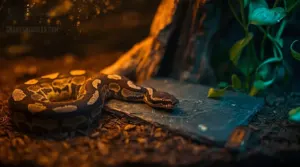
Often, reduced activity is the first clue that something’s off. Snakes can’t make their own body heat, so reptile thermoregulation depends on the enclosure. Reptiles rely on environmental heat sources like sunlight and warm surfaces rather than metabolic heat, so a proper temperature gradient lets your snake choose the warmth it needs. When it’s too cool, their metabolism slows and their muscles lose energy. The snake looks lazy, but it’s really cold.
Don’t assume every quiet snake is cold, though. Snakes naturally rest for long stretches. Judge muscle tone, position on the temperature gradient and response to touch instead. A healthy snake in its hide still feels firm and reacts when handled gently.
Snug hides on both the warm and cool sides, as this detailed corn snake care sheet explains, make a resting snake easier to read.
Watch for limp, unresponsive behavior. A snake that ignores its basking spot, or stays sluggish after you’ve warmed things up, needs a closer look. Prolonged time outside its ideal temperature range weakens its immune system.
Poor Appetite Can Indicate Low Temperatures
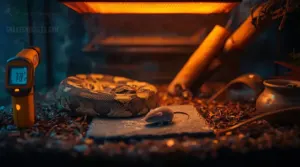
A sluggish snake that also turns down meals is telling you something. Cold slows digestion, and a snake won’t eat what it can’t process.
Most species need roughly 75 to 85°F to break down food properly. Below that range, digestive enzymes work slowly and the snake’s metabolism drops. The body conserves energy, so hunger fades. Food that does go down may sit and rot, or come back up.
A chilled snake stops hungering because its body saves energy, and any meal it swallows may spoil unprocessed
Don’t assume every missed meal means trouble. Some snakes fast during shedding or breeding season. A healthy one will still look firm and alert.
Check for these signs together:
- Refusing several meals in a row
- Regurgitating food hours or days later
- Lethargy alongside the refusal
- Visible weight loss over weeks
If you see two or more, check your temperatures before changing anything else.
Once your temperatures are dialed in, a boa constrictor feeding schedule matched to your snake’s age and size helps you spot appetite changes early.
Persistent Heat-Seeking May Reveal Inadequate Warmth
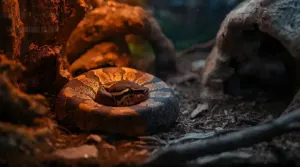
Low temperatures often push a snake to chase heat all day. Watch where yours spends its time.
A snake that never leaves the heat source is struggling with thermoregulation, meaning it can’t control its own body temperature. Healthy basking behavior comes in short stretches, followed by a move to the cool side. Persistent heat-seeking suggests a poor temperature gradient or inadequate warmth.
| Behavior | What you’ll see | What it means |
|---|---|---|
| Surface pressing | Tight coil against heat pad or glass | Air is too cool |
| Stretched posture | Flattened body on the warm spot | Maximizing heat gain |
A snake digesting a big meal may bask longer, so don’t panic over that. Outside feeding periods, treat constant warmth-seeking as a warning to recheck your setup.
Confirm Your Snake’s Heat Requirements
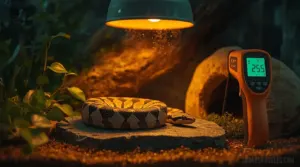
Before you raise the heat, make sure you know what your snake actually needs. Two checks will tell you: the right temperature targets for your species and an accurate way to measure them. The points below walk you through both.
Once you know your targets, a guide to safe and comfortable snake housing ideas can help you set up heating and hides that hold them steadily.
Species-specific Temperature Targets
Picture a corn snake kept at 76°F across the whole tank. She hides and skips meals, though nothing looks wrong.
Her preferred ideal temperature zone is a warm side of 82-88°F with a cool side of 72-78°F.
Ball pythons run hotter: 88-92°F on the warm side, 76-80°F on the cool side. Boas and tree pythons want basking spots of 85-95°F.
Accurate Surface and Air Measurements
A single tool won’t give you the full picture, so use two.
An infrared temp gun reads surface basking temperature. Aim it straight at a matte spot, like unglazed stone, and hold it steady. A digital probe thermometer tracks ambient air temperature. Check these spots:
- The basking rock under the lamp
- The cool hide’s floor
- Air at your snake’s body height
Restore Safe Heat Without Overheating
Once you know your snake’s target temperatures, you can start raising the heat in small, careful steps. Rushing this part is how a cold snake becomes an overheated one, so go slowly and check your readings after every change.
Below are the two adjustments that matter most: how you control your heat source and how you shape the temperature zones inside the enclosure.
Thermostat-controlled Heating Adjustments
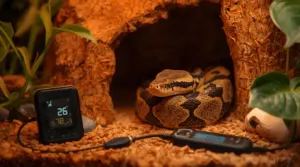
A thermostat is the safest way to raise heat, because it lets you adjust in small steps instead of guessing. Raise the setpoint by just 1 to 2 degrees, then wait a full day before judging the result.
Check the warm hide with a digital probe thermometer after each change. Don’t trust the dial alone. If readings drift from your target, move the probe or recalibrate.
Maintaining Warm and Cool Zones
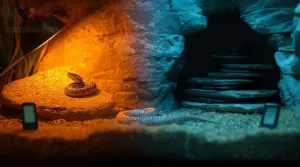
Picture a sunlit rock beside a shaded crevice. Your snake needs that same contrast.
Keep the heat on one end, then check these:
- Hide on the warm side
- Hide on the cool side
- Probe thermometers at both ends
Never let a heat lamp warm the whole tank. Your snake can’t cool down, and that causes stress. Check both ends daily.
Know When Your Snake Needs a Vet
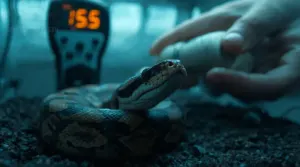
Picture a ball python that’s been sitting in the same spot for two weeks. You raised the temperature, and nothing changed. Now it’s breathing with its mouth open and you can hear a faint wheeze.
That’s no longer a heat problem. It’s a medical one, and it needs a reptile vet the same day. Respiratory infection vs heat stress can look alike early on, but wheezing, bubbles at the nostrils or a head held high to breathe point to illness.
Go to a vet right away if your snake can’t right itself, stargazes, or has a blue or grey mouth. Also call if it refuses food for three weeks despite correct temperatures, regurgitates repeatedly, or has burns from a heat source.
Don’t wait. Snakes hide illness until it’s serious.
Frequently Asked Questions (FAQs)
How long can my snake go without heat?
It depends on your species and how cold the room gets. Most snakes handle a few hours at 75°F (24°C), but below 60°F (5°C) digestion stops. Don’t feed during an outage. Fix the heating quickly.
Do snakes need heat at night?
Would you sleep well in a chilly room? Your snake won’t either. Most species need heat at night only when your room drops below 70°F. Ball pythons need that floor; corn snakes tolerate low 70s.
Are heat rocks safe for pet snakes?
No, they aren’t. Heat rocks often malfunction and create hot spots that burn a snake’s belly scales. Snakes can’t spread concentrated heat through their bodies, so thermal burns happen fast. Use a thermostat-controlled heat mat instead.
Do baby snakes need different heat than adults?
Picture a hatchling curled in a warm hide, still learning to manage its own heat. Yes, babies need steadier warmth than adults. Give hatchling corn snakes an 88-92°F basking spot and no cold nighttime drops.
Can humidity levels interfere with proper heating?
Picture a wet towel clinging to your snake’s enclosure. Yes, humidity can interfere with heating. Damp air traps heat, while dry air strips it away. Check humidity control and proper ventilation before you raise temperatures.
Does shedding change my snakes heat needs?
Think of shedding as a snake outgrowing a winter coat while running a fever. Your snake’s body works harder, so its heat needs rise. Keep humidity higher, hold the ideal temperature range, and preserve warm and cool zones.
Conclusion
Picture a corn snake stretched across the warm side of its enclosure, eyes bright, body loose. That’s what a well-heated reptile looks like.
Watch for the signs your snake needs more heat: sluggish movement, refused meals, and hiding against the heat source. Then check your temperatures, adjust your thermostat, and keep a cool zone available. If nothing improves, call a reptile vet.
Warmth isn’t a luxury for your snake. It’s the foundation of its health.