This site is supported by our readers. We may earn a commission, at no cost to you, if you purchase through links.

Snakes are escape artists. A hatchling can squeeze through a gap barely wider than a pencil, and a corn snake can slip a loose latch in an afternoon.
That’s why safe and comfortable snake housing ideas start with security, then build outward. Your snake needs the right space, heat that stays steady, and a hide that feels like a burrow, not a box. Get those wrong and stress shows up fast: refusal to eat, constant pacing, a snake that never settles.
The good news? A great setup is easier to build than you’d think. Here are five ideas that keep your snake secure, calm, and thriving.
Table Of Contents
- Key Takeaways
- Choose a Spacious, Escape-Proof Snake Enclosure
- Build With Snake-Safe Materials and Comfortable Bedding
- Create a Species-Appropriate Heat and Humidity Gradient
- Add Snug Hides, Climbing Spots, and Fresh Water
- Design an Easy-Clean Habitat That Grows With Your Snake
- Frequently Asked Questions (FAQs)
- What are some ideas for a snake enclosure?
- Can you leave a snake alone for a week?
- What is the friendliest snake to own?
- Are snakes happy in enclosures?
- How to build a safe snake enclosure?
- Do you have to keep a snake in an enclosure?
- How to choose the right enclosure for a pet snake?
- How do you keep a snake in a house?
- How do I bring a snake home?
- How do you keep a snake safe in captivity?
- Conclusion
Key Takeaways
- Secure your snake’s enclosure first, using tight latches and sealed corners with no gap wider than 1/8 inch, because snakes can escape through tiny openings.
- Give your snake a thermal gradient, with a warm basking side of 32 to 34°C and a cooler side of 24 to 28°C, and match humidity to your species, such as 50 to 60% for ball pythons and 70 to 90% for tropical boas.
- Stick to snake-safe materials, like aspen or coconut husk bedding and nontoxic enclosures, and never use cedar or pine, since their oils irritate your snake’s lungs.
- Add two snug hides, one on each side of the enclosure, along with sturdy climbing branches and a wide, shallow water dish, and choose a tall, easy-to-clean setup that can grow with your snake.
Choose a Spacious, Escape-Proof Snake Enclosure
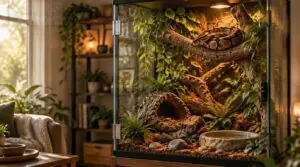
A spacious enclosure is the first step to a safe, happy snake, so let’s get it right. For snakes under 3 feet, plan on at least 10 gallons per foot of body length. Go tall, too. Your snake will love climbing, and that extra height makes the space feel cozy and fun.
If you’re leaning toward a boa, understanding boa constrictor temperament for beginners helps you judge how much room your snake will need.
Now for the escapeproof design. Snakes are sneaky, and a tiny gap is all they need. Pick secure latches, ideally magnetic or compression types, and add a secure sliding glass panel with reinforced hinges so nothing flexes or pops open. Seal every corner with quality silicone, leaving no gap wider than 1/8 inch.
Snakes are sneaky, so seal every gap, secure every latch, and never leave an opening wider than an eighth of an inch
Keep door seals away from the substrate, and a double-baffle design stops prying. Safe snake, safe home!
Build With Snake-Safe Materials and Comfortable Bedding
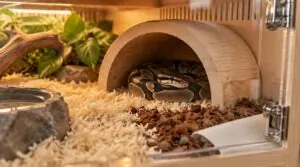
Once your snake’s home is locked down, it’s time to fill it with things that are safe to touch, sniff, and slither across.
If you’re unsure which style suits your pet, this guide to different types of corn snake hides compares options so you can choose one that’s secure and comfortable.
Start with nontoxic materials. Untreated solid wood or BPA-free acrylic works great. If you use plywood, seal it with reptile-safe epoxy. Skip galvanized hardware, since it rusts and leaches. Keep your secure latches stainless steel for the same reason.
Substrate selection matters just as much. Aspen shavings or coconut husk soak up moisture, so change them weekly. Paper towels make inspection easy. Never use cedar or pine, because their oils irritate your snake’s lungs.
Get it right, and you’ll see:
- A calm snake tucked into smooth hiding spots
- Easy breathing thanks to ventilation systems
- Peace of mind
Create a Species-Appropriate Heat and Humidity Gradient
Getting the climate right keeps your snake safe, cozy, and happy. Below, you’ll find two key points to cover: heating and ventilation, then humidity for your snake’s species. Nail both, and your setup will feel just right.
Once the enclosure feels right, a calm snake is much easier to work with, so these tips for handling a snake without fear can help you build trust.
Heating and Ventilation
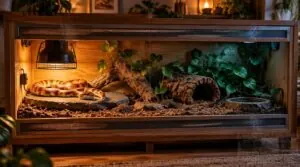
Basking spots of 32 to 34°C keep temperate pets cozy. Pair a thermostat-controlled heat mat with a ceramic emitter, and skip incandescent bulbs as primary heat.
Build a thermal gradient, with a cool side at 24 to 28°C. Add cross-ventilation using offset mesh vents, never over hotspots. Keep humidity under 70% near heat, and secure every vent for escape prevention.
For a closer look at layout choices that make these zones easy to maintain, these snake habitat design tips show how placement and airflow work together in a real setup.
Humidity by Species
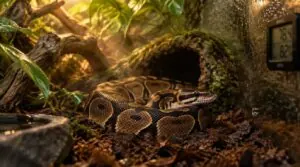
With heat set, match humidity levels to species-specific needs. Ball pythons like 50 to 60%, corn snakes and king snakes 40 to 60%, tropical boas 70 to 90%.
Use reptile-safe substrate like cypress mulch to hold moisture, and add a 65 to 75% humid hide. Humidity monitoring means hygrometers at head height, and steady humidity regulation in vivariums limits swings.
Add Snug Hides, Climbing Spots, and Fresh Water
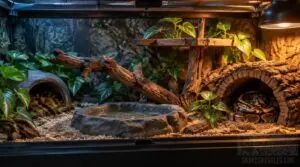
Give your snake two cozy hiding spots, one on the warm side and one on the cool side, so it can shuffle between them as the day shifts. Make the entry opening about 1.5 to 2 times your snake’s girth, and keep the inside cavity 2 to 3 times that wide. Choose ventilated, mold-proof hides and add paper-based bedding beneath.
Next, think vertical. Anchor natural logs or rough branches rated for five times your snake’s weight, spaced 2 to 6 inches apart. Add one climbing platform above the water dish.
For water bowl placement, pick a wide, shallow, tip-proof dish, 2 to 4 inches deep, that’s easy to reach from every hide. Check secure latches, because happy climbers test lids.
Design an Easy-Clean Habitat That Grows With Your Snake
Because your snake will grow, smart snake habitat design starts with a plan for tomorrow.
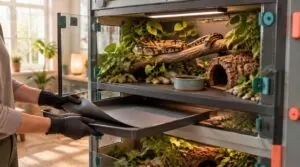
Think modular. Choose a tall enclosure with adjustable shelves and reversible corner bracing, so enclosure size optimization never means starting over. Removable dividers let you reshape the space as your pet stretches out.
Front-access doors with magnetic latches let you clean without moving your snake, which keeps everyone calm and happy. Line the floor with a shallow, removable tray and a washable mat you can flip for even wear.
Pick non-porous, sealed materials that sanitize easily, and moisture control gets simpler too. Set cleaning schedules you’ll actually follow: spot-clean daily, deep-clean monthly. Color-coded fixtures speed up swaps, and environmental enrichment for reptiles keeps home cozy.
Since every snake tolerates a slightly different routine, this guide to keeping a snake enclosure clean helps you fine-tune your timing without stripping their scent markers.
Frequently Asked Questions (FAQs)
What are some ideas for a snake enclosure?
Your happy snake deserves a safe, cozy home! Pick a roomy, escape-proof tank with adjustable vents, then build a temperature gradient using an under-tank heater and ceramic bulb.
Tuck in snug hides and soft substrate.
Can you leave a snake alone for a week?
Worried a week’s too long? It’s fine for healthy adult snakes.
Lock in your temperature gradient, cozy hiding spots, steady humidity levels, and reliable ventilation systems. Follow enclosure ventilation tips, top up water, and relax.
What is the friendliest snake to own?
Think snakes can’t be cuddly? Think again. The friendliest snake to own is the ball python, among the calmest beginner-friendly snakes.
Corn snakes are docile snake species too. Snake temperament varies, so respect species-specific needs.
Are snakes happy in enclosures?
Snakes don’t feel happy the way you do, but they can truly thrive in captivity.
Smart snake habitat design helps snake wellbeing through stress reduction in snakes, a naturalistic terrarium, and behavioral enrichment for snakes.
How to build a safe snake enclosure?
Start your reptile enclosure setup with a roomy, smooth-walled tank and secure fasteners on every lid.
Prioritize substrate safety, skip cedar, and add reliable temperature monitoring. That’s safe and comfortable snake housing your pet deserves.
Do you have to keep a snake in an enclosure?
Yes, you should. A secure enclosure protects your snake and your household, and it lets you control the temperature gradient, humidity levels, and ventilation airflow.
Add hiding spots, and enclosure safety becomes easy to maintain.
How to choose the right enclosure for a pet snake?
A snake’s home is its whole world, so build it generously.
When determining enclosure size, aim for twice your snake’s length. Secure glass panels, make sure ventilation, and keep a temperature gradient and proper humidity levels.
How do you keep a snake in a house?
Give your pet a secure, ventilated tank for safe and comfortable snake housing.
Build a thermal gradient using your preferred heating source options, add two hiding spots, and mind water bowl placement. You’ve got this!
How do I bring a snake home?
Bringing a snake home takes prep, not luck. Set up safe and comfortable snake housing first, with hiding spots, a thermal gradient, and a water bowl placement you’ve tested. Pick your heating source, then let your snake settle quietly.
How do you keep a snake safe in captivity?
Most escapes happen through a lid gap no wider than a snake’s head. Choose escapeproof snake housing with tight latches, reptilesafe materials, hiding spots, and thermostat-driven thermal regulation. Practice safe handling of pet snakes, too.
Conclusion
Picture your snake at dusk, coiled in a snug hide, warm belly pressed to the heated floor, fresh water gleaming nearby. That calm scene comes from simple choices. These safe and comfortable snake housing ideas work because they cover the basics: a secure lid, steady heat, and a space that fits.
Start with one upgrade today. Check your latches, test your thermometer, and add that extra hide. Your snake answers by eating well and settling.