This site is supported by our readers. We may earn a commission, at no cost to you, if you purchase through links.
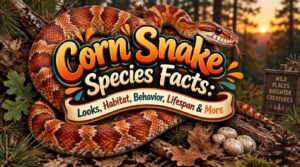
A corn snake can pass for a copperhead, and that mistake has gotten plenty of harmless snakes killed with a shovel. Look closer and the differences jump out: round pupils, a slim head, and a belly checkered black and white like a chessboard.
Your corn snake species facts start there. These 4 to 6 foot constrictors range from North Carolina to Texas, work the pine edges and brush piles at dusk, and lay up to 26 eggs in loose soil. They’re hardy, calm, and not endangered.
Here’s how to read their colors, track their habits, and follow their lives from egg to adult.
Table Of Contents
- Key Takeaways
- Corn Snake Appearance: Size, Patterns, and Color Morphs
- Where Corn Snakes Live: Native Range and Habitats
- Corn Snake Behavior: Hunting, Diet, and Defense
- Corn Snake Reproduction and Lifespan: Eggs to Adulthood
- Corn Snakes and People: Pets, Misidentification, and Conservation
- Frequently Asked Questions (FAQs)
- What are 10 interesting facts about corn snakes?
- What are some interesting facts about corn snakes as pets?
- What is the rarest type of corn snake?
- What is the biggest trouble with corn snakes as pets?
- What are some interesting facts about corn snakes?
- How long do corn snakes live?
- How poisonous is a corn snake?
- Is corn snake smart?
- Do corn snakes make good pets?
- How often do corn snakes shed?
- Conclusion
Key Takeaways
- You can tell a harmless corn snake from a copperhead by its round pupils, slim head, and black-and-white checkered belly, so look closely before you harm one.
- You’ll find these calm, nonvenomous 4 to 6 foot constrictors from North Carolina to Texas, hunting rodents at dusk along fence lines, brush piles, and farm edges.
- You can expect a female to lay 6 to 26 eggs that hatch in 55 to 75 days at 28 to 30°C, and your snake can live 15 to 20 years in captivity but rarely more than six in the wild.
- You’ll do best with a captive-bred snake if you want one as a pet, since corn snakes are hardy and easy to handle, and your main challenge is getting temperature, humidity, and feeding right.
Corn Snake Appearance: Size, Patterns, and Color Morphs
A healthy corn snake usually measures 4 to 6 feet, and you’ll notice that females run larger than males. A big female can reach 6 feet long, though most stop a bit short. Size takes time. Expect two to three years of steady feeding before yours reaches full length.
Because feeding consistency, prey size, and temperature all shape how close your snake gets to its genetic ceiling, this corn snake growth guide is worth a look.
Look at the classic patterns first. Red-brown to orange blotches, edged in black, sit on a gray or tan ground color. Near the neck they form Y or V shapes, then turn rectangular down the body. Flip the snake over and you’ll see a checkered belly in black and white.
Color morphs change everything. Anery snakes lack red pigment, Snow and Ice morphs look pale, and albino forms glow bright yellow.
Where Corn Snakes Live: Native Range and Habitats

Those bold patterns aren’t just pretty, they help your snake vanish into leaf litter. Now let’s look at where that camouflage works best.
Corn snakes call the southeastern United States home. Their geographic distribution stretches from North Carolina to Texas, with the highest densities across Florida’s peninsula and the Gulf Coast plains. Some populations reach northern Mexico.
If you’d like to bring one of these woodland and farmland natives home, reputable corn snake breeders near you can ship healthy hatchlings with a live arrival guarantee.
You’ll find them in open pine forests, overgrown fields, and farm margins. Cornfields attract them because rodents do. Suburban areas work too, especially edges with brush piles and old burrows. Because they favor brush piles and burrows, a corn snake terrarium with plenty of hides and cork bark recreates that cover.
Look for sunny fence lines and fallen logs. Dense, shady forests rarely hold them. Habitat loss has caused declines, yet abandoned farmland and sprawl have created new edges, so their range keeps growing.
Corn Snake Behavior: Hunting, Diet, and Defense

You’ll find corn snakes working those same fence lines after dark. They’re nocturnal hunters, most active at dusk in warm weather, and they ambush prey near rodent holes.
Here’s what to know:
- Strike range: they hit prey within 0.5 to 1.2 meters.
- They constrict rodents, mostly mice and voles.
- Pheromones help them track prey trails and mates.
- Juveniles flick their tails to distract predators.
- Adults eat every 5 to 7 days in summer.
Farm margins benefit, since corn snakes provide natural rodent population control.
Anyone considering these helpful hunters on their own property can start with this corn snake species information and care guide to understand their habits, habitat needs, and temperament.
When threatened, you’ll see coiling, hissing, and jabbing strikes. That’s defensive mimicry, a bluff borrowed from rattlesnakes. Still, most just retreat into crevices or stay frozen in leaf litter. Just give them room to slip away.
When threatened, a corn snake bluffs with hissing and mock strikes borrowed from rattlesnakes, so give it room to slip away
Corn Snake Reproduction and Lifespan: Eggs to Adulthood

Those hunting trips double as courting in spring. Corn snake reproduction begins after brumation, when males follow scent trails and compete for females. It’s textbook oviparous reptile reproduction: she lays 6 to 26 eggs in loose, well-drained soil, up to four clutches yearly.
Snake egg incubation takes 55 to 75 days at 28 to 30°C with high humidity. Above 32°C, deformities rise.
| Stage | Timing | Size |
|---|---|---|
| Hatchling | 55 to 75 days | 9 to 13 inches |
| Adult | 12 to 18 months | 4 to 5 feet |
Hatchlings slit the shell with an egg tooth, then rest inside. Hatchling development speeds up after the shed. Steady temperatures and small mice help your snake reach 8 to 12 years, while wild ones rarely top six.
Corn Snakes and People: Pets, Misidentification, and Conservation

Because Corn Snakes are calm, hardy, and easy to feed, they’re some of the most popular pets in the reptile world.
Still, misidentification is a real problem, and beginners often mistake your backyard Corn Snake for a copperhead. Confirm these three field marks before you act:
- Look at the pupils. Corn Snakes have round ones, not vertical slits.
- Study the head. It’s slim, not wide and triangular.
- Examine the belly. Corn Snakes show a black checkered pattern.
If you’re still unsure, call a local herpetologist instead of guessing. A well-illustrated field guide to North American reptiles can help you compare markings while you wait to hear back from a herpetologist.
Wild Corn Snakes aren’t endangered, but conservation matters, since roads, pesticides, and habitat loss take a toll. If you want one, choose captive-bred snakes and check your permit rules.
Frequently Asked Questions (FAQs)
What are 10 interesting facts about corn snakes?
You’ll spot orangebrown bodies with red blotches outlined in black, a black and white checkered belly. These nocturnal hunters constrict mice, bluff like rattlesnakes, lay 12–25 eggs, and come in over 800 different color morphs.
What are some interesting facts about corn snakes as pets?
Think of a corn snake as the golden retriever of reptiles. You’ll love these docile pets, among the most popular pets around.
If you’re thinking about breeding yours, getting both adults healthy first matters, and you can breed corn snakes without a cooling period once they’re in prime condition.
Secure your snake enclosure setup, because escapes happen. Frozen mice simplify reptile care.
What is the rarest type of corn snake?
Is a Blender really the rarest corn snake? Not exactly, because no verified title exists today.
You’ll find rare morph status shifts with selective breeding, since limited pedigrees make some Corn Snake color morphs scarce.
What is the biggest trouble with corn snakes as pets?
You’ll wrestle a million problems if your reptile pet care slips. The biggest trouble is husbandry: wrong temperatures, humidity, and feeding schedules.
Check exotic pet regulations, avoid mistaken identity, since wildlife misidentification means unsafe handling.
What are some interesting facts about corn snakes?
One female corn snake can lay 30 eggs in a single clutch.
You’ll find color morphs from orange to albino, and captive lifespan can top 20 years. Its hunting behavior curbs rodents across its habitat.
How long do corn snakes live?
Snakes are slow candles. Lifespan in captivity hits 15 to 20 years, occasionally over 20 years in captivity. The oldest recorded corn snake was 32 years and 3 months. Wild vs captive snake lifespan differs.
How poisonous is a corn snake?
You’re safe. A corn snake is nonvenomous, and it’s not poisonous either. It uses constriction methods on rodents.
Careful snake identification matters, since Batesian mimicry in snakes can make harmless corn snakes resemble venomous copperheads.
Is corn snake smart?
Ever watched a Corn Snake slip out of a "secure" tank? That’s reptilian intelligence at work. Your snake won’t solve puzzles like a mammal, but its behavioral adaptability, sharp sensory systems, and learned routines are survival strategies worth respecting.
Do corn snakes make good pets?
Yes, they do. Corn snakes have a calm temperament, rarely bite, and tolerate handling well. Their enclosure requirements are simple, feeding habits are predictable, and captive breeding keeps them ethically sourced. Handle gently, wash up afterward, and you’ll thrive.
How often do corn snakes shed?
Picture a milky-eyed corn snake slipping out of its skin like a sock. Ecdysis in snakes repeats every 2-6 weeks for juveniles, every 1-3 months for adults. Keep your snake enclosure humid, skip snake handling.
Conclusion
A single clutch holds up to 26 eggs, and every hatchling starts life as a snack for hawks, raccoons, and bigger snakes. Those odds are why you’ll see so few adults. Keep that in mind next time a slim, blotched snake slides past your brush pile.
Now you know the corn snake species facts that matter: round pupils, a checkered belly, and a calm temperament. Look twice, spare the snake, and let it keep hunting.