This site is supported by our readers. We may earn a commission, at no cost to you, if you purchase through links.
Ball pythons have a reputation for being forgiving beginner snakes, but their enclosures tell a different story. Get the setup wrong—wrong humidity, wrong heat gradient, wrong size—and even a healthy snake starts refusing meals, getting stuck in its shed, or developing respiratory infections.
The terrarium isn’t just a home; it’s the life-support system. Glass remains the most reliable choice for visibility and heat management, though it comes with real trade-offs in weight and cost. PVC and plastic alternatives might look appealing on a budget, but they off-gas toxic compounds at the temperatures ball pythons need.
The right snake terrarium for ball pythons balances material, dimensions, and environmental controls—and the products you choose make that balance far easier to achieve.
Table Of Contents
- Key Takeaways
- Best Terrarium Types for Ball Pythons
- Choosing The Right Terrarium Size
- Essential Ball Python Terrarium Features
- Top 7 Terrarium Products for Ball Pythons
- Setting Up and Maintaining a Ball Python Terrarium
- Frequently Asked Questions (FAQs)
- What are the best enclosures for ball pythons?
- What type of terrarium is best for ball pythons?
- What size terrarium should a ball python have?
- What is the best habitat for a ball python?
- How often should I replace terrarium substrate completely?
- Can ball pythons share an enclosure with other snakes?
- What are signs of respiratory infection in ball pythons?
- Do ball pythons need nighttime temperature drops?
- How do I safely transport my ball python?
- How often should ball pythons be fed?
- Conclusion
Key Takeaways
- Glass is your most reliable enclosure material for ball pythons—it gives you clear visibility and solid heat management, though it costs more and needs a stronger heating setup to compensate for heat loss.
- Enclosure size isn’t one-size-fits-all: hatchlings need a 10–20 gallon tank, while adult females require at least a 60-inch enclosure to move, thermoregulate, and stay stress-free.
- Humidity between 55–65% and a temperature gradient from 78–80°F on the cool end up to 88–92°F on the warm side are non-negotiable baselines that directly affect your snake’s appetite, shedding, and overall health.
- Substrate choice does real work—coconut fiber, aspen, cypress mulch, and sphagnum moss each handle moisture and burrowing differently, so matching your substrate to your humidity goals matters more than picking whatever’s cheapest.
Best Terrarium Types for Ball Pythons
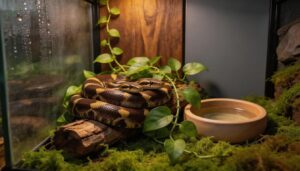
Not all terrariums are built the same, and the material you choose makes a bigger difference than most people expect. Glass, wood, and PVC each come with real trade-offs that affect your snake’s comfort and your daily routine.
Each material handles heat and humidity differently, so it’s worth checking snake species habitat requirements before committing to an enclosure.
Here’s what you need to know about each type before you buy.
Glass Enclosures – Pros and Cons
Glass terrariums are a popular choice for good reason. Clear visibility through solid walls lets you spot health issues and behavior changes early — something flimsy plastic simply can’t match. The Exo Terra All Glass Terrarium is a solid example of glass strength done right.
That said, there are real trade-offs:
- Heat escapes faster through glass, demanding stronger heating setups
- Weight challenges make routine cleaning and repositioning a chore
- Condensation management requires careful ventilation balancing
- The cost premium over basic plastic enclosures adds up quickly
Wood Enclosures – Durability and Safety
Wood enclosures built with hardwoods like oak or maple offer real material durability.
Mortise and tenon joints with waterproof glue keep seams tight over years of daily misting.
A sealed subfloor membrane stops moisture from wicking up.
Add rounded edge bevels, thermal breaks, and a marine varnish finish — then lock it down with keylock security for reliable safety and escape prevention.
| Feature | Benefit |
|---|---|
| Sealed Subfloor Membrane | Blocks moisture from reaching wood walls |
| Lockable Doors + Rounded Edge Bevels | Safety and escape prevention for ball pythons |
Why PVC and Plastic Are Not Recommended
PVC panel ball python enclosures might look sturdy, but the risks outweigh the appeal quickly.
- Toxic off-gassing — warm terrarium conditions cause PVC to release volatile compounds that irritate your snake’s respiratory tract and dull appetite.
- Structural warping — heat and humidity cause plastic walls to bow, creating escape gaps.
- Hygiene challenges — surface scratches harbor bacteria that routine cleaning can’t fully eliminate.
Stick with glass. The PVC leaches harmful additives, which can contaminate the terrarium substrate.
Choosing The Right Terrarium Size
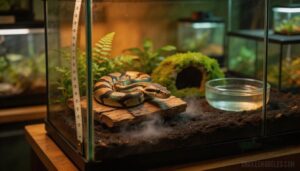
Getting the size right is honestly one of the most important decisions you’ll make for your ball python. Too small, and your snake feels cramped; too large, and it gets stressed and stops eating.
Here’s what you need to know based on your snake’s age, sex, and size.
Hatchling and Juvenile Size Guidelines
Your hatchling starts life at just 10 to 14 inches and 40 to 90 grams — small, but still demanding the right space from day one. Nail the ball python enclosure size guidelines early, and you set the foundation for healthy growth milestones.
| Stage | Length Ranges | Minimum Enclosure Size |
|---|---|---|
| Hatchling | 10–14 inches | 10–20 gallon |
| Juvenile | 18–36 inches | 40 gallon |
Choosing appropriate enclosure size for ball pythons at the juvenile ball python stage matters because cramped quarters hurt feeding frequency and slow weight benchmarks.
Adult Male Vs. Female Enclosure Dimensions
Sex makes a real difference when choosing the right enclosure size for your adult ball python. Male length generally runs from 3.5 to 4.5 feet, so a 36 × 18 × 12-inch enclosure usually covers male breadth and movement needs. Females are bigger—4 to 6 feet—and need more room.
Follow these size requirements for snakes based on sex:
- Male Length: 48-inch minimum enclosure length
- Female Length: 60-inch enclosure for full extension
- Female Breadth: 24-inch depth for humidity zones
Importance of Width and Height
Width and height aren’t just measurements—they’re the backbone of your ball python’s entire living system.
Getting the dimensions right also reduces anxiety—proper reptile care techniques for minimizing snake stress often start with giving your ball python a space that feels secure, not cramped.
Aim for at least 18 inches of width to support an effective enrichment layout, giving you room to place hides, branches, and water bowls without crowding.
Taller enclosures improve thermal zoning by creating distinct microclimate management layers from warm basking areas down to cool retreats. Proper height also improves behavioral visibility, letting you spot stress signals early.
Don’t overlook burrowing space either—deeper floor areas support substrate depth for healthier, happier snakes.
Essential Ball Python Terrarium Features
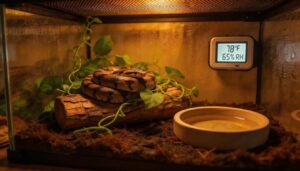
Getting the features right matters just as much as getting the size right.
Your ball python needs specific conditions to stay healthy, and the terrarium you choose either accommodates that or fights against it.
Here’s what to look for before committing to any enclosure.
Temperature Control and Heating Options
Ball pythons can’t warm themselves from the outside — they need options. A proper temperature gradient design runs from 88–92°F on the warm side down to 78–80°F on the cool end.
- Use a substrate heater or heat mat distribution pad paired with a thermostat for safe, steady belly warmth
- Ceramic heat emitters and radiant heat panels maintain nighttime temps without disruptive light
- Precise thermostat placement and a heat lamp prevent dangerous hot spots
Maintaining Proper Humidity Levels
Aim for humidity levels between 55 and 65 percent — and don’t guess. Hygrometer placement matters: mount it away from heat sources for accurate readings.
Check twice daily for trend monitoring and catch problems early. A light misting system, damp hide, or humidity control devices help you maintain the right humidity gradient across humidity zones.
Proper ventilation and humidity control in reptile habitats keep air fresh without drying things out.
Lighting Needs for Health and Wellbeing
Your snake doesn’t need a spotlight — it needs a consistent 12-on, 12-off photoperiod. Set this using a timer for reliable day-night cycle management.
A low-wattage UVB bulb rated 5.0, positioned to deliver proper UVB intensity without glare, promotes vitamin D3 synthesis and calcium metabolism. Choose a 5000–6500K color temperature for natural-feeling light your python will actually respond to.
Ventilation and Accessibility Considerations
Good ventilation isn’t optional — stagnant air leads to mold, ammonia buildup, and respiratory problems. Look for a cross ventilation design with adjustable vent panels on opposite walls to keep air moving without drying things out.
Low-force door latches and removable screen access make daily maintenance easy. Dual opening doors or front sliding doors improve reach, while an integrated filter system and screen top ventilation round out a reliable custom ventilation setup.
Top 7 Terrarium Products for Ball Pythons
Getting the right products inside your ball python’s enclosure matters just as much as the enclosure itself. From lighting and substrate to enrichment, each item on this list plays a direct role in your snake’s comfort and health.
Here are seven products worth adding to your setup.
1. ReptiSun UVB Fluorescent Bulb

For UVB lighting, Zoo Med’s ReptiSun 5.0 fluorescent bulb is a solid, dependable choice for your ball python’s enclosure. It delivers 5% UVB output, which helps your snake synthesize vitamin D3 naturally — reducing the risk of metabolic bone disease without relying on supplements alone.
The 25-watt T8 tube fits into any standard fluorescent fixture with no special ballast needed. Mount it 6–8 inches from the basking spot for effective UVB delivery. Beyond that distance, output drops noticeably, so placement matters. The quartz glass construction keeps the bulb cool during operation while maximizing UVB penetration into the enclosure.
Plan to replace it every 6 months. The UVB output fades before the bulb visibly dims, so waiting until it burns out means your snake goes without adequate UV exposure longer than you’d think.
| Brand | Zoo Med |
| Wattage | 25W |
| UVB Output | 5% (UVB 5.0) |
| Bulb Type | T8 Fluorescent Tube |
| Mounting Distance | 6–8 inches |
| Replacement Interval | Every 6 months |
| Best For | Diurnal reptiles, turtles, tortoises |
Best For: Diurnal reptiles like bearded dragons, turtles, and tortoises that need natural UVB exposure to stay healthy in captivity.
| Brand | Zoo Med |
|---|---|
| Primary Use | UVB Lighting |
| Price | $34.99 |
| Suitable For | Reptiles, Turtles |
| Replacement Schedule | Every 6 months |
| Humidity Impact | Neutral |
| Additional Features |
|
- Supports natural vitamin D₃ synthesis, which helps prevent metabolic bone disease without over-relying on supplements.
- Easy to set up — fits standard fluorescent fixtures with no special ballast required.
- Gives reptiles the ability to self-regulate their UV intake, which lowers the risk of vitamin D overdose.
- UVB output drops off sharply past 10 inches, so placement has to be pretty precise.
- Needs replacing every 6 months even if it still looks fine — the UVB fades well before the light burns out.
- At $34.99, it runs pricier than generic alternatives, and the glass tube can arrive damaged if shipping is rough.
2. Exo Terra Repti Glo Terrarium Lamp
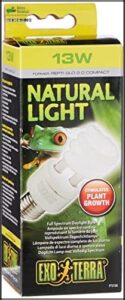
While the ReptiSun manages UVB, you’ll also want a solid light source that makes your enclosure look great and keeps your ball python active. That’s where the Exo Terra Repti Glo 13W comes in.
It runs at 6700K with a CRI of 98 — that’s near-perfect color rendering. Your snake’s natural markings will look vivid, and you’ll actually be able to see what’s happening inside the enclosure during feeding and maintenance checks.
The compact fluorescent design fits standard E27 sockets and runs cool, so it won’t mess with your temperature gradient. UVA output gives your python a natural day-night cue, which aids feeding behavior and activity cycles.
Keep in mind it’s not a high-UVB source. Pair it with a dedicated UVB bulb and replace it every 12 months.
| Brand | Exo Terra |
| Wattage | 13W |
| Color Temperature | 6700K |
| CRI | 98 |
| Bulb Type | Compact Fluorescent (CFL) |
| Base | E27 |
| Best For | Full-spectrum viewing light with UVA support |
Best For: Reptile and amphibian owners who want bright, natural-looking light that enhances enclosure colors and supports animal activity without adding unwanted heat.
| Brand | Exo Terra |
|---|---|
| Primary Use | Full-Spectrum Lighting |
| Price | Not specified |
| Suitable For | Reptiles, Amphibians |
| Replacement Schedule | Every 12 months |
| Humidity Impact | Neutral |
| Additional Features |
|
- CRI of 98 means colors look incredibly true-to-life — your animals and plants will look exactly as nature intended
- Runs cool, so it won’t throw off your temperature gradient in smaller or heat-sensitive setups
- Fits standard E27 sockets and pairs seamlessly with Exo Terra UVB units for a complete lighting setup
- Low UVB output means it can’t fly solo — you’ll need a separate UVB bulb for species that require it
- At 13W, it may not cut it for high-light plants that need more intensity
- Pricier than generic full-spectrum CFLs, and voltage listings can be inconsistent for international buyers
3. ReptiChip Coconut Reptile Substrate Bedding
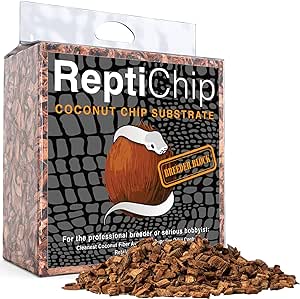
Once your lighting is sorted, the floor of the enclosure deserves just as much attention. ReptiChip Premium Coconut Substrate gives your ball python something worth burrowing into.
The 72-quart compressed brick weighs just under 10 pounds dry and expands three to four times its size after you add water. What you get is a loose, breathable bedding that holds humidity without creating a wet, stagnant mess. Ball pythons are tropical animals — they need that ambient moisture, and this substrate delivers it consistently.
It’s dust-free after processing, so respiratory irritation stays off the table. The chips are coarse enough to support natural digging behavior without compacting over time.
Spot-clean two to three times per week and do a full swap every two to three months. At $34.95 per brick, the cost per use is genuinely reasonable.
| Brand | ReptiChip |
| Material | 100% Coconut Husk |
| Compressed Size | 72 qt / ~10 lb |
| Special Properties | Odor-absorbing, low-dust, humidity-retaining |
| Best For | Ball pythons, tropical reptiles |
Best For: Ball pythons, boas, geckos, and other tropical reptiles that need consistent humidity and a substrate they can actually burrow into.
| Brand | ReptiChip |
|---|---|
| Primary Use | Substrate |
| Price | $34.95 |
| Suitable For | Ball Pythons, Tropicals |
| Replacement Schedule | Every 2–3 months |
| Humidity Impact | Humidity-retaining |
| Additional Features |
|
- Expands massively from one compact brick — 72 quarts dry turns into 200 quarts of usable bedding
- Naturally absorbs odors and holds humidity well, so your enclosure stays fresh without constant maintenance
- Low dust and low splinter risk make it a safe, comfortable choice for sensitive reptiles
- Setup takes some prep work — you need to soak and break apart the brick before it’s ready to use
- Overwatering can lead to mold, so you have to keep an eye on moisture levels
- The $34.95 upfront cost is higher than basic alternatives, even if it evens out over time
4. Zoo Med Aspen Snake Bedding
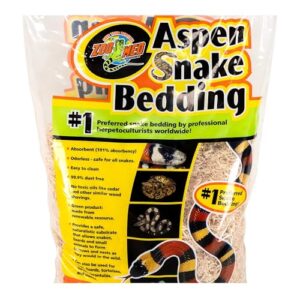
Not every keeper wants coconut fiber on the enclosure floor. If you prefer something drier and more wood-forward, Zoo Med Aspen Snake Bedding is worth a look.
It’s 99.9% dust-free, which matters more than people realize. Shed cycles already stress your snake — airborne particles don’t need to add to that. The aspen shavings absorb moisture fast, rated at 191% absorbency, and won’t introduce the toxic oils found in cedar or pine. Your ball python can burrow and tunnel without the bedding collapsing around them.
The texture stays loose and light, which encourages natural digging behavior and makes spot-cleaning straightforward. Pull out wet clumps right away, though — aspen doesn’t bounce back once it’s soaked through.
It comes in multiple bag sizes, so you can match the quantity to your enclosure without overspending.
| Brand | Zoo Med |
| Material | Aspen Wood Shavings |
| Special Properties | 99.9% Dust-Free, 191% Absorbency, No Toxic Oils |
| Best For | Snakes and Reptiles |
| Weight | 2.2 lbs |
Best For: Snake and reptile keepers who want a dry, wood-based substrate that’s safe, easy to spot-clean, and great for burrowing species.
| Brand | Zoo Med |
|---|---|
| Primary Use | Substrate |
| Price | Not specified |
| Suitable For | Snakes, Reptiles |
| Replacement Schedule | As needed |
| Humidity Impact | Low retention |
| Additional Features |
|
- 99.9% dust-free and free of toxic oils, so it’s genuinely safe for your snake to dig through and breathe around
- Absorbs moisture fast at a 191% absorbency rate, keeping the enclosure cleaner between deep cleans
- Loose, light texture encourages natural burrowing behavior and makes spot-cleaning quick and easy
- Once it gets soaked through, it doesn’t recover — wet spots need to come out right away
- Large enclosures may need multiple bags, since it only comes in 8-quart packages
- May not be easy to find in local pet stores, so you might have to order it online
5. Galapagos Sphagnum Moss Terrarium Substrate
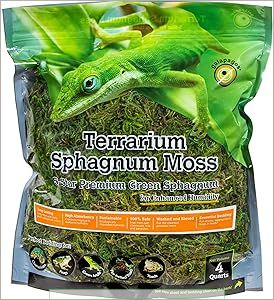
Sphagnum moss might look decorative, but Galapagos Sphagnum Moss earns its place in a ball python setup through sheer function. It holds several times its dry weight in water, giving your snake consistent humidity without turning the enclosure into a swamp. Layer it over your main substrate or pack it around hides to build moisture-rich zones that support clean sheds and healthy skin. The long fibers create a gentle surface — no friction, no rough patches that snag during shedding cycles.
Keep humidity between 55 and 65 percent, and this moss stays stable longer than loose bedding alternatives. Mist lightly after water changes to refresh moisture levels. Replace it every one to two months before odors or mold get a foothold.
It’s sustainably sourced, chemical-free, and comes in a resealable 4 qt bag for about $10.49.
| Brand | Galapagos |
| Material Type | Sphagnum Moss |
| Primary Use | Humidity/Substrate |
| Suitable For | Reptiles & Amphibians |
| Size | 4 qt |
| Special Properties | Humidity Retention, Long-Fiber Construction |
| Additional Features | Sustainably sourced, natural appearance, resealable packaging |
Best For: Reptile and amphibian keepers who need reliable humidity control for tropical setups, especially those housing snakes, geckos, or frogs that depend on consistent moisture for healthy sheds and skin.
| Brand | Galapagos |
|---|---|
| Primary Use | Humidity/Substrate |
| Price | $10.49 |
| Suitable For | Reptiles, Amphibians |
| Replacement Schedule | Every 1–2 months |
| Humidity Impact | High retention |
| Additional Features |
|
- Holds moisture really well, so you’re not constantly misting to keep humidity where it needs to be
- Long fibers are soft and gentle — no rough surfaces that could snag or irritate during shedding
- Sustainably sourced and chemical-free, so it’s safe for sensitive animals and comes in a handy resealable bag
- Can go moldy fast if airflow is poor or you skip cleaning — needs regular upkeep
- Some batches run heavily dyed, leaving greenish water when you pre-soak it
- The bag is mostly air, so you might need more than one for larger enclosures or deeper substrate layers
6. Zoo Med Forest Floor Bedding
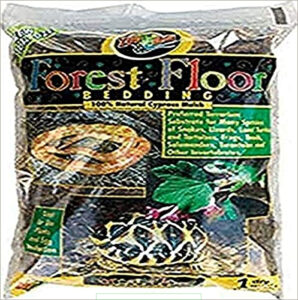
When your ball python needs a substrate that works as hard as you do, Zoo Med Forest Floor Bedding is worth a close look. This natural cypress mulch creates a soft, forest-like surface that facilitates burrowing without scraping scales or compacting underfoot. It holds enough moisture to keep humidity in that 55–65 percent sweet spot without turning soggy between cleanings.
Spread a two- to four-inch layer across the enclosure floor. That depth slows drying and gives your snake room to burrow naturally. Spot-clean waste daily and swap out the full substrate every four to six weeks. If the bag feels dusty when you open it, rinse a portion before use — your snake’s respiratory health is worth the extra step.
| Brand | Zoo Med |
| Material Type | Cypress Mulch |
| Weight | 10.6 lbs |
| Primary Use | Substrate |
| Special Properties | Moisture Retention, Low Dust |
| Suitable For | Snakes, Amphibians |
Best For: Reptile and amphibian owners who need a reliable, humidity-holding substrate for tropical species like ball pythons, frogs, or blue-tongued skinks.
| Brand | Zoo Med |
|---|---|
| Primary Use | Substrate |
| Price | Not specified |
| Suitable For | Snakes, Amphibians |
| Replacement Schedule | Every 4–6 weeks |
| Humidity Impact | Moderate retention |
| Additional Features |
|
- Holds moisture really well, making it easier to keep humidity in that ideal range without constant misting
- Low-dust formula means less irritation for your pet’s lungs — and yours
- Works for a wide variety of species and mixes easily with other substrates like coconut fiber to stretch your dollar
- A bit pricey per bag, especially if you’re running a large enclosure or doing frequent full swaps
- Waste can hide in the mulch pretty easily, so you’ll need to do a smell check rather than just a visual scan
- Can dry out over time and needs regular re-wetting to stay effective
7. Fluker’s Reptile Terrarium Vines
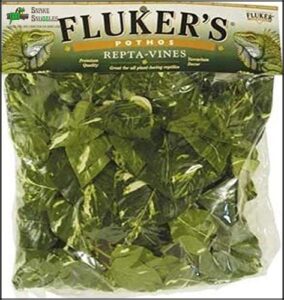
Fluker’s Repta Vines give your setup an instant layer of visual depth and practical function at a low cost. Each strand runs six feet long, made from non-toxic polyethylene with a flexible internal wire so you can bend it into arches, drape it across branches, or spiral it up a corner. Suction cups come included, though you may need backup mounting — adhesive clips work better on smooth glass.
Trim it to fit smaller tanks without fraying. Wipe it down weekly with a reptile-safe disinfectant and let it fully dry before putting it back. One honest heads-up: check the wire ends regularly. If the plastic coating wears down, exposed metal can scratch your snake during movement.
| Brand | Fluker’s |
| Material Type | Non-toxic polyethylene |
| Length | 6 feet |
| Primary Use | Enrichment / Décor |
| Special Properties | Flexible, bendable, trimmable |
| Suitable For | Reptiles & Amphibians |
| Price | $15.99 |
Best For: Reptile and amphibian owners who want affordable, flexible terrarium decoration that doubles as climbing and hiding enrichment for their pets.
| Brand | Fluker’s |
|---|---|
| Primary Use | Enrichment/Decor |
| Price | $15.99 |
| Suitable For | Reptiles, Amphibians |
| Replacement Schedule | As needed |
| Humidity Impact | Low retention |
| Additional Features |
|
- Six feet of bendable, trimmable vine gives you a lot to work with for the price — easy to shape around any tank layout
- Non-toxic plastic is simple to wipe down and sanitize without holding onto smells or waste
- The internal wire lets you create arches, spirals, or flat drapes depending on what your setup needs
- Suction cups are pretty unreliable — plan on using adhesive clips or another mounting method from the start
- Exposed wire ends can be a scratch hazard, so you’ll want to check and tape them if the coating wears down
- Not ideal for high-humidity tanks — prolonged moisture can lead to mold, and UVB exposure may cause the plastic to fade or get brittle over time
Setting Up and Maintaining a Ball Python Terrarium
Getting the setup right makes all the difference between a thriving ball python and a stressed one. Every detail—from what lines the floor to where you place the water bowl—shapes how safe and comfortable your snake feels.
Here’s what you need to know to build and maintain a habitat your ball python will actually want to live in.
Selecting and Arranging Substrate
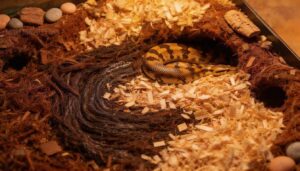
Your substrate is the living floor of your terrarium—get it wrong and everything else suffers. Layer coconut fiber or aspen, 3–5 inches deep for proper moisture management and burrowing. Use non-toxic materials only; skip cedar and pine entirely.
- Coconut fiber for reliable substrate absorption
- Aspen for texture variety and odor control
- Layering techniques improve drainage system efficiency
- Substrate heating benefits from darker, denser materials
- Mix substrate types for balanced pros/cons
Adding Hides, Branches, and Water Bowls
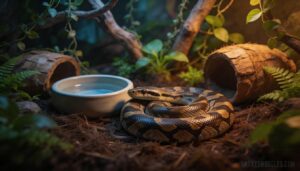
Think of your terrarium like a small neighborhood—your ball python needs distinct zones to feel secure. Hide Placement Strategies matter here: position one hide on the warm side, another on the cool side, creating true Microhabitat Balance. This providing hideouts and climbing structures approach reduces stress noticeably.
- Use Branch Anchoring Techniques at varied heights for exercise and shedding support
- Apply Enrichment Item Rotation every 1–2 weeks to sustain curiosity
- Water Bowl Design should be shallow, ceramic, and cool-side placed
- Prioritize water bowl placement and hygiene—change water daily
Routine Cleaning and Health Checks
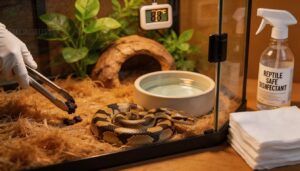
Staying consistent with your regular cleaning schedule is what separates healthy snakes from sick ones. Follow a solid Spot Cleaning Frequency—remove waste and wet substrate the moment you spot it. Practice Disinfectant Safety by using reptile-safe products, rinsing surfaces fully, and letting everything dry before reassembling. Keep your Water Bowl Hygiene tight with daily changes.
Healthy snakes start with consistent cleaning — spot-clean waste immediately, sanitize safely, and refresh water daily
Your Health Observation Checklist should cover shedding monitoring, breathing, and body condition every week.
Reducing Stress Through Enclosure Design
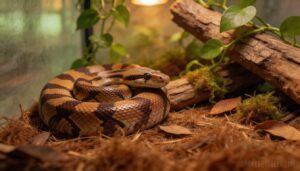
A clean enclosure keeps your snake healthy, but smart design keeps it calm. Visual Isolation matters more than most keepers realize — solid panels on enclosure sides block outside movement that triggers defensive coiling. Noise Dampening materials in walls can drop ambient sound by up to 15 decibels, which makes a real difference for shy individuals.
Try these design features that reduce reptile stress:
- Apply Glare Reduction by using non-reflective surfaces and frosted side panels.
- Create Burrowing Space with 4–6 inches of moisture-retaining substrate.
- Practice Enrichment Rotation — swap branches and hides every two weeks.
Frequently Asked Questions (FAQs)
What are the best enclosures for ball pythons?
Glass, PVC, and wood each have trade-offs.
For a ball python enclosure, glass offers clear visibility and easy disinfection, while PVC panel ball python enclosures win on cost efficiency and temperature stability.
What type of terrarium is best for ball pythons?
Your ball python’s long-term health starts with the right home. A glass enclosure with front-opening doors offers the best visibility, heat retention, and humidity control for proper ball python care.
What size terrarium should a ball python have?
Size needs for juvenile vs adult ball pythons differ considerably.
A 10-gallon works for hatchlings, but adults need a minimum recommended tank size of 2x3x4 feet for proper floor space and enrichment space.
What is the best habitat for a ball python?
Think of a ball python’s habitat as its whole world.
The best setup pairs a secure enclosure with a steady temperature gradient, smart humidity management, and escape-proof design suited to your snake’s needs.
How often should I replace terrarium substrate completely?
Swap substrate completely every 12 to 18 months in glass enclosures. Wood setups need replacement every 9 to 12 months. Persistent mold or odor? Replace immediately, no matter the schedule.
Can ball pythons share an enclosure with other snakes?
No, ball pythons should always live alone. For handling safety and stress reduction, one snake per enclosure is the standard in reptile husbandry.
Cohabitation causes aggression risks, disease transmission, and feeding competition. Microclimate competition stresses both animals.
What are signs of respiratory infection in ball pythons?
Wheezing & Gurgling, Open-Mouth Gasping, Mouth Discharge around the nostrils, Lethargy & Anorexia, and Throat Swelling all signal respiratory infection.
Poor ventilation requirements, humidity regulation, and temperature and humidity monitoring failures drive disease prevention breakdowns—see a vet immediately.
Do ball pythons need nighttime temperature drops?
Yes, a slight nighttime drop mimics their natural circadian rhythm mimicry. Keep nights at 75–78°F, never below 70°F, to support behavioral thermoregulation without stress.
How do I safely transport my ball python?
Use a ventilated transport tub with a secure locking lid. Keep temps between 75–80°F, skip feeding 48 hours before, and cover the container to keep your ball python calm and stress-free.
How often should ball pythons be fed?
Feed hatchlings every 4–7 days, juveniles every 7–14 days, and adults every 3–6 weeks. Adjust based on body condition and prey size, not just age.
Conclusion
Imagine your ball python thriving in a terrarium that’s a perfect miniature ecosystem. With the right setup, your snake can live a long, healthy life.
Choose a well-ventilated, spacious enclosure that maintains proper temperature and humidity levels. Consider one of the top 7 snake terrariums for ball pythons, designed to meet your pet’s specific needs.
A well-designed habitat makes all the difference. Your ball python’s happiness and health depend on it, and so do snake terrariums for ball pythons.