This site is supported by our readers. We may earn a commission, at no cost to you, if you purchase through links.
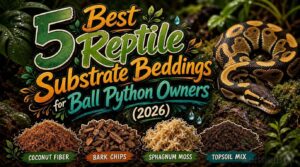
The wrong substrate doesn’t just make your enclosure look bad—it can kill your snake.
Ball pythons need consistent humidity between 60–80%, stable burrow tunnels, and a floor that won’t compact into wet cement after one misting.
Most keepers learn this the hard way, watching expensive setups turn moldy or their snake refuse to burrow because the bedding collapses the moment they push into it.
Reptile substrate beddings for ball python owners range from rock-solid performers to outright hazards—and the difference matters more than most care guides admit.
The five options ahead have been tested where it counts: inside real enclosures, under real conditions.
Table Of Contents
Key Takeaways
- Coconut fiber and husk are the gold standard substrate for ball pythons—it holds humidity at 60–80% RH, supports 4–6 inch burrow tunnels without collapsing, and lasts 2–4 months with regular spot-cleaning.
- Cedar, pine, sand, and scented aspen aren’t just bad choices—they actively harm your snake through respiratory damage, impaction risk, and rapid mold growth at the humidity levels ball pythons need.
- Aspen looks affordable at $6–12, but it molds fast above 60% humidity and can’t hold burrow tunnels, making it a false economy compared to coco coir or a 60/40 topsoil-coco blend.
- Substrate maintenance isn’t optional—daily spot-cleaning, full replacement every 2–4 months, and watching for ammonia smells or visible mold are what keep your snake breathing clean and staying healthy long-term.
Top 5 Ball Python Substrates
Not every substrate deserves space in your ball python’s enclosure, so this list cuts straight to what actually works. Each pick was evaluated on humidity retention, burrowing support, and long-term safety. Here are five options worth your attention.
1. RediChip Medium Coconut Reptile Bedding
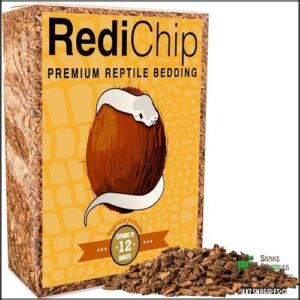
RediChip Medium Coconut Reptile Bedding is a strong first pick for ball python owners who want reliable humidity without babysitting their enclosure. The medium-sized coconut husk chips hold moisture steadily — users report hitting 80–85% humidity in rack setups — without turning the substrate into a swamp.
At 12 quarts per bag, smaller enclosures are covered easily.
It’s ready straight from the bag, low-dust, and controls odor well between cleanings.
| Best For | Ball python owners and reptile keepers who want a low-maintenance substrate that holds humidity naturally without constant adjustments. |
|---|---|
| Material | Coconut husk chips |
| Organic | 100% organic |
| Odor Control | Yes |
| Package Volume | 12 qt |
| Humidity Support | Dry or moistened |
| Burrowing Support | Yes |
| Additional Features |
|
- Holds 80–85% humidity steady in rack setups without getting waterlogged — great for tropical species
- Absorbs odors well, so the enclosure stays fresher between cleanings
- Ready to use straight from the bag and works with bio-active setups, moss, or bark mixes
- The 12-quart bag won’t stretch far in larger tanks — you’ll likely need to supplement with other substrate
- Some dust on first use; a quick shake or rinse helps before putting it in the enclosure
- A bit pricey per volume, which adds up fast if you’re running multiple large setups
2. BabiChip Coconut Reptile Substrate
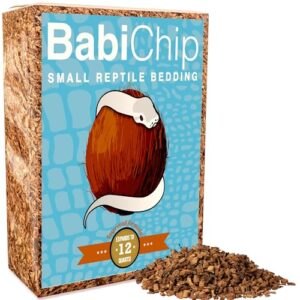
BabiChip takes a slightly different approach than compressed bricks or fine coir. The chips are elephant-sized coconut pieces — larger than most competitors — and they break down gradually, which helps support burrowing without collapsing too quickly.
Triple-washed to cut down on dust, they work dry for arid setups or hydrated for tropical humidity levels.
For ball pythons, add water gradually until you hit your target RH. One limitation: very large, heavy-bodied snakes may find the chunky texture uncomfortable underfoot.
| Best For | Small to mid-sized reptiles like geckos, small snakes, and amphibians that need adjustable humidity and a low-impaction substrate. |
|---|---|
| Material | Coconut husk chips |
| Organic | 100% organic |
| Odor Control | Yes |
| Package Volume | 12 qt |
| Humidity Support | Dry or moistened |
| Burrowing Support | Yes |
| Additional Features |
|
- Works dry or hydrated, so you can dial in humidity for arid or tropical setups
- Dust-free and odor-absorbing right out of the bag — no prep needed
- Small chip size is gentler on low-profile species and reduces impaction risk
- Some chips feel sharp, which can be uncomfortable for larger, heavier snakes
- 12 quarts isn’t a lot of volume for the price — it runs out faster than you’d expect
- Tropical setups need consistent watering or the bedding dries out and loses its humidity benefits
3. Legigo Coconut Fiber Terrarium Substrate
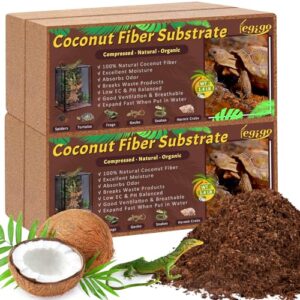
Where BabiChip leans on chunky texture, Legigo goes finer. Each pack contains four compressed coco bricks — roughly 7.87 × 3.94 × 1.97 inches each — that expand into a fluffy, airy bedding once soaked. No chemicals, no synthetic binders. Just 100% coconut husk fiber.
It holds humidity well and resists compaction, so airflow stays consistent even after repeated refresh cycles. Inspect each brick before use — a few users have reported occasional foreign material in the mix.
| Best For | Reptile, amphibian, and invertebrate owners who want a natural, chemical-free substrate that holds humidity and supports burrowing behavior. |
|---|---|
| Material | Coconut coir fiber |
| Organic | 100% organic |
| Odor Control | Yes |
| Package Volume | 4-brick pack |
| Humidity Support | Requires hydration |
| Burrowing Support | Yes |
| Additional Features |
|
- Pure coconut coir — no chemicals, synthetic binders, or additives, so it’s safe for sensitive species
- Holds moisture well and resists compaction, keeping humidity steady without frequent replacement
- Expands into a loose, diggable bedding that lets snakes, frogs, and hermit crabs behave naturally
- Bricks have to be soaked before use — they’re rock-hard dry and can’t go straight into the enclosure
- No instructions included in the packaging, so first-timers will need to look up prep steps elsewhere
- Occasional foreign material has been reported in the mix, so it’s worth inspecting each brick before use
4. Zilla Reptile Aspen Bedding Substrate
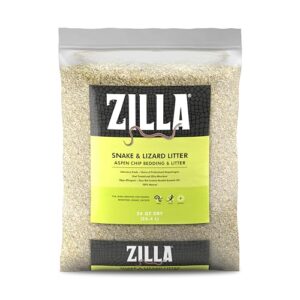
Coco substrates aren’t always practical — and that’s where Zilla’s aspen bedding steps in. Made from heat-treated aspen chips, it’s 100% natural, free of aromatic oils, and low-dust by design. At $17.99 for a 24 qt bag, it’s an affordable backup option.
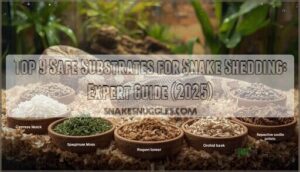
If you want to stretch your budget even further, buying in bulk from online retailers can drop the price to around $11 for the same 24 qt bag — check out this guide to safe substrate options for shedding snakes to see how aspen stacks up against the alternatives.
That said, aspen isn’t ideal for ball pythons long-term. It molds quickly above 60% humidity and collapses under burrowing weight. Use it short-term during quarantine or recovery — not as a permanent setup.
| Best For | Reptile keepers who need a dry, affordable substrate for snakes, skinks, or geckos in lower-humidity setups. |
|---|---|
| Material | Aspen wood chips |
| Organic | 100% natural |
| Odor Control | Yes |
| Package Volume | 24 qt |
| Humidity Support | Low moisture retention |
| Burrowing Support | Yes |
| Additional Features |
|
- Low dust and no aromatic oils, so it’s gentle on sensitive reptile respiratory systems.
- Easy spot-cleaning thanks to the small, uniform chip size — just scoop and go.
- Retains heat well, helping keep enclosure temps stable without extra effort.
- Fine chips can stick to live feeders and pose an impaction risk for small or young snakes.
- Molds fast in high humidity, making it a poor long-term choice for tropical species.
- Some users notice a strong wood smell out of the bag — needs to air out before use.
5. Zoo Med Hermit Soil Coconut Fiber
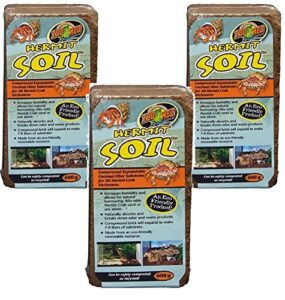
Zoo Med’s Hermit Soil isn’t marketed for ball pythons — but it performs surprisingly well for them.
Each brick expands to 7–8 liters of substrate after hydrating, so three bricks give you roughly 21–24 liters total.
That covers a standard 40-gallon build comfortably.
The coconut fiber holds moisture well, controls odor naturally, and helps light burrowing.
One note: some users detect a faint chemical smell after soaking. Use distilled water and wring it thoroughly before adding it to the enclosure.
| Best For | Hermit crab owners — or reptile keepers — who want a natural, moisture-retaining substrate that supports burrowing and keeps odors under control. |
|---|---|
| Material | Coconut coir fiber |
| Organic | 100% natural |
| Odor Control | Yes |
| Package Volume | 3-brick pack |
| Humidity Support | Requires hydration |
| Burrowing Support | Yes |
| Additional Features |
|
- Expands to 7–8 liters per brick, so three bricks give you a solid 21–24 liters of substrate
- Holds humidity well and naturally breaks down waste, cutting down on enclosure smell
- Eco-friendly and compostable — easy to dispose of without guilt
- Rehydrating the bricks can get messy and requires a decent amount of water
- Some users notice a petroleum-like smell after soaking — distilled water helps, but it’s an extra step
- Fully soaked bricks get heavy and compact, so mixing the substrate can be awkward without a separate container
Best Substrate Types Compared
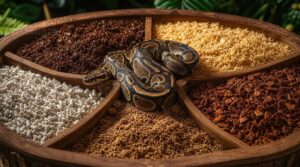
Not all substrates are created equal, and the wrong pick can affect your snake’s health fast. Each type has trade-offs worth knowing before you commit to one. Here’s how the most common options actually stack up.
Coconut Fiber and Chips
Coconut fiber and chips punch well above their weight as a ball python substrate. The fiber chip benefits start with structure: coir chips interlock to support burrow tunnel support without collapsing, while fine fibers fill gaps and regulate moisture retention. Together, they maintain 55–60% RH with minimal misting. Its durability is enhanced by the fiber’s high lignin content.
- Water holding capacity stays consistent for 24+ hours between mistings
- Chip texture stability keeps tunnels usable longer than loose bedding
- Longevity of coir allows 2–4 months before full replacement
Cypress Mulch Bedding
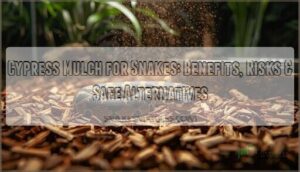
Cypress mulch deserves a spot in your substrate lineup. Moisture retention is where it quietly excels — the fibrous heartwood holds humidity at 50–60% RH, cutting down your misting schedule noticeably.
It won’t mold on you if airflow is decent. Burrowing suitability is limited to 2–3 inches, and its chunky texture won’t hold tunnels as neatly as coco.
At $15–20 a bag, the cost efficiency and longevity make it worth considering.
Topsoil-Coco Blends
Think of this blend as the closest thing to what a ball python encounters in the wild. A 60% coco, 40% topsoil ratio hits the sweet spot — the coconut fiber holds moisture and structure, while the topsoil adds mineral density that stabilizes tunnels for weeks.
pH buffering keeps the mix irritant-free. Humidity holds steady at 55–60% with minimal misting.
Paper Towels for Quarantine
Paper towels aren’t a long-term substrate — they’re a quarantine-phase tool, full stop. Their high capillary action pulls moisture away from the enclosure floor fast, making spot-clean ease genuinely simple. You can see waste immediately, remove it, and move on.
Use only plain white, unprinted sheets. Swap them weekly, seal used ones before disposal, and keep a simple inventory tracking log nearby.
Aspen Bedding Limitations
Aspen shavings look clean and affordable, but they’re a poor fit for ball pythons. Moisture retention is minimal — humidity drops fast, and damp patches from water dish spills promote rapid mold growth within days.
- Tunnel collapse is constant; the loose texture can’t hold burrows
- Dusty substrates irritate airways and lungs
- Ingested shavings carry impaction risk, causing intestinal blockages
Humidity, Burrowing, and Depth
Getting the substrate right goes beyond just picking something that looks good — humidity, depth, and tunnel stability all play a role in keeping your ball python healthy. Each of the factors below directly affects how your snake behaves, sheds, and regulates its own body temperature.
Here’s what you need to know before choosing.
Ideal Humidity Range
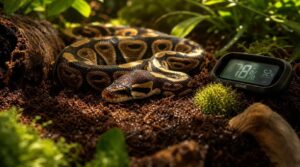
Ball pythons need 60–80% RH consistently — not occasionally. That range mirrors the humid savanna conditions they evolved in.
| Condition | Target RH | Substrate Tip |
|---|---|---|
| Standard daytime | 60–70% | Coco coir, misted 1–2×/week |
| Winter/dry season | 40–50% indoor air | Add deeper substrate layer |
| Summer balance | 45–55% | Increase ventilation after misting |
| Shedding period | 70–80% | Maintain moisture retention actively |
| Mold risk threshold | Above 85% | Spot-clean immediately |
A reliable digital hygrometer removes the guesswork. Aim for accuracy within ±5% — cheap dial versions rarely deliver that. Your substrate choice directly drives humidity performance, so pick one that holds moisture without staying soggy.
Humid Hide Requirements
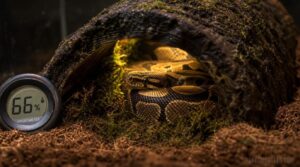
A humid hide takes that ambient range further. Inside the hide, target 80–90% RH — high enough to soften retained shed without soaking your snake.
- Damp sphagnum moss or coconut fiber works best for substrate moisture retention
- Hide placement on the warm side helps both shedding and thermoregulation
- A small hygrometer near the entrance makes humidity monitoring precise and reliable
Safe Burrowing Depth
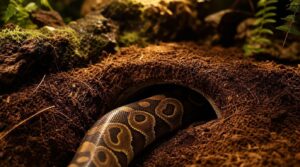
Substrate depth of 4–6 inches gives your ball python real burrowing room — enough to thermoregulate underground without hitting the enclosure floor. Shallower than 4 inches, they’ll stay on the surface instead of retreating below.
Keep entrance width around 1–2 inches so the tunnel mouth stays open and stable as your snake moves in and out.
Tunnel Stability
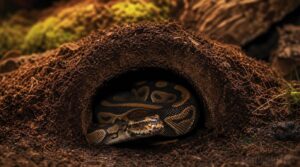
Depth gets your snake underground — but substrate composition determines whether that tunnel holds. Coconut fiber and topsoil-coco blends pack together like a circular arch, distributing pressure evenly so the tunnel mouth stays open.
Fine coco fibers collapse under load. Medium chips or a 60/40 topsoil-coco mix holds its shape far better, even after your snake passes through repeatedly.
Preventing Mold Problems
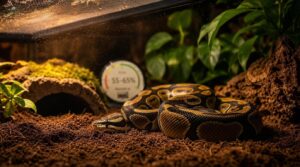
Mold doesn’t wait — it moves fast when moisture and stagnant air combine. Pre-dry your substrate before introducing it: spread coco fiber thin and let it air out for 24 hours.
After misting, crack the lid or run a small fan to hit 2–3 air exchanges per hour. Spot-clean daily.
Musty odor or discoloration means replace immediately.
Safety, Cleaning, and Replacement
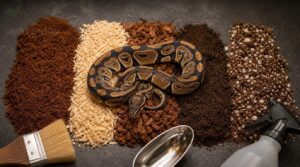
Picking the right substrate is only half the job — keeping it safe and clean is where most keepers slip up. Knowing what to avoid, when to spot-clean, and how long each material actually lasts will save your snake from preventable health problems. Here’s what you need to know.
Substrates to Avoid
Some substrates don’t just underperform — they actively harm your snake. Cedar and pine top the danger list. Both release phenols and aromatic oils that cause irreversible respiratory damage. Even brief exposure matters.
Cedar and pine don’t just underperform — they actively destroy your snake’s lungs
Silica sand and calcium sand risk impaction if ingested.
Aspen with added fragrance or dye irritates skin and airways.
Non-reptile soils may carry heavy metals or pesticides absorbed through contact.
Spot-Cleaning Schedule
Keep a spot clean log — it’s the simplest way to stay ahead of problems before they become health risks.
Daily spot cleaning means checking for waste, uneaten prey, and moisture pockets. Remove anything soiled within 24 hours. Your spot clean protocol is straightforward: gloves on, dedicated scoop, disposable bag out.
Weekly, blot damp patches and inspect hides. That’s your full substrate sanitation schedule.
Full Replacement Timing
Spot cleaning buys you time — but it doesn’t reset the clock. Every substrate has a lifespan, and missing that window is where problems quietly build.
Full substrate replacement for coco coir runs every 2–4 months. Topsoil-coco blends and cypress mulch need a full swap every 2–3 months.
Watch for these non-negotiable replacement triggers:
- Odor triggers: a sour or ammonia smell means decomposition is already underway — replace immediately
- Moisture threshold: readings above 65% RH for more than 4 consecutive days signal saturation
- Visible mold growth: even a small fuzzy patch warrants a full change, not a spot clean
Seasonal adjustments matter too. High-humidity rooms may shorten your substrate replacement frequency by 2–4 weeks. Poor ventilation impact accelerates this further.
Log every replacement date. Your substrate sanitation schedule should never be guesswork — your ball python’s long-term substrate durability and health depend on the pattern you track, not the mess you see.
Respiratory Health Risks
Your ball python’s lungs are more vulnerable than you’d think. Dust-free substrate matters — fine particles from dry aspen or disturbed coco become airborne instantly. Cedar and pine are outright dangerous; their phenolic compounds and aromatic oils cause irreversible respiratory damage.
Ammonia control through consistent spot-cleaning prevents gas buildup from soiled bedding. Always increase ventilation after misting to push out spores and fumes without dropping humidity.
Cost and Longevity
Budget shapes your substrate choice as much as biology does.
Coconut fiber bricks like Legigo run $8–18 per block and expand to fill a 40-gallon tank — strong cost-per-use. RediChip sits at $15–25 but lasts 2–4 months with spot-cleaning.
Aspen costs less upfront at $6–12, but molds fast at ball python humidity, making it a false economy.
Frequently Asked Questions (FAQs)
What substrate do ball pythons prefer?
Ball pythons gravitate toward coconut fiber and husk. It mirrors their native soil, holds burrow tunnels at 3–4 inches, and keeps humidity steady. A topsoil-coco blend runs a close second.
What not to use for snake bedding?
Cedar and pine shavings are the biggest threats — their aromatic oils cause respiratory damage that can’t be reversed. Skip sand, walnut shells, and clay soils too. They risk impaction, irritation, and compaction.
Can ball pythons ingest substrate while feeding?
Yes, they can. During a strike, loose particles can enter the mouth. Avoid sand and dusty substrates — they carry the highest risk of digestive impaction. Coconut fiber and cypress mulch are far safer choices.
Does substrate choice affect egg incubation success?
Absolutely — substrate choice directly shapes hatch success. Moisture retention, gas exchange, and thermal conductivity all hinge on what surrounds the eggs. Coconut fiber excels here. Poor choices risk mold, hypoxia, or embryo desiccation fast.
How does substrate impact a hatchlings development?
Substrate moisture directly affects hatchling size and development rate. Wetter substrates accelerate water uptake by eggs, while overly dry conditions slow embryonic growth. Fungal contamination post-hatch can compromise respiratory health immediately.
Conclusion
Switching substrates mid-setup feels risky, but your ball python adapts faster than you’d expect when the conditions are right.
The real investment isn’t money—it’s paying attention.
The best reptile substrate beddings for ball python owners share one trait: they work with humidity, not against it.
Get that right, and your snake burrows confidently, sheds cleanly, and stays healthy long-term.
Choose the substrate that fits your enclosure, then commit to maintaining it consistently.