This site is supported by our readers. We may earn a commission, at no cost to you, if you purchase through links.
Feeding a boa constrictor outdoors changes everything—humidity spikes, temperature swings, and pests turn a simple feeding session into a real challenge. Most keepers don’t realize how fast improper prey storage or the wrong tools can cause feeding strikes, bacterial contamination, or escaped rodents in an outdoor setting.
Getting your setup right means matching the right boa constrictor feeders for outdoor reptile rooms to your specific environment. The products you choose—tongs, warmers, insulated storage, hygienic tubs—directly control your boa’s feeding response, your safety, and your long-term results.
Table Of Contents
- Key Takeaways
- Best Boa Feeder Products
- Outdoor Feeding Room Requirements
- Choosing Proper Feeder Sizes
- Product Features Worth Comparing
- Safe Outdoor Feeding Practices
- Frequently Asked Questions (FAQs)
- Do boas need UV light?
- Can a Kenyan sand boa live in a 20 gallon tank?
- Can outdoor temperatures affect a boas appetite?
- How do seasonal changes impact feeding schedules?
- Should feeding routines change during shedding cycles?
- Do boas need calcium supplements added to feeders?
- How does stress influence a boas feeding behavior?
- Conclusion
Key Takeaways
- Your outdoor feeding setup lives or dies on temperature and humidity control — keep your zone between 60–70% RH and use thermal buffering to stop appetite-killing swings before they start.
- Match prey size to your boa’s midbody girth and age group (pinkies for neonates, medium-to-large rats for adults), and always warm frozen-thawed prey to 100–110°F so your snake strikes clean and fast.
- The right gear — stainless steel tongs with 12–18 inch reach, insulated freezer packs, and non-porous feeding tubs — directly protects your boa’s health and keeps every session safe and sanitary.
- Outdoor pests, escaped prey, and post-feed stress are your biggest hidden risks, so seal every entry point, wait 48 hours before handling after meals, and never skip a weekly visual check of your feeding room.
Best Boa Feeder Products
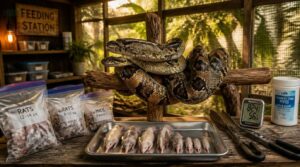
Getting your boa’s feeding setup right starts with having the right products on hand. From quality frozen prey to the tools that make every feeding session safer and cleaner, what you use matters more than you’d think. Here’s what’s worth adding to your outdoor reptile room in 2026.
Stocking up on the right frozen prey makes a real difference, and a solid boa constrictor feeding guide can help you nail down sizing, frequency, and thawing technique before you even open the freezer.
Frozen-thawed Rodent Suppliers
Finding the right frozen-thawed supplier makes or breaks your feeding routine. Here are five worth knowing:
- RodentPro — bulk options, consistent sizing, accommodates large operations
- Frozen Mice Factory — European cold chain, factory pricing
- Chinese export suppliers — certified, standardized quality
- Local breeders — same-size batches, fresher stock
- Regional networks — reduced shipping, reliable freshness
Supplier certification and cold chain integrity matter most. Additionally, many manufacturers offer calcium-enriched pinky mice to support reptile health.
Feeding Tongs and Hooks
Once your supplier is sorted, the right feeding tongs make every session safer and cleaner. Stainless steel tongs resist rust and sanitize easily.
Go for 12–18 inch reach to keep your hand outside the strike zone. Ergonomic, spring-loaded grips reduce fatigue. Look for rounded or rubber-coated tips — gentler on your Boa Constrictor.
Always lock and hand-wash tongs after each use.
Rodent Warmers
Tongs handle the handoff — but warming the prey is where precision really matters. Your Boa won’t strike cold prey reliably.
A good rodent warmer heats frozen rodents to 100–110°F safely:
- Heating Pad Performance delivers steady, even warmth
- Safety Overheat Protection auto-shuts if temps spike
- Dual Pad Configuration warms two prey items simultaneously
Portable design features and built-in calibration keep accuracy under control — no guesswork.
Feeding Tubs
Once the prey is warmed, you need the right tub to contain the action. Feeding tubs with sloped bottoms make post-meal cleanup fast. Non-porous plastic resists bacteria.
Elevated lip edges stop splatter when your boa strikes hard. Integrated lid channels block pests. Rounded corners protect your snake during feeding.
Storage-safe Freezer Packs
Keep your frozen rodents FRESH — even in summer heat. Storage-safe freezer packs hold temps between -2°F and 5°F for up to 6 hours, so your frozen-thawed prey stays safe outdoors.
For a full picture of safe feeding and storage routines, beginner snake ownership tips walk you through keeping your setup clean, cold, and stress-free for your snake.
Non-toxic gel won’t harm your boa constrictors if contact happens. Reusable packs handle 100+ freeze-thaw cycles easily. Grab rectangular packs — they fully utilize cooler space perfectly.
Outdoor Feeding Room Requirements
Your outdoor feeding room needs to check a few important boxes before it’s truly ready for your boa. Getting the setup right means safer feeding sessions and a lot less stress — for both of you. Here’s what to look for.
Temperature-stable Feeding Zones
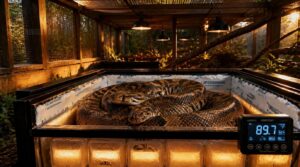
Temperature swings outside aren’t just annoying — they’re a real risk for your boa’s feeding routine. Feeding zone placement matters more than most keepers realize.
Here’s what keeps your zone stable:
- Use thermal buffering materials like phase change packs
- Apply zone insulation methods with double-wall construction
- Run a real-time temperature monitoring thermostat
This controls ambient temperature and locks your heat gradient tight.
Humidity-safe Feeding Areas
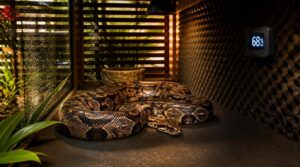
Humidity can make or break your feeding zone. You want RH levels between 60–70% to keep mold away while preserving prey moisture for clean digestion.
Use closed-cell foam liners on walls — they cut surface moisture transfer by 40%. Pair that with sealed rubberized mats for easy post-feed cleanup. Add an RH sensor that triggers ventilation automatically if humidity climbs past 75%.
Escape-proof Room Setup
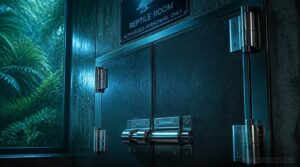
A boa that gets out isn’t just loose — it’s a serious safety problem. That’s why your feeding room needs to be built like a vault.
Double laminated doors with magnetic weatherstripping create airtight seals that resist prying. Stainless steel hinges handle 200,000+ open-and-close cycles. Internal deadbolts lock automatically. Keep panic release levers clearly labeled inside — safety first, always.
Pest Prevention Essentials
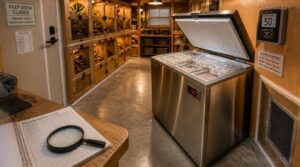
Pests don’t knock — they sneak in through every crack, gap, and drain you ignore. Seal all entry points around vents, doors, and foundations to cut off their routes. Use fine mesh vent covers and fix damaged screens fast. Weekly visual checks catch early signs of mites or nesting before they spread to your enclosure.
Store frozen prey in sealed, labeled containers inside a dedicated freezer set at -18°C or colder. This removes odors that attract insects. Clean feeders and bowls regularly to stop bacterial buildup pests detect from meters away. Maintain room humidity between 40–60% — dry conditions are your best natural pest deterrent.
Easy-clean Feeding Surfaces
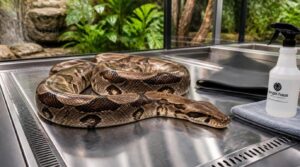
Your feeding surface is the unsung hero of a clean boa room.
Silicone mats resist stains, stay non-porous, and wipe clean in seconds. Stainless steel surfaces handle disinfectant without rusting or holding odors. Look for integrated drain channels to guide fluids away fast.
- Non-porous surface options stop bacteria from hiding
- Quick wipe protocols after every feed keep things sanitary
- Substrate barriers protect your cleaning zone
Choosing Proper Feeder Sizes

Getting feeder sizes right is one of the most important things you can do for your boa’s health and feeding response. A prey item that’s too small won’t satisfy, and one that’s too large can cause serious problems. Here’s what you need to know for every stage of your boa’s life.
Juvenile Boa Prey Sizes
Getting prey size right for juveniles is one of the most important moves you’ll make early on. Start neonates on pinkie mice (4–9g), then work up to 10–60g feeders as they grow.
Match prey to 70–100% of girth width, stay within 10–12% of body weight, and feed every 5–7 days. Track weight weekly and adjust fast.
Sub-adult Boa Feeders
Once juveniles are growing steadily, sub-adults need a size upgrade. Switch to small-to-medium rats (50–180g), matching prey width to your boa’s midbody.
Feed every 7–10 days, monitor digestion closely, and use stainless steel feeding tongs to reduce stress. Warm frozen-thawed prey to 28–32°C before offering. Adjust your feeding schedule as growth rate shifts.
Adult Boa Prey Options
Adult boas are ready for medium-to-large frozen rodents — rats between 200–500g work well for most. Match prey width to your boa’s midbody. Frozen-thawed prey is always the safer choice.
- Rats are the go-to staple
- Occasional birds add dietary variety
- Never exceed midbody thickness
- Feed monthly, adjusting for health
- Warm prey to 100–110°F before offering
Prey Weight Guidelines
Once you’ve nailed prey size, weight percentage targets matter just as much. Aim for 10–20% of body weight for juveniles, 25–35% for sub-adults, and 0.5–1.5kg for adults.
If your boa refuses, drop the prey weight by 5–10% next time. Use a digital scale — precision keeps snake nutrition on track.
Feeding Frequency by Age
Feeding frequency shifts as your Boa constrictor grows. Juveniles eat every 7–10 days to fuel rapid growth. Sub-adults slow down — every 10–14 days fits their metabolic rate shift. Adults only need feeding every 2–4 weeks.
Track weight-gain monitoring closely at each phase. Seasonal feeding adjustments may stretch intervals further in cooler outdoor reptile rooms.
Product Features Worth Comparing
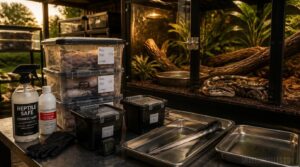
Not all feeding gear is built the same, and the right features can make a real difference in your outdoor reptile room. Before you buy, it’s worth knowing what to look for across storage, tools, containers, enclosures, and sanitation. Here’s a breakdown of the key features that actually matter.
Insulated Feeder Storage
Outdoor temps can swing fast — and that’s exactly where insulated feeder storage earns its keep. A foam or vacuum-insulated core with an average R-value of 3.5 keeps thawed prey at a safe temperature for up to six hours outside.
Pair that with a built-in temperature sensor and 24-hour data log, and you’ve got full control over every thaw cycle.
Durable Feeding Tools
The right tools don’t just last — they make every feeding session smoother. For your boa constrictor’s feeding schedule, durability isn’t optional.
- Stainless steel feeding tongs resist corrosion and heat up fast
- Spring-loaded grip keeps frozen prey secure during transfer
- Anti-slip ergonomic grips reduce fatigue and improve control
Impact resistance and corrosion protection mean your reptile enclosure tools stay reliable session after session.
Hygienic Thawing Containers
Dirty thawing kills more than just appetites.
Sealed thawing containers keep frozen rodents isolated during thaw, blocking contaminants from spreading. Drainage tray benefits shine here — liquid drains away cleanly, cutting bacterial growth fast. Smooth surface design means no microbial buildup between sessions. Add color-coded lids to track stages and avoid mix-ups.
Clean prep = better reptile nutrition every time.
Secure Feeding Enclosures
A weak enclosure isn’t just inconvenient — it’s a liability.
Secure feeding enclosures for boa constrictor enclosures give you real control. Here’s what to compare:
- Escape proof door keeps boas contained during frozen-thawed prey sessions
- Tamper proof access with lockable feeding ports blocks curious wildlife
- Integrated alarm feature alerts you if a panel opens unexpectedly
- Food grade interior protects prey and water bowl surfaces
- Rigid frames maintain shape under pressure
Easy Sanitation Features
Sanitation isn’t glamorous — but it’s everything. Stainless Steel Prep surfaces wipe clean fast with 70% isopropyl ethanol after every feeding session. Nonporous Feeding Trays go straight into the dishwasher.
Sloped Surface Design drains liquids away instantly. Color-Coded Components keep clean and soiled tools separate. Dedicated Waste Buckets with foot pedals make post-feeding cleanup hands-free and hygienic.
Safe Outdoor Feeding Practices
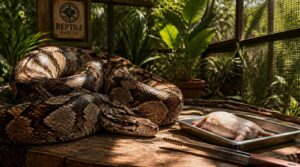
Feeding your boa outdoors adds extra variables you don’t deal with indoors — and small mistakes can cost you big. Getting the process right means knowing what to do before, during, and after every meal. Here’s what safe outdoor feeding actually looks like in practice.
Thawing Without Microwaves
Microwaves are a hard no for frozen-thawed prey — they cook the outside while leaving the inside frozen. Instead, use air thawing techniques: seal prey in a container and let it sit at 15–21°C for 1–2 hours. Flip it halfway for even thawing. Cold water thawing works faster — submerge sealed prey in 4–7°C water, changing it every 15 minutes.
Always use a temperature probe to confirm the core hits 4–7°C. Before feeding your Boa constrictor, inspect prey for sliminess or off smells and discard anything questionable.
Warming Prey Correctly
Once prey is fully thawed, warmth is your next move. Target a surface temperature of 100–105°F using a warm water bath or heat lamp — never a microwave. Check with an infrared thermometer for even heat distribution.
Let it rest briefly so your boa detects those thermal cues. Consistent warmth means a faster, cleaner strike every time.
Preventing Substrate Ingestion
Warmth gets your boa striking — but substrate ingestion can quietly undo a clean feed.
Always use a dedicated feeding tub with solid, easy-clean walls. Keep substrate depth under 2 cm and present frozen-thawed prey on tongs or a mat, never loose bedding. Clean the tub after every use.
Avoiding Post-feed Handling
A clean feed means nothing if you stress your boa right after. Post-feed rest is non-negotiable — wait at least 48 hours before any handling.
Post-feed rest is non-negotiable — never handle your boa within 48 hours of a meal
- Keep the feeding zone quiet and staff-free after every meal
- Use camera monitoring instead of direct contact during rest periods
- Schedule all handling and maintenance outside the post-feed window
Your boa constrictor’s digestive system needs calm to do its job.
Monitoring Feeding Responses
Watching your boa feed tells you more than any scale ever could.
Behavior cue tracking starts the moment you present frozen-thawed prey with feeding tongs — look for a slow head lift and quick tongue flicks signaling hunger.
Strike latency under 2 seconds means your snake is healthy and ready. Delayed strikes or jaw gape irregularities? Flag those immediately.
Frequently Asked Questions (FAQs)
Do boas need UV light?
Not every reptile needs the sun — but that doesn’t mean light is useless. Boas don’t require UVB to survive, but low-level UV exposure can support Vitamin D synthesis and overall wellbeing.
Can a Kenyan sand boa live in a 20 gallon tank?
Yes, a 20-gallon long works for adult males. Females need a 40-gallon breeder minimum. Match tank size to your snake’s sex and length for proper thermoregulation and burrowing space.
Can outdoor temperatures affect a boas appetite?
Absolutely — outdoor temperatures hit a boa’s appetite hard. When temps drop into the low 70s°F, feeding refusal is common. Heat above 95°F triggers the same shutdown. Thermoregulation controls everything, including hunger.
How do seasonal changes impact feeding schedules?
Seasons shift your boa’s appetite hard. Winter cooling stretches feeding intervals to 21–28 days. Summer warmth tightens them back to 7–14 days. Photoperiod and temperature drive both changes equally.
Should feeding routines change during shedding cycles?
Shedding cycles do shift feeding frequency. Skip meals when your boa’s eyes cloud over — appetite drops naturally. Resume normal dietary requirements once the shed completes and your boa is active again.
Do boas need calcium supplements added to feeders?
Whole prey calcium is built in. Frozen-thawed rodents include bone, organs, and muscle — no calcium dusting needed. Routine supplementation risks overdoing it. Stick to quality whole prey, and your boa’s dietary requirements are covered.
How does stress influence a boas feeding behavior?
Stress raises corticosterone levels fast. That shuts down feeding. Your boa may refuse prey, tense up, or hide. Reduce handling and keep temperatures stable to help it reset and feed again.
Conclusion
Like an old field naturalist flipping through a worn leather handbook, you now hold the full map. The best boa constrictor feeders for outdoor reptile rooms don’t just feed your snake—they protect your entire setup, your time, and your results.
Get the right tongs, warmers, and insulated storage dialed in. Control your environment before it controls you. Your boa feeds better when every variable is locked down tight. That’s not luck—that’s true mastery.