This site is supported by our readers. We may earn a commission, at no cost to you, if you purchase through links.
A rodent doesn’t stop being dangerous the moment it enters your snake’s enclosure. Live prey bites kill hatchlings, infect healthy adults, and turn routine feeding sessions into emergency vet visits. That risk is real, repeatable, and entirely preventable.
The debate over live versus frozen prey isn’t just about convenience. It touches on pathogen exposure, long-term nutrition, and whether your feeding costs are scaling with your collection or against it.
This comparison gives you the data on safety margins, nutritional retention after freezing, and the protocols that turn a reluctant feeder into a consistent one.
Table Of Contents
- Key Takeaways
- Live Vs Frozen-Thawed Prey: Quick Comparison
- Which Feeding Option is Safer?
- Does Freezing Change Prey Nutrition?
- Cost and Storage: Live Vs Frozen Prey
- Switching Your Snake to Frozen-Thawed Prey
- Frequently Asked Questions (FAQs)
- Should I feed my snake live or frozen?
- Can I switch my snake from live to frozen?
- Do ball pythons eat frozen or live mice?
- Do you feed snakes live or dead mice?
- Do ball pythons prefer live or frozen mice?
- How does prey size impact digestion and health?
- How often should adult snakes be fed prey?
- Does prey color or appearance affect snake interest?
- Can frozen prey be refrozen after thawing safely?
- How often should snakes be fed frozen prey?
- Conclusion
Key Takeaways
- Live prey poses a real and preventable injury risk—defensive rodents bite and scratch, and those wounds can become infected or cause lasting tissue damage to your snake. Safer alternatives like earthworms and small feeder fish work well for young snakes, and this baby garter snake feeding guide covers portion sizes and variety.
- Freezing doesn’t meaningfully compromise nutrition when you store prey under six months at a stable temperature, making frozen-thawed a safe nutritional substitute for live.
- Frozen prey wins on cost and logistics: bulk purchasing cuts per-unit price, freezer storage replaces enclosure maintenance, and you feed on your schedule rather than a supplier’s.
- Most snakes will accept frozen-thawed prey once you nail the thawing protocol—warm the prey to room temperature, present it with tongs, and adjust one variable at a time if your snake refuses.
Live Vs Frozen-Thawed Prey: Quick Comparison
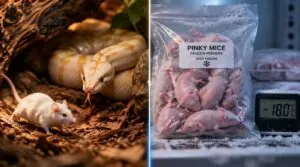
Between live and frozen-thawed prey, the key differences across safety, nutrition, and cost are more important than most keepers initially realize. This isn’t a minor stylistic choice; it’s a decision that shapes your entire husbandry routine at every single feeding.
Understanding where your snake falls on this spectrum gets easier once you explore the full breakdown of live vs. frozen-thawed feeding trade-offs, which walks through exactly how each choice plays out over time.
Choosing between live and frozen prey isn’t a stylistic preference—it shapes every feeding for the life of your snake
Live prey keeps snakes behaviorally engaged. The movement triggers natural strike responses, which sounds ideal until you consider live rodent risks: a defensive mouse or rat will bite, scratch, and stress your snake if left unattended. A secure feeding enclosure lock adds an extra layer of protection, ensuring your snake stays contained during the unpredictable moments live prey can trigger.
Frozen-thawed prey removes that unpredictability. Commercial processing includes pathogen control in prey, reducing bacterial exposure considerably. You still need to follow proper thawing steps to prevent cold-core refusals. Frozen rodent storage is simple, requiring consistent freezer temperatures and disciplined stock rotation to avoid degradation.
A reptile prey thawing bag makes the thawing process more consistent, helping you avoid the cold spots that cause most feeding refusals.
Which Feeding Option is Safer?
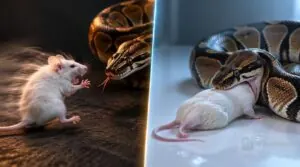
The unpredictability issue described above has a direct safety cost. When you feed live prey, you’re accepting real injury risk on both ends. Defensive rodents bite and scratch, inflicting wounds that can become infected or cause long-term tissue damage. Larger taxa face higher bite risk during initial feeding attempts, and unpredictable strikes from your snake become more likely.
Frozen-thawed prey eliminates that pattern. There’s no movement triggering defensive biting, no escape risk, and no live-animal containment problem inside your facility.
The practical and behavioral case for this approach is well-documented in resources like this guide on frozen prey feeding benefits for snakes, which covers everything from bite prevention to long-term husbandry advantages.
Safe prey handling with frozen items also cuts your exposure to zoonotic disease concerns. Live rodents carry opportunistic pathogens that transfer during handling. Pathogen control in prey through commercial freezing lowers that bacterial load before reaching your snake’s enclosure.
Does Freezing Change Prey Nutrition?
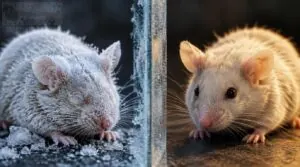
Freezing doesn’t erase nutritional value, but it does shift it in predictable ways you can manage.
Nutritional equivalence between frozen prey and live prey is closer than most keepers assume when storage conditions are controlled. Freezing affects each nutrient class differently:
- Protein retention holds within 20-25% of baseline at −18°C over 90-180 days.
- Polyunsaturated fatty acids degrade less than 10% over three to six months in stable, dark storage.
- Fat-soluble vitamins like A, D, E, and K resist breakdown far better than B-vitamins do.
- Vitamin degradation accelerates past six months, skewing micronutrient balance even when macros stay intact.
Keep storage under six months, vacuum-seal when possible, and you’ll maintain a nutritional profile that helps long-term health.
For pinky mice specifically, temperature consistency matters most—details on timing and technique are covered in this guide to frozen feeder mice home storage.
Cost and Storage: Live Vs Frozen Prey

Once you’ve confirmed that frozen prey retains its nutritional value, the cost comparison shifts decisively in frozen’s favor.
Frozen bulk savings cut your per-unit cost on every order. Buying live prey weekly means paying premium prices repeatedly, plus covering enclosure maintenance, bedding, and waste removal. Stocking a chest freezer with 200 rodents costs less monthly than running a live colony. Stocking up is easier than ever when you can browse bulk frozen feeder rodents and order a six-month supply in one sitting.
| Factor | Live Prey | Frozen Prey |
|---|---|---|
| Per-item cost | Higher | Lower in bulk |
| Storage space | Enclosures needed | Freezer only |
| Shelf life | Days to weeks | Up to 6 months |
| Labor per feeding | High | Low |
| Schedule flexibility | Limited | High |
Freezer storage also gives you feeding schedule flexibility live prey can’t provide. You thaw as needed, on your timeline, without chasing a supplier’s next shipment.
A compact chest freezer designed for feeder storage fits neatly in a closet while holding several months’ worth of thaw-ready prey.
Switching Your Snake to Frozen-Thawed Prey
Switching to frozen-thawed isn’t complicated, but execution determines acceptance. Most snakes can be converted with the right thawing technique and presentation method. The steps below cover exactly what you need to do.
Safe Thawing and Presentation

Thawing protocol matters more than most keepers realize. Refrigerate prey at 1–4°C for 24–48 hours, then finish with a warm water bath to bring the surface to ambient room temperature.
Pat it dry, then present using feeding tongs. Keep thermal prey presentation brief; don’t let it sit warm for too long. Always match prey size to your snake’s mid-body girth.
If Your Snake Refuses

When your snake refuses, identify the cause before changing prey size. Most feeding response failures trace to three variables:
- Prey temperature too low
- Weak scent or contaminated odor
- Insufficient movement during presentation
Hatchling feeding challenges are common; don’t panic. Picky eater cases often resolve with consistent feeding adjustment techniques. Adjust one variable at a time and re-offer within a week.
Frequently Asked Questions (FAQs)
Should I feed my snake live or frozen?
The theory that live prey is more stimulating holds truth, but frozen-thawed prey is the safer choice. It’ll eliminate injury risk, support parasite reduction by freezing, and simplify your storage without compromising your snake’s nutrition.
Can I switch my snake from live to frozen?
Most snakes can switch successfully from live to frozen-thawed prey, but whether yours will depends on species, individual behavior, and how precisely you can match the heat and scent cues that trigger its feeding response.
Do ball pythons eat frozen or live mice?
Ball pythons eat both, but frozen-thawed mice are the standard for captive keeping. Most accept them readily once properly acclimated, especially when prey is warmed to feeding temperature before presentation.
Do you feed snakes live or dead mice?
Both options are valid, but frozen-thawed prey is the safer, more practical choice for most keepers. Live mice can injure your snake; frozen prey eliminates that risk while fully preserving nutritional completeness across all macronutrients.
Do ball pythons prefer live or frozen mice?
Preference varies by individual, not species. Many ball pythons consistently accept frozen prey over multiple meals once trained, but some will start on live and won’t switch without real sustained effort. No universal answer exists.
How does prey size impact digestion and health?
Prey size matching directly controls how hard your snake’s gut works. Oversized meals slow digestion, increase regurgitation risk, and put cumulative strain on digestive health when feeding intervals don’t allow the full gut recovery time.
How often should adult snakes be fed prey?
How regimented is your feeding schedule? Adult constrictors usually need prey every 7-14 days, calibrated to species, body condition, and metabolic rate. Lean individuals feed closer to weekly; heavier adults can extend toward ten days.
Does prey color or appearance affect snake interest?
Color is a supporting actor, not the leading role. For most snakes, scenting frozen prey matters far more than appearance; visual contrast can spark initial investigation, but it won’t reliably drive a successful strike alone.
Can frozen prey be refrozen after thawing safely?
Refreezing thawed prey on the same day is possible only if it’s been kept at proper refrigeration, but repeated freeze-thaw cycles raise microbial risk, degrade tissue integrity, and reduce palatability. Don’t make it a habit.
How often should snakes be fed frozen prey?
Your feeding schedule is your snake’s growth engine. Hatchlings eat every 5–7 days; hatchling development demands it. Adults don’t need feeding more than every 7–14 days, which lowers regurgitation risk and keeps prey acceptance consistent.
Conclusion
Some snakes do better on live prey, at least at first. That’s real, and it doesn’t invalidate the switch. The live versus frozen prey debate ends the same way for most collections: frozen-thawed is safer, cheaper, and nutritionally sound. Bites don’t happen, pathogens don’t travel from prey to patient, and your freezer holds a month of feeding in one bag.
Make the change deliberately. The protocol works when you follow it.