This site is supported by our readers. We may earn a commission, at no cost to you, if you purchase through links.

A single temperature breach during transit can compromise an entire shipment of frozen feeder mice before they ever reach your freezer. Most keepers don’t realize how quickly nutritional value and tissue integrity degrade once the cold chain breaks, and a thawed-and-refrozen mouse carries real health risks for the animals that eat it.
Proper storage and handling protect your investment and, more importantly, your reptile’s health. Knowing how to store frozen feeder mice at home means more than finding shelf space, it means controlling every variable from delivery to thaw.
Table Of Contents
- Key Takeaways
- Inspect Your Delivery Right Away
- Choose The Right Freezer Setup
- Package and Label Feeder Mice Properly
- Use First-In, First-Out Rotation
- Know Safe Storage Lifespans
- Handle and Thaw Mice Safely
- Frequently Asked Questions (FAQs)
- Can you get hantavirus from frozen feeder mice?
- How long can I store frozen mice?
- What is the 5 day mouse rule?
- How do I thaw frozen feeder mice?
- How to store frozen feeder mice?
- What temperature is too cold for mice outside?
- Can feeder mice be stored with reptile supplements?
- How do bulk purchases affect overall freezer organization?
- What signs indicate a suppliers rodents were mishandled?
- Should feeder mice be sorted by prey size category?
- Conclusion
Key Takeaways
- A single break in the cold chain during shipping can compromise your entire feeder supply, so inspect every bag for soft spots, loose seals, and off-odors the moment your delivery arrives.
- A dedicated chest freezer set at −18°C (0°F) with a calibrated thermometer and 15% airflow headroom is the single most important investment you can make for long-term feeder quality.
- Vacuum-seal feeders in double-labeled bags, track them with a FIFO log, and pull oldest stock first—pinky mice degrade within 3–6 months even under ideal conditions, so rotation isn’t optional.
- Never refreeze a thawed mouse, never use a microwave to thaw, and always wear nitrile gloves during handling—these three rules prevent most of the health risks your reptile faces from feeder mismanagement.
Inspect Your Delivery Right Away
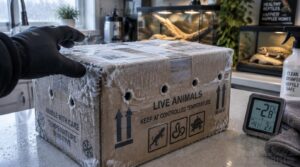
When your shipment arrives, what you do in the next few minutes directly affects the quality of every feeding that follows. Proper delivery inspection starts before you even open the box. Here’s what to check, why transit timing is critical, and what biosecure cold-chain shipping actually means for your feeders.
How to Inspect a Frozen Feeder Delivery
Before anything goes into the freezer, you’ll need to inspect the delivery carefully.
Check each item for signs of freezer burn, discoloration, or packaging damage before storing—proper frozen feeder preparation techniques can help you catch issues that compromise both safety and nutritional quality.
Check each vacuum bag for loose seals or air pockets; these signal temperature abuse during transit. Press the bags firmly; they should feel completely rigid and frozen solid throughout. Any soft spots, fluid pooling, or off-odors require immediate quarantine.
Count packages against your shipping invoice before storing. Following a structured frozen food receiving quality checklist can help make sure all inspection steps are completed consistently and documented properly.
Why Transit Timing Matters
What you find during inspection often reflects what happened in transit. Shipments arriving more than 24 hours after dispatch carry a 15-30% higher loss rate than on-time deliveries.
When feeder mice spend over six hours above 0°C, discard probability rises by up to 35%.
If your supplier can’t guarantee faster delivery, that risk is built into every order you place.
What Biosecure Cold-Chain Shipping Means
That risk drops when your supplier uses biosecure cold-chain shipping. It’s a system where your frozen feeder mice travel in validated insulated containers with phase-change materials maintaining precise temperature control throughout transit.
Every handoff gets documented, tamper-evident packaging protects the contents, and real-time loggers record temperature history. When your order arrives, that record is your evidence the cold chain held.
Choose The Right Freezer Setup
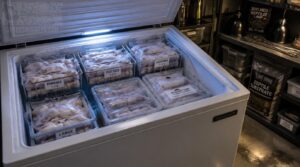
Your freezer setup is the most controllable variable in long-term feeder storage, and getting it right matters more than most keepers expect.
A few specific decisions determine whether your mice stay at peak quality for six months or closer to two years.
The following guidelines cover what to look for, what to avoid, and how to protect your investment before the next shipment arrives.
Chest Freezer Benefits
Before modern refrigeration, keepers relied on iceboxes to preserve food. A chest freezer outperforms upright models for freezer storage tips:
- Higher usable volume per vertical inch, so you fit more stock
- Reduced temperature fluctuation each time you open the lid
- Uniform cold distribution that limits damaging freeze-thaw cycles
It’s the right call for reliable temperature control without sacrificing capacity.
Keep Below 0°F
Although your standard home freezer cycles through temperature fluctuations, a dedicated deep freezer holds steady at or below 0°F consistently. That consistency is what defines proper freezer storage recommended methods, and it’s what prevents freezer burn from compromising your supply.
Set yours to −18°C and leave it there. Pinky mice degrade faster than furred feeders at any temperature above this.
Use Freezer Thermometer
Because freezer temperature can drift without warning, a dedicated freezer thermometer isn’t optional. Place the probe in your freezer’s thickest storage zone, away from door drafts.
- Set your target between -10°F and -20°F
- Log your min/max readings daily
- Calibrate using the ice-water method first
- Replace any unit showing persistent discrepancy
Consistent monitoring prevents the temperature fluctuations that accelerate freezer burn.
Backup Power Planning
A fully stocked deep freezer maintains stable freezer temperature for roughly 48 hours without power, but a power failure during a partial load can spike temps within hours. Backup power planning closes that gap.
A UPS with 15-30 minutes of runtime bridges until your generator’s running; size your inverter for compressor surges. Temperature fluctuations above 0°F degrade feeder quality fast.
Avoid Overfilling Freezer
Packed tight, your freezer can’t circulate cold air properly. That dead air creates uneven temperatures, accelerating freezer burn and compromising your inventory control. Guarding your freezer space keeps your freezer storage reliable.
- Keep 15% headroom above your current stock
- Reserve space for unexpected deliveries
- Prioritize airflow for freezer burn prevention
- Leave adequate room to act fast during a power failure
Package and Label Feeder Mice Properly
Once your feeders are in the freezer, how you package and label them determines how long they stay usable. Improper storage invites freezer burn, contamination, and disorganized inventory that costs you feeders and money. Here’s what you need to do to keep every bag in your freezer accounted for and protected.
Vacuum-sealed Storage
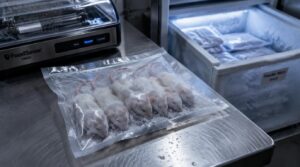
Vacuum sealing is the most effective method for airtight storage of feeder mice. Removing oxygen slows lipid rancidity and limits ice crystal formation, the primary driver of freezer burn over longer storage periods.
When you vacuum seal correctly, you’re extending your shelf life by weeks compared to standard bags. Confirm every seal is intact before placing mice in the freezer.
Double-bag for Protection

Even vacuum sealing isn’t foolproof. A compromised seal puts your entire supply at risk.
Double Bag every pack using food-grade freezer bags:
- Seal the inner bag completely before inserting it into the outer bag.
- Label both bags with purchase date and mouse size to support FirstInFirstOut rotation.
- Inspect each layer for tears or moisture before freezing to maintain Packaging Integrity.
Prevent Leaks and Odors

Place absorbent pads under each double bag to catch incidental leaks before they’ll spread across your storage surface. Use light-colored bins so moisture is visible at a glance.
Inspect your vacuumsealed packaging after every thaw for micro-tears. These breaches allow odor migration and raise the moisture loss percentage, compromising packaging integrity. If odor detection reveals off-odors, quarantine that bag immediately.
Purchase Date and Mouse Size
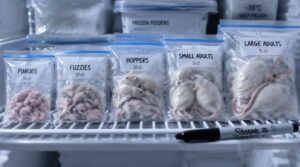
Once packaging’s secure, label each bag with two critical details:
- Purchase date in MM/DD/YYYY format to anchor your FIFO inventory management rotation.
- Mouse size category (pinky, fuzzy, or adult) to prevent cross-size mixing during feeding prep.
- Batch number for supplier traceability if shelf life questions arise.
Consistent labeling keeps your freezer storage functioning reliably across every restock cycle.
Quantity Per Bag
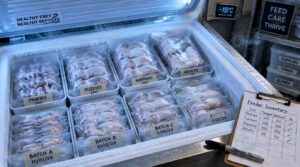
Record the quantity per bag on each label alongside size and date. Aim for 10–50 mice per bag, with pinkies skewed lower to reduce temperature fluctuation risk. Uniform counts across a batch simplify your FIFO inventory management and thaw staging.
Log totals in a freezer inventory log and sort bags into labeled bins inside your chest freezer by batch date.
Use First-In, First-Out Rotation
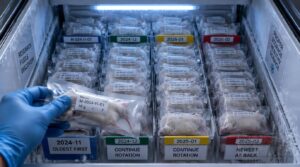
Rotation discipline determines whether your frozen feeders stay nutritionally viable or quietly degrade past usefulness. First-in, first-out management keeps older stock cycling through before newer inventory accumulates behind it.
The steps below give you a practical system for sequencing, auditing, and tracking your supply.
Oldest Mice First
Imagine two bags sitting in your freezer: one from March, one from just last week. Your feeding schedule demands you reach for March first. That’s first-in first-out storage in practice.
Always pull the oldest mice first, keeping your inventory rotation tight. A simple freezer inventory log noting each bag’s purchase date prevents older stock from quietly degrading at the back.
Monthly Inventory Checks
Once a month, pull every bag from your freezer and run a full quality assessment checklist: verify seals, inspect for freezer burn, and confirm each label matches its size and purchase date.
This inventory rotation step upholds first-in first-out storage, safeguards against temperature fluctuations, and aligns with your sound freezer storage recommended approaches. Flag any discrepancy above five percent immediately.
Track Feeding Supply
Three numbers drive your inventory rotation: mice used weekly by type, current lot counts, and days remaining until restock.
Log these for each type:
- Pinkies used this week
- Furries used this week
- Bags opened per lot
- Any feeding adjustments made
- Discards linked to lot
You’re guessing at restock timing until you’re actively tracking consumption rates across first-in first-out storage cycles.
Know Safe Storage Lifespans

Not all frozen feeders store equally well, and storage lifespan depends on feeder type, packaging quality, and freezer temperature. Pushing mice past their best window degrades nutritional value and increases the risk of freezer burn and bacterial contamination after thawing.
The following points cover safe storage timelines by feeder type and the warning signs that tell you when to discard.
How Long Can I Store Frozen Mice?
Shelf life varies more than most keepers expect. Your packaging standards and freezer consistency together determine longterm frozen storage success or failure. Temperature fluctuations accelerate freezer burn.
| Feeder Type | Ideal Temp | Storage Window |
|---|---|---|
| Pinky mice | -20°C | 6 to 12 months |
| Furry mice | -20°C | 9 to 12 months |
| Any feeder | -25°C or colder | Extended viability |
| Any feeder | Above -18°C | Rapid degradation |
Furry Mice Storage Window
Think of furry mice like fresh bread: edible past their prime, but they’re far from ideal.
Frozen feeder mice stay viable for 3 to 6 months when you follow proper freezer storage guidelines. Beyond that window, temperature fluctuations accelerate freezer burn, degrading both texture and nutritional value.
Inspect each bag before any thawing procedure. Discard anything showing off-odor or discoloration.
Pinky Mice Storage Window
Pinky mice lack the fur and feathers that help insulate older frozen rodents against moisture loss, making the Pinky Mice Storage Window shorter than you might expect.
Vacuum-sealed at 0°F, they hold nutritional quality for up to 6 months, with 12 months as the absolute ceiling.
Your standard home freezer’s temperature fluctuations can compress that window to roughly 3 months.
Watch Freezer Burn
Freezer burn isn’t random. It develops when moisture loss from sublimation leaves dry, white patches on frozen mice. Once your home freezer develops ice crystals from temperature swings, quality degrades fast.
Check each mouse before feeding for:
- Dry, grained texture when pressed
- White or gray discoloration on skin
- Stale or off odor after thawing
- Visible ice crystals on packaging interior
When to Discard Frozen Feeder Mice
Those cues from freezer burn signal more than quality problems; they tell you to discard. Once you spot ice crystals, off odor, or texture changes, pull the bag.
| Condition | Action |
|---|---|
| Freezer burn, ice crystals | Discard now |
| Thawed over 2 hours | Discard; don’t refreeze |
| Moisture loss, odor present | Discard immediately |
Repeated thawing and refreezing compounds risk. Never second-guess a compromised bag.
Handle and Thaw Mice Safely
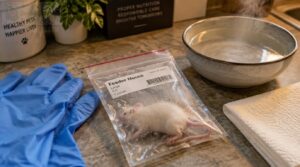
How you thaw frozen feeder mice directly affects your snake’s health and willingness to eat. Proper thawing method and timing matter as much as storage conditions. The steps below cover everything from refrigerator thawing to glove use.
How Do I Thaw Frozen Feeder Mice?
How you approach thawing frozen rodents shapes the outcome at every feeding. Two reliable thawing methods exist: refrigerator thawing and Cold Water Soaking.
The Warm Water Bath Method is strictly reserved for warming already-thawed prey to the correct feeding temperature, not the initial thaw itself.
You’ll always want clean food preparation surfaces nearby, and you should never rush this step.
Thaw Inside Refrigerator
Of the available thawing methods, refrigerator thawing is the most reliable.
Place your bagged feeders in a designated feeder section on the bottom shelf, and you’ll Thaw Inside Refrigerator safely overnight. This food preparation separation keeps your household protected from cross-contamination.
Allow 12 to 24 hours depending on size. When ready, use clean tongs, not bare hands, to transfer them.
Warm Water Bath Method
When refrigerator thawing isn’t practical for same-day feeding, the warm water bath method is a reliable and safe alternative.
Place the sealed feeder package in warm, not hot, water. Lukewarm temperature thaws feeders evenly without cooking the outer layer. Change the water every 15 minutes and keep the package fully submerged throughout. Most sizes thaw within 30 to 45 minutes.
Why to Avoid Microwaves
Microwaves create three critical problems for pathogen-free reptile food:
- Uneven heating leaves cold spots where pathogens survive undetected.
- Lipid oxidation degrades fat quality, altering scent profiles that stress animals.
- Ruptured vacuum seals from rapid steam expansion increase contamination risk.
These risks directly undermine your freezer storage recommended procedures. Always use thawing procedures that maintain a consistent, controlled internal temperature throughout.
Do Not Refreeze Mice
Once a mouse has fully thawed, refreezing it damages tissue quality a lot.
Ice crystal recrystallization accelerates breakdown and shortens shelf life, often producing freezer burn on any subsequent storage. Do not refreeze mice under any circumstance, even if they still feel cold. Discard all unused feeders after each feeding session. This rule is central to sound freezer storage guidelines.
Wear Disposable Gloves
Imagine reaching into a thawed feeder bag bare-handed, then touching your phone without a thought. That single lapse transfers bacteria to everything you’ll subsequently touch.
One bare-handed reach into a thawed feeder bag can transfer bacteria to everything you touch afterward
Don nitrile gloves before any handling begins. Strictly follow a Clean Hands Protocol: wash your hands before donning and again after doffing. Disposable gloves keep both you and your airtight feeder storage free from cross-contamination.
Frequently Asked Questions (FAQs)
Can you get hantavirus from frozen feeder mice?
The risk isn’t zero, but it’s slim. Biosecure cold-chain sourcing and proper handling procedures dramatically reduce exposure. Reputable suppliers offer pathogen-free reptile food, making contamination prevention straightforward when you follow safe thawing and storage practices.
How long can I store frozen mice?
Shelf life varies by feeder size. Pinkies stay viable for 2-3 months, with the best results within the first 1- Furry mice hold frozen solid for up to 3-6 months, but use them within three.
What is the 5 day mouse rule?
A clock that only ticks toward certainty: five consecutive days of complete inactivity, meaning no fresh droppings, triggered traps, gnaw marks, or sounds, confirms your active pest population is resolved before you move to prevention.
How do I thaw frozen feeder mice?
Thawing is the bridge between frozen storage and your Feeding Schedule.
Use Cold Water Soaking: submerge the sealed bag. Keep dedicated tools on clean food preparation surfaces. The Rub Method confirms the center’s fully thawed.
How to store frozen feeder mice?
Ironically, proper storage is simpler than most expect.
Keep feeders frozen solid at 0°F, use airtight storage for feeders, apply freezer storage recommended methods like first-in first-out storage, and freezer burn won’t be an issue.
What temperature is too cold for mice outside?
Below 20°F (-7°C), mice without an established nest will likely die outdoors. At 0°F (-8°C), outdoor survival time becomes extremely limited, and they simply can’t sustain body temperature without continuous shelter and adequate food.
Can feeder mice be stored with reptile supplements?
Nothing says ‘species-appropriate nutrition’ quite like Salmonella-dusted calcium powder. Keep frozen feeder mice and supplements in separate storage areas. Pathogens survive freezing and transfer easily, compromising nutritional consistency and contaminating what your reptile depends on.
How do bulk purchases affect overall freezer organization?
Bulk purchases compress freezer space fast, reducing airflow clearance and forcing tighter stacking. If you don’t organize deliberately, your oldest stock gets buried. Segment batches onto dedicated shelves to protect rotation access and prevent cross-contamination.
What signs indicate a suppliers rodents were mishandled?
Even a single red flag can condemn the entire batch. Slimy texture, off-odor detection, mold growth, and bacterial growth signal serious compromise. If your snake refuses uneaten thawed prey, that’s another warning you can’t ignore.
Should feeder mice be sorted by prey size category?
Some keepers don’t bother sorting, but mixing size classes creates prey size mismatches at feeding time. Separate pinkies and fuzzies into individual, clearly labeled bags to maintain accuracy and protect nutritional consistency across all feedings.
Conclusion
Think of your freezer as the last line of defense between your reptile and a compromised meal. Every decision you make about how to store frozen feeder mice at home, from the moment a shipment arrives to the final thaw, either protects that animal or exposes it to preventable risk.
Inspect, package, label, rotate, and thaw correctly. Your reptile can’t audit your storage habits, but the health of your animal will speak clearly over time.