This site is supported by our readers. We may earn a commission, at no cost to you, if you purchase through links.

The wrong feeder mouse doesn’t just waste money—it can stress your boa, trigger a feeding strike, or worse, cause regurgitation that sets back months of progress. Experienced keepers know prey selection is precision work, not guesswork.
A 200-gram juvenile needs a fundamentally different mouse than a 400-gram sub-adult, and the gap between those sizes matters more than most new keepers realize.
Frozen feeders that are consistently sized, properly packaged, and nutritionally sound separates a thriving collection from a frustrating one.
These eight options cover the full range of what frozen feeder mice for experienced boa constrictor keepers actually demand.
Table Of Contents
Key Takeaways
- Matching prey width to your boa’s widest body girth — keeping it within 1 to 1.5x — prevents swallowing problems and regurgitation that can set back months of progress.
- Prey weight should hit 5–15% of your boa’s body mass, with hatchlings staying near the lower end and juveniles pushing toward the higher range as they grow.
- Flash-frozen, gamma-irradiated feeders from consistent suppliers eliminate the pathogen risk of live prey while delivering reliable nutrition — around 18% protein and 7–8% fat per 100g.
- Always thaw frozen mice slowly in the fridge, finish in 30–40°C water, and confirm the prey hits 98–100°F before offering it with tongs — skipping any of these steps risks bacterial growth or a feeding strike.
Top 8 Frozen Feeder Mice
Not all frozen feeders are created equal, and the brand you choose can make a real difference in your boa’s health. These eight options cover every life stage, from tiny hatchlings to full-grown adults.
For a deeper look at matching prey size to your boa’s age and weight, this complete boa constrictor feeding guide breaks down exactly what to offer at each stage.
Here’s what each one brings to the table.
1. RodentPro Frozen White Medium Mice
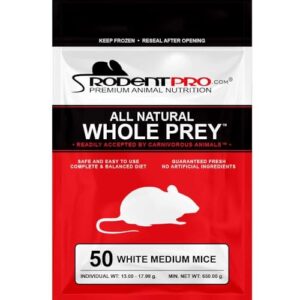
RodentPro’s Frozen White Medium Mice hit the sweet spot for juvenile boas. Each mouse weighs 13–18 grams, which aligns perfectly with the 5–15% body weight rule for snakes in the 100–350 gram range.
You get 50 mice per bag, individually weighed and gamma-irradiated for pathogen safety. The industrial zip-lock packaging fights freezer burn well.
Crude protein comes in at 18.25% with 7.72% fat — solid numbers for a growing boa. At $75.50 for 50 mice, the per-feeder cost stays manageable.
| Best For | Reptile keepers and small-scale breeders feeding juvenile boas or similarly sized predators who want a safe, bulk-friendly frozen feeder option. |
|---|---|
| Quantity | 50 mice |
| Form | Frozen whole prey |
| Euthanasia Method | Irradiation process |
| Artificial Ingredients | None |
| Mouse Size | Medium |
| Price (USD) | $75.50 |
| Additional Features |
|
- Gamma-irradiated, so you’re not gambling with pathogens the way you would with live feeders
- 50 individually weighed mice per bag keeps feeding consistent and cuts down on restocking runs
- Solid nutrition profile (18.25% protein, 7.72% fat) that supports steady growth in young snakes
- All 50 mice come in one bag, which can be a headache if your freezer space is tight
- Only one size available, so keepers with very small hatchlings or larger adult snakes will need to shop elsewhere
- Some hobbyists skip irradiated feeders on principle, and frozen prey won’t give your animal the hunting stimulation live feeders do
2. RodentPro Frozen White Pinky Mice
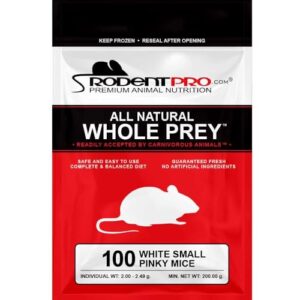
For newborn boas, you need to go smaller. That’s where pinky mice come in.
Each one 0.09 and 0.11 ounces — just right for hatchlings under 150 grams. RodentPro sells them 100 per bag, individually weighed, irradiated, and sealed in an industrial zip-lock to lock out freezer burn.
nutritional profile matches the medium mice almost exactly: 18.25% crude protein and 7.72% fat. $68.00 per 100, the per-feeder cost drops noticeably.
| Best For | Hatchling snakes, small birds of prey, and other tiny exotic carnivores that need a feeder sized to match their early growth stage. |
|---|---|
| Quantity | 100 mice |
| Form | Frozen whole prey |
| Euthanasia Method | Irradiation process |
| Artificial Ingredients | None |
| Mouse Size | Small pinky |
| Price (USD) | $68.00 |
| Additional Features |
|
- 100 mice per bag at $68 keeps the per-feeder cost low, especially for breeders feeding multiple animals.
- Irradiated and sealed in an industrial zip-lock, so they stay fresh and pathogen-reduced right up until feeding time.
- Consistent nutrition — 18.25% protein and 7.72% fat — means you know exactly what your animal is getting every single feed.
- Small pinky size works for hatchlings, but your animal will outgrow these fast and you’ll need to size up.
- Irradiation may cause minor nutrient loss compared to non-irradiated prey, which some keepers prefer to avoid.
- Requires proper thawing before feeding — skip that step and you’re risking bacterial growth and a sick animal.
3. RodentPro Frozen White Fuzzy Mice
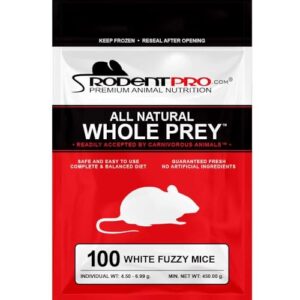
Once your boa grows past the pinky stage, fuzzy mice fill the next gap perfectly.
RodentPro’s White Fuzzy Mice weigh between 4.5 and 6.99 grams each — individually weighed so you’re not guessing at sizing. They come 100 per bag, irradiated, and frozen at or below -18 °C.
The nutritional profile holds strong: 18.25% crude protein and 7.72% fat per 100 grams. That consistency matters when you’re tracking weekly body condition and keeping feeding logs tight.
| Best For | Snake keepers who’ve moved past pinkies and need a reliable, consistently sized prey item for small-to-mid juvenile boas and other carnivorous reptiles. |
|---|---|
| Quantity | 100 mice |
| Form | Frozen whole prey |
| Euthanasia Method | Irradiation process |
| Artificial Ingredients | None |
| Mouse Size | Extra-small fuzzy |
| Price (USD) | Not listed |
| Additional Features |
|
- Each mouse is individually weighed, so you’re not playing guessing games with portion size
- Irradiated and frozen in bulk — easy to stock up and keep on hand without worrying about spoilage
- Solid nutritional profile with 18.25% crude protein keeps your feeding routine predictable
- Only comes in the fuzzy size, so you’ll need to source elsewhere once your snake outgrows them
- Requires proper thawing before every feeding — no shortcuts here
- Some picky eaters may not take to irradiated prey as readily as fresh-killed or live
4. Imagitarium Frozen Small Fuzzy Mouse
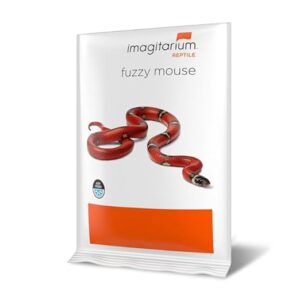
Not every keeper needs a 100-count bag. Imagitarium’s Frozen Small Fuzzy Mouse fits when you’re feeding one or two hatchlings and want smaller quantities.
Each mouse weighs 3 to 6 grams — right in the range for boas under 150 grams. One real catch: buyers frequently report pinkies instead of true fuzzies.
If sizing consistency matters to your feeding log, inspect each thawed mouse before offering it. Available at major pet retailers, but stock varies by location.
| Best For | Keepers feeding one or two hatchling reptiles who want a smaller bulk supply without committing to a massive bag. |
|---|---|
| Quantity | 50 mice |
| Form | Frozen whole prey |
| Euthanasia Method | Farm-raised frozen |
| Artificial Ingredients | None |
| Mouse Size | Small fuzzy/medium |
| Price (USD) | $31.44 |
| Additional Features |
|
- 50-count bag is a solid middle ground — enough supply to cut down on reorders without overbuying
- Farm-raised and parasite-free, so you’re not rolling the dice on wild-caught prey
- Affordable at $31.44, which breaks down to under a dollar per mouse
- Buyers regularly get pinkies instead of true fuzzies, so the advertised size isn’t always what shows up
- No individual wrapping, brand labeling, or expiration date — you’re flying a bit blind on freshness
- Not a great fit if your animal has outgrown small feeders or if bulk frozen handling isn’t your thing
5. MiceDirect Frozen Adult Feeder Mice
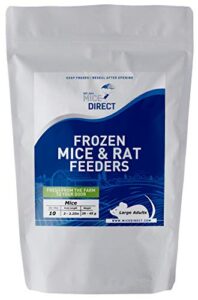
Frozen Adult Feeder Mice hit the mark for juvenile red-tail boas and larger snakes outgrowing hoppers. Each large adult mouse weighs 26 to 45 grams — enough mass to meet 5–15% body weight targets for boas in the 250 to 500 gram range.
Switching to frozen feeders also reduces bite risk and stress for your snake — safe frozen snake feeding tips can help you nail the thawing and presentation process.
They’re flash-frozen within a week of processing and shipped on dry ice, so nutritional quality stays intact.
One caveat: occasional batches show contamination or odor, so inspect each mouse before offering it.
| Best For | Keepers of adult ball pythons, juvenile red-tail boas, and larger lizards who want a convenient, ready-to-feed frozen prey option without the hassle of raising live rodents. |
|---|---|
| Quantity | 10 mice |
| Form | Frozen whole prey |
| Euthanasia Method | CO₂ euthanasia |
| Artificial Ingredients | None |
| Mouse Size | Large adult |
| Price (USD) | Not listed |
| Additional Features |
|
- Shipped fresh — typically frozen less than a week before arrival, so you’re not getting old, freezer-burned stock
- CO₂ euthanized and raised on quality feed, so you know what your animal is actually eating
- No live colony to maintain, which means less mess, less biosecurity risk, and less stress all around
- Some batches have shown up with odor, sores, or fecal contamination — always inspect before feeding
- Picky eaters (especially wild-caught or older snakes) may flat-out refuse frozen prey
- Dry ice shipping means you need to handle it carefully and freeze promptly on arrival
6. MiceDirect Frozen Hopper Feeder Mice
Twenty-five hopper mice per pack — that’s what MiceDirect delivers for hatchlings stepping up from pinkies.
Each mouse measures 1.5–2 inches and hits the right girth match for baby red-tail boas in the 100–200 gram range.
They’re flash-frozen within a week of processing and fed a Mazuri zoological-grade diet before harvest. Dry-ice shipping keeps them frozen door-to-door.
One thing to watch: batch sizes can vary, so verify each mouse fits your boa’s widest girth before feeding.
| Best For | Reptile owners raising baby ball pythons, hatchling red-tail boas, or sub-adult milk snakes who want a reliable, store-free source of appropriately sized frozen prey. |
|---|---|
| Quantity | 25 mice |
| Form | Frozen whole prey |
| Euthanasia Method | CO₂ euthanasia |
| Artificial Ingredients | None |
| Mouse Size | Hopper (1.5–2 in) |
| Price (USD) | $99.97 |
| Additional Features |
|
- Fed a Mazuri zoological-grade diet, so you’re getting a nutritionally solid meal for your snake, not just filler
- Dry-ice shipping keeps every mouse frozen and fresh from their facility straight to your door
- Humanely CO₂-euthanized with no additives — clean, simple, disease-free prey you can stock up and freeze long-term
- At $99.97 for 25 mice, the per-mouse cost runs higher than bulk options from local stores or suppliers
- Size can be inconsistent — some customers got mice on the smaller end, so don’t assume every hopper is the same
- The 1.5–2 inch range is only right for smaller reptiles; if your snake is growing fast, you’ll outgrow this pack quickly
7. Strike Frozen Feeder Mice for Reptiles
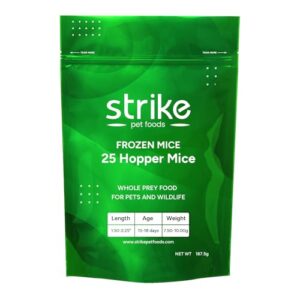
Strike Frozen Feeder Mice come in small, medium, large, and fuzzy sizes — so you can match prey to your boa’s girth without guessing.
Each mouse is hand-raised, flash-frozen, and sealed in resealable, aluminum-laminated bags that lock out freezer burn.
At 7.5–10 g per mouse, a pack of 25 runs $89.99. That’s a solid buy for juvenile boas in the 150–500 g range.
Thaw using warm water, confirm temperature hits 98–100 °F, and present with tongs.
Clean, consistent, and ready to go.
| Best For | Reptile owners feeding juvenile ball pythons, adult king snakes, rosy boas, or large carnivorous lizards who want a safe, convenient alternative to live prey. |
|---|---|
| Quantity | 25 mice |
| Form | Frozen whole prey |
| Euthanasia Method | Humane CO₂ |
| Artificial Ingredients | None |
| Mouse Size | Pre-weaned fuzzy |
| Price (USD) | $89.99 |
| Additional Features |
|
- Whole-body nutrition supports bones, muscles, digestion, and skin — no supplements needed
- Flash-frozen and sealed in resealable, foil-lined bags that keep freezer burn out
- 25 mice per pack at $89.99 is solid value, and no live-mouse handling risks
- Needs freezer space and thaw time before every feeding — not grab-and-go
- Some picky eaters won’t take frozen prey; no scented or flavored option available
- Meltwater during shipping can be an issue — you’ll want to unpack and refreeze promptly
8. MiceDirect Frozen Mouse Feeder
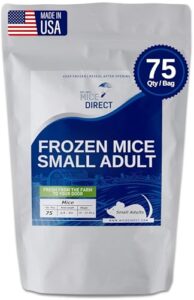
Bulk buying just got smarter. This pack delivers 75 small adult mice — each 2.5–3 inches — totaling at least 1,425 g per order. That’s enough to feed a juvenile boa for months without reordering weekly.
Raised on Mazuri zoo-grade feed in Cleveland, GA, the mice are humanely euthanized with CO₂, ensuring ethical practices.
They arrive frozen on dry ice in a hermetically sealed bag, with no artificial additives. Free shipping applies to orders over $119.
Consistent quality, serious quantity defines this offering, combining convenience with reliability.
| Best For | Reptile owners feeding juvenile or adult snakes like ball pythons, corn snakes, or red-tail boas who want a reliable bulk supply without constant reordering. |
|---|---|
| Quantity | 75 mice |
| Form | Frozen whole prey |
| Euthanasia Method | CO₂ euthanasia |
| Artificial Ingredients | None |
| Mouse Size | Small adult (2.5–3 in) |
| Price (USD) | Not listed |
| Additional Features |
|
- 75 mice per pack means fewer orders and more freezer-ready meals stocked up for months
- Raised on Mazuri zoo-grade feed and humanely euthanized, so you know exactly what your snake is getting
- Ships frozen on dry ice in a sealed bag — arrives cold and ready to store
- Mice aren’t individually wrapped, which can feel a bit messier to handle
- You’ll need solid freezer space to store all 75 at once
- Only comes in small adult size, so it won’t work for larger snakes that need bigger prey
Choosing Boa-Appropriate Mouse Sizes

Getting the prey size right is one of the most important decisions you’ll make as a boa keeper.
A mouse that’s too big can cause regurgitation; one that’s too small won’t meet your snake’s nutritional needs.
Here’s what you need to know to match the right mouse size to your boa at every stage.
Match Widest Body Girth
Start with the snake’s widest girth. Use a flexible measuring tape or caliper as your Girth Measurement Tools, then select prey no wider than 1–1.5x the widest part of their body.
Mismatched Feeder Sizing creates real Obstruction Risks during swallowing. Check Visual Girth Guides if you’re unsure.
During growth spurts, Growth-Based Adjustments matter — remeasure often to protect Swallowing Efficiency in Boa Constrictors.
Use 5–15% Body Weight
Once you’ve matched girth, weight becomes your next checkpoint.
For prey size calculation, aim for 5–15% of your boa’s body mass — hatchlings stay closer to 5–7%, while juveniles push toward 8–12%.
Precision Feeding Tools like a digital scale make this easy.
Activity level impact matters too: active snakes process meals faster.
Monitor your boa’s weight monthly to catch underfeeding detection early.
Hatchling Prey Size Ranges
Hatchling boas (50–150 g) need pinky mice first — roughly 0.5–0.9 g each.
Within 4–8 weeks, most hatchlings graduate to small fuzzy mice, weighing 1.5–3 g.
Neonate feeding challenges are real; prey too large triggers refusal. Growth stage adjustments keep things on track.
Watch for shedding impact analysis clues — a thickening girth signals it’s time to size up.
A modest visible lump after swallowing indicates correctly sized prey, as described in the visible lump guideline.
Juvenile Mouse Size Upgrades
Once your boa clears 150 g, small fuzzy mice won’t cut it anymore. Growth Stage Indicators like a visibly thicker girth and faster strikes signal that Size Shift Timing has arrived.
Shift your juvenile snake diet with these upgrades:
- 150–250 g: small fuzzy mice
- 250–350 g: hopper mice
- 350–500 g: large hoppers
- Watch for Behavioral Feeding Cues — aggressive, immediate strikes confirm Mouse Age Benefits and Nutritional Shifts Needed.
When Boas Outgrow Mice
Once your boa hits 18–36 inches, adult mice stop meeting its nutritional requirements for boas. That’s your signal to shift to rats.
| Snake Length | Recommended Prey | Prey Weight Range |
|---|---|---|
| 18–24 in | Weaned rats | 30–60 g |
| 24–36 in | Small rats | 60–120 g |
| 36+ in | Medium rats | 120–200 g |
Match prey size to girth measurement guide principles — no pronounced bulge — and frozen feeders make Regurgitation Prevention Tips and Transition Stress Reduction simple to follow.
Comparing Quality and Value
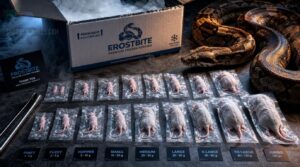
Not all frozen feeders are created equal, and the differences show up fast when your boa’s health is on the line.
Sourcing, packaging, bulk pricing, freshness, and age-specific fit all shape whether you’re getting real value or just a cheap bag of freezer burn.
Here’s what to look at before you buy.
Sourcing and Feeder Consistency
Not all frozen feeder rodents are created equal.
RodentPro.com sets the bar with farm-raised in the USA prey breeding programs built on strict Supplier Standards and full Batch Traceability — every shipment carries lot numbers you can verify.
Health Certifications and Regional Warehousing cut transit time, locking in Nutritional Uniformity.
For premium zoo quality veterinarian raised feeders, consistent sourcing like this isn’t optional — it’s the foundation.
Packaging and Freezer Protection
Good packaging isn’t just cosmetic — it’s what stands between fresh prey and freezer‑burned waste.
- Vacuum Sealing and Barrier Films block oxygen and moisture, preventing freezer burn through multiple freeze‑thaw cycles.
- Insulation Materials and dry ice shipping maintain cryogenic storage conditions during temperature‑controlled delivery.
- Sustainable Packaging options now support cold chain management for frozen prey without sacrificing seal integrity.
Flash frozen for freshness; frozen arrival guaranteed.
Bulk Pricing Considerations
Most suppliers offer volume discounts at 10, 25, or 50 units — cutting per-unit costs by up to 15%. Breeder direct pricing beats regular price almost every time at scale.
Watch for free shipping thresholds; shipping savings add real value. Factor in storage costs and freezer capacity before committing.
Flexible payment terms and contract terms can stretch your budget further, ensuring year-round availability without cash flow strain.
Freshness and Storage Lifespan
White mice hold peak quality for up to six months at -18 °C; pinkies are closer to four.
Label every bag with the freeze date and pull oldest stock first — that’s FIFO rotation practices working for you.
Opaque, vacuum-sealed packaging limits light exposure impact and locks in nutrients.
Consistent freezer maintenance tips keep temperatures stable, protecting frozen rodent storage quality long‑term.
Best Uses by Boa Age
Every growth stage calls for a different strategy. Hatchlings need pinky-sized frozen mice every 5–7 days — Growth Stage Nutrition starts small. Hatchling hydration matters too, so offer water 24–48 hours before feeding.
Juvenile Growth Spurts demand gradual prey size increases every few feedings.
Senior Boa Diets slow down naturally, shifting to an adult snake feeding schedule every 3–4 weeks with Age-Based Portions scaled to body girth.
Thawing Frozen Mice Safely
Thawing frozen mice the right way makes a real difference in whether your boa eats well and stays healthy. Few simple steps are all it takes to go from freezer to feeding without any guesswork.
Here’s exactly how to do it safely, from start to finish.
Refrigerator Thawing Protocol
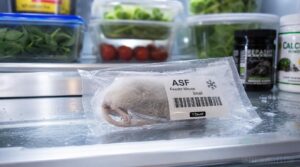
Start thawing the night before — place your frozen feeder in its original packaging inside the refrigerator at 1–4°C for 12–24 hours. This slow method keeps thawing temperatures safe and prevents bacterial growth.
Check packaging integrity before anything touches the shelf. Keep feeders on the bottom shelf for Cross-Contamination Prevention. After thawing, do a quick Post-Thaw Inspection: no off smells, no discoloration.
Warm Water Finishing

After refrigerator thawing, submerge the sealed feeder in warm water at 30–40°C for 10–15 minutes. This ideal Water Temps range manages Integrity Maintenance well — gentle Agitation Methods promote even Contaminant Flushing without damaging fur or tissue.
Among prey thawing methods, this one mimics natural body heat reliably. Finish with a Post-Thaw Inspection: check for a uniform texture and no slimy surfaces before feeding.
Target Prey Temperature

Once the warm water bath is done, confirm your target before offering the prey. Warm them to 98–100°F — that’s the Thermal Window that drives Strike Reliability and aids temperature-dependent digestion. A calibrated thermometer tells you exactly where you stand.
Consistent Temperature Consistency across feeds also matters for Health Monitoring, since Digestive Efficiency and safe digestion depend on stable, predictable thermal regulation every single time.
Avoid Microwave Thawing

Skip the microwave — it’s a trap. Microwave Risks include Heat Spot Hazards that cook outer layers while the core stays frozen. That uneven heating triggers Bacterial Growth in the danger zones and causes Texture Damage and Nutrient Loss that undermine temperature-dependent digestion.
Feeder thawing procedures exist for a reason. Stick to the warm water method to safely warm them to 98–100°F every time.
Feeding Tong Presentation

Once your prey hits 98–100°F, grab your feeding tongs—rigid, curved ones win on Tong Material Comparison and Tong Ergonomics Design.
Present the mouse at snout height, parallel to the jaw, and glide it gently side to side. That mimics natural movement.
Nocturnal Feeding Sync matters too—feed at night.
These Strike Accuracy Tips support safe digestion, injury prevention, and parasite reduction.
Advanced Boa Feeding Management
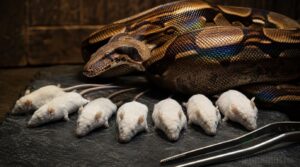
Feeding a boa well goes beyond just picking the right prey size.
How often you feed, how you track condition, and what nutrients your snake actually gets from frozen food all matter just as much.
Here’s what you need to know to manage every part of the process.
Feeding Frequency by Age
Age drives everything about feeding frequency.
A hatchling needs food every 5–7 days to support rapid growth rate, but that rhythm shifts quickly during age transitions:
- Juveniles move to every 7–10 days
- Sub‑adults stretch to every 10–14 days
- Adults settle at every 3–4 weeks
Digestion timing and condition adjustments determine each shift.
Watch growth intervals closely, and remember handling restrictions apply after every meal.
Seasonal Schedule Adjustments
Seasons reshape your boa’s appetite more than most keepers expect. Metabolic Rate Shifts kick in as temperatures drop — temperature-dependent digestion slows, so seasonal feeding adjustments mean stretching intervals by a week or two.
Snake enclosure temperature directly drives these Feeding Interval Tweaks.
Factor in Supply Chain Timing, Humidity Storage Impact, and Shipping Season Adaptations when planning stock.
Follow feeding frequency guidelines to stay ahead of metabolic considerations for large snakes.
Weight and Girth Logs
Tracking your boa’s progress isn’t guesswork — it’s Data Logging Standards in action.
Log your boa’s weight, widest girth, and prey size after every meal.
Good Quality Control Tracking reveals Prey Size Progression over time and flags issues early.
Use Defect Documentation Practices to note freezer burn or odor per batch.
Your log should capture:
- Monitor your boa’s weight weekly in grams
- Record widest girth at the same midsection point each time
- Note supplier batch for Supplier Batch Analysis
- Track feeding frequency and prey size side by side
Overfeeding Warning Signs
Your boa can’t tell you it’s full — so you have to read the signs.
| Warning Sign | What You’ll See | Action |
|---|---|---|
| Abdominal Bulging | Belly stays rounded between meals | Reduce prey size |
| Lethargy Signs | Less movement, low interest | Extend feeding interval |
| Regurgitation | Meal brought back up | Skip next feeding |
Digestive Distress, Begging Behavior, and Weight Gain Patterns all show up in your feeding log before they become serious.
Monitor your boa’s weight consistently — overweight boas develop real health problems fast.
Frozen-thawed Nutrition Concerns
Frozen-thawed prey is nutritionally sound — but not perfect. Freezing slows fat degradation and preserves protein well, yet vitamin stability takes a hit.
Water-soluble vitamins, especially B vitamins, leach out during thawing impact and drip loss. That’s why dietary supplementation matters. Add a few drops of liquid multivitamin into the prey before feeding.
B vitamins leach out when frozen prey thaws, so add liquid multivitamins before every feeding
Consistent thawing protocols improve nutrient retention and give you real nutritional control.
Frequently Asked Questions (FAQs)
How to feed frozen mice to boa?
Thaw frozen mice slowly, warm them to 98–100°F, then present with feeding tongs in a separate feeding enclosure during nocturnal feeding hours.
Never use live prey — parasite reduction alone makes frozen worth it.
Should boas fast before and after shedding?
pause feeding when your boa’s eyes cloud over. Resume 2–3 days after the shed completes.
This protects digestive health and reduces strike misfires caused by impaired vision during the shedding cycle.
How do you transition a live-fed boa to frozen?
Most boas switch to frozen mice easier than you’d expect. Use feeding tongs, warm prey to 98–100°F, and offer it in a separate tub. Consistency beats pressure every time.
Can stress affect a boas willingness to eat?
Absolutely.
Stress hormones like corticosterone suppress appetite and slow digestion, making your boa refuse even perfectly thawed frozen mice.
Handling impact, loud noise, and environmental stressors all trigger appetite suppression fast.
Conclusion
Precise prey picks protect your boa’s health, growth, and long-term trust in you as a keeper. Every size upgrade, every properly thawed feeder, every weight log entry adds up to a collection that genuinely thrives. The right frozen feeder mice for experienced boa constrictor keepers aren’t just a supply decision—they’re a husbandry standard.
Lock in your sizing, source consistently, and feed with intention. Your boa’s condition will reflect exactly that level of care.