This site is supported by our readers. We may earn a commission, at no cost to you, if you purchase through links.

Most juvenile boa deaths in captivity trace back to feeding errors, not disease. Necropsy reports and experienced keepers confirm it, year after year. Prey that’s too large, thawed incorrectly, or offered at the wrong temperature creates a cascade: regurgitation, bacterial infection, and chronic digestive stress that stunts growth.
Selecting the right boa constrictor feeders for juvenile snakes is more precise than most beginners expect. A neonatal boa isn’t a forgiving animal. Nail the size, temperature, and timing from the start, and you’ll raise a healthy, responsive snake. Every critical variable is covered ahead.
Table Of Contents
- Key Takeaways
- Choose Safe Juvenile Boa Feeders
- Size Prey for Healthy Growth
- Set a Healthy Feeding Schedule
- Prepare and Present Feeders Safely
- Prevent and Address Feeding Problems
- Frequently Asked Questions (FAQs)
- What to feed juvenile snakes?
- Will boa constrictors eat other snakes?
- How big should a 1 year old boa be?
- What do boa constrictors eat in captivity?
- What should you feed a juvenile snake?
- Can juvenile boas eat during their shedding cycle?
- How do I transition my juvenile boa to rats?
- Should I feed my juvenile boa in a separate enclosure?
- Do juvenile boas need vitamin supplements with their feeders?
- How long should I wait after handling to feed?
- Conclusion
Key Takeaways
- Most juvenile boa deaths in captivity come from feeding errors — prey that’s too large, poorly thawed, or the wrong temperature — not disease.
- Match every feeder to your boa’s widest midbody point and keep prey weight between 5–10% of your snake’s body weight to avoid overfeeding and regurgitation.
- Feed neonates every 7–10 days and juveniles every 10–14 days, always tracking meals and monthly weight so you can catch problems before they escalate.
- Thaw feeders in the fridge, warm to 31–34°C, always use long tongs, and discard any uneaten prey within 2 hours — no exceptions.
Choose Safe Juvenile Boa Feeders
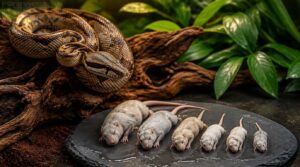
Choosing the right feeder is the first step toward steady, healthy juvenile boa growth. Safety, nutrition, and proper storage all matter before prey reaches the enclosure. Use the following guidelines to select feeders with confidence.
Understanding what boa constrictors eat at every life stage helps you make smarter feeder choices from the start.
Frozen-Thawed Rodents
Frozen-thawed rodents give juvenile boa constrictors a controlled, safer meal. They remove bite injury risk and make prey size progression easier to manage alongside your feeding schedule. Whole prey nutrition remains intact when feeders are stored and prepared correctly. Follow safe thawing practices by using a sealed bag in warm water and feeding the rodent immediately after thawing.
- Keep feeders at -18°C
- Thaw sealed to prevent contamination
- Fully thaw before warming
- Warm to 38–43°C
- Discard leftovers immediately
Mice Versus Rats
After safe thawing, choose prey by body width, not length. For juvenile boas, mice versus rats is mainly a growth question.
| Feeder | Build | Best use |
|---|---|---|
| Mouse | Slender, furred tail | Small juveniles |
| Rat | Sturdy, bare tail | Later progression |
Use clean rats as prey size progression advances. Quality checks preserve whole prey nutrition during frozen rodent storage.
Whole-Prey Nutrition
As you move from mice to rats, keep the prey item whole and intact. Muscle, organs, bone, skin, and fur provide protein, fat, calcium, phosphorus, iron, and vitamins in the balance a growing boa needs.
Match prey width to your boa, then let its natural nutrient package do the work. Proper frozen rodent storage preserves that value, while correct prey temperature aids normal digestion.
Feeder Quality Checks
Inspect each rodent before thawing. Check for uniform size, intact bodies, clean fur, normal color, and no mold, odor, freezer burn, or contamination. Record the supplier lot number or COA for traceability.
Confirm the thaw date, then regulate prey temperature before offering it with clean feeding tongs. Consistent prey size matching helps you avoid oversized meals and keeps juvenile growth steady.
Safe Feeder Storage
Keep frozen-thawed rodents at stable freezer temperatures and label every bag with purchase and freeze dates. Use FIFO rotation: place new stock behind older stock, then check monthly so older feeders stay accessible first. Stocking up on frozen feeder mice and rats in bulk makes FIFO rotation easier to maintain and helps ensure you always have appropriately sized prey on hand.
Seal rodents in airtight bags or containers to prevent freezer burn and moisture exposure. Thaw only by refrigerator thawing, then use proper prey warming before feeding. Never refreeze thawed prey, and avoid live prey.
Size Prey for Healthy Growth
Correct prey size helps steady growth without placing unnecessary strain on your juvenile boa. Use body width and weight together, rather than relying on prey labels alone. These guidelines will help you choose each feeder with confidence.
A good starting point is measuring prey width against your boa’s widest body point — and feeding frozen mice to boas covers exactly how to apply that technique at each stage of growth.
Match The Widest Body Section
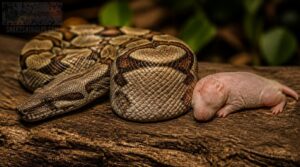
Use the widest body rule: choose prey whose widest point matches your juvenile boa’s midbody width. This gives the snake a manageable mouthful, not a hard-to-swallow bulge.
Measure at midbody, then compare each feeder’s girth. Juvenile feeder sizes should track that point as your snake grows. Make growth-based adjustments only after reassessing its current width.
Use Safe Weight Percentages
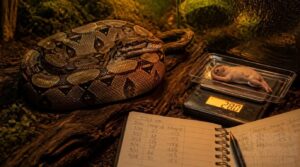
Although girth matters, Use Prey Weight Percentages to prevent overfeeding. Never Feed prey at 1015 body weight; that rate is unsafe for juveniles.
- Match The Widest Body Section.
- Track Weight Every Week.
- Adjust for Growth Spurts.
- Raise feeder weight by 2–3 percent.
- For refusal or regurgitation, reduce temporarily to 3 percent.
A 200-gram boa needs 10–12 grams weekly.
Choose Weaned Rats When Appropriate

Weaned rats give juvenile boa constrictors a reliable step up when mouse-sized prey no longer meets growth needs. They are usually 21–28 days old and offer steadier muscle and fat development.
| Check | Target |
|---|---|
| Source | Documented breeder |
| Condition | Clean, intact, healthy |
| Fit | Matches body width |
Choose reputable suppliers. This helps prey size selection, feeding frequency optimization, and growth-based adjustments without digestive strain.
Increase Feeder Size Gradually
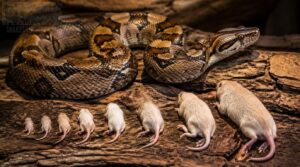
Increase Prey Size Gradually after two or three easy meals at the current size. Match prey size to the snake’s midbody width, then move up in small steps.
- You’ll protect digestion and confidence.
- You’ll support controlled growth.
- You’ll improve feeder rodent safety.
When you Progress From Mice to Rats, aim for 5–10% body weight. Avoid Oversized Meals. Never increase faster.
Avoid Oversized Prey Items
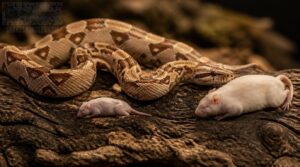
An oversized meal can turn a normal feeding into a regurgitation risk. For a juvenile boa constrictor, match prey size to the snake’s midbody width, never wider. Feed prey at 5–10% body weight, then hold that size for two or three successful meals. Avoid Oversized Meals that leave a sharp lump. This protects digestion, steady growth, and feeder rodent safety.
Set a Healthy Feeding Schedule
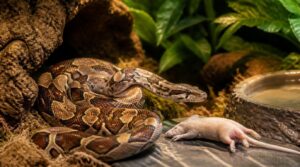
A steady feeding schedule helps healthy growth without pushing your juvenile boa too fast. Your snake’s age, body condition, and current growth rate should guide each adjustment. Use the following points to build a routine you can monitor and maintain.
Follow Age-Appropriate Feeding Intervals
Set juvenile boa constrictor feeding times by age, growth, and digestion. Feed neonate boas every 7–10 days. Move toward Juveniles Every 10–14 Days as growth steadies.
- Use prey size to the snakes midbody width.
- Keep one consistent feeding day.
- Weigh your boa weekly.
- Change intervals only after stable trends.
Don’t feed early because it appears hungry. Consistency gives you control and reveals problems quickly.
Adjust During Growth Spurts
Keep the schedule unless your boa shows a measured burst of growth. During growth spurts in juveniles, use growth-based adjustments: move a meal forward by one or two days only when digestion, body condition, and response remain normal. Don’t shorten juvenile feeding frequency repeatedly.
Avoid power feeding. Brief adjustment helps growth; routine early meals create excess condition. Track weight monthly.
Track Meals and Monthly Weight
Your records are the backbone of a reliable feeding schedule.
Log every meal with the date and prey weight. Weigh your boa monthly, same day, same scale, to monitor monthly growth trends carefully. A digital gram scale for reptiles makes it easy to log accurate prey and body weights consistently each month.
Check body condition regularly for distinct vertebrae or excess lateral fat. Remove uneaten prey within two hours.
Feeding schedule consistency depends on data you can actually trust.
Avoid Frequent Power Feeding
Those records also show when you’re pushing too hard. Avoid routine overfeeding, as it stresses digestion and raises obesity risk during rapid juvenile growth.
Watch for:
- Rapid, unexpected weight gain
- Reduced activity between meals
- Persistent fullness at feeding time
- Excess lateral fat
- Frequent prey refusals
Feeding schedule consistency and growth-based adjustments guided by monthly data keep your boa’s progress steady.
Consider Shedding and Refusals
When a shed cycle starts, your boa’s appetite shuts down. That’s completely normal. Pause feeding during shedding and wait for clear eyes and settled skin before offering prey again.
Log refusals and digestive changes alongside weight data, and avoid routine overfeeding once appetite returns. Check temperature and humidity if refusals persist. Monitor monthly growth trends to keep your schedule accurate.
Prepare and Present Feeders Safely
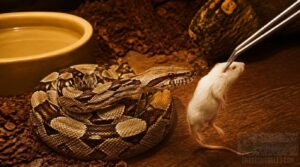
How you prepare and present each feeder matters just as much as what you’re feeding. A few non-negotiable steps stand between a clean, successful meal and a serious health risk for your snake. Here’s exactly what to do before the feeder ever reaches your boa.
Thaw Rodents in Refrigeration
Pull frozen-thawed rodents from the freezer the night before feeding. Place them in a sealed bag or container, then move them to the fridge at 1 to 4 degrees Celsius. This slows bacterial growth without risking early spoilage.
Label each bag with the date and prey type. Use the thawed prey within 48 hours and don’t let it sit longer.
Warm Prey to Feeding Temperature
Once thawed, warm your prey using the warm water bag method. Place it in a sealed zip-lock bag and submerge in warm water for 10 to 15 minutes.
Your target is 31 to 34 degrees Celsius at the center. Use an infrared thermometer to check both surface and center before offering. Anything above 39 degrees risks burning the oral tissue.
Use Long Feeding Tongs
Feeding tongs safety is the first rule at every meal. Your juvenile boa’s strike range reaches farther than you expect, and bare hands can’t keep you safe. Always use feeding tongs at least 12 to 18 inches long. When you offer prey with tongs, move slow and steady. Use the same pair to remove uneaten prey promptly after the session.
Offer Prey Head First
Direction matters. When you use feeding tongs to present prey, always offer prey head first. This lets your boa align the body naturally during swallowing, reducing the chance of a difficult or incomplete meal.
Feed in dim light to keep your juvenile calm and focused. Head-first orientation also aids warmside digestion by starting the swallow sequence the right way.
Discard Uneaten Thawed Feeders
Once your boa loses interest, the clock starts. Remove uneaten prey promptly: within 2 hours at room temperature, or within 24 hours if refrigerated.
Thawed feeder disposal is simple: seal the rodent in a bag and bin it. Never offer that uneaten prey to another animal, as that spreads pathogens fast. Discard uneaten thawed feeders every single time, without exception.
Prevent and Address Feeding Problems
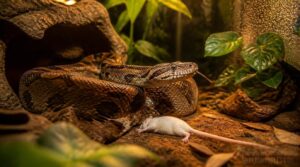
Even when you do everything right, feeding problems can still come up — that’s just part of keeping a boa. Knowing how to spot and handle them early makes all the difference between a minor hiccup and a serious health issue. Here’s what every juvenile boa keeper should have on their radar.
Feeding problems happen to every keeper — catching them early is what separates a minor setback from a serious health crisis
Maintain Proper Digestion Temperatures
After your juvenile boa eats, it can’t generate its own warmth. Check temperatures before feeding every single session, and keep them stable for 48 hours after.
- Warm side ambient: 85-90°F helps with warmside digestion
- Warm water bag method: regulate prey temperature before offering it
- Humidity at 60-70%: dry air slows digestion too
Cold spots will stall the whole process fast.
Pause Handling After Meals
Once temps are locked in, leave the snake alone. Avoid handling after meals for at least 48 hours. That’s essential postfeeding care.
Picking up a digesting boa can trigger regurgitation, damaging the esophagus and causing nutrient loss. For big meals, push that window to 3-4 days. Remove uneaten prey promptly. If regurgitation happens, wait after regurgitation two weeks before feeding again.
Recognize Overfeeding and Obesity
Overfeeding sneaks up fast. Check your snake monthly using body condition scoring, running fingers gently along the back. If ribs and spine are hard to feel, that’s a real problem.
A healthy juvenile should taper cleanly from midbody to tail. Rounded, uniform width means excess fat. Reduce prey size or extend feeding intervals. Growth-based adjustments keep gains steady, not rapid.
Manage Refusal and Regurgitation
Refusal happens to every keeper. Watch for regurgitation after each meal and remove uneaten prey promptly. Never re-offer a warmed feeder.
If your boa refuses twice in a row, support warmside digestion first by checking temperatures. Heat drives the process. Keep a refusal documentation log, noting dates, prey size, and temps. Three consecutive refusals aren’t a phase, they’re a problem.
Seek Reptile Veterinary Care
Three consecutive refusals demand reptile veterinary care. Don’t wait weeks hoping things improve. Call a reptile vet if regurgitation repeats, weight stalls, or your boa stops eating entirely.
- Track weight monthly to catch drops early
- Watch for regurgitation after every feeding
- Use growth-based adjustments between vet visits
Not every vet sees reptiles. Always confirm their reptile experience before you book.
Frequently Asked Questions (FAQs)
What to feed juvenile snakes?
Some new keepers treat feeding a juvenile snake like a culinary mystery with no obvious answer. It really isn’t. Frozen-thawed pinkie mice are your starting point, sized to match your hatchling’s girth for healthy growth.
Will boa constrictors eat other snakes?
Boa constrictors can eat other snakes, but it’s rare. In the wild, they prefer mammals and birds. Snakes aren’t a natural target, just an opportunistic meal when nothing better is available.
How big should a 1 year old boa be?
A year-old boa that looks "too small" might actually be perfectly fine. Healthy yearling size spans 2 to 4 feet and 150 to 1,500 grams. Steady monthly growth matters more than any single measurement.
What do boa constrictors eat in captivity?
In captivity, frozen-thawed rodents are the standard diet. Juvenile boa constrictors eat mice or rats sized to their body width, offered every 5 to 7 days.
What should you feed a juvenile snake?
The old truth "you are what you eat" applies here. Frozen-thawed pinkie mice give hatchlings complete nutrition. Size prey to the widest body section, warm to proper feeding temperature, and your juvenile snake will thrive.
Can juvenile boas eat during their shedding cycle?
Yes, juvenile boas can eat during a shed cycle, but refusal is common and completely normal. If yours still accepts prey, keep it small. Aim for no larger than the widest part of the body.
How do I transition my juvenile boa to rats?
Picture your boa turning its nose up at every rat you offer. Scent transfers fix that. Rub the rat against a freshly thawed mouse. Once your boa feeds reliably on mice, shift to weaned rats.
Should I feed my juvenile boa in a separate enclosure?
Yes, a separate feeding enclosure is worth using. It keeps your main habitat clean, reduces feeding-stimulus confusion, and simplifies supervision during juvenile boa constrictor feeding times without disrupting normal rest behavior.
Do juvenile boas need vitamin supplements with their feeders?
What you feed your boa matters more than what you add on top. Whole-prey nutrition covers most needs. Occasional calcium supplementation fills any gaps. Routine vitamin dosing isn’t really necessary or backed by strong evidence.
How long should I wait after handling to feed?
Wait at least 24-48 hours after handling before offering food. Stress from handling can trigger refusal or defensive behavior. Give your juvenile boa time to settle before presenting any prey.
Conclusion
It’s no coincidence that the healthiest juvenile boas belong to keepers who obsess over the small things. Prey size. Thaw time. Feeding intervals.
Mastering boa constrictor feeders for juvenile snakes isn’t about natural instinct. It’s about precision practiced consistently, every single time.
Your snake can’t tell you when something’s wrong. But the regurgitation does. Start every feeding session with the right prey size and temperature, and you stay ahead of every problem before it starts.