This site is supported by our readers. We may earn a commission, at no cost to you, if you purchase through links.

A juvenile corn snake tests every branch it meets, gripping, coiling, and probing for weak spots before trusting its weight to it. Get the diameter wrong or the texture too smooth, and you’ll watch that confidence collapse into stress and refused meals. Reptile keepers underestimate how much a few centimeters of wood diameter or a bark’s roughness shapes a young snake’s sense of security.
The right climbing branches for juvenile snakes do more than decorate a tank. They build muscle tone, sharpen coordination, and turn a glass box into something resembling actual habitat.
Below, you’ll find ten branches worth your money, plus the species-specific sizing, installation angles, and maintenance routines that keep them safe for years of climbing.
Table Of Contents
- Key Takeaways
- Choose Safe Juvenile Snake Climbing Branches
- Top 10 Climbing Branches for Juvenile Snakes
- 1. Exo Terra Natural Forest Branch Large
- 2. Hamiledyi Flexible Bendable Jungle Vines Terrarium Decor
- 3. EONMIR 8 Foot Reptile Vine
- 4. Natural Mopani Driftwood for Aquarium Reptile Tanks
- 5. Exo Terra Forest Branch Small Natural Wood
- 6. Majoywoo Natural Large Driftwood Aquarium Decor
- 7. Natural Grape Wood Reptile Climbing Branches
- 8. Resin Reptile Corner Climbing Branch
- 9. Coolrunner 8ft Reptile Vines With Leaves
- 10. Fhiny Resin Reptile Climbing Branches
- Match Branches to Juvenile Snake Species
- Install Branches for Safer Juvenile Climbing
- Maintain Juvenile Snake Climbing Branches
- Frequently Asked Questions (FAQs)
- What branches are safe for reptiles?
- What can I use for my snake to climb on?
- Can small snakes climb trees?
- Can I use branches from outside for my snake?
- How many branches should a juvenile snake enclosure have?
- Can juvenile snakes climb branches immediately after shedding?
- Do juvenile snakes need branches in every enclosure?
- How much weight can a juvenile snake branch hold?
- What enrichment benefits do climbing branches provide juveniles?
- Conclusion
Key Takeaways
- Branch diameter and texture aren’t cosmetic choices—get them wrong and your juvenile snake will refuse meals and show real stress, so match sizing to species (0.5-1.5 inches for corn snakes, 2-6 cm for boas) and always favor rough bark over smooth wood for grip.
- Stick to safe hardwoods like oak, maple, beech, birch, and hickory, and steer clear of cedar, pine, yew, or anything treated with chemicals like pentachlorophenol or creosote, since those can seriously irritate your snake’s skin and lungs.
- Installation matters as much as the branch itself: angle them 20-40 degrees, space tiers 10-25 cm apart, anchor both ends securely with stainless screws, and build a warm-to-cool thermal gradient so your snake can self-regulate.
- Maintenance is non-negotiable—dry natural wood to under 12% moisture before use, disinfect with reptile-safe solutions, inspect weekly for cracks or warping, and rotate branches every 12-18 months to keep your snake climbing safely for years.
Choose Safe Juvenile Snake Climbing Branches
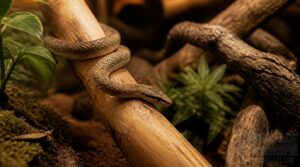
Not every branch on a pet store shelf belongs in your snake’s tank. Wood species, diameter, and texture all decide whether a branch helps healthy growth or sets your juvenile up for a fall. Here’s what to check before you buy, and where to find branches that actually pass the test.
If you’re also stocking the enclosure, our guide on whether corn snakes actually need hides to feel secure covers another shelf-bought item worth a closer look before checkout.
Safe Hardwood Materials
Not all wood earns a spot in your enclosure. Reptile-safe hardwoods like maple, beech, birch, oak, and hickory offer dense grain and low porosity, resisting splinters while holding fasteners securely.
Beech shrugs off humidity swings without warping. Oak’s closed grain and tannins deter mold when dried properly. Hickory’s shock resistance controls juvenile snakes’ repeated climbs without cracking.
Toxic Woods and Treatments
Picking the right species solves half the battle. Avoiding the wrong ones solves the rest.
Skip cedar, pine, and yew outright, plus anything with pentachlorophenol or creosote residue. These leach toxins that irritate skin and lungs.
Buy from reptile-safe suppliers or pesticide-free nurseries. Non-toxic finishes and thorough rinsing after disinfecting keep your juvenile’s terrarium chemical-free and mold-resistant.
Branch Diameter and Growth
Toxin-free is step one. Fit is step two, and juveniles are trickier than adults here.
Aim for 1.5 to 2.5 cm diameters, sized to species. Growth peaks in the first two to three years, so check grip monthly. Favor tapered branches with uniform sections; they spread mechanical stress evenly, distribute load better, and give secure attachment points as your snake grows.
Texture and Grip
Diameter gets a snake up the branch. Texture keeps it there.
Fine roughness creates micro asperities that boost friction, giving juvenile snakes secure grip during ascent. Coarser bark adds traction on slick surfaces but wears delicate scales faster. Ridges and furrows help too, multiplying contact points. Always maintain three points of contact, and spot-check branches daily for smoothness loss or wear.
Natural Versus Artificial Branches
Bark or resin? The real trade-off is upkeep versus authenticity. Natural branches mimic natural habitat and boost enrichment but demand drying, disinfecting, and replacement every 6-18 months.
Artificial options offer maintenance ease, resist warping, and cut long-term cost.
For reptile-safe materials and species-specific branch sizing, many keepers mix both, pairing real wood’s grip with synthetic durability.
Top 10 Climbing Branches for Juvenile Snakes
You know what to look for now—hardwood grain, proper diameter, safe finishes. Time to put that knowledge to work with real options that hold up in a juvenile enclosure. Here are ten branches worth your money, from natural driftwood to flexible vines and beyond.
1. Exo Terra Natural Forest Branch Large
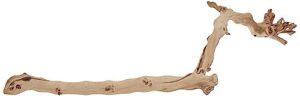
Real forest, minus the forest floor. Exo Terra’s Forest Branch Large gives juveniles natural climbing texture without splinters or moisture issues, since it’s heat treated for durability. At 25 x 7 x 5 inches and 1.5 lbs, it suits rainforest or desert setups equally well.
Expect variation, though. Each piece differs in length and knots, and some arrive smaller than photos suggest. It’s one branch, not a bundle, so plan your layout before buying multiples.
| Best For | Reptile and amphibian keepers looking to add natural climbing structure to arboreal terrariums, whether rainforest or desert themed. |
|---|---|
| Material | Natural hardwood |
| Attachment Method | Freestanding |
| Suitable Species | Arboreal reptiles/amphibians |
| Piece Count | 1 |
| Enclosure Type | Rainforest/desert terrarium |
| Weight | 1.5 lbs |
| Additional Features |
|
- Heat treated for durability and safety, with no splinter or moisture concerns
- Versatile enough to suit both rainforest and desert terrarium setups
- Natural three-dimensional shape adds authentic climbing texture and aesthetic appeal
- Actual size and shape can vary from what’s shown in product photos
- Some buyers find the branch smaller than they expected
- Sold as a single piece, so multiple branches must be purchased separately for a fuller layout
2. Hamiledyi Flexible Bendable Jungle Vines Terrarium Decor
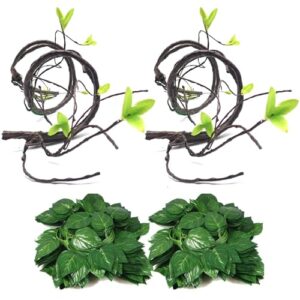
When wood feels like overkill, plastic vines pick up the slack. Hamiledyi’s set bends into curves without snapping, thanks to a flexible center and tear-resistant coating, so you can twist multiple climbing routes across vertical planes.
Textured bark-like grip keeps juveniles from slipping, and the leaf accents add gripping points wood alone can’t offer. It’s waterproof, wipes clean with mild soap, and needs no drying time. Just rinse first, since dye sometimes bleeds on that initial wash.
| Best For | Reptile and amphibian keepers looking to add climbing routes and hiding spots for arboreal geckos, chameleons, snakes, frogs, and turtles. |
|---|---|
| Material | PU plastic |
| Attachment Method | Bendable placement |
| Suitable Species | Geckos, chameleons, snakes |
| Piece Count | 4 |
| Enclosure Type | Terrarium |
| Weight | Not specified |
| Additional Features |
|
- Flexible, bendable design lets you twist and shape multiple climbing paths to fit any enclosure
- Bark-like texture gives juveniles secure grip, while leaf accents add extra gripping points
- Waterproof and easy to wipe clean with mild soap and water
- Leaves may arrive creased or crumpled and need reshaping before use
- Dye can bleed during the first wash, so rinsing beforehand is recommended
- Smaller vine sizes may not offer enough support or climbing space for larger, adult reptiles
3. EONMIR 8 Foot Reptile Vine
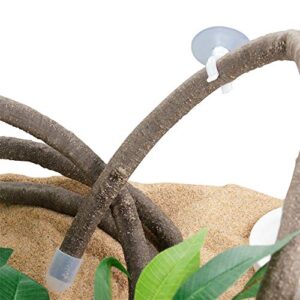
EONMIR built this vine specifically for juveniles, and it shows. The braided polypropylene center coils tight around branches without kinking, letting you build multi-directional routes fast.
Silicone coating adds micro-grip ridges for tiny scales still learning to climb, while end caps stop fraying at anchor points. It controls humidity fine, but keep it clear of heat sources, since coating can melt or warp under direct exposure.
| Best For | This vine is a great fit for keepers of chameleons, geckos, lizards, tree frogs, and small to medium snakes who want to add climbing space and enrichment to a terrarium. |
|---|---|
| Material | PU and iron |
| Attachment Method | Suction cups |
| Suitable Species | Chameleons, geckos, snakes |
| Piece Count | 1 |
| Enclosure Type | Glass enclosure |
| Weight | 11.2 oz |
| Additional Features |
|
- Bendable PU and iron core lets you twist and shape it into all kinds of natural-looking climbing routes
- Realistic vine texture gives your enclosure a more authentic jungle feel
- Comes with 6 suction cups for attaching it securely to glass walls
- Larger or heavier snakes may be too much weight for it to hold up over time
- Suction cups can lose their grip on glass and need to be reattached often
- Texture may vary a bit from unit to unit due to how it’s manufactured
4. Natural Mopani Driftwood for Aquarium Reptile Tanks
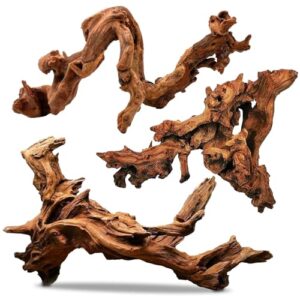
Twisted, gnarled, and never quite the same shape twice, Mopani driftwood turns your terrarium into something that looks pulled straight from a riverbank. Each PINVNBY piece runs 7-11 inches, sold in three-piece sets, and doubles for aquariums or dry enclosures.
Boil pieces 1-2 hours with soda and salt, repeat three times, to cut tannins and force sinking. Smooth-to-grooved surfaces give juveniles solid grip, though check every piece for splinters and sawed edges before install.
| Best For | Reptile and aquarium keepers who want a natural, one-of-a-kind centerpiece for climbing, hiding, or anchoring live plants. |
|---|---|
| Material | Natural Mopani wood |
| Attachment Method | Freestanding |
| Suitable Species | Fish, shrimp, reptiles |
| Piece Count | 3 |
| Enclosure Type | Aquarium/terrarium/paludarium |
| Weight | 1.37 lbs |
| Additional Features |
|
- Versatile enough for aquariums, terrariums, and paludariums alike
- Unique twisted shapes add real character, with no two pieces ever matching
- Doubles as an anchor for moss, java fern, or anubias to create lush aquascapes
- Requires repeated boiling and soaking before use to reduce tannins and prevent floating
- Can leach tannins that tint water yellow-brown for days or weeks, meaning extra water changes
- Individual pieces vary in size and shape, and may have holes, thin branches, or sawed ends
5. Exo Terra Forest Branch Small Natural Wood
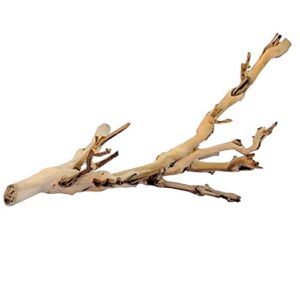
Scale matters when you’re outfitting a juvenile enclosure, and this one’s built for it. Running 9 to 12 inches, the branch stays untreated hardwood throughout, so no leached chemicals or synthetic coatings to worry about.
Heat treatment keeps moisture low and mold at bay, while the rough-bark texture gives young snakes real grip points as they twist and climb. At 1-2 pounds with a sturdy center, it won’t sag under a juvenile’s weight, and it drops into standard Exo Terra setups with zero extra hardware.
| Best For | This is best for owners of small reptiles, amphibians, or juvenile pets looking for a compact, natural-looking climbing and basking branch. |
|---|---|
| Material | Heat-treated wood |
| Attachment Method | Freestanding |
| Suitable Species | Geckos, lizards, snakes |
| Piece Count | 1 |
| Enclosure Type | Terrarium |
| Weight | 4.23 oz |
| Additional Features |
|
- Made from real heat-treated wood for a natural branch look and feel
- Encourages climbing and exploration behaviors in geckos, lizards, and snakes
- Works well in both rainforest and desert terrarium setups
- Often smaller in person than product photos suggest
- Single branch design rather than the multi-branched look shown in images
- May not provide enough climbing space for larger arboreal reptiles
6. Majoywoo Natural Large Driftwood Aquarium Decor
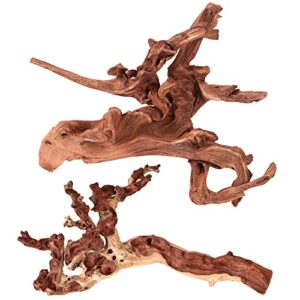
Sold in pairs, Majoywoo pieces run 12.5 to 18 inches each, so you get real coverage without cramming the tank. Every piece looks different, rugged grooves and ridges give juveniles solid grip, and the medium-to-dark brown tone works in both aquariums and reptile enclosures.
It’s marketed untreated, but plan on boiling 3-4 hours to sink it and pull tannins before use. Anchor it securely once placed. It’s a solid climbing and hiding feature for juvenile snakes when set up right.
| Best For | Aquarium and reptile-tank owners with larger setups (20+ gallons) who want a natural, one-of-a-kind climbing and hiding feature for fish, juvenile snakes, or other reptiles. |
|---|---|
| Material | Natural wood |
| Attachment Method | Freestanding |
| Suitable Species | Fish and reptiles |
| Piece Count | 1 |
| Enclosure Type | Aquarium/terrarium |
| Weight | 1.2 lbs |
| Additional Features |
|
- Sold in pairs with generous coverage (12.5–18 inches each), so you get real visual impact without overcrowding the tank
- Rugged grooves and ridges give juveniles solid grip, making it great for climbing and hiding
- Each piece is unique, and the medium-to-dark brown tone suits both aquariums and reptile enclosures
- Requires significant prep work, plan on boiling it for 3–4 hours to sink it and remove tannins before use
- Marketed as untreated, so pieces may still release substantial tannins early on, meaning more frequent water changes
- Quality and shape can vary a lot between pieces, so what you receive may look different from photos and needs to be anchored securely once placed
7. Natural Grape Wood Reptile Climbing Branches
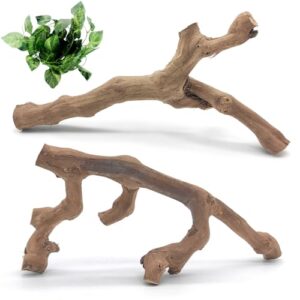
If boiling driftwood isn’t your idea of fun, VCEPJH’s grape wood pack skips that step entirely. Two branches per pack, each 12.2 to 14.96 inches, trim-to-fit for tighter enclosures.
Natural ridges give juveniles real traction without sanding, and grape wood’s non-aromatic profile won’t irritate developing airways like pine or cedar. Skip humid setups though, mold risk climbs fast. Rinse off flaking bark before placement, and expect some size variation between branches, so pick pieces matched to your snake’s grip capacity.
| Best For | Reptile owners looking to add natural climbing and hiding options for chameleons, bearded dragons, geckos, or snakes without the hassle of prepping driftwood. |
|---|---|
| Material | Natural grape wood |
| Attachment Method | Freestanding/trimmable |
| Suitable Species | Chameleons, dragons, snakes |
| Piece Count | 2 |
| Enclosure Type | Reptile enclosure |
| Weight | Not specified |
| Additional Features |
|
- Skips the boiling/soaking prep that driftwood usually requires
- Trim-to-fit branches (12.2–14.96 in) adapt easily to different enclosure sizes
- Natural, non-aromatic wood adds texture and realism without irritating airways
- Not suited for high-humidity setups due to mold risk
- Bark may flake and needs rinsing or removal before use
- Branch shape and diameter can vary, so some selection is needed for a good fit
8. Resin Reptile Corner Climbing Branch
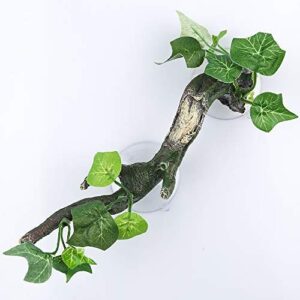
Not every setup calls for real wood, and that’s fine. The Resin Reptile Corner Climbing Branch fits snug into enclosure corners, mimicking bark texture without the mold worries or drying time.
Its 12-18 inch length and 1.0-1.5 inch diameter suit juveniles perfectly. Non-porous resin resists odor absorption, cleans up with mild soap, and won’t crack under normal handling. Smoothed edges protect delicate scales, while raised grip points hold traction even in humid tanks.
| Best For | This climbing branch is best for owners of juvenile reptiles and amphibians—like young snakes, lizards, bearded dragons, chameleons, and frogs—who want a naturalistic corner accent for a glass terrarium. |
|---|---|
| Material | Resin and glass |
| Attachment Method | Suction cups |
| Suitable Species | Snakes, lizards, frogs |
| Piece Count | 1 |
| Enclosure Type | Terrarium/tank |
| Weight | Not specified |
| Additional Features |
|
- Realistic bark-like texture and branch design create a naturalistic look without the mess or wait time of real wood
- Non-porous resin resists odors, cleans easily with mild soap, and holds up well to normal handling
- Dual suction cups and raised grip points keep it secure and provide reliable traction, even in humid tanks
- Requires a glass surface for the suction cups to stay secure, limiting placement options
- Sized for juveniles (12-18 inches, 1.0-1.5 inch diameter), so it may not suit larger or adult reptiles
- Purely decorative and functional for climbing—it’s not meant to replace other enrichment or habitat features
9. Coolrunner 8ft Reptile Vines With Leaves
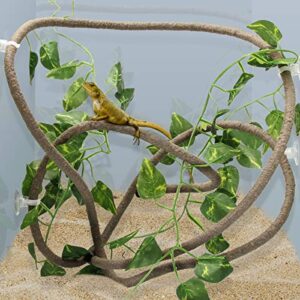
If corners aren’t your enclosure’s problem, sprawl might be. The Coolrunner 8ft Reptile Vines with Leaves gives juveniles a full climbing network, PU coating over a metal center that holds bends without collapsing.
Sculpted leaves add gripping surface and multiple contact points, cutting slip risk on steeper angles. The rough texture suits juvenile snakes still building climbing confidence. Corrosion-resistant center means it survives humid tanks long-term, and the vine wipes clean with a damp cloth, no fuss required.
| Best For | juvenile and small-to-medium arboreal reptiles, like leopard geckos, tree frogs, and young snakes, that need a flexible, easy-to-shape climbing setup. |
|---|---|
| Material | PU with metal core |
| Attachment Method | Suction cups |
| Suitable Species | Chameleons, geckos, iguanas |
| Piece Count | 2 |
| Enclosure Type | Terrarium/enclosure |
| Weight | Not specified |
| Additional Features |
|
- Bendable metal core holds its shape and stands up to humid tank conditions over time
- Textured, leafed surface gives extra grip points, making it easier for reptiles to climb confidently
- Two vine lengths (8ft and 6ft) allow for a full, naturalistic climbing network across the enclosure
- Suction cups can loosen over time and may need extra glue or reinforcement
- Leafed sections can detach or get chewed on by some reptiles
- Material may tear or warp if bent too sharply or repositioned too often
10. Fhiny Resin Reptile Climbing Branches
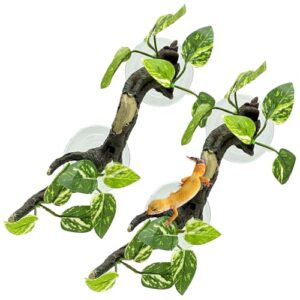
Resin closes out this list, and it earns the spot. Fhiny’s branches skip wood entirely: non-porous resin resists mold better than natural bark in humid tanks, while textured ridges replicate bark grip without splinter risk.
Integrated mounting points fit standard fixtures, and multi-point contact spreads weight evenly, minimal wobble even during active exploration. Rated for hatchling-sized juveniles, not adults.
Smooth edges prevent scale irritation. No toxic finishes, no fiber shedding. Just consistent, low-maintenance texture that holds up wash after wash.
| Best For | Owners of corn snakes, bearded dragons, geckos, frogs, and chameleons looking for natural-looking, low-maintenance climbing and basking decor. |
|---|---|
| Material | Resin and plastic |
| Attachment Method | Suction cups |
| Suitable Species | Corn snakes, dragons, geckos |
| Piece Count | 2 |
| Enclosure Type | Reptile habitat/tank |
| Weight | 11.64 oz |
| Additional Features |
|
- Lifelike bark texture with soft leaves offers secure grip and welcome shade
- Two strong suction cups per branch keep it firmly attached to glass or acrylic tanks
- Easy to install and clean, needing only a smooth surface to adhere well
- Not ideal for larger or heavier reptiles, as suction cups may detach under extra weight
- Only works well on clean, smooth glass or acrylic surfaces for a solid hold
- Leaves and stems may feel less durable and less realistic over time
Match Branches to Juvenile Snake Species
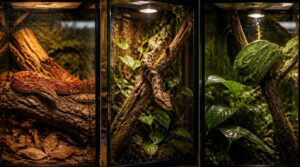
Not every snake climbs the same way, and your branch setup shouldn’t pretend otherwise. A corn snake’s needs look nothing like a boa’s, and arboreal species play by their own rules entirely. Here’s how to match your setup to the species actually living in it.
Corn Snake Branches
Corn snakes climb like they’re chasing something. Give juveniles branches with 0.5 to 1.5 inch diameter, rough bark for grip, and a tapered tip so they don’t slip reaching the end. Oak or maple works best, seasoned two weeks minimum. Skip smooth wood entirely. Growth rings and natural scent add texture and appeal, mimicking southeastern habitats they instinctively recognize.
Providing appropriate climbing enrichment helps their natural behaviors and overall well-being, which is an essential aspect of corn snake care.
Ball Python Branches
Ball pythons climb cautiously, so gentle inclines matter more than height. Stick to 0.75-1.5 inch diameter branches with rough bark for grip, sloped 20-30 degrees. Skip smooth, slick wood entirely.
- Maple or oak, seasoned and dry
- Anchor both ends securely
- Keep humidity moderate to prevent warping
Juvenile snake fit beats size every time. Undersized bodies need branches they can actually wrap.
Boa Constrictor Branches
Boas outgrow branches fast, so start with 2-6 cm diameters they can actually grip. Use oak or maple, never pine or cedar. Anchor both ends tight and spot-check daily for shifting or softening.
Place branches near hides on a slight taper, spanning warm-to-cool zones for real thermoregulation support. Rough bark beats smooth every time.
Arboreal Juvenile Snakes
Green tree pythons live in the branches, not on them. Build dense, interconnected networks with reptile-safe hardwoods sized for narrow twig navigation. Vary branch density to mimic vertical hunting zones, and map escape routes for grip-scale utilization. This isn’t optional decor, it’s beginner-friendly climbing architecture that matches how arboreal juveniles actually survive.
Terrestrial Juvenile Snakes
Not every snake wants the sky. Terrestrial juveniles need low basking spots and ground cover more than height, since they hug soil and leaf litter for warmth and ambush hunting. Keep branch diameter modest, skip tall structures, and prioritize horizontal safe climbing structures near shelter.
Check fastener security regularly. Stable humidity control helps natural shelter seeking habits.
Install Branches for Safer Juvenile Climbing
Picking the right branch means nothing if it’s not installed right—placement makes or breaks safety for a growing snake. Angle, positioning, and anchoring all work together to prevent falls and keep your snake moving with confidence. Here’s exactly how to get the setup right, step by step.
Branch Height and Angles
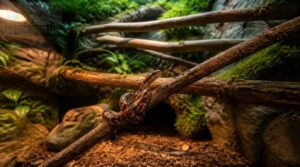
Height and angle make or break a beginner setup. Place branches 15 to 60 centimeters above substrate, angled 20 to 40 degrees, with vertical spacing of 10 to 25 centimeters between tiers. Stagger them, don’t stack them, so falls stay short and controlled. That ladder effect builds confidence one rung at a time.
Warm-to-Cool Climbing Routes
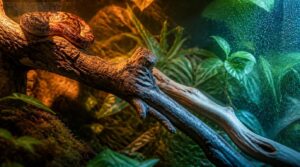
Once the ladder’s staggered, run it diagonally: warm end higher, cool end shaded, spanning 40-70 cm per move. This thermal gradient (24-32°C basking, 18-24°C cool) lets juveniles self-regulate digestion and activity.
Vary bark texture, rough near heat, smoother toward shade, for grip and cooling.
Anchor solidly, check weekly, and keep humidity stable so footing never slips.
Clear Access to Hides
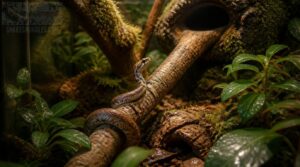
A shaded gradient means nothing if the hide sits unreachable. Keep pathway slope under 25 degrees, with straight approaches at least 8 inches long, no sharp turns.
Space multiple entry points 6-12 inches apart, hide openings 1-1.5 inches wide, placed 6-12 inches up. That’s unobstructed access, real climbing freedom, not guesswork.
Secure Branch Anchoring
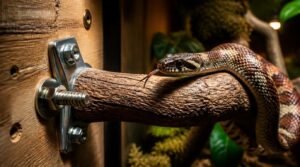
Access means nothing if the branch shifts underfoot. Strengthen anchor points with stainless screws, three-point contact bracing, torque checked to 5-10 Nm.
- Sand or coat surfaces for secure grip
- Pre-drill pilot holes, add washers
- Space anchors for clearance, inspect monthly
Mounting options vary, but structural integrity checks stay non-negotiable.
Maintain Juvenile Snake Climbing Branches
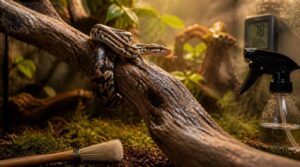
Buying the right branch is only half the job—keeping it safe over time is where most setups fall apart. Wood breathes, shifts, and collects grime, so your maintenance routine has to keep pace with it. Here’s exactly what to check, clean, and watch for.
Disinfecting Natural Branches
Wild wood carries hitchhikers. Wipe branches clean first, then use reptile-safe disinfectants like 0.5% bleach or 3% hydrogen peroxide, keeping surfaces wet for full contact time.
Rinse thoroughly to strip residue, and dedicate separate tools to reptile prep, avoiding cross contamination with kitchen gear. Spot-check daily for grime buildup between deep cleanings.
Drying Wood Completely
Since damp wood rots fast and breeds mold in humid vivariums, dry branches completely before use. Air dry 4-8 weeks (thinner pieces 4-7 days) or kiln dry within 48 hours. Verify with a calibrated moisture meter, targeting under 12% MC.
- Check multiple points, not just ends
- Condition 24-72 hours before installing
- Recheck MC after conditioning
- Match drying schedule to species density
Weekly Safety Inspections
Rarely does a five-minute glance save you a vet bill, but weekly branch checks do exactly that. Spotcheck daily; inspect deeply weekly, logging date, area, and fixes.
| Check Point | Pass Criteria |
|---|---|
| Fastener security | No movement under pressure |
| Branch height | No sudden shifts |
| Cracks/gouges | Under 3mm |
| Substrate | No mold, odor |
| Behavior | Normal climbing, no avoidance |
Preventing Mold and Splinters
Mold thrives where moisture lingers, so humidity control in enclosures matters as much as the branch itself. Keep relative humidity under 60%, wipe branches with a damp sponge, then dry fully before reinstalling.
- Seal wood with a non-toxic, cured coating
- Inspect crevices weekly with a flashlight
- Discard porous wood that won’t dry
Splinters follow the same rule: dry, sealed, tight-grain hardwood like maple resists both.
When to Replace Branches
A branch doesn’t fail overnight, it warns you first. Watch for structural failure signs: cracks, warping, resin bleeding, or soft spots.
A branch never fails overnight—it warns you first, with cracks, warping, or soft spots
| Wear Indicator | Action |
|---|---|
| Cracks/splits | Replace now |
| Mold/fungus | Remove immediately |
| Warping | Discard, fall risk |
| Heavy use | Rotate at 12-18 months |
Check fastener security weekly alongside growth monitoring, since health risks climb fast once wood breaks down.
Frequently Asked Questions (FAQs)
What branches are safe for reptiles?
Only five hardwoods pass the safety test reliably. Stick to reptile-safe hardwoods like oak, maple, and beech, avoiding cedar, pine, and treated lumber. Nontoxic reptile materials, properly dried and splinter-free, keep juvenile snakes safe.
What can I use for my snake to climb on?
Stick with reptilesafe hardwoods like oak, maple, or beech, sized 5 to 5 inches for juveniles. Skip cedar and pine. Rough bark beats smooth, polished wood for grip every time.
Can small snakes climb trees?
Watch a hatchling corn snake tackle a rough oak limb: yes, small snakes climb readily. Using concertina locomotion and prehensile scales for bark friction, they show strong juvenile climbing ability during natural vertical exploration behavior.
Can I use branches from outside for my snake?
Yes, with caveats. Confirm pesticide-free sourcing, avoid pentachlorophenol or creosote-treated wood, then bake at 200-250°F for 1-2 hours, dry fully, and test moisture content below 12% before installing.
How many branches should a juvenile snake enclosure have?
More isn’t always better. Three to five climbing surfaces per enclosure hits the sweet spot, one near warm zones, one mid-level.
Overcrowding blocks escape paths; proper enclosure space planning balances enrichment with safety load limits.
Can juvenile snakes climb branches immediately after shedding?
Not quite. Post shed grip returns once the blue phase clears and eyes regain clarity. Rough bark speeds recovery.
Species recovery speed varies, but complete sheds signal readiness; partial sheds mean waiting before resuming full climbing behavior.
Do juvenile snakes need branches in every enclosure?
Not every glass box needs a jungle gym. It hinges on growth stage needs and species: arboreal juveniles thrive with branch-walking setups, while terrestrial snakes stay healthy with ground-level enrichment and minimal, well-placed perches instead.
How much weight can a juvenile snake branch hold?
Properly anchored oak or maple branches support 5 to 2 kilograms, well past a juvenile’s body weight plus a 20 percent safety margin. Diameter matters too, aim for at least 5 cm for secure grip and even load distribution.
What enrichment benefits do climbing branches provide juveniles?
A bored snake just stares at glass all day, unimpressed with its four walls. Branches flip that script: vertical exploration, muscle-building movement, and mental stimulation turn a plain tank into genuine reptile enrichment and behavioral wellness.
Conclusion
A branch is a snake’s first handshake with the world, a test of trust before it commits its weight. Get the diameter, texture, and angle right, and you’ll watch hesitation turn into confident travel.
Climbing branches for juvenile snakes aren’t decoration, they’re training equipment for muscle and nerve. Install them thoughtfully, inspect them weekly, and retire them the moment bark loosens or wood softens. Your snake won’t say thanks. It’ll just climb like it means it.
- https://rattlesnakesolutions.com/snakeblog/arizona-snakes/yes-rattlesnakes-can-climb-trees-this-is-normal
- https://journals.biologists.com/jeb/article/213/24/4249/10012/Substrate-diameter-and-compliance-affect-the
- https://www.snakescapes.com/post/arboreal-snake-habitats-designing-custom-enclosures-for-your-arboreal-snakes