This site is supported by our readers. We may earn a commission, at no cost to you, if you purchase through links.
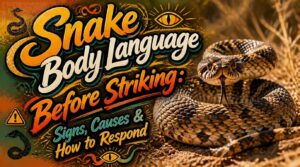
Seventy milliseconds. That’s the window between a snake locking onto its target and the muscle release that sends its head forward at speeds rivaling a swinging baseball bat. Most people miss every warning sign leading up to it, focused on the tail or the fangs when the real story unfolds in the neck, the eyes, and the coil.
Reading snake body language before striking isn’t guesswork, it’s pattern recognition built on anatomy: tendon tension, pupil response, vertebral wave mechanics. Learn what an S-shaped neck or a sudden freeze actually signals, and you’ll never approach a snake blind again.
Table Of Contents
- Key Takeaways
- Signs a Snake is About to Strike
- Why Snakes Coil Before Striking
- Defensive Versus Predatory Strike Body Language
- Factors That Change Pre-Strike Signals
- How to Respond to Strike Warnings
- Frequently Asked Questions (FAQs)
- How to tell if a snake is about to strike?
- What is a snake’s body language when aggressive?
- How do you tell if a snake is comfortable with you?
- How to tell snake body language?
- Can snakes strike without any warning signs at all?
- How fast can a snake actually strike?
- Does strike distance depend on the snakes size?
- Conclusion
Key Takeaways
- A snake’s strike takes as little as 44-70 milliseconds, so the real warning happens well before that, in the S-shaped neck, raised head, fixed stare, and sudden stillness that build up beforehand.
- That coiled posture isn’t just for show, it’s a loaded spring, with muscles and tendons storing energy and the rear body anchoring itself so the strike fires straight and fast.
- Defensive strikes and hunting strikes can look almost identical, so telling fear-driven warnings apart from prey-tracking movements takes practice and close attention to detail.
- Things like species, temperature, stress, shedding, and breeding season can all change how a snake signals its next move, which is why backing off slowly and giving it space is always the safest response.
Signs a Snake is About to Strike
When a snake means business, its body starts telling you long before its jaws do. Reading that language takes practice, but the signs are specific enough to catch once you know where to look. Here’s what to watch for in the seconds before a strike happens.
A tense, coiled posture paired with a pulled-back head often shows up first, and if you’re seeing frequent head wobbling paired with defensive coiling, that’s a strong warning sign worth taking seriously.
S-Shaped Neck and Tight Coils

When a snake bends its foreparts into an S-shaped strike posture, you’re watching neck curvature signals coil tension buildup, elastic energy loading into a spring-like reserve. Loops tighten along the mid-body, shortening the distance to target while posterior anchoring stability keeps the tail grounded. That rigid, smooth-scaled tight defensive coil is your clearest cue: strike preparation has begun.
Raised Head and Fixed Stare
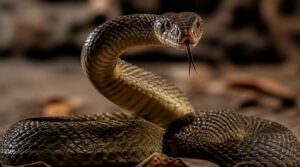
Once the coil sets, watch the head. Head elevation lifts it above mid-body, neck arched to cut blind spots, while a fixed stare locks onto you. Pupils may dilate, tongue sampling quickens, and eyelids barely move.
That unwavering gaze paired with **neck tension signals strike preparation, whether it’s defensive posture or genuine threat assessment.
Sudden Stillness and Muscle Tension
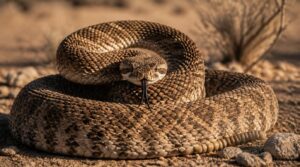
Right after that stare locks on, everything stops. This coiled stillness response signals vertebral tension buildup, muscles co-contracting to 30 times resting tension. Segments feel rigid to touch, held 44-70 milliseconds before release. That’s your window: sustained rigidity means strike latency is shrinking fast, so back away now, not after the freeze breaks.
This stillness allows for precise targeting despite variations in body posture during strike initiation. Kinematic variability in strike execution makes successful strikes possible even with diverse body positioning.
Rapid, Focused Tongue Flicking

Watch the tongue while the body stays locked. Flick rate jumps to 6-12 flicks per second, each tip extension under 0.2 seconds, sampling air currents and chemical signals via the vomeronasal organ. This focused tongue flicking sharpens thermal signature detection and target confirmation.
Sudden acceleration without an escape route means strike latency is closing. Give ground now.
Hissing, Puffing, and Tail Vibration

When a threatened snake runs out of room to retreat, sound and posture do the talking. Hissing pushes air through the glottis at 2-4 kHz, while puffing arches the ribs to inflate body diameter. Tail vibration hits 40-60 Hz, often rattling.
This layered defensive posture signal starts 1-2 seconds before contact, your last clear warning window.
Why Snakes Coil Before Striking

That tight coil isn’t just posture, it’s a loaded spring, and every twist of the snake’s body has a mechanical purpose. Once you understand what’s happening beneath those scales, you’ll read the warning signs with far more confidence. Here’s what actually drives that coil, piece by piece.
Spring-Like Energy Storage
Think of a snake’s a musculoskeletal spring: vertebral flexion stores elastic energy in tendons, while muscle preloading begins milliseconds before launch. This tendon spring effect fuels a vertebral propulsion wave, rippling tail to head. When released, that springloaded strike delivers kinetic energy transfer exceeding 700 m/s², proof that coiling isn’t passive, it’s raw potential energy, waiting.
Before that spring ever releases, though, snakes often telegraph their mood through posture and displays, so learning to spot defensive bluffing behaviors that stop short of a strike can help you read the warning signs early.
A coiled snake isn’t passive, it’s a musculoskeletal spring loading raw potential energy for release
Anchoring Posterior Body Loops
Behind every strike sits an anchor point. The rear loops grip the substrate through frictional anchorage, recruiting trunk muscles to build tension along the posterior abdomen before launch even begins.
Hind segments constrict slightly, keeping the coil compact yet ready. That posterior loop stability lines up with the spine, so energy transfers straight into the strike rather than leaking sideways.
Balancing The Launch Position
A snake mid-coil is a study in weight distribution control, every muscle group answering to the same command. The pelvis and shoulder girdle line up neutrally, while the tail delivers tail counterbalance function against the chest.
As the Sshaped strike posture tightens, the center of gravity shift moves forward, locking in ground contact stability for a launch with true strike accuracy.
Improving Speed and Accuracy
Speed isn’t luck, it’s engineering. Muscle preloading gets fast-twitch fibers ready, while elastic energy release drives the vertebral propulsion wave from tail to head.
Results follow patterns seen across skill training:
- Consistent drilling cuts strike latency reduction by up to 20%
- Substrate grip enhancement prevents slip mid-launch
- Feedback-based repetition sharpens strike accuracy
- Real-time practice builds unpredictable-scenario precision
Preparing The Strike Range
Distance isn’t guessed, it’s calculated. Range calibration cues, stride length, body bend, let a snake judge reach before committing to lunge.
Muscle coactivation ensures peak velocity lands precisely at contact. Body alignment keeps the head on-target, while a final tension adjustment fine-tunes coil tightness, locking in strike range for maximum accuracy.
Defensive Versus Predatory Strike Body Language
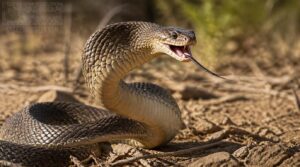
Not every coiled snake means you harm, and reading intent matters as much as reading posture.
A defensive strike and a predatory one can look nearly identical to an untrained eye, yet the cues behind them tell very different stories.
Here’s what separates a fear-driven warning from a hunting sequence, and where beginners tend to misread one for the other.
Fear-Based Warning Displays
When cornered, a snake leans on fear response before force. Raised head posture and a fixed stare track you as the threat. Hissing hits 2-4 kHz, tail vibration runs 40-60 Hz, and puffing body expansion adds visual bulk, all warning signs meant to end things before a strike ever starts.
Prey-Tracking Head Movements
Not every fixed stare means fear. When hunting, head movements track prey instead of a threat, with tongue flicking, gaze alignment, and neck muscle control locking onto a moving target through:
- Steady visual fixation
- Lateral head tilts
- Rigid neck, shifting body
- Head elevation adjustments
- Rapid reorientation on direction changes
Feeding Response Indicators
Once locked onto prey, a snake shifts from tracking to consuming: saliva coats the lips, easing grip, while gular fluttering and throat expansion reposition food for swallowing.
Jaw stretching widens the gape for larger meals, and rapid tongue flicking confirms exact location before contact.
Posture stabilizes into a low, controlled profile, maximizing precision through the entire strike sequence.
Escape Attempts Before Defense
Before defense, many snakes try flight: neck tension buildup into a high S curve, tail anchoring for a push off, then a weight shift lunge away from you.
- Head pivot escape toward open space
- Rib cage stiffening for a quick sprint
- Ventral scales gripping for traction
- Tongue flicking continues, mouth closed
Read the escape attempt correctly, it isn’t a threat display yet.
Signals Mistaken for Aggression
Not every twitch means attack. Tail flicking misinterpreted as rattling, head tilt scanning read as targeting, and puffing thermoregulation display mistaken for a threat display all fool inexperienced handlers.
Even tongue flicking sampling scents gets read as a prestrike focus. Body freezing avoidance, mock strikes, and bluff charges with head flattening are bluffs, not commitment. Learn to distinguish genuine warning signs from ordinary exploratory behavior before you assume hostility.
Factors That Change Pre-Strike Signals
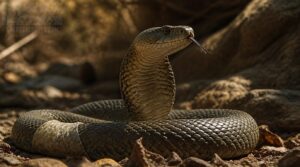
No two snakes read the same way, and the warning signs you learn on one animal won’t always transfer to the next. Species, temperature, stress, shedding cycles, and even reproductive drive can all reshape how a snake telegraphs its next move.
Here’s what actually shifts those signals, and why paying attention to each one matters.
Species-Specific Warning Behaviors
No two species read the same. Rattlesnakes lean on tail vibration speed, ramping from 12 Hz to a startling 60-100 Hz burst. Cobras favor a defensive coil with dramatic head flattening. Others rely on hissing frequency shifts, puffing body expansion, ventral scale flashing, mouth gaping, or mock strikes. Learn your species’ specific warning posture, since misreading it invites real trouble.
Temperature and Activity Levels
When temperatures climb toward 25-30°C, you’ll see snakes shift into full thermal readiness, muscles primed for rapid coiling.
Below 18°C brings cold-weather sluggishness, sluggish draw-back, and delayed strikes. Basking accelerates alertness within minutes, doubling movement speed and shortening reaction time.
Above 34°C, snakes retreat, conserving kinetic energy rather than expending it needlessly.
Handling and Enclosure Stress
Cramped enclosures breed chronic stress, pushing snakes toward repetitive pacing and defensive coiling.
Cluttered substrate hides escape routes, so a startled snake reads your hand as a threat, not a keeper.
Handle too often, without hides or enrichment, and cortisol climbs. Give species-appropriate space, cover, and calmer routines, and those tense, ready-to-strike postures ease noticeably.
Shedding and Reduced Vision
Ever notice a snake acting jumpy right before shedding? A cloudy eye cap slashes depth perception, so it strikes defensively at shadows it can’t properly judge.
Tongue flick frequency often rises as it compensates through scent. Since eyelids don’t exist, this reduced vision phase brings tighter coiling and flattened heads until eyes clear and vision recovery post-shed restores confidence.
Reproductive Behavior Changes
Courtship rewires the whole warning system. Males chasing receptive females show prolonged pursuit with brief pauses, reading pheromone cues rather than threats.
Tail coil synchronization and lateral flattening intensify near mates, easily mistaken for aggression. Some species add subtle vocalizations during these displays.
Handle cautiously this season. Elevated pheromone detection and courtship-driven posturing mean normal defensive cues get scrambled, so give breeding snakes extra space and patience.
How to Respond to Strike Warnings

When a snake gives you these signals, what you do next matters more than what you noticed. Your response in that moment can either defuse the situation or push the animal closer to a bite it doesn’t want to deliver either. Here’s how to handle it, step by step.
Stop Handling Immediately
When you spot warning posture, an S-shaped neck, flattened head, or defensive sound, do not touch the snake. Freeze, then withdraw your hands entirely.
Move away slowly, keeping safe distance from striking range. Remove others present immediately; extra motion and body heat only intensify prestrike behaviors.
Any escalation calls for expert assistance, not another handling attempt.
Move Slowly and Give Space
Once you’ve backed off, keep retreating in small, deliberate increments rather than one big rush. Snakes read speed as intent, so slow movements lower a defensive coil’s tension fast.
- Step sideways, never straight back
- Pause to check posture and breathing
- Maintain a 1-meter safe distance
Space awareness beats bravado here. Give it room, and prestrike behaviors usually settle.
Avoid Head-on Approaches
Once you’ve created distance, mind your approach angles too. Walking straight toward a coiled snake reads as a direct threat, triggering head flattening and defensive displays.
Approach at an angle instead, avoid corner avoidance traps like walls, and keep hands and pets well outside striking distance. Proper threat assessment starts with how you move in, not just how you retreat.
Correct Persistent Habitat Stress
If your snake keeps flashing warning signs despite good handling, look at the enclosure itself. Reduce enclosure noise, improve hiding spots, and stabilize temperature gradients. Maintain proper humidity and clean water access too.
- Quiet equipment placement
- Multiple secure hides
- Consistent thermal gradient
- Fresh water daily
These environmental factors often resolve stress indicators faster than any handling adjustment.
Seek Help for Abnormal Coiling
When coiling turns twisted, rigid, or won’t release even after the threat’s long gone, that’s your cue for veterinary diagnosis, not a wait-and-see approach.
Rule out neurological disorders and Inclusion Body Disease through bloodwork and imaging.
Keep symptom tracking notes on posture, appetite, and environmental triggers.
Chronic defensive posture deserves real care plan adjustments and ongoing health monitoring.
Frequently Asked Questions (FAQs)
How to tell if a snake is about to strike?
Read the body like a coiled spring about to snap: tongue flick frequency spikes, the head lifts sharply, tail vibration starts, and a defensive coil locks tight, muscles primed, gaze fixed and unblinking.
What is a snake’s body language when aggressive?
An aggressive posture shows a tight defensive coil, raised head elevation stance, hissing, and flattening their body. Rapid tongue flick intensity, vocalized warning display, and rigid readiness to launch all signal imminent defensive strike behavior.
How do you tell if a snake is comfortable with you?
Picture a ball python looping loosely around your wrist, tongue flicking slow and steady. That’s trust building in action. A comfortable snake shows relaxed body posture, calm exploration, and steady breathing, never bracing or fleeing your gentle handling.
How to tell snake body language?
Watch for body posture shifts, eye fixation, quickened tongue flicks, and muscle tension. Combine these with tail movement and defensive displays like hissing or a defensive coil, this threat assessment approach reveals intent before any strike occurs.
Can snakes strike without any warning signs at all?
Yes, when cornered with no chance to flee, some snakes deliver a silent strike with no coiling or defensive displays at all. Predatory ambush strikes work the same way, bypassing warning signs entirely, so never assume silence means safety.
How fast can a snake actually strike?
Faster than you’d think: strike latency runs under 70 milliseconds, with peak velocity near 3 m/s and acceleration topping 160 m/s². Vertebral energy storage converts coiled tension into explosive kinetic release, closing 13-22 centimeters in roughly 60-80 milliseconds.
Does strike distance depend on the snakes size?
Absolutely, it does. Strike distance scales with body length, so a five-footer reaches roughly one and a half to two feet, while a ten-foot snake extends three to four, thanks to longer coiling and greater acceleration.
Conclusion
Funny thing about a striking snake: the moment that looks fastest is really the slowest part, telegraphed seconds before it happens. Reading snake body language before striking turns panic into pattern: the S-coil, the fixed stare, the sudden stillness, each a sentence written in muscle before the strike ever lands.
You don’t need luck near a snake. You need attention. Learn the signs, respect the range, and the animal keeps telling you exactly what it plans to do.