This site is supported by our readers. We may earn a commission, at no cost to you, if you purchase through links.
Your boa sits tightly coiled in the open, tongue flicking, eyes tracking every shadow that crosses the room. You think it’s calm. It isn’t.
Without cover, a boa stays on high alert, and that alertness floods its body with stress hormones and kills its appetite. In the wild, boas wedge into hollow logs and root tangles where walls press against their flanks. Darkness and body contact tell their nervous system the threat level is low.
A boa constrictor hide box delivers that same security, and the benefits for stress relief start with the right size, material, and placement.
Table Of Contents
- Key Takeaways
- Why Do Hide Boxes Reduce Boa Stress?
- Choosing Secure, Snug Boa Constrictor Hides
- Placing Boa Hides for Stress-Free Thermoregulation
- Managing Boa Hide Humidity Without Mold
- Maintaining Hides and Monitoring Boa Stress
- Frequently Asked Questions (FAQs)
- Are snakes good for people with anxiety?
- How to reduce stress in snakes?
- What does a boa constrictor do to a human?
- Which snake is the calmest?
- How often should I handle my boa after adding a hide?
- Can a boa use a hide too much?
- Why does my boa refuse to enter its new hide?
- Should baby boas and adult boas share hides?
- Conclusion
Key Takeaways
- A boa without cover stays on constant alert, so you’ll see high stress hormones, a poor appetite, and eventually health problems like regurgitation and respiratory trouble.
- Pick a snug, dark hide with one small entrance, sized so your boa’s coils fit comfortably (about 12×8×4 inches for juveniles and 15×15×7 for adults), and upgrade it as your snake grows.
- Put one hide on the warm side (85-88°F) and one on the cool side (78-82°F), so your boa can regulate its temperature without ever leaving cover.
- Pack damp (never soggy) sphagnum moss into just one hide to help shedding, and disinfect each hide weekly so mold and bacteria don’t take hold.
Why Do Hide Boxes Reduce Boa Stress?
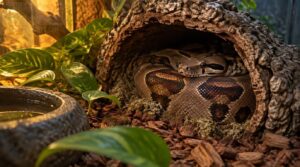
Why does a boa that’s hiding eat better, grow better, and strike less? Because darkness and body contact tell its nervous system the threat is low. In the wild, a boa never sits exposed. It wedges itself into a hollow log, a burrow, a root tangle. Walls press against its flanks. Overhead cover blocks the sky, where hawks hunt.
A snug, well-placed hide also helps rescue boas settle in faster, and this guide to boa constrictor hides for rescue owners shows how to choose one.
A boa that hides feels safe, because darkness and snug walls tell its nervous system the threat is low
Strip that away and you get a snake that’s on alert around the clock. Stress hormones stay high. Appetite drops. Regurgitation and respiratory problems follow.
A proper hide fixes this fast. Place it correctly along the temperature gradient, and your boa can thermoregulate without ever leaving cover. Add solid humidity control inside the hide, and shedding gets easier too. That’s real stress reduction, and it starts with hide placement you get right the first time.
Choosing Secure, Snug Boa Constrictor Hides
Your boa won’t use a hide just because it’s there. It has to feel secure and snug, or it’ll sit out in the open and stress. Here’s what to check before you buy or build one: fit, materials, and safe DIY options.
Sizing for Comfortable Full-Body Coiling
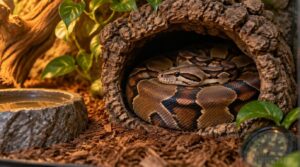
Hide size decides whether your boa relaxes or stays on alert. Match juvenile size guidelines first: 12×8×4 inches internal, so coils never touch the walls.
Once the size is right, you can compare materials and layouts in this guide to choosing snake hides for boa constrictors so your young boa feels secure and keeps eating well.
Adult hide measurements run about 15×15×7 inches for 6–8 ft snakes. Follow growth scaling rules and upgrade as your boa grows.
- Keep ceiling height near 1.5 times width.
- Choose snug-fitting entrances.
- Verify hide placement accuracy.
Safe Materials and Enclosed Designs
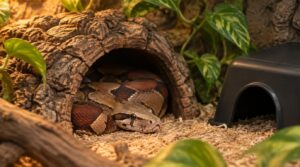
Size gets your boa through the door. Material and design keep it there.
| Feature | Why It Works |
|---|---|
| PVC or ABS | Non-porous, wipes clean |
| Cork bark | Grippable, splinter-resistant |
| One small entrance | Dark, cave-like security |
Choose safe materials and enclosed designs for real snake security. Skip rough edges. Wipe plastic weekly, and keep the hide on the warm side, preserving your gradient.
If you’re unsure which style suits your setup, this guide to different types of corn snake hides compares options so you can match each hide to your snake’s needs.
Young boas in particular benefit from multiple hides, so follow a boa enclosure sizing guide to match the enclosure and hide count to your snake’s length.
Naturalistic and DIY Hide Safety
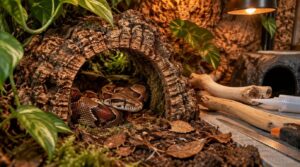
starts with safety considerations for DIY materials.
- Use untreated cork bark.
- Bake wood at 200°F for 2 hours.
- Skip cedar and pine.
- Cure reptile-safe foam fully.
- Seal with aquarium-safe silicone.
Then carefully cut snugfitting entrances 15 times the snakes width. Bioactive and mosslined hides suit hiding behavior and enclosure enrichment, but check for mold weekly.
If you keep a pair together, sturdy boa constrictor hides for breeding pairs give both snakes room to coil without crowding, using easy-to-clean, non-porous materials.
Placing Boa Hides for Stress-Free Thermoregulation
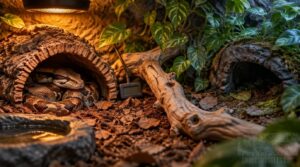
Where you put a hide matters as much as the hide itself. Strategic hide placement decides whether your boa feels safe or stuck choosing between security and heat.
You need two hides at minimum. That’s the number of hides needed for a proper gradient. Set one over the basking spot on the warm side, where ambient temps run 85-88°F. Put the second on the cool side, at 78-82°F. These thermoregulation hides let your boa warm up or cool down without ever leaving cover.
Warm side vs cool side placement is your thermal choice. Skip it and your snake will sit exposed.
For temperature gradient maintenance, probe inside each hide, not just the air. Check daily. Add a third if needed.
Managing Boa Hide Humidity Without Mold
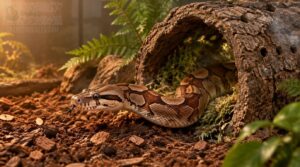
Sphagnum moss is your best tool for humidity control for shedding. Dampen it, don’t soak it, and pack it into one hide only. That gives your boa a moist retreat without turning the whole enclosure into a swamp.
Check the hide daily. If the moss feels soggy or condensation pools on the floor, pull it out and replace it with slightly damp moss. Wet, stagnant material breeds mold and bacteria fast.
Airflow matters just as much. Drill small holes in the hide, or choose breathable materials, so moisture stays inside while stale air escapes. Pair that with solid enclosure ventilation systems and you’ll keep the rest of the habitat dry.
Mosslined hides work well. Bioactive hides can too, but only if the cleanup crew and drainage are dialed in.
Maintaining Hides and Monitoring Boa Stress
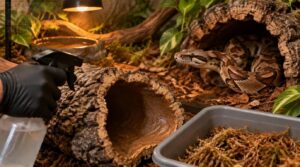
A 3% bleach solution, left on for 10 minutes, kills what a simple wipe leaves behind. That’s the essence of your hide cleaning routine.
Spot clean feces and shed skin daily. Once a week, disinfect each hide, rinse it thoroughly, and let it dry completely. Swap the moss or substrate inside every month. That moss replacement schedule keeps pathogens from building up.
Cleaning and maintaining boa hides also means inspecting them. Check for cracks, sharp edges, and loose fit. Your boa grows, so hide replacement timing matters. Replace any hide that’s too tight or too loose for coiling.
Watch your boa closely, too. Hissing, an S-curve posture, tail rattling, lethargy, or refusing food all signal stress. Log it every day.
Frequently Asked Questions (FAQs)
Are snakes good for people with anxiety?
Sometimes, yes. Snakes give you quiet, low-demand company and a calming routine. They won’t cure anxiety, though. Ball pythons suit beginners. Proper hide setup and steady care keep your snake calm, which helps you too.
How to reduce stress in snakes?
Want calmer snakes? Start with a proper hide. Give a snug, dark, single-entrance shelter on both ends of the temperature gradient. That hide placement strategy drives stress reduction in captive snakes.
What does a boa constrictor do to a human?
A boa wraps and squeezes prey, not people. Your pet usually just explores, flicks its tongue, and coils loosely on your arm. Stress reduction in captive snakes keeps bites rare. Stay calm, support its body.
Which snake is the calmest?
Is one species the calmest? Not really. Temperament is individual. A captive-bred boa constrictor with smart hide placement, stress hormone reduction, a naturalistic terrarium setup, and behavioral enrichment stays steadier than any wild-caught "calm" species.
How often should I handle my boa after adding a hide?
Wait 1-2 weeks after adding a proper hide. Then handle your boa 5 minutes every 3-4 days.
Hide placement drives stress hormone reduction, so raise handling frequency only if she uses it. That’s behavioral enrichment.
Can a boa use a hide too much?
Congratulations, your boa has mastered invisibility. Yet a snake that never leaves its hide isn’t relaxed, it’s stressed. Use stress reduction techniques: a proper hide, smart hide placement, enclosure enrichment for reptiles, and behavioral stimulation.
Why does my boa refuse to enter its new hide?
Your boa isn’t being stubborn. The hide probably feels wrong. Check three things: it’s too roomy, it sits on the wrong temperature side, or it smells new. Also wait out any shed or meal.
Should baby boas and adult boas share hides?
Would you toss a hatchling into a den with a hungry adult? That’s what sharing does. Never share hides. Hide competition risks include stress, bites, and cannibalism. Give each boa its own enclosure and snug hide.
Conclusion
Picture your boa slipping into a snug, dark hide, flanks pressed against the walls, tongue finally still.
That’s the payoff. The boa constrictor hide box benefits for stress relief show up in steadier feeding, calmer shedding and fewer defensive strikes. Choose a snug, enclosed hide, place it on both temperature zones, and keep humidity in check so mold never moves in.
Clean it often and watch your boa. A secure snake is a settled one.