This site is supported by our readers. We may earn a commission, at no cost to you, if you purchase through links.
A breeding pair that won’t settle rarely produces. Most experienced boa breeders know this—stress kills breeding behavior faster than almost anything else, and a hide that fits poorly or holds bacteria between introductions exacerbates the stress at every stage of the cycle. The wrong hide choice isn’t a minor inconvenience; it’s a variable that quietly undermines months of preparation.
Boa constrictor hides for breeding pairs demand more than a dark box to crawl into. You’re managing two large-bodied animals with different thermal needs, a gravid female who requires precise humidity, and a sanitation window between introductions that leaves no room for porous materials that trap pathogens. Every hide in your setup carries functional weight.
What follows cuts through the options—resin, ABS plastic, cork bark, and humid hide designs—so you can match material and dimensions to each stage of your breeding cycle.
Table Of Contents
- Key Takeaways
- Best Boa Hides for Breeding Pairs
- Top Non-porous Resin Hides for Adult Boas
- Best ABS Plastic Hides for Easy Disinfection
- Best Natural Cork Bark Hides for Breeding Enclosures
- Best Humid Hides for Gravid Female Boas
- Best Budget DIY Hide Options
- Product Comparison by Size, Durability, Cleaning, and Price
- Which Hide Types Work Best for Temporary Breeding Introductions
- Choosing The Right Hide Size
- Safest Hide Materials
- Placement for Breeding Setups
- Cleaning and Breeding-Cycle Management
- Frequently Asked Questions (FAQs)
- Do boa constrictors need hides?
- Which snake squeezes its prey to death?
- How big should a hide be for a snake?
- Can stress from poor hides cause failed ovulation?
- How do hides support neonates after live birth?
- Should lighting near hides change during breeding cycles?
- Do male boas need hides during cooling periods?
- Conclusion
Key Takeaways
- Non-porous resin and ABS plastic hides are your safest bet for breeding setups — they handle repeated disinfection without warping, harboring bacteria, or breaking down over time.
- Hide size isn’t a one-time decision — upsize when girth grows more than 20% within two months, and always target an entrance just 1–2 inches wider than your boa’s thickest point.
- Gravid females need a two-chamber humid hide packed with Sphagnum moss, placed in the mid-zone between warm and cool ends, with moss replaced weekly to keep humidity steady at 60–70%.
- Stress from a poorly fitted or contaminated hide can suppress the hormonal signals that trigger ovulation — meaning hide hygiene and correct sizing directly affect whether your breeding cycle succeeds or fails.
Best Boa Hides for Breeding Pairs
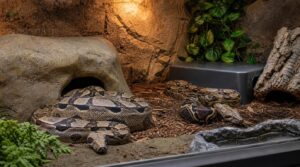
Not every hide on the market is worth your money — especially when you’re managing a breeding pair with specific temperature, humidity, and hygiene demands.
Understanding what actually makes a hide breeding-safe is worth the research — snake hides designed for breeding success break down exactly what to look for before you buy.
The options below are chosen with adult boas and gravid females in mind, covering everything from resin and ABS plastic to cork bark and DIY builds. Here’s what’s actually worth keeping in your setup.
Top Non-porous Resin Hides for Adult Boas
For adult boas, nonporous resin hides are hard to beat. Their sealed, nonporous surface makes them genuinely easy to clean between introductions.
Look for these key features:
- Impact-Resistant Construction — withstands bites and pressure from large boas
- UV-Stabilized Finish — won’t fade under breeding room lighting
- Low-Off-Gassing Formulation — post-cured resin stays safe in humid setups
- Modular Multi-Chamber Layout — scales with your enclosure configuration
Best ABS Plastic Hides for Easy Disinfection
Durable ABS plastic performs differently in high-activity breeding rooms. Its nonporous surface wipes clean in seconds, while antimicrobial coatings on gloss finishes further reduce biofilm risks.
Snap-fit construction allows easy disassembly for deep cleaning between introductions. Ventilated panels accelerate drying, enhancing hygiene.
UV-stabilized polymers retain color even after 100-plus disinfection cycles, ensuring long-term durability. Plastic reptile hide boxes consistently deliver optimal hide box dimensions, meeting practical needs without compromise.
Best Natural Cork Bark Hides for Breeding Enclosures
Cork bark brings something plastic simply can’t replicate — microclimate creation through natural moisture buffering that stabilizes humidity right where your boa rests. Heat-treated cork bark hides resist mold while eco-friendly sourcing from renewable Quercus suber keeps your setup guilt-free.
Texture variety across wooden and cork bark hides also facilitates mating behavior by giving each snake a genuinely secure retreat — a real factor in boa health.
The hides also benefit from natural antimicrobial properties, helping keep the enclosure hygienic.
Best Humid Hides for Gravid Female Boas
Gravid females need more than just a hiding spot — they require a controlled microenvironment. A Two-Chamber Design separates the damp retreat from a dry zone, offering essential flexibility.
Pack the humid chamber with sphagnum moss for superior moisture retention compared to coco coir. Incorporate Drainage Slot Integration to eliminate standing water. Daily use of Humidity Monitoring Tools ensures precise environmental tracking.
Maintain reliability through a consistent Maintenance Schedule Frequency: replace moss weekly to uphold optimal humidity control and shedding performance.
Best Budget DIY Hide Options
Budget doesn’t have to mean compromise. DIY hide options keep costs under $10 while still meeting your boa’s needs:
- Recycled Plastic Boxes — cut an entry hole, apply silicone sealant around edges for stability
- Painted Cardboard Tubes — reinforced with non-toxic sealant; quick assembly methods make replacements easy
- PVC Tunnels — smooth interior facilitates maintenance and cleaning protocols
- Budget thermal insulation lining retains warmth effectively
Product Comparison by Size, Durability, Cleaning, and Price
Each hide type has its trade-offs. When you stack size cost ratio, impact durability score, cleaning ease index, price per volume, and weight vs. durability side-by-side, patterns emerge quickly.
| Hide Type | Size | Durability | Cleaning | Price |
|---|---|---|---|---|
| Non-Porous Resin | Up to 14×9×5 in | 8/10 | Fast — 5 min dry | $16–$22 |
| ABS Plastic | Standard 10×7×4 in | 9/10 | Bleach-safe | $12–$18 |
| Cork Bark | Varies | Cracks if dropped | Ethanol only | $22–$40 |
| Humid Gravid Hide | Extra-large | Moderate | Rinse thoroughly | $28–$60 |
| DIY Options | Customizable | 1–3 yr lifespan | Material-dependent | $6–$14 |
Which Hide Types Work Best for Temporary Breeding Introductions
Temporary introductions demand the right setup from the start. Snap-fit hides and low-stress entry hides minimize friction when a male component enters the female component’s space.
Keeping the warm hide at 86–90°F for ball python comfort encourages both animals to settle in without unnecessary stress.
Pre-sanitized travel hides maintain cleanliness between sessions, ensuring hygiene without added effort.
Modular compartment hides and adjustable aperture hides adapt quickly to different body sizes—eliminating guesswork for seamless adjustments.
Non-porous resin remains the most practical material choice: fast to disinfect, structurally stable, and snug enough to keep both components secure.
Choosing The Right Hide Size
Getting hide size wrong is one of the easiest mistakes to make — and one of the most costly for a breeding pair. A hide that’s too big or too small throws off security, thermoregulation, and your snake’s overall comfort.
Here’s what the right dimensions actually look like across different sizes and setups.
Hide Dimensions for Juvenile Boas Under 5 Feet
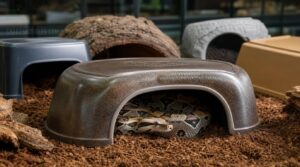
Selecting appropriate hide size and material for boa constrictors starts earlier than most breeders expect — with hatchling boas. For juvenile space optimization, target interior hide dimensions of 12 × 8 × 4 inches. Your hide interior volume should allow full coiling comfort metrics without excess room. Keep the snout entry buffer at 1 inch wider than girth.
Growth projection scaling means reassessing every 6 months.
Hide Dimensions for Adult Boas 6–8 Feet
Once your boa reaches 6 feet, juvenile hides quickly become a tight squeeze. Adult boas measuring 6–8 feet require ample space to coil fully—not just stretch out. Here’s your essential size guide for reptile hide shelters at this growth stage:
- Overall Hide Length: 15 inches minimum
- Body Width Fit: 4–6 inches interior width
- Depth for Coiling: 15 inches deep
- Internal Height Clearance: 7 inches
- Upsizing Timeline: Reassess every quarter
Large-bodied snakes thrive in enclosures featuring cleanable, non-porous materials. Durable ABS plastic accessories for terrariums are ideal—they withstand repeated disinfection cycles without warping.
Why Breeding Pairs Need Separate Hides
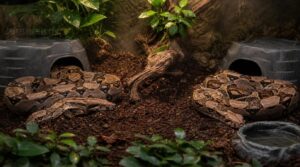
Sharing a single hide during breeding is a recipe for trouble. Stress reduction starts with giving each boa its own retreat — aggression prevention becomes much easier when neither snake competes for space.
Separate hides also support thermal independence, disease isolation, and cleaner behavior monitoring.
Durable ABS plastic accessories for terrariums simplify maintaining dual hide setups, ensuring consistent cleaning protocols between introductions.
Ideal Entrance Size for a Secure Fit
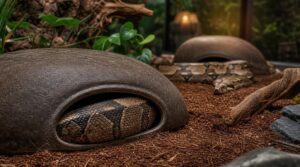
Once each boa has its own retreat, entrance size becomes your next focus. Girth-based measurements drive this decision — for adults 6–8 feet, a 3–4 inch opening delivers a snug fit without forcing the body through. Entrance taper angle guides entry naturally, while edge smoothness prevents scale abrasions.
For large-bodied snakes, proper hide access directly facilitates boa constrictor care during high-stress breeding introductions.
When to Upsize Hides During Growth Checks
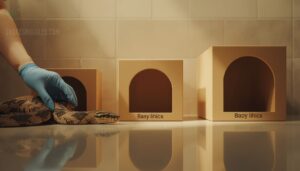
Growth benchmark triggers tell you exactly when to act. Upsize when girth increases more than 20 percent within two months — that’s your girth threshold. Follow a seasonal upsizing schedule, targeting mid-spring when growth peaks.
For large-body snakes requiring extra-large or jumbo hide boxes, increase interior diameter by 0.75–1 inch at a time.
Track occupancy rate — target 70 percent use within 14 days post-upsize.
Signs a Hide is Too Small or Too Large
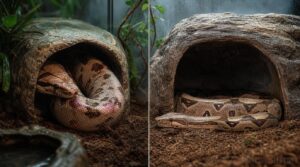
Once you’ve nailed the upsizing schedule, knowing what a bad fit looks like keeps you ahead of problems.
Watch for pressure marks or reddened skin — that’s a too-small hide. Frequent exits signal discomfort.
Oversized hides cause humidity drops and poor heat retention. Interior wear streaks mean repeated rubbing.
Both extremes spike stress hormones, disrupting digestion and feeding response.
Safest Hide Materials
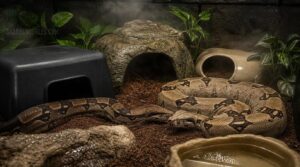
The hide material you choose matters more than most people realize — especially in a breeding setup where you’re cleaning frequently and managing humidity for a gravid female. Not every material holds up to that kind of repeated use, and some can actually work against you.
Here’s what’s worth your consideration.
Resin Hides Versus Plastic Hides
Both plastic and resin hides solve the same core problem — cleanable, nonporous reptile enclosures that won’t harbor bacteria between breeding introductions. The real difference comes down to trade-offs worth knowing:
- Thermal conductivity: Resin retains heat better; plastic relies on external sources
- Surface smoothness: ABS plastic won’t snag scales during movement
- Chemical durability: Both handle disinfectants without warping
- Weight considerations: Resin is lighter than ceramic but heavier than thin plastic
Cork Bark, Mopani, and Manzanita Options
Cork bark, mopani, and manzanita each bring distinct advantages to a breeding enclosure. Cork’s lightweight build and natural aesthetics excel in weight comparison, while its irregular texture provides a secure grip for boas during movement. Mopani’s dense branching design offers environmental enrichment through varied hiding spots. Manzanita stands out for its ability to withstand humid conditions, making it ideal for high-moisture zones.
All three materials support stress reduction when proper hide placement is ensured. However, their cleaning protocols require more effort compared to plastic alternatives, despite their functional benefits.
Materials to Avoid in Breeding Enclosures
Some materials will quietly work against you. Lead paint and solvent coatings off-gas toxins that irritate skin and lungs. Untreated wood harbors mold fast, creating unhealthy conditions. Sharp edges can snag scales, causing injury, while PVC additives leach when chewed, posing ingestion risks.
Avoid cardboard box hides entirely—they collapse under humidity and fail to withstand cleaning protocols. These hides cannot endure regular maintenance, compromising hygiene and structural integrity over time.
Prioritize cleanable nonporous reptile enclosures using heavy 18-gauge plastic. Opt for durable resin hides to ensure safety, longevity, and ease of sanitation.
Mold Resistance and Moisture Control
Humidity is a double-edged sword in breeding enclosures — essential for gravid females, but dangerous when it feeds mold. Your hide material determines which side wins.
In breeding enclosures, humidity is essential for gravid females — and lethal when your hide material lets mold win
- Surface Finish Selection — glossy resin limits spore attachment better than rough textures
- Moisture Barrier Layers — sealed seams block water infiltration at joints
- Integrated Drainage Design — sloped bottoms shed water after cleaning
- Antimicrobial Sealants — cork and manzanita need sealants to resist fungal growth
- Real-Time Hygrometry — place hygrometers inside hides to keep RH at 60–70%
Food-grade and Non-toxic Material Considerations
Plastic and resin hides built from ABS polymer or food-grade HDPE should carry certification labels confirming FDA or EU 1935/2004 compliance. Always request supplier documentation and third-party leachability testing results.
BPA-free sealants and non-toxic coatings on nonporous materials prevent chemical transfer — especially critical when heat and humidity push 88°F inside gravid female setups. What goes into your hide matters as much as what goes into your enclosure.
Durability for Large-bodied Boa Constrictors
A large boa isn’t gentle on its hide — and your enclosure materials must withstand this reality. An adult snake, reaching 6–8 feet, exerts significant pressure on every surface it contacts.
- Vertebral column strength means sustained body pressure against hide walls
- Scale abrasion resistance depends on smooth, non-porous interiors
- Muscle tone maintenance requires hides that don’t flex or collapse
- Joint integrity checks reveal wear from undersized or warped hides
- Enclosure load capacity matters — extra large hide boxes in heavy 18" thick plastic or ABS polymer outlast cheaper alternatives
The durability of plastics and resin hides simply wins long-term.
Placement for Breeding Setups
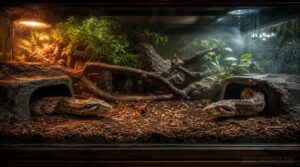
Where you place a hide matters just as much as which hide you choose. A well-positioned setup gives your boas the temperature gradient they need to self-regulate — and that’s especially critical during breeding season.
Here’s how to get placement right for every hide in the enclosure.
Warm-side Hide Placement Under Heat Sources
Place the warm-side hide directly over your thermostat-controlled heat source — heat source alignment here isn’t optional. Aim for 86–90°F inside.
Use an insulating spacer or elevated hide mounting to reduce direct conduction and prevent belly burns. Maintain air gap reduction for stable temperatures, and verify with a probe daily.
If surfaces run hot, heat shield application protects the hide from warping.
Cool-side Hide Placement for Thermoregulation
The cool-side hide belongs at the far end of the enclosure — edge proximity to the warm source undermines the purpose.
Floor level positioning matters here; substrate conductivity keeps interior temps steady at 75–80°F without artificial spikes.
That thermal buffer zone gives your boa a genuine gradient distance to work with.
Confirm readings daily with a probe inside the hide.
Dual-hide Arrangements for Each Boa
Once your warm and cool sides are dialed in, dual-hide setups complete the picture. Give each boa its own hide on opposite ends—that’s your Territorial Balance and Microclimate Separation working together.
Hide Pair Symmetry keeps Behavioral Monitoring straightforward; you’ll spot stress or avoidance faster.
Entrance Alignment and Placement strategies for dual-hide setups reduce scent crossover, making introductions noticeably calmer.
Humid Hide Placement for Gravid Females
Gravid females require more than a standard dual-hide arrangement. A humid hide lined with moistened sphagnum moss provides essential microclimate control and monitoring, preventing overheating when placed in the intermediate zone between the warm and cool ends. Maintain a height offset of 5–10 cm above the heat source to ensure safety and effectiveness.
Substrate depth should be deeper than usual to prioritize nesting comfort. This design enhances moisture retention, humidity control, and shedding performance while supporting physiological needs.
Proper hide placement directly enables stress reduction, creating a stable, controlled environment critical for gravid health and reproductive success.
Using Temperature Probes Inside Hides
Once your humid hide is positioned, probe placement matters: push a waterproof sensor to the deepest point for true ambient readings. Calibration routine should happen monthly.
Use data logging probes to support trend analysis across the temperature gradient. That data tells you when your thermostat-controlled heat source needs adjustment before your boa’s thermoregulation suffers.
Ventilation Strategies to Prevent Mold
Stagnant air is mold’s best friend — and your boa’s worst enemy. Proper Airflow Path Design keeps moisture from settling on hide surfaces long enough for spores to take hold.
- Position vents using Vent Position Optimization to push air around — not past — hides
- Apply Condensation Prevention Techniques by angling airflow away from hide corners and seams
- Use Humidity Monitoring Systems with a reliable hygrometer to catch spikes before mold establishment
- Follow a strict Filter Cleaning Schedule every 30 days to maintain consistent air exchange
- Apply sound ventilation hole design principles — cross-ventilation keeps enclosure humidity between 55–75%
Cleaning and Breeding-Cycle Management
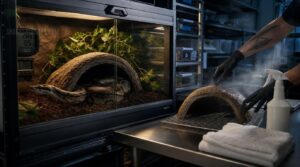
Keeping hides clean during a breeding season isn’t just good practice—it separates a smooth cycle from a stressful one.
How you manage disinfection, drying, and temperature adjustments at each stage of the cycle matters more than most keepers realize.
Here’s what you need to know to stay on top of it.
Daily Spot-cleaning for Breeding Enclosures
A missed day of cleaning can quietly unravel weeks of careful breeding work. Spot clean daily — remove feces, replace soiled substrate, and rinse water dishes every 24 hours.
Your cleaning schedule should include residue checks on hide surfaces and ventilation management to prevent condensation buildup.
Behavioral monitoring after each clean confirms your boas reoccupy hides within 15 minutes.
Disinfecting Hides Safely Between Introductions
Between introductions, every hide needs a full disinfection reset — not just a rinse. Follow these five steps:
- Pre‑disinfection rinse removes visible waste so organic matter doesn’t block the disinfectant.
- Even wetting techniques guarantee no dry patches on seams or textured surfaces.
- Contact time specifics — keep surfaces wet the full label duration.
- Post‑disinfection handling uses clean gloves to prevent recontamination.
- Disinfectant residue management confirms no chemical buildup remains before reuse.
Drying Protocols Before Returning Hides
Disinfection is ineffective if a wet hide is returned to the enclosure. Maintain controlled airflow at 20–25°C and 40–60% relative humidity as the baseline—deviations risk case hardening or mold growth. Target 12–14% internal moisture before reinsertion, and use odor detection as a final check: a sour smell indicates insufficient drying.
| Drying Timeframes | Moisture Target | Post-Dry Handling |
|---|---|---|
| 6–8 hrs (thin plastic) | 12–14% moisture meter | Gloves on, no bare hands |
| 12–16 hrs (resin) | Matte, non-sticky surface | Rest 1 hr in breathable bin |
| 18–24 hrs (cork/wood) | Firm, not brittle flesh side | Final wipe with damp cloth |
| Turn every 2 hrs | No internal moisture pockets | Recheck after binning |
| Fan running continuously | Below 15% to prevent mold | Inspect for cracks before return |
Managing Hides During Cooling Cycles
Cooling cycles demand tighter hide management — not looser. Drop enclosure temps to a 20–25°C band and keep humidity below 60% using desiccant packs placed near (never touching) hides for effective humidity monitoring.
- Rotate hides every 12–24 hours for consistent airflow optimization
- Inspect daily for softening edges or discoloration
- Retain a warm hide with partial heat source access to prevent respiratory infections
Hide Setup After Male Introduction
Immediate hide placement is not optional — it’s the reset button for both animals. Dual-hide setups, one warm and one cool, provide each boa with a private retreat and serve as your strongest stress reduction tactic after introduction.
Keep both hides undisturbed for at least 24 hours. This hide acceptance period reveals how well the introduction is progressing.
Post-ovulation Hide Temperature Adjustments
After ovulation, raise ambient temperature to ~84 °F and incrementally adjust the warm hide to 88–89 °F. Never make sudden changes; the luteal phase relies on a stable temperature gradient to avoid stress.
Conduct daily thermostat precision checks and meticulously log hide temperatures. This ensures thermoregulation remains consistent, preventing fluctuations that could disrupt physiological processes.
Use a thermostat-controlled heat source to maintain precise temperature zoning. This approach locks in the stability required for the boas’ reproductive health during this critical phase.
When to Replace Plastic and Wooden Hides
Stable temperatures protect the litter, but worn hides quietly undermine all of that. Replace plastic reptile hide boxes every 12–18 months, as material fatigue and growth overshoot are equally valid triggers for replacement.
Watch for visible cracks, persistent odor, or mold recurrence—those are hard stops requiring immediate action.
Adhering to guidelines for hide replacement intervals based on snake growth, combined with maintenance and cleaning protocols for reptile hides, ensures year-round reliability.
Frequently Asked Questions (FAQs)
Do boa constrictors need hides?
Yes — hides aren’t optional. They’re essential for stress reduction, thermoregulation aid, shedding support, and predator avoidance.
Without one, a boa’s immune function drops and feeding suffers.
Hides are non-negotiable for long-term health.
Which snake squeezes its prey to death?
Boa constriction, python pressure, anaconda squeeze, and king snake coil all share one thing — breathing disruption.
These constrictors kill by preventing exhalation, cutting off oxygen and circulation until the prey stops moving.
How big should a hide be for a snake?
A proper hide should let your snake coil snugly with a 1–2 inch Coiling Buffer on all sides.
Match the Girth Ratio so the entrance fits just slightly wider than the snake’s thickest point.
Can stress from poor hides cause failed ovulation?
Like a pulled fire alarm that never shuts off, cortisol spikes from behavioral stress and hormonal disruption can suppress GnRH signaling.
This suppression blocks the LH surge that triggers ovulation, causing ovulation suppression even when mating occurs.
How do hides support neonates after live birth?
Hides cut neonate stress fast — they block harsh light, trap belly warmth, and stabilize humidity for clean first sheds and steady early feeding.
Should lighting near hides change during breeding cycles?
Yes: photoperiod adjustments and spectrum tuning matter. Gradually shift light intensity near hides during breeding cycles.
Stress-reduction lighting with warm, low-blue output promotes calm behavior without disrupting humidity-friendly lighting or light-heat management around hides.
Do male boas need hides during cooling periods?
Yes, they do — a cool-side hide facilitates stress mitigation, steadies activity patterns, and improves temperature drop tolerance throughout the cooling cycle timing window.
Conclusion
A hide is more than shelter—it’s the quiet anchor of every successful breeding cycle. When properly sized, non-porous, and placed with intention, these hides eliminate variables that could disrupt months of careful conditioning.
Clean materials, correct dimensions, and smart placement remove one more variable that could derail progress. While these fundamentals don’t guarantee outcomes, they create the conditions where results become possible.
Get the fundamentals right, and your animals will do the rest.
- https://reptilesmagazine.com/tips-for-breeding-boa-constrictors/?srsltid=AfmBOooO1EeRMNfb6QdnAJmKmsphqUf0_s5vazsDrd_QMVbwISKttCmH
- https://www.galapagospet.com/animals/boa-constrictor/?srsltid=AfmBOoo-FcfdGlPbvRKOFvlKP9CQssFb8BnpHMp1t2vas0Nw318avxnV
- https://dubiaroaches.com/blogs/snake-care/boa-constrictor-care-sheet?srsltid=AfmBOorM4dxcbRApyjlPCCfQ2aB4nOf98-cRcmC_6WC0vYtftmxe4cZ4