This site is supported by our readers. We may earn a commission, at no cost to you, if you purchase through links.
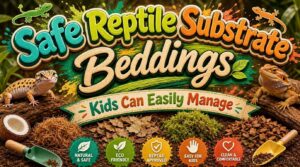
Choosing the wrong bedding is one of the most common mistakes new reptile owners make—and for kids, it can mean the difference between a thriving pet and an emergency vet visit. Loose sand, cedar chips, walnut shells: they look harmless in the pet store, but they cause real harm.
The good news is that safe, kid-friendly reptile substrate beddings exist, and they’re easier to manage than most parents expect.
Whether your child is caring for a ball python, corn snake, or burrowing lizard, the right substrate makes daily care simpler, safer, and actually enjoyable.
Here’s what works.
Table Of Contents
Key Takeaways
- Loose substrates like sand, walnut shells, and cedar can cause serious harm through ingestion or toxic fumes, so sticking to paper towels, reptile carpet, or tile keeps young caretakers on the safe side.
- Your reptile’s bedding needs depend on its species — ball pythons and corn snakes thrive on aspen shavings, while burrowing and humidity‑loving reptiles need deeper, moisture‑retentive blends.
- A simple daily spot-check routine — scanning for waste, moisture, and odors — catches small problems before they turn into vet visits.
- Setting up autoship or curbside pickup for substrate means your child never scrambles for supplies and always keeps the enclosure fresh without adult reminders.
Best Beginner Reptile Bedding Options
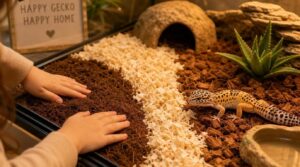
Picking the right bedding doesn’t have to be complicated, especially when you’re just starting out. A few solid options work well for beginners and are easy for kids to handle on their own. Here’s what’s worth knowing before you choose.
For a deeper look at what actually makes a difference day-to-day, corn snake habitat and care essentials covers the basics in a way that’s easy to follow.
Paper Towels
Paper towels are the easiest starting point for any new reptile keeper. They have no loose substrate, which completely eliminates the digestive blockage risk from accidental ingestion.
You can spot waste instantly, swap them out daily, and move on.
Their wet strength holds up during cleanups, and most are hypoallergenic.
Used sheets go straight in the trash — simple, safe, done.
Reptile Carpet
Reptile carpet is a great next step up from paper towels. A repticarpet liner sits flat on your enclosure floor, traps waste on the surface, and won’t break apart if your reptile mouths it — so impaction risk stays low. Studies highlight the benefits of reptile carpets such as reduced bacterial buildup.
- Soft fibers cushion your reptile’s belly and joints
- Textured surface gives solid grip during movement
- Moisture-wicking backing helps control humidity
Carpet maintenance is simple: remove, wash, dry, replace.
Tile or Vinyl
If carpet feels a bit soft for your setup, tiles or vinyl bring a whole new level of ease.
Adhesive-free vinyl tiles press flat onto the enclosure floor — no tools needed.
Ceramic or porcelain tile resists scratches and cleans up fast.
Both surfaces eliminate impaction risk entirely, since there’s nothing loose to swallow.
Aspen Shavings
For kids who want something more natural, aspen shavings are a great next step. This hypoallergenic wood bedding contains no toxic oils or scents, so it’s gentle on your reptile’s lungs.
It’s also dust-free bedding that provides burrow support for snakes that like to dig. Plus, it’s an eco-friendly option — biodegradable and easy to compost.
Natural Soil Blends
Natural soil blends take things up a notch. A good soil mix combines loamy soil, sand, and coconut coir — giving your reptile a naturalistic substrate that holds moisture without staying soggy.
Microbial activity keeps the enclosure balanced, while burrow stability lets digging species do what they love.
It’s a solid pick for kids ready for a more hands‑on setup.
Safest Substrates for Young Caretakers
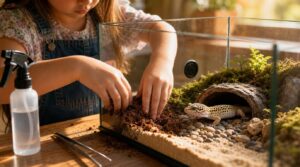
Picking the right substrate isn’t just about your reptile — it’s about making sure you can actually keep up with the care. Some beddings are genuinely easier and safer for younger keepers to handle day to day. Here’s what you should know before choosing one.
Low Impaction Risk
Impaction is one of the biggest health risks young caretakers should understand. It happens when a reptile swallows loose substrate particles that block digestion.
Impaction starts when reptiles swallow loose substrate, making bedding choice a real health decision for young caretakers
Safer options — like reptile carpet, tile, or paper towels — drastically cut reptile substrate impaction risk. They leave no loose pieces for curious reptiles to ingest, making digestive safety much easier to maintain from day one.
Easy Waste Spotting
Spotting waste early is one of the best ways to protect your reptile’s health. Light-colored substrates like paper towels and vinyl tile make this simple — fresh droppings show up clearly within an hour or two.
- Check daily using a magnifier for spotting small deposits
- Log findings on a color-coded waste chart
- Follow a spotting schedule routine every morning
Non-Toxic Materials
Not every bedding looks safe — but the materials underneath matter most. For young caretakers, choosing non-toxic substrates removes a lot of worry.
Inert glass substrate, ceramic tile, and stainless steel won’t leach harmful chemicals. Hemp fiber options, coconut fiber, and Lugartis Natural Reptile Bedding offer eco-friendly substrate choices that are gentle, biodegradable, and low in irritants — smart picks for responsible, kid-managed enclosures.
Simple Cleaning Steps
Cleaning doesn’t have to feel like a chore. Start with a pre-clean inspection — scan the enclosure for spilled substrate or waste before touching anything.
Then use a scoop or paper towel for waste scoop removal.
Follow with a damp surface wipe, rinse with clean water, and let it complete air dry before your reptile goes back in.
Choosing reptile substrate liners for beginners can also make routine cleanup faster and less stressful.
Snake-Friendly Choices
Not every substrate suits every snake. For beginners, the safest picks are simple and low-risk:
- Paper towels make waste spotting easy
- Aspen shavings support natural burrowing instincts
- Reptile carpet offers a washable, stable surface
- Tile or vinyl keeps cleaning quick and mess-free
Stick to these, and impaction prevention for snakes stays straightforward.
Species-Specific Bedding Matches
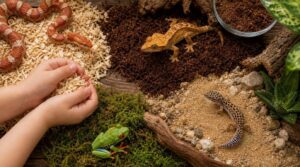
Not every reptile plays by the same rules, and their bedding needs are no different. The right substrate for your snake won’t always work for a burrowing lizard or a humidity-loving species. Here’s what each type actually needs.
Ball Pythons
Ball pythons are one of the best starter snakes for kids. They’re calm, slow-moving, and rarely bite.
Aspen shavings work great — they’re safe, hold tunnels well, and carry no toxic oils. Avoid loose sand entirely; impaction risk is real.
Aim for 40–60% humidity, spot-check bedding daily, and use paper towels during shed week for easy moisture tracking.
Corn Snakes
Corn snakes are naturally curious and surprisingly easy to manage. They’re slender, docile, and adapt well to a simple setup — a great next step after ball pythons.
Aspen shavings are your best bedding choice. They’re non-toxic, hold shape well, and let you spot waste quickly. Skip loose substrate entirely — impaction risk is just as real here.
Boa Constrictors
Boa constrictors are a big step up from corn snakes — literally. Adults can reach 10 to 13 feet, so their enclosure needs to grow fast.
Aspen shavings work well here. They’re non-toxic, hold heat, and make waste easy to spot. Skip loose sand or bark — both hide waste and raise impaction and mold risks quickly.
Burrowing Reptiles
Some reptiles need to dig — it’s not just a quirk, it’s survival. Sand boas and certain monitors require loose, diggable media to feel secure.
A natural soil blend (4–5 inches deep) reinforces tunnel stability without collapse. Keep soil slightly moist — too dry, and burrows crumble.
That depth also gives them the burrow depth, burrowing behavior in reptiles genuinely demands.
Humidity-Loving Species
Some species practically breathe humidity — and their substrate has to match that need.
Ball pythons, boa constrictors, and many frogs require moisture-retentive substrates like coconut fiber to stay healthy. These materials hold ambient humidity without turning soggy.
- Use RH monitoring devices to keep levels between 60–90%
- Run misting cycles to prevent dry spikes
- Choose eco-friendly substrate blends free of mold-prone bark
Substrates Children Should Avoid
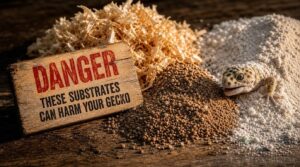
Not every substrate on the shelf is safe for young caretakers to handle. Some materials can seriously harm your reptile — even when they look totally fine at first glance. Here are the ones you’ll want to steer clear of.
Loose Sand
Loose sand might seem like a natural choice, but it’s one of the riskiest loose substrates you can use. Sand particle size ranges from 0.05 to 2.0 mm — small enough to be swallowed accidentally during feeding. That’s how impaction starts, and it can turn serious fast.
| Risk Factor | Why It Matters |
|---|---|
| Fine grain ingestion | Causes digestive blockages |
| Dust during cleaning | Irritates lungs and eyes |
Preventing accidental ingestion and managing dust are the two biggest challenges with loose sand. Skip it entirely for young caretakers.
Calcium Sand
Calcium sand is often marketed as a safer, mineral‑rich option — but don’t be fooled. Impaction risk is still real if your reptile ingests too much.
Fine carbonate dust can also irritate sensitive airways in both kids and pets. Substrate rotation helps reduce that exposure.
For calcium intake, stick to powders dusted on feeder insects instead.
Walnut Shells
Walnut shells might seem like an ecofriendly substrate — they’re biodegradable and made from agricultural waste — but they’re a poor fit for reptile bedding.
- Sharp shell fragments can cut mouths and skin
- Impaction risk rises if pieces are swallowed
- Not a natural substrate alternative for most reptiles
- Small or burrowing species face the highest danger
Skip walnut shells. Pet parents have safer options.
Cedar or Pine
Cedar and pine might seem like natural substrate alternatives, but both are dangerous for reptiles. Their aromatic oils are the real problem — even short exposure can irritate or damage your reptile’s respiratory tract.
Cedar is especially harmful. Pine isn’t much safer. Avoid both completely. Choose non-aromatic bedding instead to keep your reptile breathing easy.
Mold-Prone Bark
Bark looks natural, but it’s a hidden mold factory. Moist organic bark traps humidity, and mold spreads fast in warm enclosures. That’s a real problem for your reptile’s lungs.
- Spores cause respiratory irritation in reptiles and kids
- Mold and mildew grow invisibly before you notice
- Moldy bark attracts insects, making cleaning harder
Choose kiln dried bark only, or skip bark entirely.
Kid-Friendly Cleaning and Reordering
Keeping a reptile’s home clean doesn’t have to feel like a chore — even for kids. A simple routine makes the whole thing manageable, and knowing what to do (and when) is half the battle. Here’s what that routine looks like in practice.
Daily Spot Checks
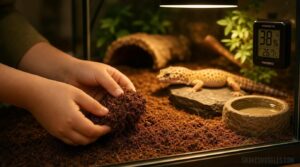
Checking your reptile’s enclosure daily doesn’t have to feel like a chore. A quick 5–10 minute routine each day keeps small problems from turning into big ones.
| Check | What to Look For | Action If Off |
|---|---|---|
| Temperature Check | Warm and cool side in range | Adjust lamp or heating pad |
| Humidity Check | Hygrometer reads species range | Mist or ventilate enclosure |
| Substrate Check | No mold, odors, or wet spots | Spot-remove soiled areas |
| Water Bowl Check | Clean, full, algae-free | Replace with fresh water |
Log each check — pass or fail — so you can spot trends early.
Full Substrate Changes
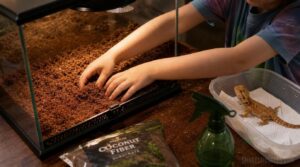
Daily spot checks catch small messes, but some problems go deeper. That’s when a full substrate change is needed.
- Move your reptile to secure temporary housing
- Remove all old substrate and sanitize the enclosure
- Add species-appropriate substrate at the correct depth
After refilling, watch your reptile’s feeding and activity for a few days.
Humidity Monitoring

Once the fresh substrate is in, don’t stop there. Humidity monitoring ties everything together.
| Setting | Kids’ Action | Target Range |
|---|---|---|
| Sensor placement | Away from vents and water | Eye-level on enclosure wall |
| Alert threshold | Check color-coded display | 60–80% RH for tropical species |
| Log frequency | Record daily in care journal | Every 24 hours |
Pickup and Delivery Options

Once humidity is steady, keeping substrate stocked is your next win. PetSmart’s pickup and delivery options make reordering simple — even for kids managing their own supply runs.
- Curbside pickup lets you grab substrate without leaving the car
- Same-day delivery arrives within hours through DoorDash
- Locker access is available 24/7 with a unique code
- Delivery scheduling lets you pick your time slot
- Real-time alerts notify you when orders are ready
Autoship for Consistency
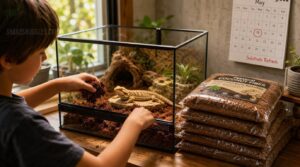
Autoship takes the guesswork out of restocking. Set your delivery frequency once, and substrate arrives before you run out.
You can adjust order timing, skip a month, or swap items anytime.
It even facilitates consistent supply routines that help kids stay on schedule — so your reptile always has fresh, species-appropriate substrate without last‑minute scrambles.
Frequently Asked Questions (FAQs)
How often should reptile bedding be fully replaced?
A stitch in time saves nine." Replace bedding every 1–2 months for most reptiles. Swap sooner if you spot odor, moisture buildup, or visible waste.
What signs indicate a reptile has ingested its bedding?
Watch for fecal bedding fragments in stool, reduced appetite signs, abdominal bloating, and straining defecation posture. These behavioral discomfort clues signal impaction. Loose substrate in the digestive tract may require veterinary intervention to protect reptile health.
Are live plants safe to grow in reptile substrates?
Yes, live plants are safe — if chosen carefully. Always do a Plant Toxicity Check first. Use soilless planting for vivariums when possible, guarantee Root Zone Drainage, and always complete New Plant Quarantine before introducing anything new.
Conclusion
Hark—the difference between a sick reptile and a healthy one often comes down to what lines the bottom of their enclosure. With the right reptile substrate beddings for children learning reptile care, your kid gains real confidence, not just a hobby.
Paper towels, aspen, reptile carpet—each one makes daily care manageable and safe. Choose wisely, stay consistent with cleanings, and the enclosure practically runs itself.
Your child’s reptile journey starts from the ground up.