This site is supported by our readers. We may earn a commission, at no cost to you, if you purchase through links.

A snake can’t sweat, pant, or walk away from a heat source it doesn’t understand. It can only move within the space you give it, and if every inch of that space is dangerous, it has nowhere to go.
So can snakes overheat from enclosure heaters? Yes, and faster than most keepers expect. A stuck thermostat, a bulb too strong for a small tank, or a heat pad buried under bedding can turn a cozy enclosure into a burn hazard within hours. Some injuries look minor at first, then blister and blacken days later.
Here’s how to spot the warning signs, set up safe heat, and respond if something goes wrong.
Table Of Contents
Key Takeaways
- Yes, snakes can overheat from enclosure heaters, and it happens fast, because they can’t sweat or cool themselves and a stuck thermostat, oversized bulb, or buried heat pad can turn the enclosure dangerous within hours.
- You’ll want a thermostat on every heater, a separate thermometer to double-check it, and a warm-to-cool gradient with a cool refuge, since species-specific temperatures (like 90-92°F for ball pythons) let your snake choose its own comfort.
- Watch for open-mouth breathing, pressing against cool glass, limpness, or blistering and darkening scales, because burns often look minor at first and worsen over several days.
- If your snake overheats, cool it gently with a damp, slightly cool towel (never ice or cold water) and call an exotics vet the same day, since organ and kidney damage can show up later.
Can Snakes Overheat From Enclosure Heaters?

A snake can overheat when its heat source runs unchecked. Snakes are ectotherms, so they rely on their surroundings to regulate body temperature. They can’t sweat or cool themselves down the way you can. If enclosure heaters push the space too hot, a snake has few ways out.
A reliable reptile thermometer for snake enclosures lets you check both the warm and cool ends, so you can keep a proper gradient and catch overheating early.
The most common cause is a heater with no thermostat. Under-tank pads, heat rocks and unguarded lamps can create dangerous hot spots, and a snake that rests on one can suffer burns before you notice. A failed thermostat or a bulb that’s too strong for the enclosure size makes things worse. Overheating in a tank is most likely in small glass enclosures near sunny windows.
Heat source safety matters, and signs of overheating are easy to miss. Reptiles that are overheating often show glass surfing and panting away from the basking area as they try to escape excessive heat.
Safe Enclosure Temperatures and Thermal Gradients
Overheating comes down to numbers, so you need to know the right ones. A safe enclosure has a thermal gradient, a smooth range from a warm side to a cool side. This lets your snake pick its own body temperature.
Targets vary by species. Ball pythons do best with a basking area of 90-92°F and a cool end no lower than 75°F. Corn snakes want a basking area near 88-92°F and a cool side around 75°F. Desert species need 100-110°F basking spots, but they must have a 75-80°F retreat.
Cool refuge matters for every species. Check temperatures with a digital thermometer and an infrared temperature gun, at both air and floor level. Keep the whole setup thermostat-controlled. Anything outside the ideal temperature range needs fixing.
Since the right range shifts from one species to the next, this temperature guide for different snake breeds helps you set up each enclosure’s warm and cool sides correctly.
Signs of Snake Overheating and Heater Burns

Even with good numbers on paper, a heater can fail or run hot, so you need to recognize trouble early. Watch where your snake sits. A snake that stays pressed against cool glass or camps on the cool side all day is avoiding a warm side that’s too hot.
Other signs of overheating are more urgent. Open-mouth breathing away from the heat, especially when it’s rapid, is a red flag. So are darkened skin, labored breathing that continues after you move the snake, twitching, rigidity, and poor coordination.
Thermal burns from unguarded heat sources often look minor at first, then worsen over several days. Blistering or darkening scales need a vet’s attention.
A limp snake that can’t right itself when turned over is an emergency.
Preventing Overheating From Enclosure Heaters
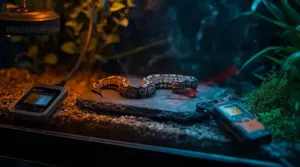
Most overheating cases trace back to a heat source that nobody was watching. You can prevent nearly all of them with two habits: controlling how much heat your heater produces and choosing where that heat goes. The points below walk through both, starting with thermostats and monitoring.
If you’re deciding between heat mats, ceramic emitters, and radiant panels, this guide to safe heating options for snake habitats explains which suits your enclosure.
Overheating almost always begins with an unwatched heater, so control its output and direct where its warmth lands
Thermostats and Independent Temperature Monitoring
Picture your snake pressed against a glowing heat source while the dial reads a calm 88°F.
A thermostat-controlled setup only works if you verify it:
- Fix thermostat probe placement at the basking spot.
- Add a min-max thermometer for overnight swings.
- Sweep surfaces with an infrared temperature gun.
- Use redundant temperature monitoring on both sides.
Check readings weekly and trust measured numbers over the dial.
Safe Heater Placement and Enclosure Ventilation
Under-tank heaters belong on the outside bottom of the enclosure, never buried under deep substrate where heat builds unseen. Mount radiant panels on an inner side wall at the warm end, not the ceiling, since heat rises and overhead units waste output.
Put vents low at the cool end and high at the warm end. Add a fan on a thermostat-controlled switch for stubborn hot spots.
Helping an Overheated Snake Safely
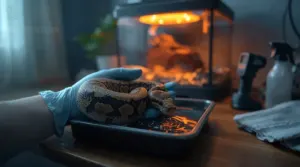
If your snake shows signs of overheating, act calmly and quickly. The steps below cover two things: how to cool your snake safely, and when the situation calls for a vet. Read both before you need them, because knowing the plan ahead of time helps you stay in control.
Immediate Cooling Without Sudden Temperature Changes
Act fast, but stay gentle. Move your snake to a quiet room with room-temperature surfaces and good airflow, then drape a damp, slightly cool towel loosely over its body. Keep the head clear.
Never use ice or cold water. It can cause shock. Check the snake’s temperature with a probe thermometer, and stop cooling once it reaches the lower end of its preferred range.
When to Seek Emergency Veterinary Care
Your snake looks better, so you might wait. Don’t. Organ damage from thermal stress in reptiles can appear later. Call an exotics vet the same day if you see open-mouth breathing, tremors, limpness, or blistered, blackened or oozing skin.
After first aid, a vet will check breathing, hydration and burns. Early veterinary treatment best protects the kidneys and nervous system, so don’t delay.
Frequently Asked Questions (FAQs)
Should I turn my snakes’ heat off at night?
A snake’s night is a small winter. Let the room cool, but not too far. Most adults handle a nocturnal temperature drop of 5 to 10°F. Hatchling corn snakes need steady warmth. Thermostat-controlled, lightless heat helps.
Can overheating cause lasting damage to a snakes health?
Yes, it can. Overheating can cause lasting damage, including organ failure and neurological damage. Thermal injury keeps progressing after cooling, so harm may appear days later. Burns often leave permanent scarring, and kidney damage can be irreversible.
How does humidity affect a snakes heat tolerance?
Does humid air protect a snake from heat? No. High humidity weakens evaporative cooling, so your snake sheds heat less efficiently. It can overheat at temperatures that would be safe in drier air.
Do baby snakes overheat faster than adult snakes?
Yes, they do. Young snakes have a high surface area-to-volume ratio, so they absorb heat fast and have little thermal inertia. Their body temperature climbs quickly near a heater, while adults heat more slowly.
How long can a snake survive in excessive heat?
It can happen fast. In a glass enclosure with direct sun and poor airflow, a snake can die in about an hour. Once body temperature passes roughly 110°F, organ failure begins within minutes.
Conclusion
A keeper leaves for work with a ball python’s heat lamp running and no thermostat. By afternoon, the enclosure hits 100°F, and the snake has nowhere cooler to go.
Can snakes overheat from enclosure heaters? Yes, quickly. Put a thermostat on every heater, verify temperatures with a separate thermometer, and leave a cool side. If you see burns or heat stress, cool your snake gently and call a vet. Safe heat is something you control.