This site is supported by our readers. We may earn a commission, at no cost to you, if you purchase through links.
That green film creeping across your snake’s water dish didn’t appear overnight. Algae and bacterial biofilm start anchoring to the surface within 24 hours, and a quick rinse won’t budge either one.
Your snake drinks from that bowl, soaks in it, and sometimes deposits waste in it. Slimy water isn’t just ugly. It’s a steady source of bacteria in the one place your animal can’t avoid. Preventing algae in snake water dishes comes down to a handful of habits: the right material, smarter lighting, fresher water, and a scrubbing routine that actually works.
Here’s how to build each one.
Table Of Contents
Key Takeaways
- Choose a smooth, nonporous dish like glass or glazed ceramic, since scratches in plastic give bacteria and biofilm a place to settle in.
- Keep the dish out from under your UVB tube, heat lamp, and any direct sunlight, and cap lighting at 10 hours a day with a timer, because algae can’t grow without light.
- Dump, scrub, and refill the bowl with filtered water every day, because biofilm starts anchoring within 24 hours and a quick rinse or top-off won’t remove it.
- Disinfect weekly with a reptile-safe product like chlorhexidine, rinse until no odor is left, and never use copper or pond-style algae additives, since copper builds up in your snake’s liver.
Choose Smooth, Nonporous Snake Water Dishes
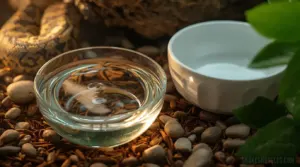
A scratched bowl is a bacteria hotel, and you’re the one paying for the rooms. That’s why bowl material matters more than most keepers think.
Stainless steel and ceramic resist scratching far better than plastic, and this guide to the safest type of water bowl for snakes explains how to choose.
Every scratch in a snake’s water dish becomes a rented room for germs, so choose smooth glass or glazed ceramic
Glass and glazed ceramic are your best bets. They’re hard, so scrubbing won’t gouge them, and their nonporous surfaces give biofilm nothing to grab. Plastic, resin, and melamine scratch easily, and those tiny grooves harbor slime you can’t see. Stainless steel works too, but skip the steel wool, which scars it.
Check ceramic for hairline cracks in the glaze, since they behave like pores. Light-colored or clear dishes also help, because you’ll spot a film or green tinge early. Smooth, nonporous surfaces can also handle boiling water and bleach, which plastic can’t. Plastic is the weakest choice because it absorbs oils and particles and develops scratches that become bacterial strongholds over time.
Limit Light Exposure Around Water Dishes
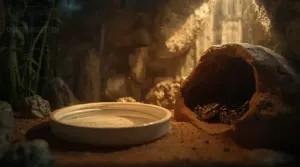
A spotless dish still turns green if the light is wrong, and algae needs only two things: water and photons. You control the second one.
Start with placement. Keep the water dish out from under your UVB tube or heat lamp, since that bright, warm spot is an algae greenhouse. UVB is invisible to you, so it’s easy to blame the bowl and miss the lamp.
Once the bowl sits on the warm side but out of the lamp’s direct glow, a weekly disinfecting routine from this ball python water requirements guide keeps it clear.
Next, check the window. Even a few hours of direct sunlight will bloom a bowl, no matter how often you scrub. Draw the shades or move the enclosure.
Cap light exposure at 10 hours daily with a timer. If algae has already taken hold, cover the enclosure for 48 to 72 hours. It starves. A digital outlet timer makes the 10-hour cutoff automatic, so your lights switch off on schedule even when you forget.
Keep Snake Drinking Water Fresh and Clean
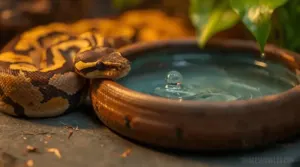
Even a perfect bowl won’t save you if the water inside it turns into a nutrient soup. Two habits decide whether your snake’s drink stays clear or goes green, and you’ll want to get both right. Here’s where to start.
Water Sources and Daily Changes
Say you fill your ball python’s dish from the kitchen tap and top it off each evening. Three days later, a green film coats the rim. That’s chloramines leaving ammonia behind, plus silicates, feeding algae.
Switch to filtered drinking water, skip distilled and softened water, and do a full daily water change. Dump, scrub, refill. Topping off never counts either.
A simple routine helps this stick, and a snake water dish cleaning schedule shows how to keep the bowl fresh without extra guesswork.
Substrate, Waste, and Soaking Messes
Fresh water still gets dirty fast if your snake treats the dish like a bathroom. Feces and urates drop straight in, and substrate particles hitch a ride on every soak. That debris feeds algae like fertilizer.
Scoop out waste immediately, then scrub the dish. Before a shed, expect extra mess and pull shed fragments and stagnant water out right away.
Remove Algae and Biofilm With Daily Scrubbing
Scrub the dish every day, even when the water looks clear. Biofilm starts anchoring within 24 hours, and rinsing won’t touch it. Run a finger along the inside. If it feels slick, bacterial biofilm has already moved in.
Here’s a routine for non-porous surface cleaning:
- Dump the water and set the dish on a clean surface.
- Scrape the walls and corners with a dedicated soft-bristled scrub brush.
- Use the stiff side of a sponge on the waterline, where algae builds a ring.
- Dry the dish before refilling.
Skip metal pads. They leave micro-grooves on smooth surfaces, which gives bacteria better footholds. Never share the brush with your kitchen sponge either. Daily scrubbing takes about two minutes. A non-scratch reptile dish brush with soft nylon bristles reaches tight corners and cleans thoroughly without leaving grooves behind.
Disinfect Snake Water Dishes Safely
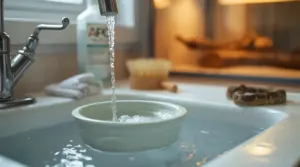
Scrubbing gets the gunk off, but it won’t kill what’s left behind. A weekly disinfecting soak takes care of that job, as long as you use the right product and rinse it all away. Here are the two points that keep your snake’s water safe.
Safe Disinfectant Use and Thorough Rinsing
Scrubbing clears the slime, but only a reptile-safe disinfectant finishes the job. Rinse off soap first, since leftover suds weaken many products. Then soak the dish in a chlorhexidine solution at about 1 ounce of 2% concentrate per gallon for 10 to 20 minutes.
Rinse two to three times, until no odor remains. Then air dry completely before refilling. Skip ammonia cleaners entirely.
Avoid Copper and Algae-Control Additives
Copper kills algae, so why not use it? Because snakes drink what you dose.
Skip these:
- Copper sulfate algaecides
- Copper or brass dishes
- Pennies as "algae killers"
- Pond-style additives
Copper accumulates in the liver, and dying algae leave nutrients behind for bigger blooms. Better water hygiene means scrubbing, rinsing, and using safe cleaning agents. That’s dull, but it works fine.
Frequently Asked Questions (FAQs)
Is algae in a snakes water dish harmful?
Two kinds of algae show up in snake dishes, and only one can kill. Green algae is harmless if swallowed. Blue-green cyanobacteria is the danger. If it smells swampy or looks like paint, dump it.
How deep should a snakes water dish be?
Aim for 3 to 4 inches for adult ball pythons, and 2 to 3 inches for corn snakes. Hatchlings need just 1 to 2 inches. The water should never climb above your snake’s chin.
How often should I replace an old water dish?
There’s no fixed calendar date. Replace it the moment you spot cracks, chips, deep scratches, or stains that survive a good scrub. Plastic goes when it feels rough. Glass and steel can last years.
How warm should refill water be for snakes?
Say your tap runs 55°F and your enclosure sits at 78°F. Pour that straight in and your snake gets a chilly drink. Let it rest to room temperature, around 70 to 75°F, before refilling.
Do different snake species need different cleaning routines?
Semiaquatic water snakes need fresh water every 24 hours because they soak in it. Terrestrial species just sip, so their cleaning frequency can be lighter, but rinse on schedule and scrub any badly fouled bowl.
Conclusion
Pick the right bowl, dim the light, change the water, scrub the film. Four habits, one goal, and none of them take long. Preventing algae in snake water dishes is less about heroic cleanups and more about never giving slime a foothold.
Disinfect weekly, rinse until you can’t smell a trace of cleaner, and skip the copper and additives. Clean water is the easiest health upgrade your snake will ever get, and it’s nearly free.