This site is supported by our readers. We may earn a commission, at no cost to you, if you purchase through links.
A snake tensed in a defensive S-curve rarely relaxes on command, no matter how gently you approach. Its body tells the truth before its behavior ever catches up. Most keepers watch for a strike or a hiss, but the real story unfolds in subtler cues, like loose muscle tone, unhurried tongue flicks, and a tail that curls without gripping.
These signs a snake feels safe matter because stress in reptiles often hides in plain sight, showing up as poor appetite or failed sheds long before anything looks alarming.
Once you know what calm actually looks like, coiled shoulders and steady breathing start speaking a language of their own.
Table Of Contents
- Key Takeaways
- Loose, Relaxed Body Posture
- Calm Movement and Curious Exploration
- Slow, Regular Tongue Flicking
- Predictable Feeding, Resting, and Shedding
- Relaxed Handling and Growing Trust
- Safety Signs Versus Stress Signals
- Frequently Asked Questions (FAQs)
- How to tell if a snake is safe?
- How to tell if a snake trusts you?
- How do I know if my snake is ok?
- Can you tell if a snake is happy?
- How long does it take a snake to feel safe?
- Do different snake species show comfort differently?
- Can a scared snake become calm again quickly?
- How does enclosure size affect a snakes comfort?
- Conclusion
Key Takeaways
- A relaxed snake shows loose muscle tone, gentle curves, and a body that flows rather than tenses into a defensive S-curve.
- Calm movement matters just as much as posture, since slow gliding, curious exploration, and steady tongue flicks (about once or twice per second) signal genuine security.
- Daily routines like consistent appetite, calm post-meal resting, and complete sheds reveal whether your snake’s stress levels are staying low over time.
- Knowing your individual snake’s baseline behavior helps you catch real warning signs, like tight coils, rapid breathing, or hissing, early enough to fix husbandry issues before they become serious.
Loose, Relaxed Body Posture

A snake’s body tells you more than its face ever will. When muscles stay soft and curves stay gentle, you’re looking at an animal that trusts its surroundings. Here’s what that relaxed posture actually looks like, sign by sign.
Loose coils, unhurried movements, and a body that flows rather than freezes are all cues explained in this guide to reading a corn snake’s relaxed body language.
A snake’s body reveals more than its face ever could, its soft curves quietly announcing whether it trusts the world around it
Soft Muscles and Gentle Curves
Softness tells the story. When your snake feels safe, its shoulders and neck carry a soft, steady tone, with gentle curves flowing along the spine instead of rigid angles.
Run a light touch along its sides. You should feel:
- Pliable muscles, not tension
- Even scales, no ridges
- Smooth, flowing movement
- A relaxed, gentle taper at the tail
Head Resting on Body Coils
Watch where the head lands. When it settles onto a coil rather than staying raised, you’re seeing neck tension relief in action, the coil cradle effect supporting steady breathing and head stability.
This isn’t laziness. Snakes that trust their owners use this rest posture aid often, pairing it with calm, relaxed body language and smooth flowing movements elsewhere in the body.
Confident, Stretched-Out Resting
Once the neck relaxes, the rest of the body often follows suit. A snake that trusts its space will stretch out fully rather than bunch defensively, showing clear body length extension and even weight distribution across the surface it’s resting on.
Spinal alignment stays gently curved, muscle tone stays loose, and basking or resting sessions reflect calm, relaxed body language throughout.
Loosely Curled Tail
That relaxed tail tells its own story. A loosely curled tail rests near the midline, arc soft, tip trailing free, shifting gently with each breath rather than locking rigid.
Look for:
- Gentle, non-gripping curl
- Stable position over minutes
- Smooth, even substrate contact
- Consistent shape across resting spots
Curl tightness varies by individual, but calm bodies rarely change it fast.
No Defensive S-Curve
Straight Body Alignment is your clearest signal here. A safe snake elongates rather than coiling into a tight S, showing Elongated Resting Posture with smooth surface glide across the enclosure.
Level Head Position, gentle breathing, no shoulder tension, calm and relaxed body language throughout. Compare this to defensive coiling, the difference becomes obvious once you know what you’re watching for.
Calm Movement and Curious Exploration

A snake’s posture tells you a lot, but how it moves through its world tells you even more. Movement reveals confidence in ways stillness alone can’t, showing you whether your snake trusts its surroundings enough to explore freely. Here’s what calm, curious movement actually looks like.
If your snake tenses up or freezes mid-explore instead, it’s worth learning what a hissing snake is really trying to tell you.
If your snake freezes or coils tightly instead, it’s worth understanding what defensive snake posture actually signals before assuming the worst.
Slow, Deliberate Movement
A snake at ease never rushes. It shifts with controlled pace and steady motion, pausing between adjustments rather than bolting.
Once it settles, give it space to digest, since knowing what to feed a sick snake can make that quiet recovery period even smoother.
You’ll notice:
- Gentle shifts in direction
- Deliberate steps, not bursts
- Calm transitions between rest and motion
- Mindful motion when investigating new spots
This slow, deliberate movement, paired with calm and relaxed body language, tells you your snake trusts its space and isn’t preparing to flee or strike.
Smooth Gliding During Exploration
Watching a snake glide across its enclosure tells you plenty about its state of mind. Smooth movements show confidence, with even muscle tension control and reduced scale drag against the substrate.
| Sign | What It Means |
|---|---|
| Head level stability | Calm, linear travel |
| Steady glide rhythm | Low stress, no rushing |
Climbing or exploring you, coming to the front of the tank, this exploration behavior reflects trust, not anxiety.
Comfortable Stillness in Familiar Areas
Ever notice how your snake claims the same corner every single time? That’s not laziness, it’s trust.
Stillness in hide boxes and familiar warm patches signals security.
Watch for calm breathing patterns and gentle body settling, a relaxed snake will stretch out fully in these predictable resting spots, staying calm during handling and content simply existing there.
Calm Approaches to New Stimuli
A new toy or unfamiliar scent doesn’t send a secure snake into panic mode. Instead, you’ll see a gentle approach, quiet observation, and slow investigation, with casual tongue flicking replacing rapid sampling.
- Pausing mid-glide to assess texture
- Casual movement toward the object, not away from it
- Calm sampling before deciding what’s next
That’s curiosity, not alarm.
No Frantic Escape Attempts
A secure snake won’t bolt the moment you approach. It holds a steady pace, no sudden bursts, no wild direction changes, just brief pauses to assess before moving on.
If your snake constantly darts for cover, check enclosure security and handling frequency. Handling too often can erode trust. No frantic escape attempts means it trusts its space, and you.
Slow, Regular Tongue Flicking
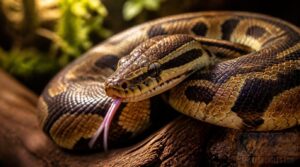
That flicking tongue is doing more work than most owners realize. Its rhythm, speed, and pattern all tell you something about what’s going on inside your snake’s head. Here’s what to watch for.
Moderate, Rhythmic Tongue Flicks
Rhythm tells you almost everything when reading your snake’s body language. A calm snake flicks its tongue about once or twice per second, a steady tempo rather than rapid darting. This chemosensory behavior signals gentle curiosity, not alarm.
Consistent spacing, brief pauses, and a relaxed posture together confirm your snake is simply watching you move, aware but unbothered.
Smooth Scent Sampling
Watching your snake sample scent tells you it feels secure enough to investigate. Its head lifts slightly, tongue extends with slow sniffing, then retracts cleanly, no rapid clustering. Each pause lasts two to six seconds near a chosen substrate.
This deliberate style, paired with a stable enclosure, reflects genuine trust rather than heightened alertness scanning for threats.
Pauses During Deep Relaxation
Between flicks, your snake may simply stop, holding its head soft and body loose for a second or two. These energy conservation pauses let it process scents without wasting effort. Think of it as a brief systems check, sensory processing stillness rather than alarm, a calm shift from active exploring to quiet, environmental monitoring rest.
This focused attention mirrors the principles of deliberate practice in skill development.
Alert Without Hypervigilance
Those pauses don’t mean your snake tuned out. Alert without hypervigilance looks like steady awareness, watching you come to the front of the tank without flinching or freezing. Gentle tongue flicking shows curiosity, not fear.
It’ll stay still when you handle them, calmly observing rather than scanning for exits, a peaceful alertness quite different from anxious, rapid-fire flicking.
Individual Flicking Patterns Matter
No two snakes flick alike. Baseline flicking frequency varies by species, age, and personality, so chemoreception in reptiles isn’t one-size-fits-all. Your ball python might sample slower than a friend’s corn snake, and that’s normal.
Reading your snake’s body language means learning its unique rhythm first. Once you know its baseline, deviations, faster bursts or sudden pauses, actually mean something.
If you want to go deeper, reading snake body language as an illness signal can help you tell the difference between quirky habits and something worth watching closely.
Predictable Feeding, Resting, and Shedding

A snake’s daily rhythms tell you just as much as its posture does. Feeding, resting, and shedding all follow patterns, and those patterns shift the moment stress enters the picture. Here’s what steady, healthy cycles actually look like.
Consistent Appetite and Feeding Routine
A snake that trusts its surroundings eats on schedule, without drama or hesitation.
Consistent appetite signals low stress, so feed at the same time daily and log:
- Prey size relative to body weight
- Refusals or partial consumption
- Feeding response speed
- Post-feeding behavior
Watch for gradual shifts, not single-day changes, since snake feeding behavior naturally reflects overall security and husbandry quality.
Confident Feeding Responses
Watch the approach, not just the appetite. A snake with genuine confidence lowers its head toward prey with relaxed jaw muscles, tolerates you adjusting placement, then strikes with precise, measured contact rather than a frantic chase.
That controlled bite, quick and targeted, tells you more about security than eating regularly ever could.
Calm Post-Meal Resting
Digestion isn’t a passive process, it takes real energy, so watch for stillness paired with soft posture near a basking spot.
Post-feeding stillness signals comfort, not distress.
Three reassuring signs:
- Loose muscle tone, no coiling
- Minimal movement for hours
- Calm settling near heat
This feeding recovery period helps safe digestion and reduces regurgitation risk during the digestive rest phase.
Normal Rest and Activity Cycles
A predictable daily rhythm tells you plenty about your snake’s sense of security.
Most species alternate quiet rest cycles with short activity bursts at dawn or dusk, reflecting natural nocturnal activity patterns and energy conservation. Awake resting, basking, and daynight cycle regulation should stay consistent. If temperature or humidity shifts disrupt this rhythm, check your husbandry before assuming stress.
Healthy, Complete Sheds
A perfect shed comes off in one piece, like a sock turned inside out, eye caps included. That’s the clearest sign of shedding successfully.
Checking for a complete, single-piece shed is one of the simplest ways to assess your boa’s wellbeing, and it’s covered in detail among the signs of a healthy boa constrictor worth knowing before issues arise.
Proper humidity levels, a warm-to-cool temperature gradient, a humid hide, and rough surfaces to rub against all support a smooth ecdysis process, giving you healthy, complete sheds and confirmation your husbandry is working.
Relaxed Handling and Growing Trust
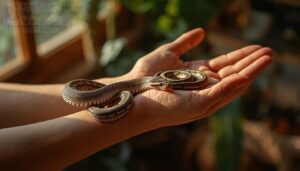
Handling reveals a lot about how safe your snake actually feels, if you know what to watch for. Trust isn’t something a snake fakes, so its body will tell you the truth the moment you pick it up. Here’s what that trust looks like in practice.
Loose Muscle Tone
Pick up a snake that trusts you and its body flows like water, not rope. Loose muscle tone means no gripping, no rigid coils, just gentle movement flow across your palms.
Watch for:
- Soft, pliable body mass
- No stiffening on contact
- Smooth muscle relaxation signs
- Posture without tension
- Easy, casual behavior throughout handling
Even Weight Across Hands
Loose muscle tone is only half the picture. A snake that’s relaxed also spreads its weight evenly across your hands, no bunching, no pressure points on one spot.
This even weight distribution keeps its body aligned, prevents awkward force shifts, and lets it stay still when you handle it, a clear sign of real handling tolerance.
Slow Exploration of Your Arms
Once your snake settles into that even weight, watch what its head does next. A snake that trusts you often extends toward your forearm with slow, deliberate touches, sampling scent through gentle tongue flicks rather than darting away.
This unhurried arm contact rhythm, calm forearm interaction paired with soft pressure, signals genuine trust-building exploration, not mere tolerance.
Minimal Gripping or Escape Attempts
That casual grip from arm exploration should stay casual. Minimal gripping or escape attempts mean your snake isn’t clamping down or hunting for the exit.
Gentle handling shows in soft muscles, not constriction around your wrist. Slow movement with no escape means husbandry and trust are working together, giving you a snake relaxed posture that confirms genuine comfort indicators throughout handling.
No Hissing, Striking, or Musking
Silence tells you as much as movement does. A trusting snake stays quiet during handling, no hissing, striking, or musking, no foul-smelling defensive spray marking its distress.
This non-aggressive behavior reflects genuine trust building, not mere tolerance. Compare it to defensive posture during vet visits, tense body, raised head, ready to strike. Peaceful interaction like this confirms safe handling and a calm demeanor rooted in real security.
Safety Signs Versus Stress Signals
Reading calm signals only tells half the story, so you also need to recognize when your snake is telling you the opposite. Stress shows up in the body just as clearly as comfort does, but the signs point in a very different direction. Here’s what to watch for when something’s off.
Tight Coils and Strike Posture

A tightly coiled body with an S-curved neck signals strike posture, not comfort. Coil tension analysis reveals compact energy storage, muscles primed for forward lunge, head aligned for target accuracy.
Compare this to relaxed coils you’ve read about elsewhere. If your snake hisses, tenses uniformly, or fixes a forward stare while handling, ease off.
Reading your snake’s body language this way prevents unnecessary stress.
Frantic Movement or Rapid Breathing

Watch the chest and the coils together. Quick, shallow breaths paired with erratic shifting signal genuine distress, not curiosity.
Frantic motion looks like:
- Rapid, irregular body shifts
- Open-mouth gaping
- Brief breath pauses between cycles
- Sudden posture changes after handling
These respiratory stress signals often follow loud noises, cramped enclosures, or abrupt temperature swings, so check husbandry before assuming illness.
Hissing, Musking, or Repeated Striking

A hiss that builds from a soft rasp to a sharp exhale means one thing: back off. Musking releases defensive odor from the cloacal area, while repeated striking, often short jabs rather than full lunges, warns you’re too close.
These aren’t a mock strike for practice. They’re clear stress indicators demanding you stop handling and give your snake space.
Know Your Snake’s Normal Baseline

No two snakes read exactly alike, so your ball python’s calm might look nothing like your neighbor’s corn snake. Baseline observation over weeks reveals your individual’s normal tongue-flick rate, resting posture, and appetite rhythm.
- Typical resting position
- Usual feeding response
- Regular activity peaks
- Comfortable handling duration
Recognizing changes against this baseline, not textbook averages, is how you truly gauge comfort.
Check Husbandry or Call Veterinarian

Stress signals rarely mean a trip to the vet, most trace back to husbandry. Check your temperature gradient, humidity, and hiding spots first. If fixes don’t help within 48 hours, or you spot weight loss, mouth swelling, or lethargy, call a reptile vet.
Document changes; vet costs for reptiles are worth it for peace of mind.
Frequently Asked Questions (FAQs)
How to tell if a snake is safe?
Picture a coil unwinding slowly in the sun, no tension anywhere. That’s your answer: look for relaxed posture, steady tongue flicks, calm exploration, and confident handling tolerance, rather than tight coils or defensive strikes.
How to tell if a snake trusts you?
Trust shows through voluntary approach behavior: your snake may watch you come to the front of the tank, stays calm during handling, tolerates longer sessions, and shows relaxed posture with reduced defensive responses over time.
How do I know if my snake is ok?
Reading the room, snake-style, comes down to five checks: body tension assessment, movement smoothness, tongue flick rhythm, feeding consistency, and handling trust indicators.
Loose muscles, slow gliding, and steady appetite signal genuine snake comfort indicators worth trusting.
Can you tell if a snake is happy?
Yes. Happy snake indicators show up as loose muscles, slow tongue flicks, and steady feeding. A relaxed snake behavior pattern, calm posture, smooth movement, no hissing, tells you contentment far better than any single moment ever could.
How long does it take a snake to feel safe?
Most snakes need 7 to 14 days to settle, with full trust building over 4 to 8 weeks given stable enclosure conditions, consistent feeding, and calm, low-frequency handling. Every snake is a little different, so patience matters most.
Do different snake species show comfort differently?
A ball python curls softly while a corn snake stretches long, yet both signal the same thing. Different snake species act in different ways, so learning your own snake’s relaxed posture matters more than comparing it to another.
Can a scared snake become calm again quickly?
With patience, absolutely. Slow recovery and calm reintroduction to a safe environment restore relaxed posture within minutes to hours, not days, especially when gentle handling and consistent routine support genuine trust building afterward.
How does enclosure size affect a snakes comfort?
A properly sized enclosure gives room for a full temperature gradient, multiple hiding spots, and genuine movement and exploration. This helps with basking, resting, comfortable feeding posture, and steadily improves handling tolerance through natural environmental enrichment.
Conclusion
Picture a coiled body draped like warm rope over your palm, breathing slow and unbothered. That stillness isn’t luck, it’s trust earned through patience.
Once you recognize the true signs a snake feels safe, every loose coil and lazy tongue flick becomes a conversation instead of a mystery. Your snake isn’t hiding its feelings; it never learned to.
Watch closely, respond honestly, and let its body do the talking. That’s the whole language, right there.