This site is supported by our readers. We may earn a commission, at no cost to you, if you purchase through links.

A wrong grab can send a snake into defense mode fast, and that split second decides whether the rescue ends safely or with a bite. Reptile rescuers know the hook matters as much as the hands holding it. The right tool keeps distance, spreads pressure evenly, and guides a snake without ever pinning it down.
Not every hook works for every job, though. A tight crawl space calls for something different than an open field encounter with a heavier-bodied snake.
The best snake hooks for reptile rescues balance reach, grip, and control, giving you the confidence to handle any situation that comes your way.
Table Of Contents
- Key Takeaways
- 10 Best Snake Hooks for Reptile Rescues
- 1. Aquaneat Extendable Stainless Steel Snake Hook
- 2. Bytcew Telescopic Snake Hook
- 3. Dutypro Snake Hook Catcher Stick
- 4. Stainless Steel Retractable Snake Hook 61 Inch
- 5. Wamlet Adjustable Snake Hook Tongs
- 6. Gzlozak Snake Hook Set Stainless Steel
- 7. Groveland Geckos 36 Inch Snake Hook
- 8. ASTRAEA Extendable Snake Tongs Grabber
- 9. Portable Collapsible Stainless Steel Snake Hook
- 10. Smarkey Snake Hook Grabber Tool
- How We Evaluated Rescue Snake Hooks
- Choosing The Right Rescue Hook
- Using Snake Hooks During Rescues
- Snake Hook Care and Rescue Safety
- Frequently Asked Questions (FAQs)
- What to use instead of a snake hook?
- What snake is worth $100,000?
- What is the best snake hook?
- What US state is home to no snakes?
- Are snake hooks safe for venomous species?
- Can beginners use snake hooks without training?
- What materials are best for snake hooks?
- How much should a quality snake hook cost?
- Are snake hooks legal for wild snake removal?
- Conclusion
Key Takeaways
- Your hook choice should match the snake’s size and the rescue setting, since a hatchling in a terrarium and a heavy-bodied constrictor in the field call for completely different tools.
- Look for gear with a rounded or duckbilled tip, a secure locking mechanism, and rust-resistant stainless steel or aircraft-grade aluminum construction to keep both you and the snake safe.
- Good technique matters as much as good gear: keep 3 to 6 feet of distance, support the snake’s body evenly along its curve, and guide it toward containment without ever pinning it down.
- Clean and disinfect your hook after every rescue, inspect locks and shafts regularly for wear, and replace any damaged equipment right away to prevent slippage or failure.
10 Best Snake Hooks for Reptile Rescues
Every rescue call is different, and your hook needs to keep up. We tested reach, shaft strength, and lock security to find tools that hold up when it counts. Here are ten snake hooks worth trusting in the field.
If you’re still weighing options, this guide to choosing the right snake handling hook breaks down which features matter most for different species and situations.
1. Aquaneat Extendable Stainless Steel Snake Hook
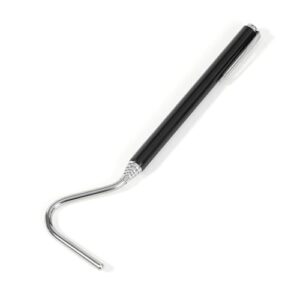
When you’re pulling a hatchling out of a terrarium, you don’t need the same tool you’d use on a boa. The Aquaneat hook adjusts from 7 to 26 inches, so you get precise control at close range. Its round-headed tip minimizes skin damage, and the stainless steel shaft resists rust in damp rescue conditions.
At 1.76 ounces, fatigue isn’t an issue. It collapses small enough for a pocket, though skip it for anything heavy-bodied or venomous.
| Best For | Reptile keepers who need a lightweight, adjustable hook for safely handling small to medium, non-venomous snakes at close range. |
|---|---|
| Material | Stainless steel |
| Handle Grip | Non-slip handle |
| Extended Length | 26 in |
| Weight | 1.76 oz |
| Hook Tip Design | Round-headed |
| Portability | Pocket-sized |
| Additional Features |
|
- Extends from 7 to 26 inches for precise control in tight enclosures
- Round-headed hook and non-slip handle reduce risk of injury during handling
- Lightweight, rust-resistant stainless steel design collapses for easy pocket storage
- Not suitable for large, heavy-bodied, or venomous snakes due to load limits
- Some users report the hook can feel flimsy or bend under moderate force
- Smaller handle size may limit leverage and comfort for users with larger hands
2. Bytcew Telescopic Snake Hook
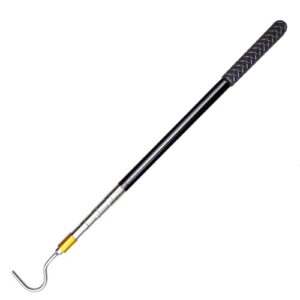
That hatchling hook works fine at arm’s length, but what happens when the rescue is a rattlesnake ten feet down a culvert? That’s where the Bytcew earns its keep, extending from 16 to 61 inches with a five-section telescopic design.
Each segment locks independently, so the shaft won’t collapse under a heavy-bodied constrictor. The stainless steel resists corrosion, and the rubberized handle keeps your grip steady. At 5.6 ounces with a 2-pound capacity, it’s built for small to medium snakes, not pythons.
| Best For | Reptile enthusiasts and field workers who need a lightweight, portable tool for safely handling and removing small snakes and rattlesnakes. |
|---|---|
| Material | Stainless steel |
| Handle Grip | Rubber handle |
| Extended Length | 61 in |
| Weight | 5.6 oz |
| Hook Tip Design | Reinforced hook |
| Portability | Collapsible |
| Additional Features |
|
- Five-section telescopic design extends from 16 to 61 inches, giving you safe distance from the snake
- Rivet-reinforced head keeps the hook securely attached under tension
- Lightweight stainless steel build with a non-slip rubber handle for steady, comfortable use
- Maximum load capacity of just 2 pounds makes it unsuitable for heavier reptiles
- Hook size may be too small to properly handle larger snakes
- Shaft may bend under its own weight when fully extended to 61 inches
3. Dutypro Snake Hook Catcher Stick
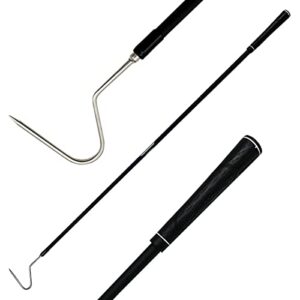
The Bytcew controls small snakes well, but chicken pen calls and heavier bodies need more muscle. The Dutypro two-section stick extends from 38 to 62 inches, keeping you roughly 1.5 meters from a defensive snake.
Its duckbilled hook spreads pressure evenly instead of pinching. A carbon steel shaft with a stainless hook resists rust, while rivet-reinforced joints and a locking system stop the shaft from slipping mid-lift. The rubber grip cuts fatigue during longer rescues.
| Best For | Reptile enthusiasts, homeowners, and campers who need to safely relocate snakes from chicken pens, campsites, or residential areas without getting close enough to risk a bite. |
|---|---|
| Material | Stainless steel |
| Handle Grip | Rubberized handle |
| Extended Length | 44 in |
| Weight | 0.25 kg |
| Hook Tip Design | Duckbilled |
| Portability | Compact portable |
| Additional Features |
|
- Duckbilled hook spreads pressure evenly for a secure, gentle grip that won’t harm the snake
- Rubberized, non-slip handle reduces fatigue and improves control during longer handling sessions
- Stainless steel construction resists corrosion while staying lightweight and easy to maneuver
- Not built for lifting or restraining very large or aggressive snakes
- Requires proper technique and experience to use safely
- Doesn’t come with protective gloves or other safety gear included
4. Stainless Steel Retractable Snake Hook 61 Inch
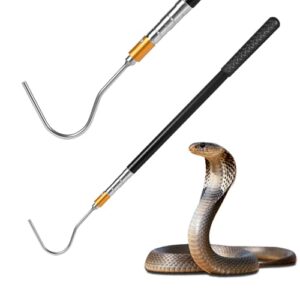
Where the Dutypro asks for muscle, this retractable hook asks for patience. It collapses to just 16 inches, so it rides in a truck cab or pack without complaint, then extends to 61 inches when you need the reach.
The duckbill head spreads pressure across the snake’s body instead of pinching, and rivet reinforcement keeps it locked under tension. A few users mention rough tips needing a quick filing before first use.
| Best For | Reptile enthusiasts, campers, hikers, and farm workers who need a lightweight, portable tool for safely handling snakes and other outdoor tasks. |
|---|---|
| Material | Stainless steel |
| Handle Grip | Non-slip rubber |
| Extended Length | 61 in |
| Weight | 6.7 oz |
| Hook Tip Design | Standard hook |
| Portability | Collapsible |
| Additional Features |
|
- Telescopes from a compact 16 inches to a full 61 inches, making it easy to store and transport
- Heavy-duty stainless steel hook with a non-slip rubber handle for secure, comfortable use
- Versatile enough to double as a tool for reaching high shelves or clearing brush
- Some hook tips arrive rough and may need filing before first use
- The telescoping mechanism can wear out with frequent use on larger or more active snakes
- Extension and retraction may feel stiff at first, sometimes requiring lubrication or handle adjustment
5. Wamlet Adjustable Snake Hook Tongs
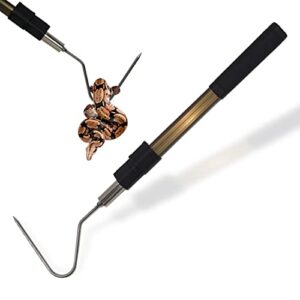
When ball pythons and copperheads need handling, not lifting, this tool earns its place in the kit. It adjusts from 22.75 to 41.6 inches with a push-button lock, so you set the length and get to work.
The stainless steel build shrugs off humidity and daily use, making these snake feeding tongs for ball pythons a durable pick for regular mealtime handling.
The stainless steel hook has a rounded, non-sharp tip, and the rubber grip keeps your hands steady. Collapsible design means it stores easily. Skip it for snakes over 8 pounds; that’s not its job.
| Best For | Reptile keepers and field handlers who need to safely manage medium to large snakes like ball pythons, copperheads, and rattlesnakes. |
|---|---|
| Material | Aluminum alloy/steel |
| Handle Grip | Rubber grip |
| Extended Length | 41.6 in |
| Weight | 13.1 oz |
| Hook Tip Design | Rounded tip |
| Portability | Collapsible |
| Additional Features |
|
- Adjustable length from 22.75 to 41.6 inches with a secure push-button lock
- Rounded, non-sharp hook tip protects snakes from injury during handling
- Collapsible design makes it easy to store and carry
- Not suitable for snakes over 8 pounds
- Less effective for very small or slender snake species
- Aluminum pole may dent if impacted or misused
6. Gzlozak Snake Hook Set Stainless Steel
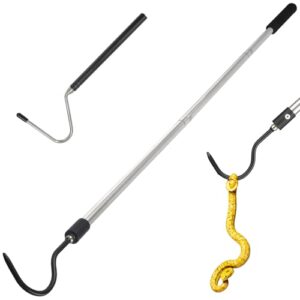
For rescuers who work with multiple species in a single day, one hook rarely does the job. This set solves that with multiple hook sizes built from stainless steel, each with a closed-eye tip that keeps snakes from slipping free.
The knurled grips grip well in wet conditions, and locking collars hold your chosen length steady mid-rescue. At an 8 lb capacity, it’s a solid, corrosion-resistant choice for varied fieldwork.
| Best For | Reptile owners and handlers with mobility limitations who need a safe, adjustable way to manage snakes or reach hard-to-access areas without bending or straining. |
|---|---|
| Material | Stainless steel |
| Handle Grip | Foam grip |
| Extended Length | 65 in |
| Weight | 1.08 lb |
| Hook Tip Design | Gel-wrapped tip |
| Portability | Disassembles compact |
| Additional Features |
|
- Soft, gelatinous hook tip protects snakes from injury during handling
- Adjustable from 7.9 to 65 inches, with sections that disassemble for compact storage
- Non-slip foam grip stays secure even in wet or sweaty conditions
- May be too long for small indoor spaces even at its shortest setting
- Rubber coating on the hook can wear down over time with heavy use or sun exposure
- Repeated assembly and disassembly may loosen the sections over time
7. Groveland Geckos 36 Inch Snake Hook
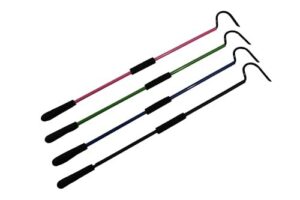
Purple, lightweight, and built for mid-size snakes, this hook keeps things simple. A 1/2 inch aluminum shaft pairs with a 2 inch hook opening, giving you enough support for constrictors without the bulk.
The angled, rounded tip protects both your hands and the snake’s scales. At 36 inches with a soft foam handle, it’s comfortable for longer rescues and cuts hand fatigue during transfers into containment.
| Best For | This hook is best for reptile keepers and handlers managing mid-size, non-venomous snakes who need a lightweight, comfortable tool for everyday feeding, transport, and transfers. |
|---|---|
| Material | Aluminum/foam |
| Handle Grip | Foam handle |
| Extended Length | 36 in |
| Weight | 8 oz |
| Hook Tip Design | Angled rounded |
| Portability | Lightweight portable |
| Additional Features |
|
- Lightweight aluminum shaft with a soft foam handle keeps long handling sessions comfortable
- Angled, rounded hook tip protects both the handler and the snake from injury
- 36 inch length offers solid reach and control for constrictor-sized species
- Not suitable for venomous species without extra safety measures in place
- 2 inch hook opening limits use to snakes within that size range
- Foam handle can wear down over time with heavy sun or chemical exposure
8. ASTRAEA Extendable Snake Tongs Grabber
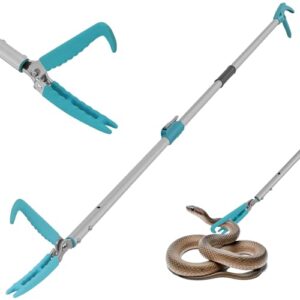
Sometimes a hook isn’t enough, and you need a firmer hold. The ASTRAEA grabber extends from 55 to 78 inches, giving you serious reach before you ever get close to strike range.
Its rubber-coated 4.5 inch jaws grip with a serrated edge, holding snakes securely without crushing scales. A push-to-lock mechanism sets the extension fast, cutting down on grip fatigue during longer captures.
At 2.57 pounds, it’s light enough for extended fieldwork, camping trips, or relocating pet reptiles without strain.
| Best For | Wildlife handlers, campers, and pet reptile owners who need a safe way to grab and move snakes without getting close enough to risk a bite. |
|---|---|
| Material | Aluminum/rubber |
| Handle Grip | Rubber-coated jaws |
| Extended Length | 78 in |
| Weight | 2.57 lb |
| Hook Tip Design | Serrated jaws |
| Portability | Extendable portable |
| Additional Features |
|
- Extends up to 78 inches, keeping you well outside strike range
- Rubber-coated, serrated jaws hold snakes firmly without hurting them
- Lightweight at 2.57 pounds, so it’s easy to use for longer or repeated captures
- Not suitable for very small snakes under about 0.5 inch in diameter
- Needs to be fully extended and locked into place to work properly
- Rubber coating on the jaws can wear down with frequent use
9. Portable Collapsible Stainless Steel Snake Hook
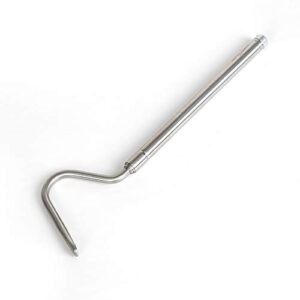
Not every rescue calls for a big rig. This hook collapses to just 7.8 inches, small enough for a pocket, and extends to 23.6 inches when you need reach.
Built from stainless steel, it weighs only 0.09 kg, yet controls snakes up to 2.2 lb with a flat, rounded tip that protects scales. It’s not built for heavy-bodied constrictors, but for small colubrids and quick habitat checks, it’s a dependable, grab-and-go tool.
| Best For | Reptile hobbyists and professionals who handle small, non-venomous snakes and need a lightweight, pocket-sized tool for field work or terrarium upkeep. |
|---|---|
| Material | Stainless steel |
| Handle Grip | Rounded tip grip |
| Extended Length | 23.6 in |
| Weight | 0.09 kg |
| Hook Tip Design | Flat rounded |
| Portability | Pocket-sized |
| Additional Features |
|
- Collapses to just 7.8 inches for easy, portable storage
- Durable stainless steel build stays lightweight at only 0.09 kg
- Flat, rounded tip allows safe, scale-friendly handling
- Not suitable for venomous snakes or heavy-bodied constrictors
- Limited holding strength for larger or stronger snakes
- Hook may reclose under pressure, requiring careful use
10. Smarkey Snake Hook Grabber Tool
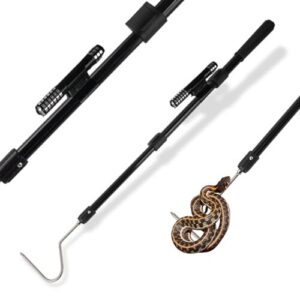
This one’s built like a jaw, not just a hook. The Smarkey grabber uses a curved, spring-loaded jaw that closes gently around the snake’s body without pinning it flat.
The telescopic steel shaft extends up to 59 inches, and the serrated grip holds firm even with gloves on. A locking latch keeps the jaw secure during transfer, making it a smart pick for handlers who want extra control during active, wriggling rescues.
| Best For | This tool is best for reptile enthusiasts, campers, hikers, and pest control handlers who need a lightweight, affordable way to safely grab and relocate snakes from a distance. |
|---|---|
| Material | Aluminum alloy/steel |
| Handle Grip | Molded grip |
| Extended Length | 35.4 in |
| Weight | 1.15 lb |
| Hook Tip Design | Steel hook tip |
| Portability | Telescoping compact |
| Additional Features |
|
- Extends to 35.4 inches, giving handlers a safe working distance from the snake
- Lightweight aluminum alloy construction (just 1.15 lbs) makes it easy to carry and maneuver
- Built-in LED light adds visibility for low-light or nighttime snake encounters
- Some users find the pole flexes too much when fully extended, reducing control
- The stainless steel hook tip can be sharp, with a risk of accidentally scratching the snake
- Grip strength can be inconsistent with larger or more active snakes
How We Evaluated Rescue Snake Hooks

Not every snake hook earns a spot on a rescue kit, and we didn’t pick these lightly. Each one got judged against the same five factors that actually matter in the field, from reach to shaft strength to how well it holds up over time. Here’s exactly what we looked for.
Reach and Working Distance
When a defensive snake coils tight, your reach becomes your safety net. We tested extendable snake hooks like the 47 and 94 Extendable models against fixed shafts, checking how far each locked out and how stable that safe capture range felt under load.
CODE320M and CODE320L scored high for smooth reach extension control, letting you adjust operator positioning without ever crowding the animal.
Hook Shape and Support
Reach gets you close; shape decides what happens next. We graded hook curvature type and support surface area, favoring wide U-shapes for boas and standard J-hooks for slender colubrids. Non-marring finishes and pressure distribution points mattered too.
- Hook tip design – rounded, blunt
- Support width matching body diameter
- Offset curvature for coil access
- Interchangeable snake hook heads
- Polished, non-marring surfaces
Shaft Strength Under Load
A hook that bends mid-lift is a hook that fails you. Material grade impact shows up here: aircraft aluminum resists stress concentration points at joints, especially on Extendable Snake Hooks pushed past 50 inches.
Good load distribution analysis means the shaft won’t flex when a heavy-bodied boa shifts weight. Fatigue resistance factors matter too — your reptile handling tools should hold up rescue after rescue, not just once.
Lock Security and Control
A rigid shaft means little if the lock fails mid-lift. We test lock engagement safety under real weight, checking positive stop pins for tactile feedback and locking collars that hold your working distance. Safety latches guard against accidental release during transport.
Snake capture equipment lives or dies by this detail — pair it with handling gloves and a routine lock inspection before every rescue.
Portability and Corrosion Resistance
Between rescues, gear needs to travel light and shrug off grime. Telescoping Snake Hooks collapse to 12–40 inches, fitting standard bags with ease.
We weigh:
- Lightweight alloys vs. bulk
- Stainless steel grade (304 vs. 316)
- Corrosion coatings
- Quick-release joints
- Compact storage tubes
Aircraft grade materials and corrosion resistant reptile tools earn top marks for durability in wet, muddy fieldwork.
Choosing The Right Rescue Hook

The right hook depends on more than personal preference. Snake size, rescue location, and shaft type all shape which tool keeps you and the animal safe. Here’s what to weigh before you make your pick.
Match Hooks to Snake Size
A three-foot rat snake and a hundred-pound python need completely different tools. Size-based hook selection starts here: small snakes take 12-18 inch hooks, medium species need 24-36 inches, large snakes call for 36-48, and extra-large constrictors demand 48-60 inches for safe handling distance.
For a safer fit, consult this snake hook length guide by snake size and account for temperament as well as length.
| Snake Size | Hook Length | Width Needed |
|---|---|---|
| Small | 12-18" | Narrow |
| Medium | 24-36" | Moderate |
| Large | 36-48" | Wide |
| X-Large | 48-60" | Widest |
Match width to girth for proper support zone alignment.
For venomous species or large constrictors, fiberglass composite hooks are often recommended due to their strength and lightweight properties.
Fixed Versus Telescoping Shafts
Once you know your snake’s size, the next call is shaft type. Fixed shafts offer better rigidity, no lock to fail, but zero packability. Telescoping snake hooks** trade some stiffness for reach and compact storage—faster deployment from a truck kit, though locking collars need regular checks. Standard snake hooks suit stable rescues; extendable reptile hooks handle cramped, unpredictable ones. Choose based on your typical call type.
Fixed shafts offer better rigidity, no lock to fail, but zero packability.
Hooks Versus Snake Tongs
A hook guides. A tong grips. That’s the key difference, and it changes everything about handler distance and control.
Hooks minimize direct contact, gentler on the spine, ideal for routine handling. Tongs excel with aggressive snakes, using padded jaws for firm, secure restraint. Choose tongs when a snake strikes fast; choose hooks when calm repositioning is all you need.
Tight-space Rescue Considerations
Crawl spaces and wall voids shrink your options fast. A Collapsible Snake Hook shines here, extending only what the corner allows.
Heat builds quickly indoors, and dim corners hide the tail. Bring a light, watch your footing, and keep a Pocket Snake Bag ready. Hand signals matter more than words when a snake’s coiled two feet from your boot.
Two-hook Lifting Setups
Big-bodied constrictors need two rescuers, not one. Two-hook lifting spreads weight across the snake’s length, with hook spacing alignment matched to girth and coil position.
Each hook maintains steady load distribution, preventing rib pressure or slippage. Choose corrosion-resistant materials like stainless steel, confirm safety locking mechanisms engage fully, then move together toward containment transfer, gentle and synchronized.
Using Snake Hooks During Rescues
Owning the right hook is only half the job. How you use it in the moment decides whether a rescue stays calm or turns risky. Here’s what good technique looks like, step by step.
Assess Species and Behavior

Before you reach for a hook, read the snake. Species identification shapes every move you make next, since color pattern, head shape, and pupil size hint at venom risk.
Watch behavior closely:
- Raised, S-shaped coils
- Rapid tongue flicking
- Hissing or rattling
- Flattened neck posture
- Sudden direction changes
These defensive signals reveal stress and readiness to strike, guiding your equipment choice.
Maintain a Safe Distance

Once you’ve read those warning signs, distance becomes your best tool. Stay 3 to 6 feet from the head, angled slightly to avoid a direct lunge.
Position yourself behind the midsection, plan your escape route, and reassess after every movement. Lock extendable hooks fully before approaching. Assign one teammate to manage distance, keeping others clear so nobody closes the gap unexpectedly.
Support The Snake Evenly
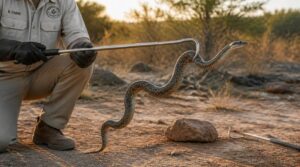
Distance keeps you safe. Even pressure keeps the snake safe.
Distance protects the handler; even pressure protects the snake
Support the body along its natural contour, never just one segment. A Standard Hook spreads weight across multiple points instead of one straight line.
- A gentle S-curve, tail trailing loose
- Smooth, unhurried lifts
- Two handlers sharing load on a Double setup
Collapsible hooks work great for field herping when portability matters.
Guide Without Pinning

Even support only gets you halfway. Now you need to move the snake without ever pinning it down.
Use minimal contact steering: gentle pressure near the midbody, never squeezing. Read calm cues—smooth motion, slow tongue flicks—before guiding. Standard or Double hook setups both work, provided you keep safe distance and let the snake move toward containment on its own terms.
Transfer Into Secure Containment

Once the snake reaches the container, the job isn’t done—it’s entering the riskiest phase.
Lower it slowly using your hook, guiding the head away from corners. Confirm double-lock security before releasing pressure.
- Container inspected for cracks beforehand
- Lid sealed with viewing window intact
- ID tags matched to transport records
- Post-transfer breathing and tail tone checked
Complete your post-transfer verification every single time.
Snake Hook Care and Rescue Safety

A good hook only works if you take care of it. Regular maintenance keeps your gear safe for you and every animal you handle. Here’s what that upkeep looks like in practice.
Clean After Every Rescue
Your rescue isn’t over when the snake is safely contained. Sanitize hooks thoroughly with mild soap and fresh water, wiping away slime and residue.
Dry components completely before storage; damp aluminum invites rust and bacteria. Give grips, shafts, and capture bags the same attention.
Store in clean containers, ready for the next call. This habit protects every animal you handle after.
Disinfect Between Animals
Between animals, soap and water aren’t enough. Sanitize tools between uses with a veterinary-approved disinfectant, giving full contact time before wiping dry.
- Work within dedicated cleaning zones
- Replace gloves frequently
- Document your cleaning sequence
Occasional swab tests confirm your snake handling equipment stays truly clean, protecting every animal your reptile safety gear touches next.
Inspect Locks and Shafts
A wobbly lock can undo years of trust in seconds. Check that lock levers engage with firm resistance, not a loose click, and confirm shafts stay straight along their full extension. Look for scratches or bright metal at contact points.
| Check | Wear Indicator |
|---|---|
| Lock lever | Loose engagement |
| Shaft | Bend or curve |
| Collar | Corrosion, pitting |
| Threads | Rounded, stripped |
Even the Snake Hooks STDHK40 Mini Narrow, trusted by Dana Savorelli, needs this routine.
Replace Damaged Rescue Equipment
A bent hook head isn’t a quirk, it’s a liability. Replace it immediately to prevent slippage.
Swap stretched locks, corroded set screws, and cracked shafts before your next call. Keep a maintenance log tracking replacement timing across your snake hooks and tongs.
Damage assessment after every field herpetology outing protects both you and the animal you’re handling.
Know When to Call Professionals
No hook, no matter how well-built, replaces trained judgment. Risk assessment triggers like erratic behavior or a venomous species in a populated area mean it’s time to call it in.
Quick checklist:
- Bite or envenomation occurred
- Snake shows aggressive, unpredictable behavior
- Location involves crowds or protected habitat
- Legal liability concerns exist
- Containment fails repeatedly
Follow emergency contact protocols, then document the incident.
Frequently Asked Questions (FAQs)
What to use instead of a snake hook?
Solid alternatives include snake tongs, cut-resistant gloves, capture nets, or a padded transfer mat for gentle relocation.
Restraining tubes and capture bags work well for non-contact handling, especially when professional snake handling calls for extra caution around defensive species.
What snake is worth $100,000?
Ever wonder what makes a pet snake worth a small fortune? A blue morph green tree python has reportedly sold near $445,800, driven by rare genetics, lineage certification, and high-end breeder demand in the exotic pet market.
What is the best snake hook?
Your top pick should feature a stainless steel shaft, deep support cup, and smooth tip radius.
Telescoping length adjustment, non-slip grip comfort, and solid weight distribution matter too, matching hook width to the snake’s body for stable, injury-free control.
What US state is home to no snakes?
Picture a place where you’d never need a snake hook at all. That’s Alaska, thanks to its frozen ground and brutal winters blocking every snake life cycle from taking hold.
Are snake hooks safe for venomous species?
Yes, when you pair proper hook technique training with the right gear. Keep a safe distance, wear protective equipment, and never pin the snake. Combined with solid containment protocols, hooks make venomous species safety genuinely achievable.
For a deeper look at the full safety picture, best practices for handling venomous snakes covers everything from permit requirements to containment protocols in one place.
Can beginners use snake hooks without training?
No, beginners shouldn’t grab a hook and go. Training builds real skill, teaching grip, distance, and body language reading. Without it, bites and tail whips happen fast. Supervised practice keeps both you and the snake safe.
What materials are best for snake hooks?
Aircraft grade aluminum alloys balance strength and light weight, while stainless steel and titanium options add durability. Carbon steel needs coatings against rust.
Fiberglass composites cut fatigue. Field tested, highest quality standards define genuine Midwest snake tongs and hooks.
How much should a quality snake hook cost?
What’s a fair price for gear that keeps you and the snake safe? Expect 20 to 60 USD for basic fixed hooks, 40 to 120 USD for telescoping designs, and over 100 USD for titanium or stainless steel professional models.
Are snake hooks legal for wild snake removal?
Legality depends on your legal jurisdiction. Many states list snake hooks among permitted capture tools, but protected species rules still apply. Always check local wildlife regulations before removing any wild snake, even during emergency removal conditions.
Conclusion
A good hook becomes an extension of your own steady hand. That’s the real measure of quality snake hooks for reptile rescues: they turn a tense encounter into a controlled, calm process.
You’re not just buying a tool, you’re investing in confidence for every call. Pick one suited to your terrain, your snakes, and your comfort level. Then check the shaft, test the lock, and get out there. Every rescue deserves your best equipment.