This site is supported by our readers. We may earn a commission, at no cost to you, if you purchase through links.

Slip on a pair of thick gloves, reach into the enclosure, and watch a normally docile snake coil into a defensive S the instant your hand makes contact. That reaction isn’t temperament, and it isn’t aggression. It’s sensory mismatch, plain and simple.
So do handling gloves scare pet snakes? Yes, often enough that it deserves a clinical answer rather than a shrug. Your snake reads the world through scent, heat, and texture, and gloves scramble all three at once, replacing familiar cues with something that registers as foreign, even threatening.
The startle fades fast in most cases, but the gap between a quick flinch and genuine lasting wariness matters, and it changes how you should glove up, or not, for every handling session ahead.
Table Of Contents
- Key Takeaways
- Yes, Handling Gloves Can Startle Pet Snakes
- Why Gloves Feel Unfamiliar to Snakes
- When Handling Gloves May Help
- How Gloves Can Make Handling Riskier
- Choosing Snake Handling Gloves Safely
- Transitioning From Gloves to Bare Hands
- Frequently Asked Questions (FAQs)
- Can I wear gloves to handle my snake?
- What are snakes most afraid of?
- Do pet snakes like to be handled?
- Can snakes bite through gloves?
- How long does snake glove retraining usually take?
- Can gloves work for all snake species equally?
- What glove materials are safest for allergic keepers?
- Should beginners start handling with gloves or bare hands?
- Conclusion
Key Takeaways
- Gloves startle snakes because they mask your scent, flatten your hand’s temperature, and change the texture your snake relies on to recognize you, not because of any real aggression or threat.
- That startle is usually just a quick, passing flinch rather than lasting fear, so distinguishing a brief reaction from genuine ongoing wariness should shape how you handle your snake going forward.
- Gloves can genuinely help nervous keepers or newly acquired defensive snakes get through the first stressful stretch, but they should always be treated as a temporary bridge, not a permanent habit.
- Thick gloves actually raise your risk by dulling your grip feedback and reaction time, so if you use gloves at all, choose thin, snug ones and work steadily toward bare-handed trust.
Yes, Handling Gloves Can Startle Pet Snakes

Yes, gloves can startle a snake, and that reaction is grounded in real sensory mismatch rather than superstition. The question isn’t whether it happens, but why it happens and what it actually means for your snake’s behavior. Here’s what’s going on beneath the surface, broken down into the factors that shape that startle response.
It’s also worth knowing that startled snakes may strike defensively, and whether venomous species can actually bite through handling gloves depends heavily on fang length and glove thickness.
Not Every Snake Reacts
Rarely does every snake read gloves as a threat.
Docile individuals often tolerate a gentle grip without striking or whipping, and temperament varies widely even within the same species.
Handling history, health status, and age all shape reactivity—younger snakes tend toward skittishness, while calm, well-habituated adults barely register the difference at all.
Startle Versus Lasting Fear
That reaction you clock during a glove-first pickup likely isn’t lasting dread. It’s phasic fear—fast, amygdala-driven, tied to an immediate cue, then it fades once the threat resolves.
Sustained fear looks different: prolonged, BNST-mediated, fueled by uncertainty.
Distinguishing them matters:
- Phasic = sharp startle, quick recovery
- Sustained = diffuse vigilance, slow decay
- Conditioning = repeated pairing risks generalized dread
Novelty Triggers Defensive Behavior
That phasic spike traces back to new object avoidance, a hardwired bias toward caution over curiosity. Unfamiliar glove scent and altered hand texture create sensory mismatch your snake’s nervous system flags as worth scanning.
Scent cues and tactile feedback normally confirm "known handler." Break that pattern and vigilance rises, at least until gradual novelty exposure rebuilds sensory familiarity through habituation.
The approach-avoidance conflict in reptiles involves neural mechanisms similar to those in mammals, where novel stimuli trigger avoidance behaviors through corticolimbic circuitry. Approach avoidance behaviors are governed by brain systems that evaluate threat and reward, which may explain why snakes react cautiously to unfamiliar objects like handling gloves.
Calm Handling Shapes Responses
Novelty fades with repetition, and that’s where your handling technique matters more than the glove itself. Predictable routines build trust, while gentle pressure promotes calm and a quiet environment reduces stress.
Four habits accelerate genuine snake habituation:
- Handle at consistent times daily
- Keep movements slow and deliberate
- Maintain relaxed handler posture
- End sessions on calm cues
Why Gloves Feel Unfamiliar to Snakes

Your snake doesn’t recognize you by sight the way you’d expect; it reads you through a set of sensory signals that gloves quietly scramble. Once that leather or nitrile barrier goes on, several of those signals shift at once, and your snake notices. Here’s exactly what changes when you glove up, and why each shift matters to the animal in your hands.
Masked Human Scent
Leather or nitrile doesn’t just cover your hands—it competes with your scent at the receptor level, creating a masking agent mix snakes read as unfamiliar.
| Bare Skin | Gloved Hand |
|---|---|
| Natural scent | Masked scent |
| Recognized cues | Residual cues only |
| Fast habituation | Slower habituation |
| Consistent handler ID | Blended identity |
| Trust builds quickly | Trust resets |
Altered Hand Temperature
Since snakes read heat the way you’d read a face, gloves scramble that signal entirely. Bare skin runs warmer at the palm, cooler at fingertips—a temperature profile snakes use for thermal asymmetry detection. Gloves flatten this into uniform, often cooler warmth.
Add poor handling position or sudden lighting shifts to the mix, and it’s easy to see why understanding what makes ball pythons naturally calm handlers helps you read these subtle cues better.
Three shifts matter most:
- Blunted hand warming patterns
- Masked cold exposure effects
- No thermal imaging feedback equivalent
Baseline temperature variation between keepers only deepens the confusion.
Different Surface Texture
Texture matters more than most keepers assume. Bare skin has natural ridges and pore microstructure; gloves substitute uniform coatings with different surface roughness entirely.
Nitrile’s smooth, low-friction finish contrasts sharply with leather’s coarser, directional grain. This shift alters tactile feedback and scent masking, leaving the snake’s tongue-flicks confused about what—or who—it’s actually touching against its scales.
Changed Grip Pressure
Grip translates through material, and gloves distort that translation. Thick padding dulls tactile feedback, so you compensate with more force than bare skin ever required—dexterity loss disguised as caution.
Snakes sense this shift immediately. Grip consistency training with thin gloves preserves proportional pressure; thick ones invite abrupt squeezing, the kind that spikes stress rather than removing it.
Mismatched Sensory Cues
No single sense fools a snake—it’s the pile-up. Scent, temperature, and texture arrive contradictory, forcing neural reweighting while the brain sorts real threat from novelty. This delays sensory conflict resolution and slows habituation.
- masked scent signaling a stranger
- cooler, uniform glove warmth
- smooth texture replacing skin ridges
- shifting grip feedback
- delayed reaction to movement
Multisensory adaptation eventually closes that gap—consistency, not force, gets you there.
When Handling Gloves May Help

None of this means gloves belong in the trash bin just yet, because certain situations genuinely call for them. The key is knowing when they’re earning their keep versus when they’re just a habit you haven’t questioned. Here’s where gloves actually pull their weight.
Nervous Keeper Confidence
Your nerves travel down the leash, so to speak, straight into your grip. A nervous keeper telegraphs tension the snake reads instantly.
Gloves offer a psychological buffer, letting you build handler confidence through calm routine practice before removing that layer entirely. Think of it as training wheels: useful briefly, never the destination for genuine anxiety reduction.
Newly Acquired Defensive Snakes
A newly acquired defensive snake hasn’t learned your scent, your hide setup, or your feeding rhythm yet. Coiled posture, short strike distance, darkened coloring: these signal stress, not aggression.
Gloves offer temporary stress removal during this raw window, buffering early strikes while acclimation cues (basking access, consistent feeding times) settle the animal before genuine habituation and trust-building begin.
Breaking Strike-Flinch Cycles
That defensive coiling can spiral into a strike-flinch cycle: recoil, near miss, escalation. Gloves blunt flinch response timing by masking olfactory cues and shifting threat perception thresholds.
Three things that help:
- Slow, deliberate movement
- Predictable handling routines
- Session documentation tracking progress
Pair this with consistent feeding response management, and defensive behavior eases well before true habituation begins.
Short-Term Habituation Support
Once flinch cycles ease, gloves can serve short bursts of true habituation—not the whole process, just a bridge. Keep exposure brief: controlled intervals, response threshold monitoring, tracking reflex decrement session to session.
That’s the habituation process working correctly—reduced startle, not suppressed memory. Gloves shouldn’t replace bare-handed handling long-term; they’re scaffolding until natural scent cues and barehanded handling resume.
Gloves as Temporary Tools
Think of gloves as training wheels, not permanent equipment. Once initial defensive snake handling settles, your glove-weaning strategy should kick in immediately.
A working shift plan:
- Glove inspection before each session
- Gradual bare-skin reintroduction
- Session-by-session confidence tracking
Short-term keeper confidence matters, but genuine mastery means bare hands, eventually.
How Gloves Can Make Handling Riskier

Gloves don’t just change how your snake perceives you, they change how you perceive your snake, and that gap matters more than most keepers realize. What feels like added protection can quietly strip away the feedback you rely on to handle safely. Here’s where that trade-off actually starts working against you.
Reduced Tactile Feedback
Gloves blunt the hand’s most reliable sense. Reduced tactile feedback compounds a natural quirk of your nervous system: tactile suppression movement already dampens sensation during active handling, and predictive touch dampening filters out cues your brain deems "expected." Add leather or rubber, and texture discrimination loss follows, vibration perception reduced further, pressure change detection dulled—leaving you guessing at grip pressure until it’s too late.
Poor Grip Control
Once tactile sensation dulls, grip pressure becomes a guessing game. You’ll swing between excessive grip pressure that stresses the snake’s ribs and insufficient grip pressure that invites a slip.
Handling gloves strip away the texture flexibility your fingers rely on for microadjustments, so grip errors multiply—and a false sense of security keeps you from noticing until the snake’s already sliding.
Slower Handling Reactions
When a snake shifts weight or lunges, your response time matters most. Handling gloves create delayed tactile feedback and a temperature perception shift, so your brain processes sensory input mismatch before muscles react. That lag means reduced reaction speed exactly when defensive behavior spikes.
Motion coordination delay follows naturally—your grip pressure adjusts a beat too late, right when snake keeping demands split-second precision.
False Sense of Security
A padded barrier between your skin and the snake breeds perceived safety that the animal’s behavior doesn’t actually support. That false assurance invites complacent vigilance—you stop reading stress signals and body language as closely, assuming the glove protects you.
Risk complacency creeps in fast: rougher handling, delayed corrections, and misplaced confidence exactly when observation matters most.
Prey Scent Contamination
Odor is a vector you can’t see, and gloves carry it well past the enclosure they touched last. Scent transfer mechanisms cause feeding association errors and prey cue confusion.
- Wash unscented, dry fully
- Store gloves away from feeders
- Never reuse across enclosures
- Discard nitrile after one use
Cross-enclosure contamination disrupts olfactory signals your snake depends on.
Choosing Snake Handling Gloves Safely
If you’re going to use gloves, the pair you choose matters more than most keepers assume, since the wrong material can undo any benefit you’re after.
Not all gloves offer the same balance of protection and feel, and that balance is exactly what determines whether handling stays safe.
Here’s what actually separates a good choice from a bad one.
Choose Thin Snug Gloves
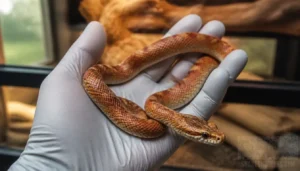
Fit determines function here: gloves should hug the hand like a second skin, not swallow it. Thin nitrile or thin leather gloves preserve dexterity and let you read snake body language through your fingertips.
Proper sizing—measured at palm width, not guessed—prevents slippage.
Clean with unscented soap; scent contamination invites a feeding association you don’t want.
Avoid Thick Welding Gloves

Bulk works against you. Thick welding gloves or gauntlets might feel protective, but glove thickness limits everything a handler needs: grip delicacy, warmth cues, snake body language.
- Numb fingertips miss subtle coil tension
- Heat retention issues mask temperature-based stress signals
- Reduced dexterity concerns slow repositioning
- Safety feedback compromise raises slip risk
Skip the gauntlets. Stress reduction in reptiles depends on your hands staying responsive, not armored.
Prioritize Dexterity and Feedback

Once thickness is off the table, dexterity becomes the deciding factor. Look for tactile grip precision and fine motor control in the fingertips.
| Glove Feature | Why It Matters |
|---|---|
| Thin fingertips | Preserves haptic feedback sensitivity |
| Snug fit | Helps pressure modulation skills |
| Flexible palm | Maintains skin texture awareness |
| Minimal seams | Reduces glove degradation over time |
| Light material | Improves handling technique overall |
Store Away From Feeders

Dexterity means little if your gloves smell like a rat. Store handling gloves at least 10 feet from feeders, elevated in airtight, pest-resistant bins. Ball pythons and corn snakes both key into prey scent contamination fast.
Keep dedicated handling gear separate from feeding equipment entirely — one cabinet, one purpose. Cross-contaminated gloves confuse the very sensory cues you’re trying to normalize.
Clean With Unscented Soap

Washing matters as much as storage. Use unscented soap on leather or cotton gloves, working a gentle surfactant through the material before a full rinse—residue left behind reads as chemically as prey scent.
- Wash after each defensive-snake session
- Rinse thoroughly, no soap film
- Air dry completely, never rush
- Skip fragranced formulas entirely
Your skin barrier benefits too—moisturize after hand washing.
Transitioning From Gloves to Bare Hands

Gloves were never meant to be a permanent fixture in your handling routine, only a stepping stone toward something more genuine.
Getting from that stepping stone to full bare-handed confidence takes a deliberate, paced approach rather than a single leap.
Here’s how you make that change stick, one careful step at a time.
Remove One Glove First
The switch begins with technique, not courage. Pinch the glove at the wrist, peeling it away without brushing your bare forearm against the outer surface, which carries scent and residue you don’t want transferred.
This single motion protects contamination control while starting the bare hand shift. Watch body language as you go, calm posture means proceed; coiling or tongue-flicking means slow down.
Increase Bare Contact Gradually
Once bare skin makes contact, resist the urge to rush. Start with one finger resting against the snake’s body, letting it approach rather than reaching toward it. This gradual exposure progression builds genuine trust rather than mere tolerance.
Monitor snake response closely: relaxed coils and steady tongue-flicks mean you’re clear to extend contact slowly, session by session, over several days.
Keep Sessions Short
Why push your luck once trust is building? Keep each session under a minute, ending on a calm note before stress creeps in.
- Use a timer for quick session planning
- Cap brief interaction windows at 60 seconds
- Return the snake promptly after handling
- Space sessions 24 hours apart
- Store handling gloves away from feeders
Watch Snake Stress Signals
A snake’s body tells you everything before its teeth do. Dilated eyes and a rigid, coiled posture mean back off. Rapid tongue flicks toward bare skin signal active investigation, not aggression, while frozen stillness followed by pacing warns of mounting arousal.
| Cue | Calm | Stressed |
|---|---|---|
| Eyes | Relaxed gaze | Wide, fixed stare |
| Tongue | Steady flicks | Rapid, directed flicks |
| Body | Loose curves | Tight coil, tremble |
Build Genuine Handling Trust
Trust isn’t a switch you flip; it’s built through consistent slow movements and predictable routines the snake learns to anticipate.
Trust isn’t a switch you flip—it’s built through slow, consistent movements the snake learns to anticipate
- Handle briefly, regularly, calmly
- Apply gentle, even pressure
- Monitor stress signals constantly
Retiring handling gloves too early undoes progress. Gradual trust development with a formerly defensive snake demands patience—rushed transitions invite regression, not readiness.
Frequently Asked Questions (FAQs)
Can I wear gloves to handle my snake?
Like training wheels on a bike, gloves offer temporary support: yes, you can use them, provided you choose thin, snug materials that preserve tactile feedback, treating them as a bridge toward genuine bare-handed trust, not a permanent safety net.
What are snakes most afraid of?
Predator scent detection, loud noise startle, and sudden movement threat rank highest, alongside unfamiliar object fear and temperature change stress.
Gloved hands can register as one more unfamiliar object, so watch reptile stress signals closely before assuming stress removal is complete.
Do pet snakes like to be handled?
A held bird doesn’t sing from joy; it simply stops thrashing. Handling tolerance varies by nature: most snakes endure calm contact without truly seeking it, especially with gentle handling benefits reinforcing predictable, brief sessions over time.
Can snakes bite through gloves?
Yes, depending on glove material strength versus fang length. Thin fabrics fail against bite force penetration, while thick leather resists most fang penetration—though damp or worn gloves risk glove puncture resistance failure and possible venom through puncture exposure.
How long does snake glove retraining usually take?
Think of retraining as thawing ice, gradual, not instant. Most snakes need 2 to 6 weeks of short daily sessions; reactive species or those with bite histories may take 4 to 8 weeks before calm, confident handling becomes consistent.
Can gloves work for all snake species equally?
No, species response variation rules this out. Arboreal snakes retreat rather than strike, while defensive species lash quickly. Temperature sensitivity, temperament, and glove fit and dexterity tradeoffs mean protective gear for reptiles needs species-specific judgment, not a blanket approach.
What glove materials are safest for allergic keepers?
Nitrile exam gloves, powder free, offer the best balance for allergic keepers: puncture resistance, snug dexterity, and no latex proteins. Neoprene works well too, while vinyl sensitivity and looser fit make it a weaker backup choice.
Should beginners start handling with gloves or bare hands?
Like training wheels on a bike, gloves offer brief stability but delay true balance. Beginners benefit most from starting gloved, then shifting quickly toward confidence without gloves once grip skills and calm handling habits take hold.
Conclusion
Snakes never read fabric as a threat; they read it as a stranger. That’s the real answer to whether do handling gloves scare pet snakes: temporarily, yes, but the fear is circumstantial, not permanent. Gloves work like training wheels, useful early, unnecessary once trust forms.
Your goal isn’t armor against your own snake. It’s fluency in its language, earned through calm, consistent, bare-handed contact, until that defensive coil fades into quiet, confident tolerance.